
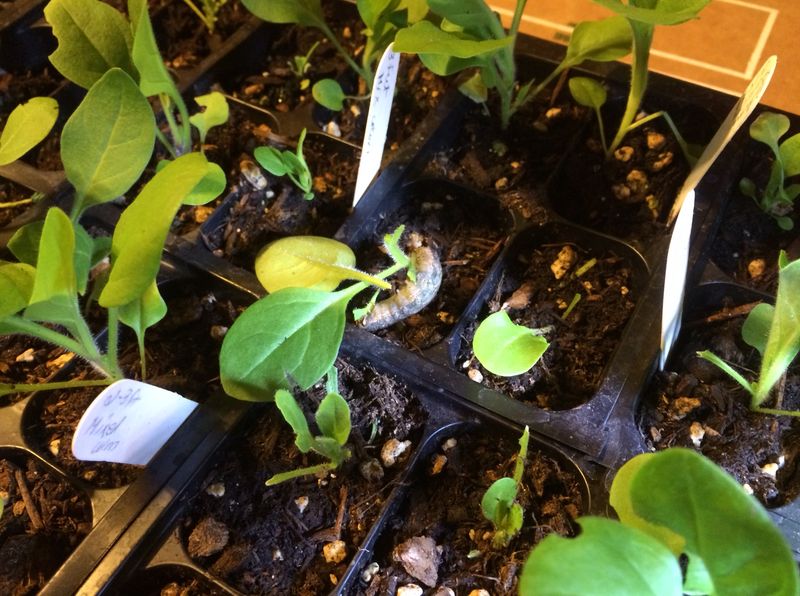
You walk out to the greens bed and a row of young spinach or lettuce is gone, or lying cut off at the base. It is a gut punch, especially when you were counting on a fall harvest.
Cutworms are one possible cause, but they are not the only one. A few careful checks can help you work out what happened and protect the plants that are left.
Cut stems make cutworms a plausible suspect
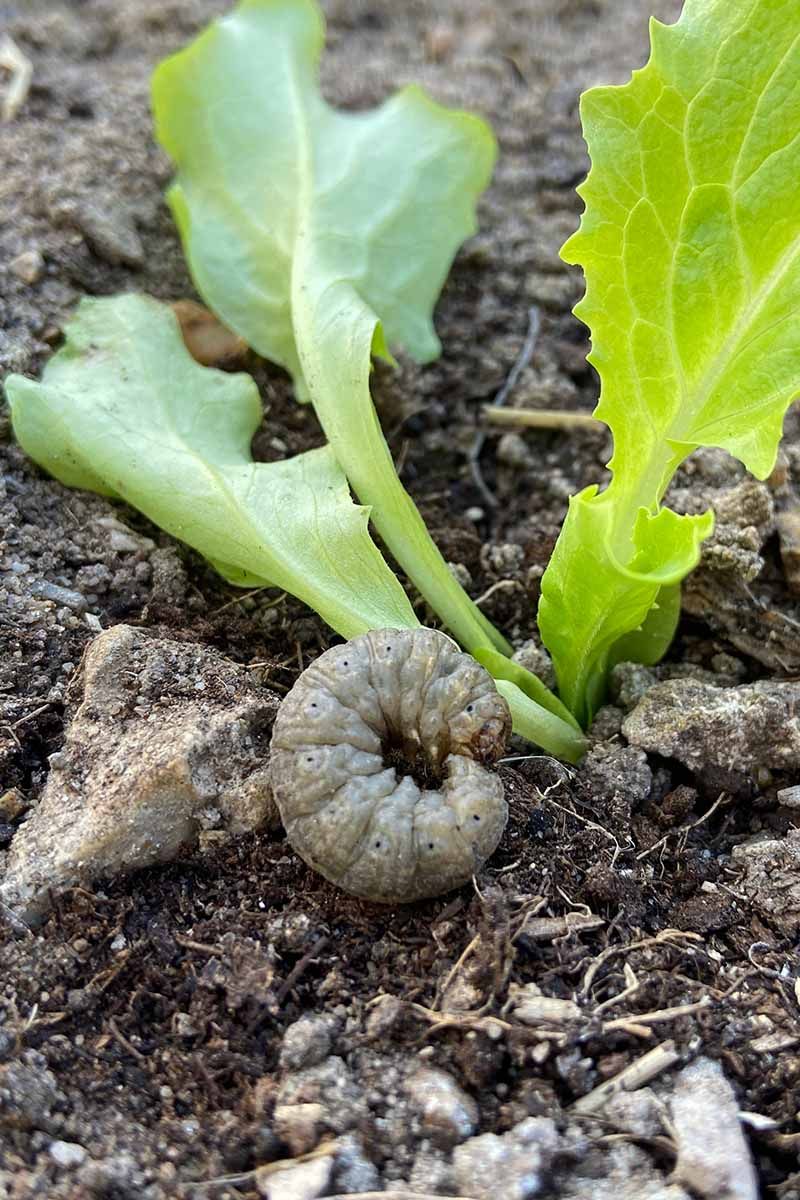
A missing seedling tells you very little. A seedling whose stem is cut off at or just below the soil line tells you more.
That kind of damage is what makes cutworms a plausible suspect, and both lettuce and spinach are listed as hosts, according to Texas A&M AgriLife Extension.
Cutworms feed mostly at night and hide in soil or plant debris during the day. Some species can even pull a seedling underground, which may explain plants that seem to vanish.
That said, not every missing seedling was dragged down a burrow, so treat this as a clue, not a verdict.
University of Minnesota Extension describes the typical pattern of young plants clipped near the ground. Use it as a reason to look closer.
The steps ahead can reduce the risk to the seedlings you still have, though they will not solve every case.
November alone does not diagnose the problem
The month on the calendar cannot tell you what chewed your seedlings. Cutworm activity changes with species and region, so a November loss in one yard says little about another.
In Georgia, University of Georgia Extension says cutworms can be active year-round. Up north, Minnesota guidance says they are rarely a problem after spring.
Those two statements fit their own regions, and neither one covers every garden.
Along the Gulf Coast, UF/IFAS identifies granulate cutworm as an important vegetable pest. That makes cutworms worth considering there, but it does not mean every Southern garden has them this month.
Let the damaged plants and the soil around them guide you, not the date.
Other problems can collapse or cut seedlings
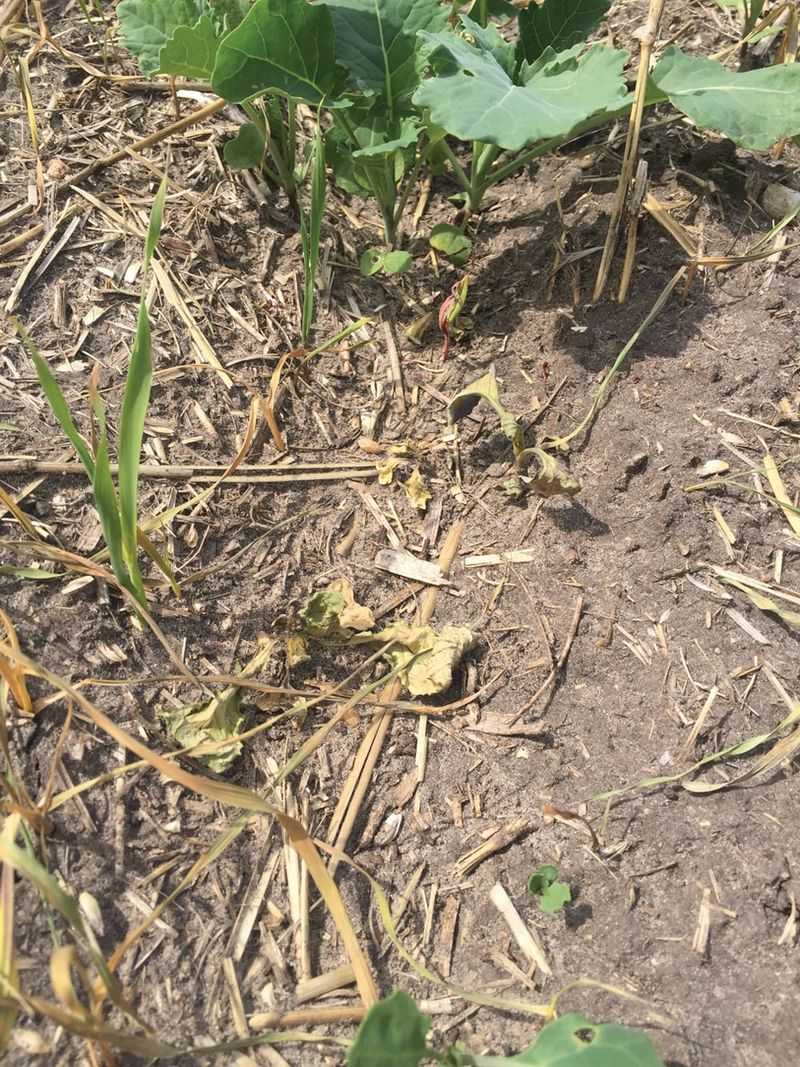
Damping-off is a common lookalike. A seedling hit by it often collapses with a pinched, water-soaked, or darkened stem base that is still attached, as described by University of Illinois Extension.
A cleanly cut stem points away from it.
White grubs are another possibility, since they may cut plants slightly below ground, according to a University of Georgia handbook. Other insects can also damage stems.
Rather than guessing, pull up one damaged plant and look at the stem and roots. Then sift the soil nearby.
What you find there will narrow the list better than any single symptom.
Look for evidence around a freshly cut plant
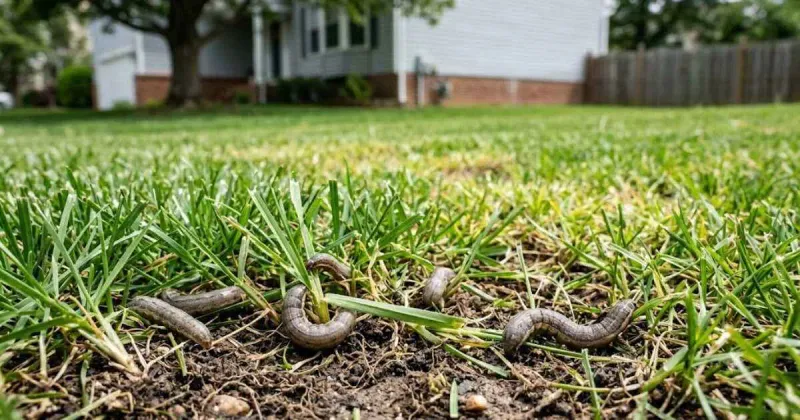
Timing helps here. Check a freshly damaged spot at dusk or after dark, when cutworms may be out feeding.
During the day, they tend to hide, so you may need to search by hand instead.
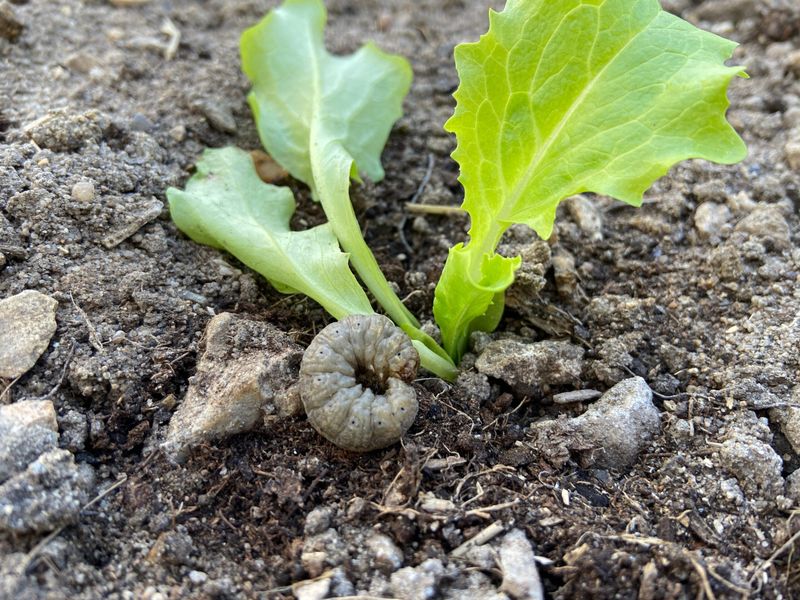
Gently dig through the soil, clods, and debris within about a foot of a cut plant. A larva that curls into a C when disturbed is a good clue, as noted by University of Minnesota Extension.
A nearby hole can be another hint, per Texas A&M AgriLife Extension.
Clues like these are helpful but not proof. If you find larvae, hand-pick them and drop them into a cup of soapy water.
Picking them off will help, but it will not necessarily clear out every one in the bed.
Place a buried collar around each vulnerable seedling
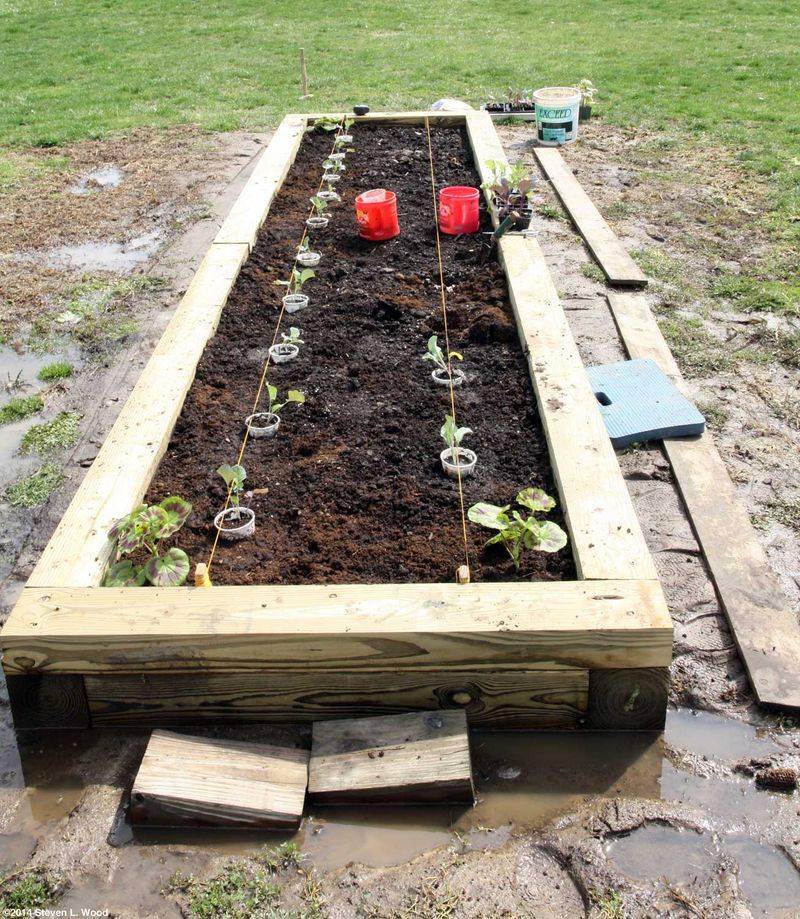
A collar is a simple barrier for individual seedlings or transplants. Cut the bottom out of a plastic cup, or use a waxed cardboard carton, and set it around the stem.
UF/IFAS recommends it extend a few inches above ground and at least an inch below it.
Press the collar in firmly so there is no gap at the soil. Make one for each plant you most want to save, starting with the youngest and tenderest.
Keep expectations realistic. A collar protects only the stem it surrounds, and it does not remove larvae already living in the bed.
UF/IFAS also notes that barriers may have limited value against black cutworms, which can bypass them.
Remove weeds and loose old plant residue
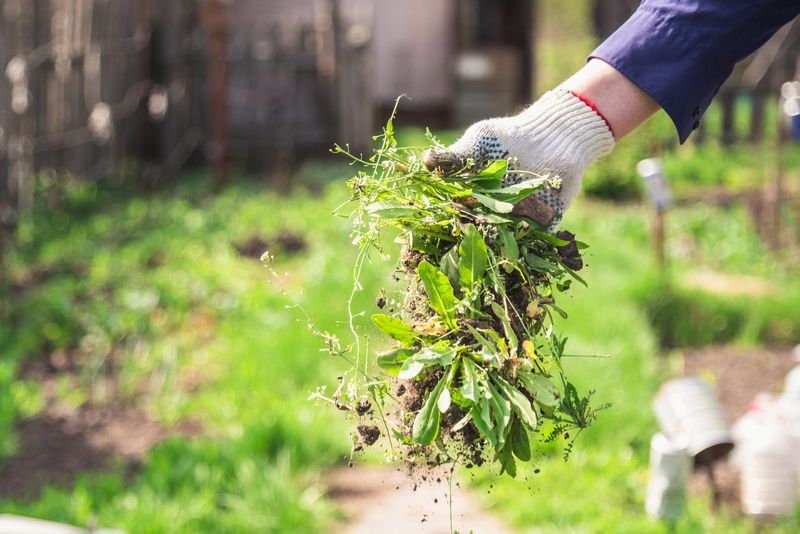
Tidy edges give cutworms fewer places to settle. Weeds and loose, old plant residue can offer food, shelter, or egg-laying sites, as outlined by University of Georgia Extension.
Pull weeds by hand and rake away dead leaves and old crop debris around and near the bed. Work carefully among the seedlings so you do not disturb their roots.
Think of this as habitat reduction and prevention. It does not prove you have an infestation, and it will not guarantee rescue for plants already at risk.
University of Minnesota Extension discusses tillage in certain settings, but tilling an established greens bed is not a safe quick fix.
Use pesticides only if a labeled product is appropriate

Most home gardens do not need a spray. University of Minnesota Extension says pesticides are usually unnecessary in this setting, so hand-picking, collars, and cleanup come first.
If you still consider one, choose only a product whose label permits use on the crop you are growing, such as lettuce or spinach. Then follow the directions exactly.
Crop-specific guidance like UC IPM lettuce information can help you understand how professionals approach the pest.
After a few days, recheck the bed. Are fewer seedlings being cut?
Collars, cleanup, and hand-picking are management steps, not guaranteed cures, so keep watching.