
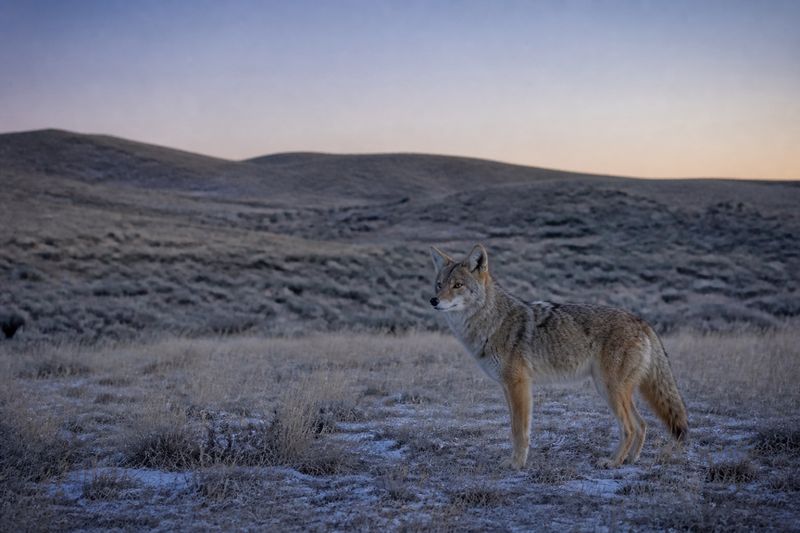
A coyote howl at night is a message between coyotes, not a signal aimed at your yard. It can tell you that coyotes live somewhere in your area, but it cannot tell you how close they are or how many there are.
Most of what people assume about those sounds does not hold up. Here is what the calls really mean and what to do about them.
What coyote calls can tell you
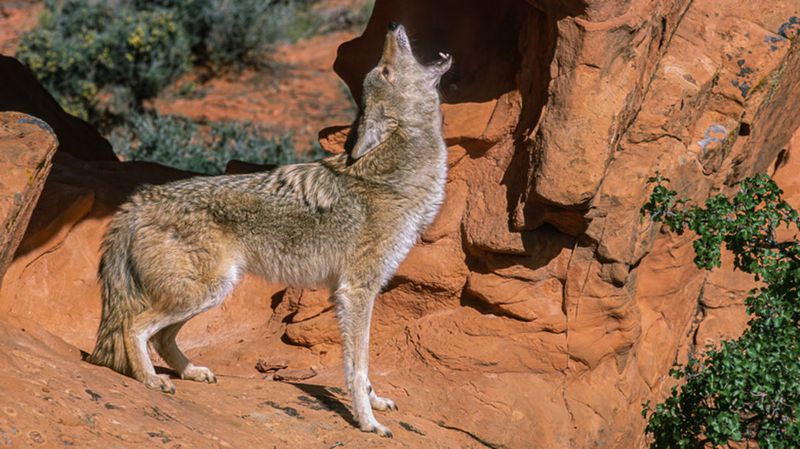
Howling is a form of communication, and it can serve several purposes. According to the NCWRC coyote biology appendix, coyotes use calls to locate group members and to signal territory, among other things.
No single meaning fits every chorus you hear.
That is the part many homeowners get wrong. A howl is not a reliable sign that coyotes are hunting, that they just made a kill, or that a den is tucked into the woods behind your fence.
It simply shows that coyotes are talking to one another somewhere.
Researchers have studied why coyotes vocalize, and Penn State’s overview of coyote howling describes a mix of social functions rather than one fixed purpose. Think of it like a phone call between neighbors.
You can hear that a conversation is happening, but you cannot tell what it is about.
You may also hear that coyotes howl because of the full moon. The NCWRC biology appendix says howling frequency is not linked to moonlight intensity, so a bright night does not explain the noise.
The practical takeaway is simple. A howl tells you coyotes are part of your local wildlife, which is already true across North Carolina.
It does not call for any emergency response on its own.
Why hearing a call does not reveal its distance

Sound travels in odd ways at night. The NCWRC reports that coyote calls can carry up to about 3.2 km (2 miles) under some conditions, as noted in its coyote biology appendix.
That figure is a reported maximum, not a normal range.
It also does not mean you will hear every coyote within two miles. Whether a call reaches your ears depends on weather, terrain, trees, and background noise.
Audibility and distance are two different things.
A faint howl might come from a coyote far away, or it might be a quieter call from somewhere closer. A loud howl might have traveled a long way over open ground.
Your ears cannot sort that out.
For the same reason, you cannot pinpoint a coyote by listening from different spots in the yard. Trying to triangulate a caller by sound is guesswork.
So if you hear a chorus, treat it as a sign that coyotes are somewhere in the region. Judge how close they are by what you can actually see, not by how loud they sound.
A chorus cannot count the coyotes
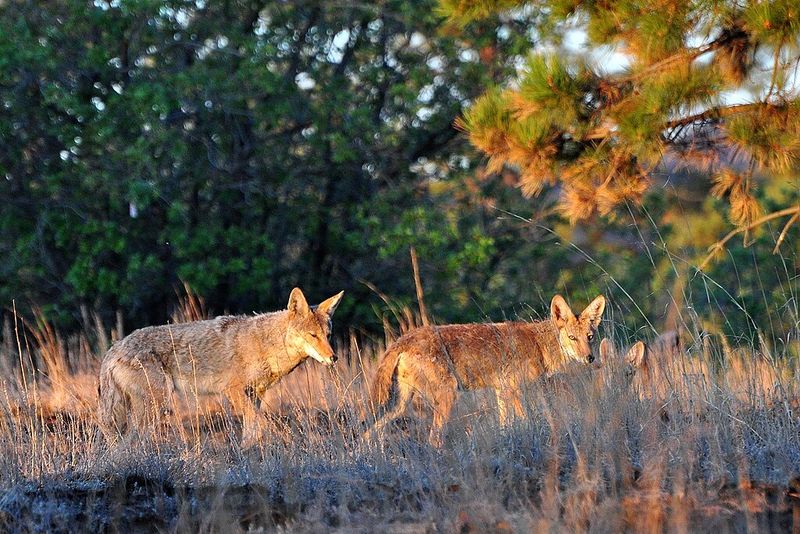
Two coyotes can sound like a whole crowd. Their yips, barks, and howls overlap and bounce around, which makes a small group seem larger than it is.
Group life among coyotes varies. The NCWRC biology appendix describes related groups, as well as transient or solitary coyotes.
A chorus cannot show which of these you are hearing, or whether the callers are family at all.
That is why the word pack can mislead. It makes people picture a large, wolf-like group, and sound alone cannot confirm anything like that.
Scientists have tested how well people judge group size by ear. In a study of human perception of coyote group size, listeners heard recordings of one to four coyotes, and on average they guessed higher numbers than were actually there.
That result comes from controlled recordings, so it cannot tell you how many animals made any particular chorus in your neighborhood. What it does show is that our ears are easy to fool.
If you hear what seems like a dozen coyotes, the honest answer is that you do not know. It could be one, two, or a few.
Protect pets with everyday routines

Good pet safety does not depend on hearing a howl. It works best as a habit you keep all year, because coyotes live in North Carolina neighborhoods whether or not they are calling.
The NCWRC offers simple steps on its coyote species page. Secure your garbage, remove outdoor pet food, and pick up fallen fruit.
These things draw wildlife into yards, and taking them away makes your property less appealing.
Next, think about where your pets are. Keep them indoors, leashed, or in a fenced area.
Do not leave pets unattended outside, even for a quick bathroom break after dark. Keep dogs on a short leash and cats indoors.
Small pets deserve the most care, since coyotes can prey on unattended small animals. A fence helps, but staying with your pet is the surest way to keep them close.
None of this means a chorus proves danger is at your door. These are routine precautions, like locking a car.
You do them because they are easy and they work, not because a particular sound has set off an alarm.
Walk your yard once in a while and look for anything a hungry animal might find, such as spilled birdseed, an open compost bin, or windfall apples.
Respond to the coyote you encounter

Seeing a coyote is a different event from hearing one. A call tells you very little, but an animal in front of you shows what it is actually doing, and that is what should guide your response.
If a coyote approaches you, the NCWRC advice on its coyote page is to stand tall, make noise or wave your arms, and not run. This kind of hazing is meant only for a coyote that is coming toward people.
It is not for an animal you merely hear in the distance, so do not go looking for it or chase it.
Spring calls for extra awareness. In its spring guidance on animal encounters, the agency notes that coyotes raise pups in the warmer months.
Mating usually happens in February and March, and births usually come in April and May. Pet guidance stretches from February through May, and den-defense advice runs from February through June.
These dates are broad guides, not a hard line for a statewide danger season.
If a coyote keeps watching you or follows you, it may be defending a den. Do not approach it or look for the den.
Calmly leave the area, and give the animal room.
Keep your pets close as you go. Walking away steadily is usually all that is needed.
Get the right help after a bite or scratch

Bites and scratches from wild animals are rare, but it helps to know the steps ahead of time. They are different for people and for pets.
If a person is bitten or scratched, wash the wound with soap and running water for 15 minutes. Then promptly contact a medical provider and your local animal control or health department.
The N.C. Department of Health and Human Services rabies guidance explains how exposures are assessed, and the medical provider and local officials can tell you what comes next.
If a pet is bitten or scratched, contact a veterinarian and your local animal control or health department for guidance. Your vet can examine the animal and talk through vaccination status and next steps.
Wear gloves if you need to handle a pet that has a wound, since saliva and blood can carry germs.
In both cases, do not try to catch the wild animal. Chasing or trapping it puts you at more risk.
Describe where you saw it and what it looked like, and let the local officials decide what to do.
Use the sound as information, not a reason to panic
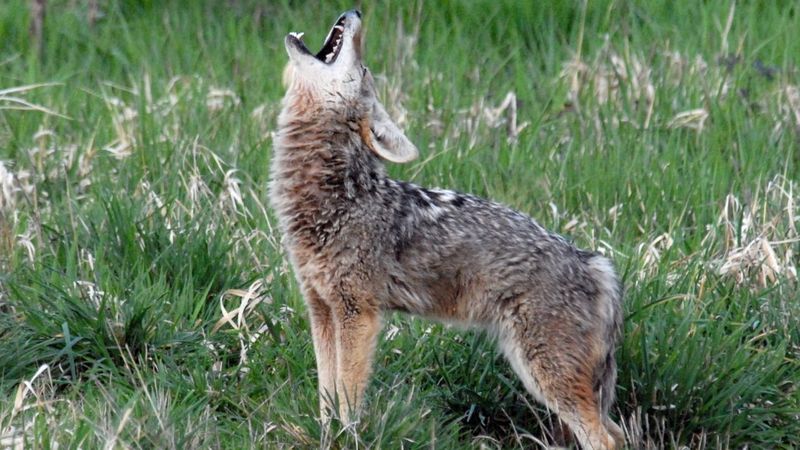
A chorus at night tells you that coyotes are part of the neighborhood. It does not reveal how far away they are, how many there are, or whether you face any immediate risk.
Keep up the everyday habits from the NCWRC coyote page, and save a change in your response for a real encounter or an injury.
A howl is just the night talking, and you can listen to it with calm curiosity.