

Crape myrtles get most of their fame from summer blooms, but the show does not have to end when the flowers fade. In parts of North Carolina, their leaves may turn shades of yellow, orange, red, or bronze before dropping.
A quick walk around your yard can tell you a lot about the plant you have. Here is what to watch for, and how to tell a normal seasonal change from a sign of trouble.
Crape myrtles can add a fall foliage display
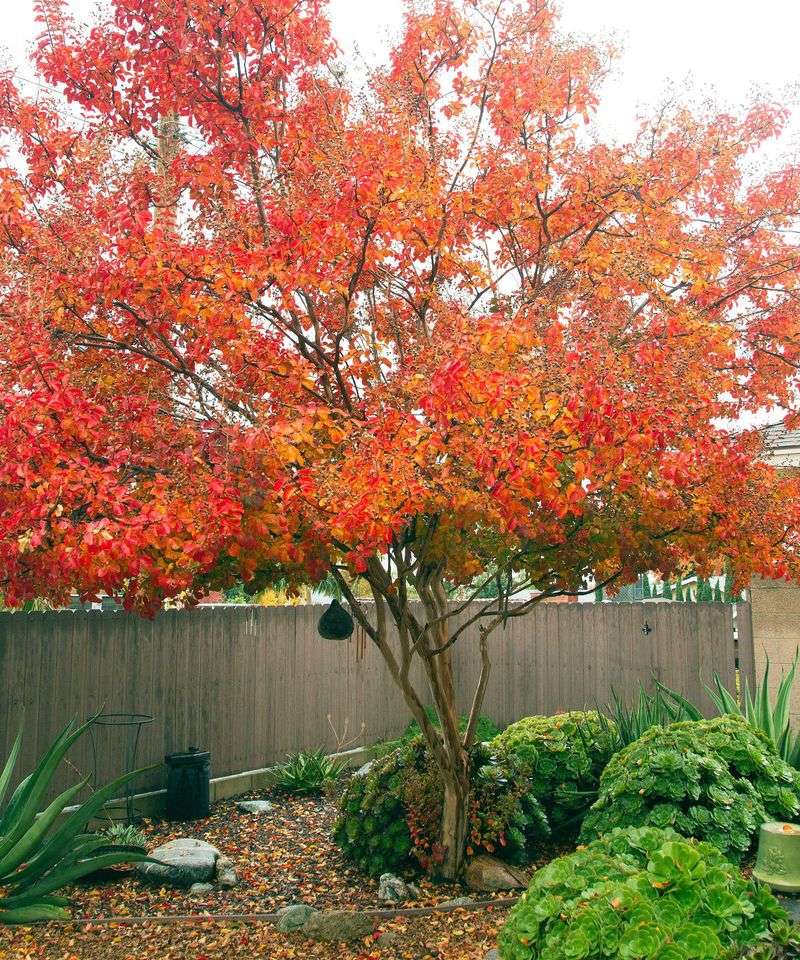
Walk past a crape myrtle in late fall and you may catch a color change you never expected from a plant famous for summer flowers. These shrubs and small trees are deciduous, which means they drop their leaves each year.
Before that happens, the foliage can shift to a new look.
According to Clemson Extension, fall leaves can turn yellow, orange, red, or related shades. Some plants show several colors at once, so a single branch might hold gold, burnt orange, and deep red leaves side by side.
Bronze and mixed tones also turn up in cultivar descriptions, which makes the display hard to predict. One plant may glow for a couple of weeks, while another nearby may fade to a plain yellow and drop its leaves quickly.
That variety is part of the fun. Think of fall color on a crape myrtle as a seasonal bonus, not a promise.
Some plants will put on a vivid show, and others will be quieter, but nearly all of them are changing in some way as the season winds down.
A good habit is to pick one plant in your yard and check it every week or so. Notice which leaves change first, whether the color starts at the top or the inside of the plant, and how long it lasts.
Those notes help you understand your own plant better than any general rule can.
Cultivar helps explain differences in color
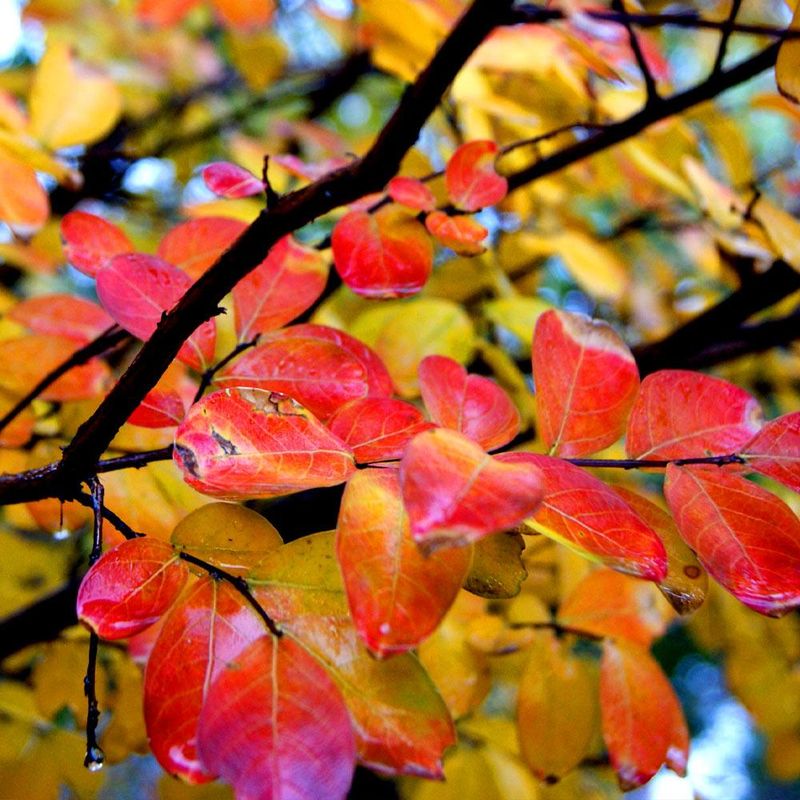
If your neighbor’s crape myrtle turns fiery orange while yours goes plain yellow, cultivar is a likely reason. A cultivar is a named variety, and each one has its own growth habit and foliage traits.
Checking the plant tag or nursery record can answer many questions.
NC State Extension’s plant profile for Lagerstroemia indica lists several examples. ‘Acoma’ is described with red to purple-red fall foliage, ‘Hopi’ with orange-red, ‘Pocomoke’ with bronze-red, and ‘Zuni’ with orange-red to red.
Those are descriptions of what a cultivar tends to do, not guarantees for every yard. Sun, soil, moisture, and the weather of a particular year can all shape what you actually see.
Flower color offers a loose hint at best. Clemson Extension notes that white-flowered types often show yellow fall color, while pink and red-flowered types often show yellow, orange, or red.
The word often matters here. Flower color alone cannot reliably predict what an individual plant will do in autumn.
If you do not know your cultivar, compare notes from a few seasons. A photo taken at the same spot each November makes differences easy to spot.
Over time, you will learn how your own plant behaves.
November is a regional window, not a crape-myrtle schedule

Fall color does not arrive everywhere at once. In North Carolina, general leaf color tends to move from the mountains toward the coast, so the Piedmont and coastal plain often see their best color later than higher elevations.
NC State’s 2026 fall foliage forecast anticipated peak color along the coast in early to mid-November. That makes November a reasonable time to look for color in parts of the state, especially in eastern areas.
The forecast is about fall foliage in general. It is not a crape myrtle observation, and it does not tell you what is peaking in your yard today.
A crape myrtle may color earlier or later than the forest trees around it.
The same outlook warned that warm, dry conditions could delay color, mute it, or cause early leaf drop. That caution applies to fall foliage generally.
It does not confirm those effects for crape myrtles in particular, though it is a fair reason to stay flexible about what you expect.
So treat November as a window to watch, not a date to circle. Where you live, how the weather has behaved, and which cultivar you grow will all shape the timing.
Leaf drop makes the bark easier to see
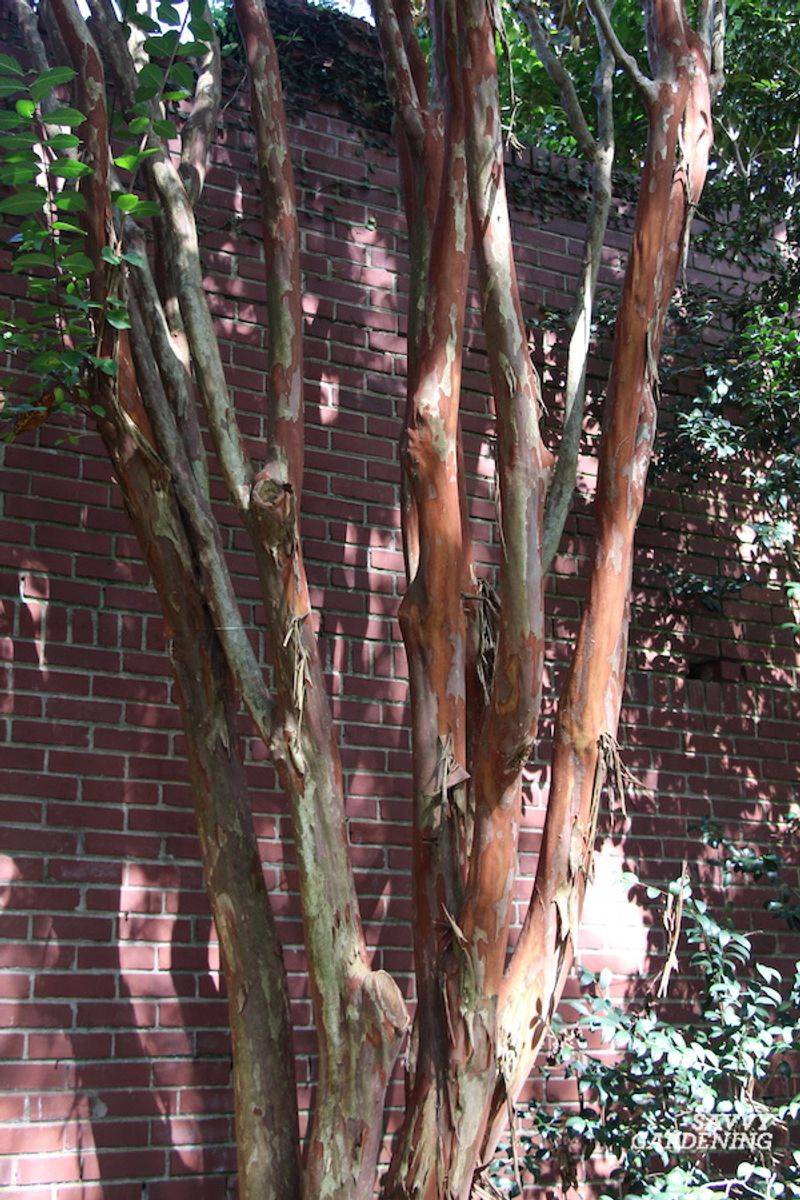
Once the leaves let go, a different feature steps forward. Crape myrtles have exfoliating bark, meaning the outer layer peels away in thin pieces and reveals smoother patches beneath.
Clemson Extension points to this bark as one of the plant’s lasting features. With the foliage gone, the trunk and branches are easier to see, and the mottled patterns of tan, gray, and reddish brown stand out.
The bark is not a fall-only feature. It is there through the growing season, just partly hidden behind leaves and flowers.
Bare branches simply give it a clearer stage.
Try a slow lap around your plant after the leaves fall. Run your eyes up the trunk and notice where the bark is peeling and where it looks smooth.
Look at how the branches twist and divide, since that structure shapes the plant’s winter outline.
If you have several crape myrtles, compare them. Bark color and texture can differ from one plant to the next, and the contrast is easy to enjoy on a clear, bright day.
Spotted leaves and early leaf loss deserve a closer look
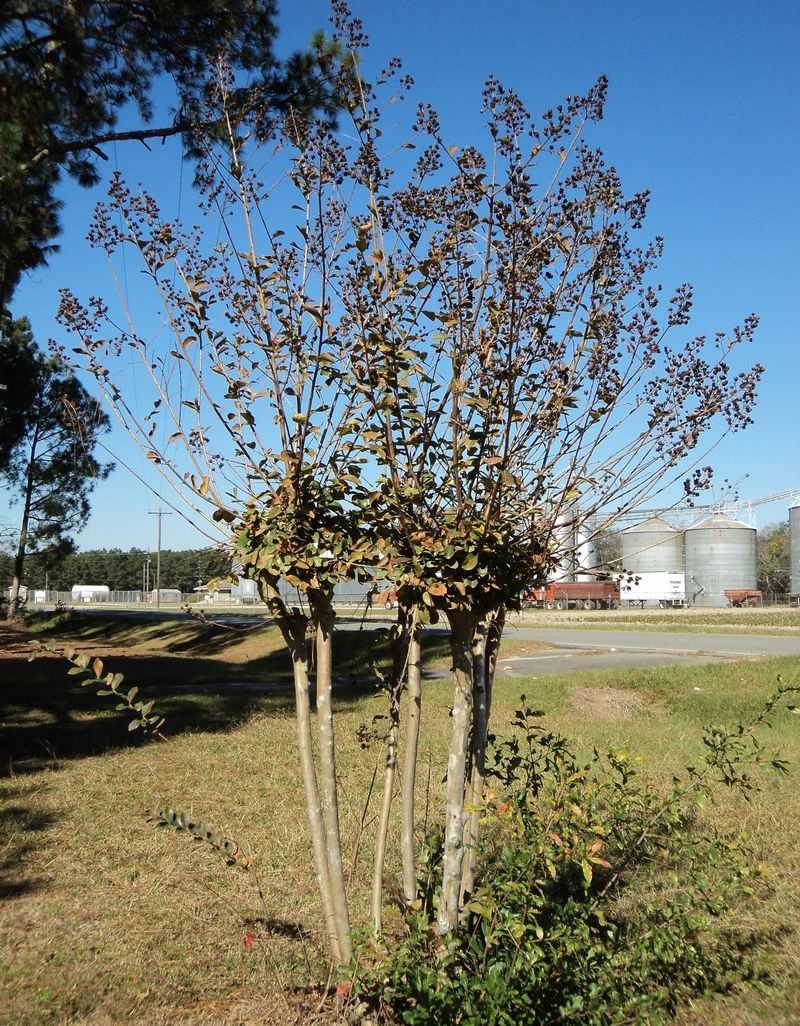
Not every yellow leaf is part of a healthy fall display. Sometimes the cause is a plant disease, and the clues look different from ordinary autumn color.
Clemson Extension says Cercospora leaf spot can cause spotted leaves and substantial premature defoliation in susceptible cultivars. Premature means the leaves drop earlier than expected, sometimes well before the season has really turned.
The key clue is the spotting. Seasonal color change usually spreads across the leaf, while leaf spot shows up as marks on the foliage.
A plant that loses a large share of its leaves early, especially with visible spots, is worth a careful look.
Color or leaf drop alone is not enough to name a problem. A plant might drop leaves early for other reasons, and a plant with spots might still be fine.
Avoid guessing from a single symptom.
If something looks off, note what you see: which leaves are affected, when it started, and whether the pattern repeats each year. Photos help.
Your local Cooperative Extension office can help you sort out what is happening and what, if anything, to do next.
Observe the plant, not a fixed date
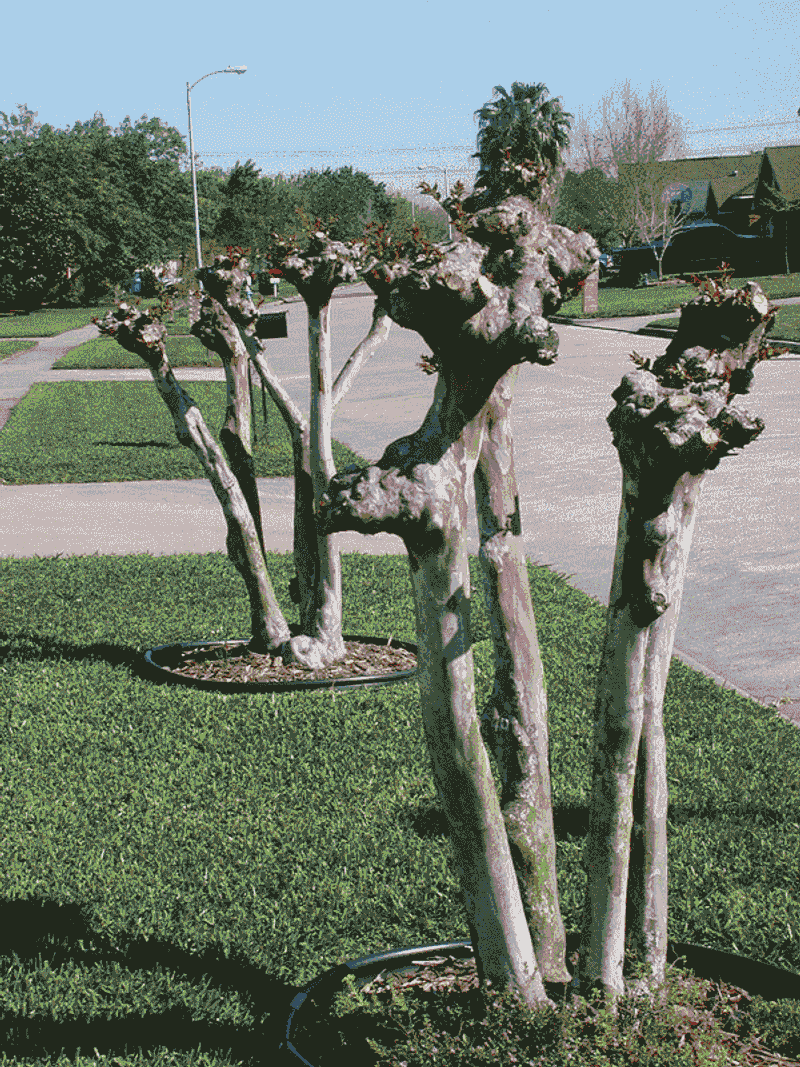
The best calendar is your own yard. Check your crape myrtle every week or so, jot down when color shows up, and look again after the leaves fall to enjoy the bark.
If you are shopping for a new plant partly for fall interest, look up the named cultivar. NC State’s plant profile includes foliage descriptions and mature size, and both are worth checking.
Treat them as a guide, not a guarantee.
Skip fall topping or pruning to chase better color. UGA Extension places any needed pruning in late winter to early spring and advises against early-fall pruning.
Some years the color will surprise you, and some years it will whisper. Either way, the plant is telling you something about the season.