
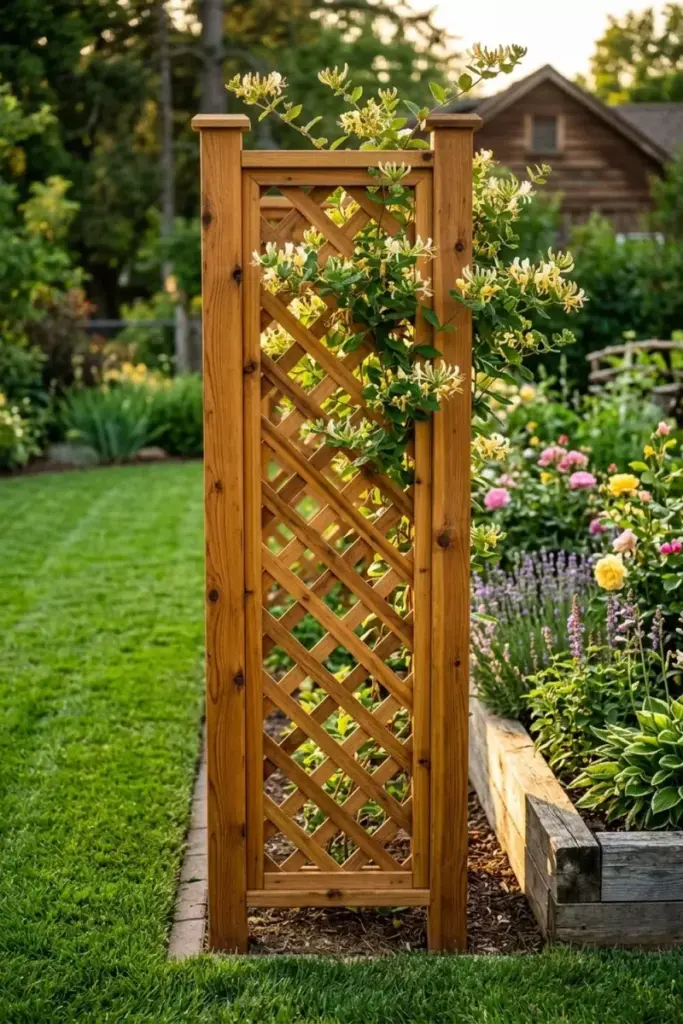
A vine needs something sturdy to climb, and picking that support matters as much as picking the plant. Crossvine is a Florida native that grips with tendrils, so it can work on a wire support in the right part of the state.
It grows fast and needs some planning, but it can turn a bare fence into a living wall of blooms. Here is how to decide if it fits your yard.
Moisture can contribute to wood decay, but it does not prove trellises fail fast
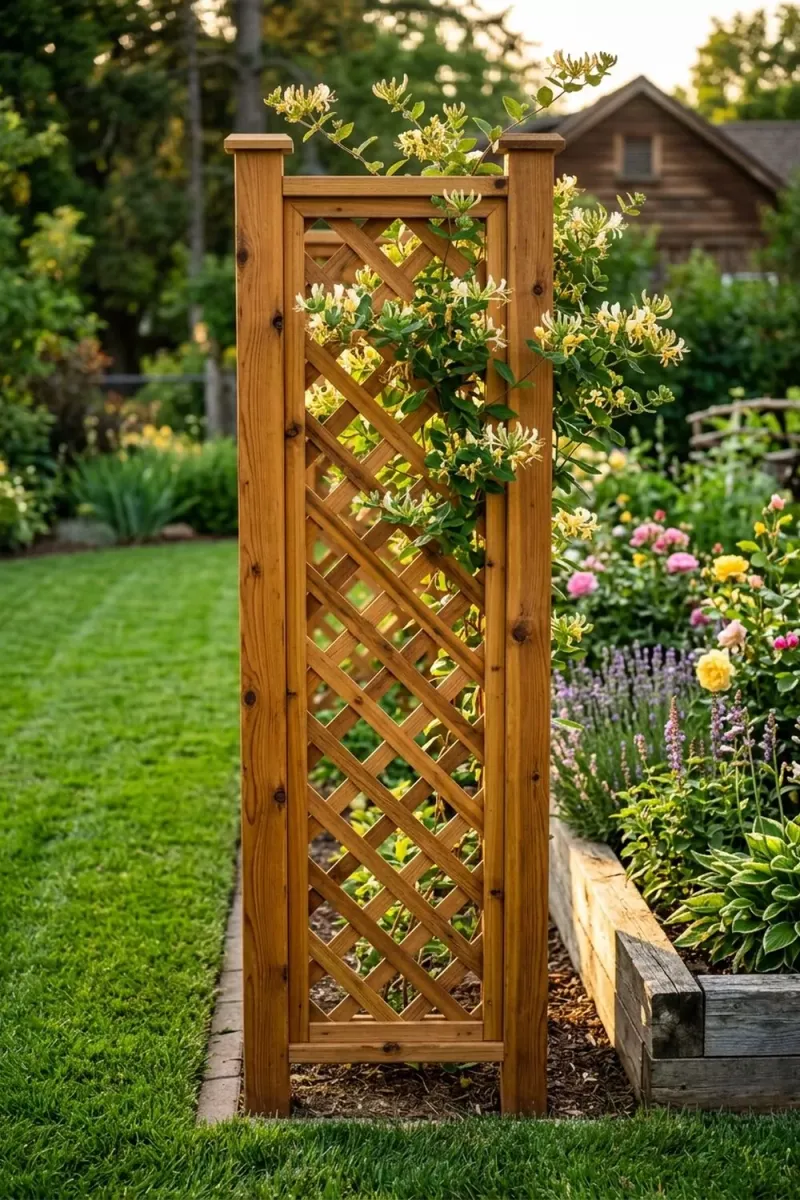
Wood and water have a long history together. Wood-decay fungi need moisture to grow, and that is the documented part of the story, as covered in USDA Forest Service research on the biodeterioration of wood.
Florida is humid, so it makes sense to think about it when you build something outdoors.
What we do not have is a number. No source we reviewed gives a Florida-specific lifespan for garden trellises, so there is no honest way to say a wooden trellis will last this many seasons or fail by that date.
Some wood structures hold up well, and others do not, depending on the wood, the build, and the spot.
Material choice and construction are the levers you can pull. The Forest Service guidance on protecting wood fences for yard and garden recommends decay-resistant or pressure-treated wood where the decay hazard is moderate or high, and keeping boards off the ground.
So if you already have a wooden trellis, a quick check of the bottom edges and any spots that stay damp is a sensible habit. Wire is another support option worth considering for a vine, but it is not a proven durability upgrade.
The rest of this article looks at one native vine that can use it.
Crossvine grips a support with tendrils

Crossvine (Bignonia capreolata) is a native vine that climbs with tendrils. UF/IFAS describes it as a Florida native that pulls itself upward this way.
The Florida Native Plant Society adds that the tendrils end in adhesive disks, which help them hold on.
That grip is why crossvine can work on a wire support. Thin tendrils can wrap and stick to something narrow, such as a wire, a slim rail, or fence mesh.
A smooth, wide surface gives them very little to grab.
It helps to know how this differs from twining. Vines like coral honeysuckle climb by wrapping their whole stems around upright supports, a difference explained in the UF/IFAS Gardening Solutions vine guide.
A tendril climber reaches out and grips, while a twiner winds around.
Climbing is not the same as standing alone. Crossvine still depends on a sturdy structure to hold its weight, and young shoots often need a gentle hand pointing them the right way.
Think of the wire as the skeleton and the vine as the growth that fills it in.
Check whether crossvine is native where you garden

Before you buy, look at where you live. UF/IFAS places crossvine in northern Florida and south through the central peninsula.
It is native in parts of the Southeast as well, but it is not native statewide.
If you garden in the Panhandle, North Florida, or Central Florida, crossvine is a regional fit. In South Florida, it falls outside that documented range, so coral honeysuckle (covered below) may be the better native to look at.
One more tip for plant shopping and spotting vines in the wild. Crossvine can look similar to invasive cat’s-claw vine.
According to the UF/IFAS invasive vines page, cat’s-claw has distinctive three-pronged tendrils, and crossvine does not.
Buy from a nursery that labels plants by scientific name, and check that the tag reads Bignonia capreolata. If a vine already climbing your fence has three-pronged tendrils, treat it as a different plant altogether.
Wire is a support system, not a substitute for one
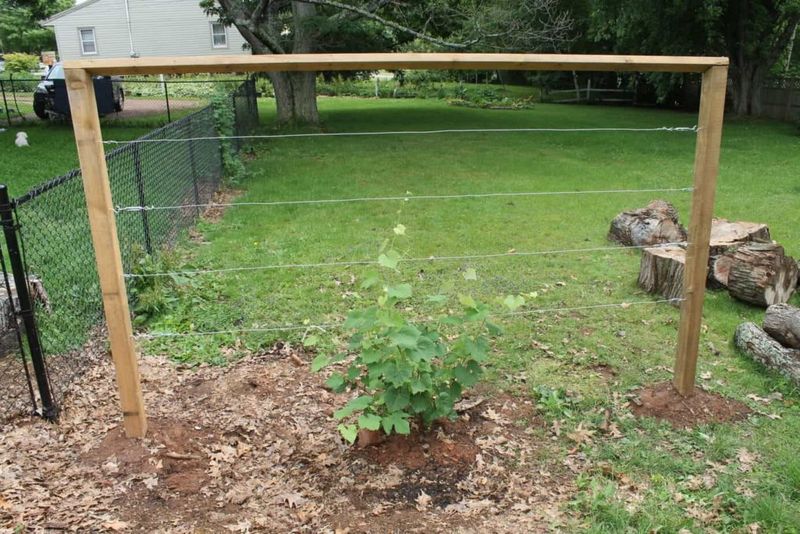
When people say a vine grows on wire, the wire is doing the job a trellis would do. It is the structure.
UF/IFAS Extension in Charlotte County advises giving vines sturdy support, and that advice applies to wire too.
Crossvine is vigorous, so plan for a support that can carry a heavy, fast-growing plant. Anchor it firmly at each end and check it from time to time.
We do not have source-backed specifics on wire gauge, spacing, corrosion resistance, or storm performance, so follow the product’s instructions and ask your local extension office for advice.
Training is the other piece. The UF/IFAS vine guide notes that new shoots may need guiding along fences or trellises.
Early on, you might loosely tie a stem to the wire or point a loose tip toward the next strand.
A practical routine looks like this: check new growth every week or two in the growing season, redirect stray shoots, and see where the tendrils have taken hold. Once the vine has grabbed on, it will do more of the work, though it will keep asking for attention.
Make room for a vine that can climb 50 feet or more
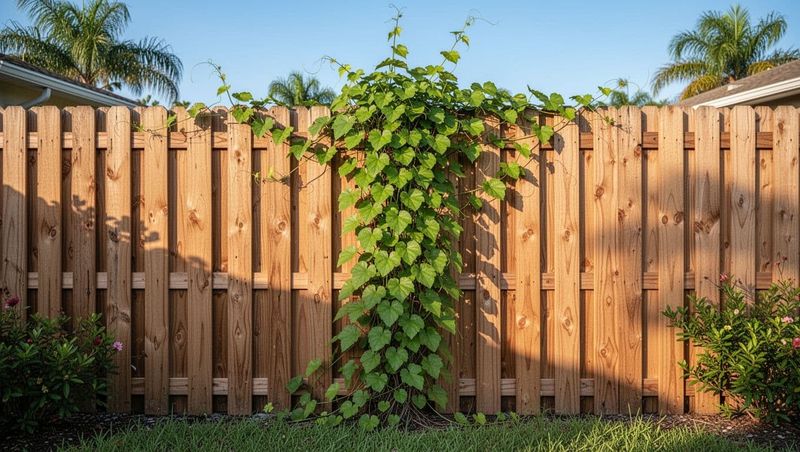
Crossvine is not a shy plant. The University of North Florida Botanical Garden notes that it grows quickly and can climb 50 feet or more.
That is a lot of vine for one fence.
Picture the mature size before you plant. A long boundary fence, a sturdy pergola, or a wall with space to spread gives it room.
A tiny courtyard or a flimsy railing is a poor match.
Pruning is part of the deal. Trim stray shoots, keep it off gutters, trees, and roofs, and cut it back when it outgrows its space.
Expect to do this more than once a year.
The UF/IFAS Florida-Friendly Landscaping guide lists crossvine among the plant options for property lines and fences. That is a good sign for suitable spots, but it does not mean every fence or small yard can handle it.
Measure your space, then decide.
Coral honeysuckle offers a statewide alternative, with a soil caveat
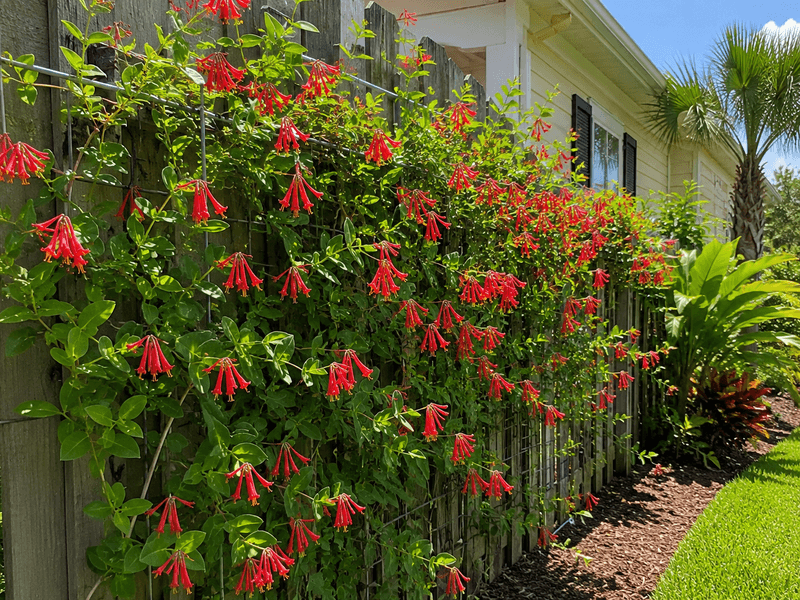
If crossvine does not suit your location or space, coral honeysuckle (Lonicera sempervirens) is worth a look. According to UF/IFAS Gardening Solutions, it is a Florida native that grows throughout the state.
That makes it a possibility for South Florida gardeners too.
It attracts hummingbirds and butterflies, and its berries are eaten by songbirds. If you want wildlife visitors near a fence or porch, that is a real perk.
The climbing style is different. Coral honeysuckle twines, so it winds its stems around upright supports, as the UF/IFAS vine guide describes.
Vertical wires or slim posts suit it, and you may need to train it along its path.
Here is the soil catch: UF/IFAS says it does not tolerate dry sands. Florida has plenty of fast-draining sandy yards, so check your soil first, and plan on a spot with better moisture if yours is very sandy.
Also, steer clear of Japanese honeysuckle, which is invasive.
Match the vine and support to the yard
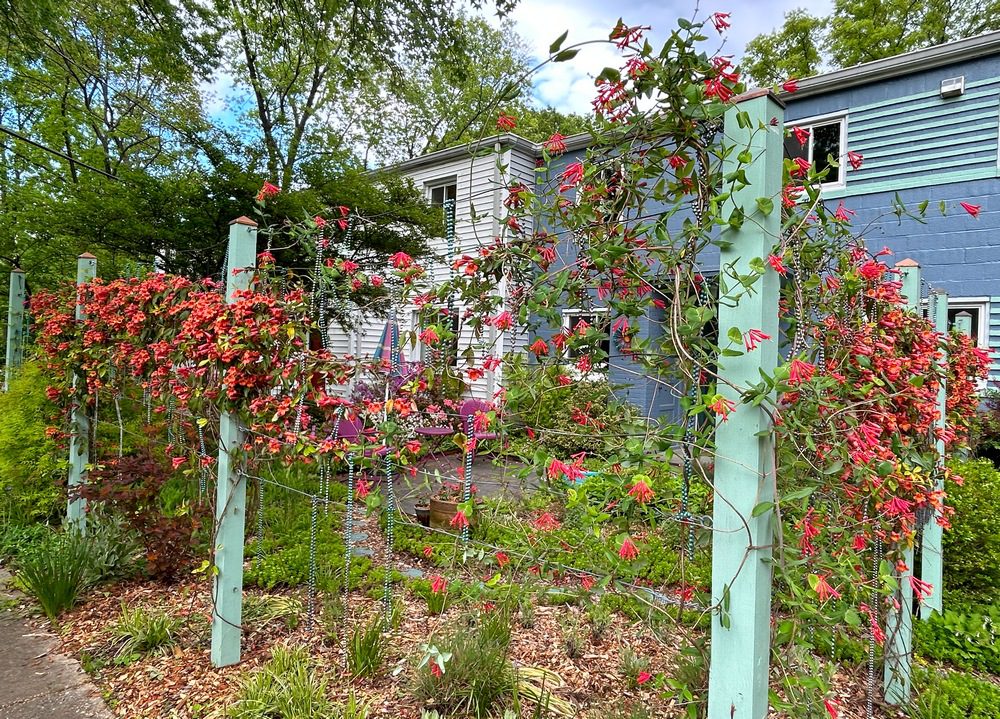
Start with your map location, since crossvine’s native range covers northern Florida through the central peninsula. Then measure your space and choose a sturdy support, as UF/IFAS Extension advises.
Wire is one option, not proof of a longer life than wood.
A good vine is a long conversation, not a one-time purchase.