
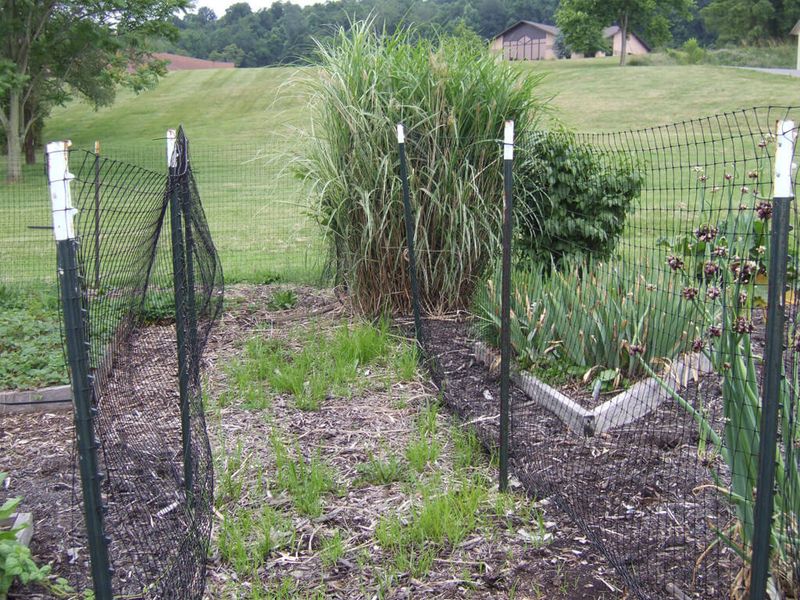
Walk out to your fall bed one morning and find the kale chewed down to stubs, and you will want a fix fast. Deer are a common suspect, but how much trouble they cause depends a lot on where you live.
A cheap, nearly invisible fishing-line barrier is a popular trick, and it may help in some small gardens. Here is how to check for deer, try the line safely, and know when to move on to something stronger.
November pressure depends on local forage
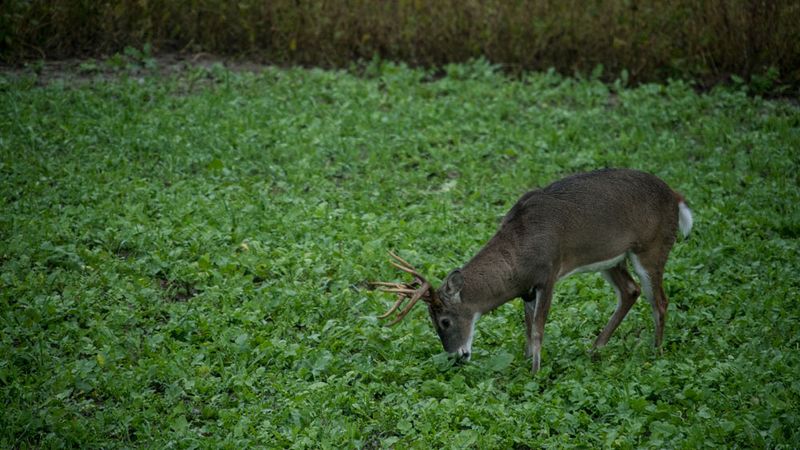
Calendar dates make poor deer predictions. Mississippi wildlife guidance says browse matters most in fall and winter when green plants are scarce, yet Texas A&M AgriLife notes that woody browse is available year-round in Texas and that food supply shifts with season, climate, and soils.
Acorns and other fall foods can also pull deer away from gardens in parts of the Southeast.
So a November surge in garden damage is not a given across the South. Some yards get hammered, and others barely get a nibble.
Growing seasons differ too. In Florida, UF/IFAS turnip planting windows run into winter, so tender crops may still be out there in November.
Deer also do not all love brassicas. UF/IFAS says preference for forage brassicas varies a lot by site.
Look at your own surroundings: nearby woods, neighbors’ yards, other food, and any past damage. Those clues tell you more than the month does.
Check the damage before blaming deer
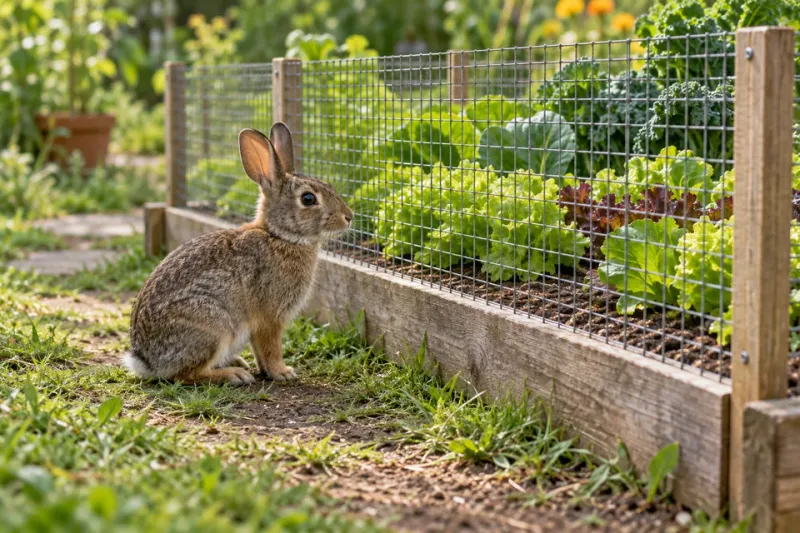
Rabbits, insects, and other critters can all leave a mess, so look closely before you build anything. UF/IFAS says deer damage commonly shows ragged ends on stems, leaves, and twigs, because deer tear plants rather than cutting them cleanly.
Height is another clue. Deer can reach plants up to about 6 feet high, so damage well above rabbit reach points their way.
Hoofprints and droppings near the bed add to the picture.
Treat these signs as clues, not proof. If the evidence is unclear, a few nights of watching or a trail camera can help.
Confirm the likely culprit first, then pick a deterrent that fits.
Treat fishing line as a temporary deterrent
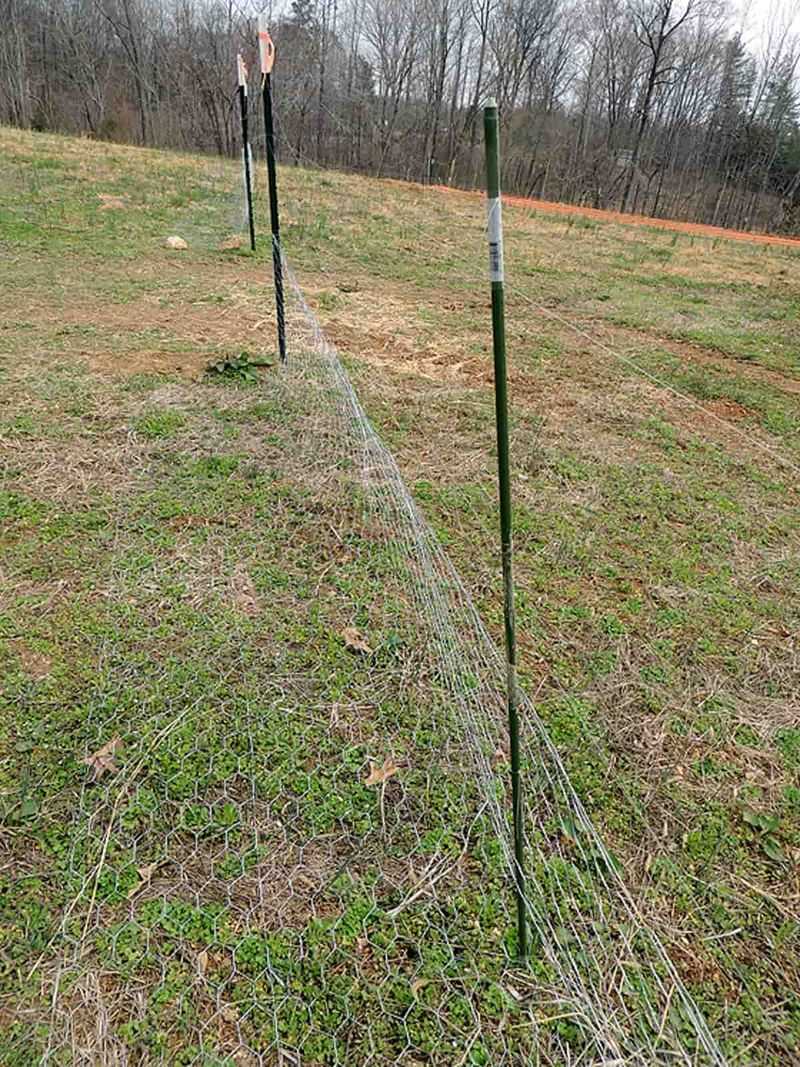
Set your expectations low and your eyes open. Iowa State Extension recommends monofilament only as short-term protection for small areas with low deer density, and says it is ineffective where deer feed by day.
Its explanation is that deer meet the line in the dark and feel uneasy about it. That is the extension’s recommended reasoning, not a proven mechanism, and it does not mean deer can never see the line.
Think of it as an experiment. Put it up, then check the bed each morning for fresh damage.
If browsing continues, the trial has told you something useful, and it is time to try a sturdier option rather than adding more line and hoping.
Build the trial barrier just beyond the bed
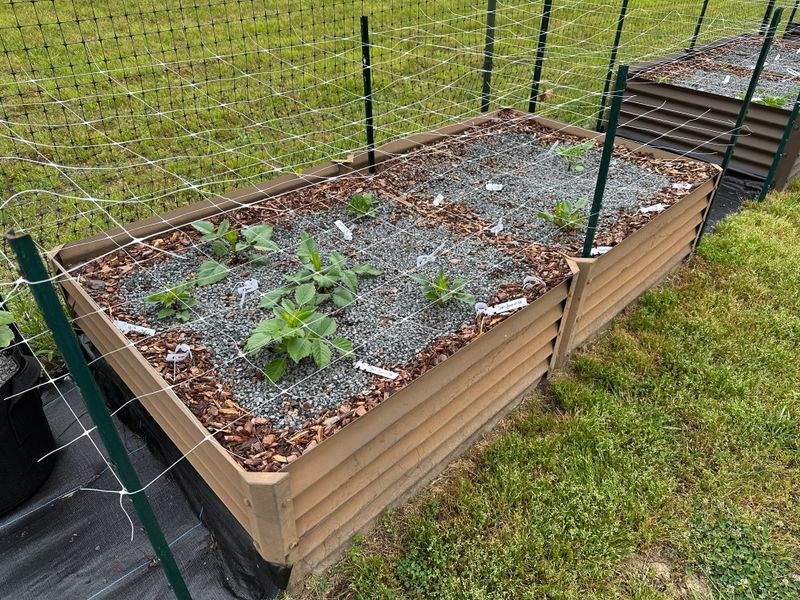
For a small bed, Iowa State’s trial setup is simple. String monofilament rated 30-pound-test or stronger tightly, 36 inches above the ground and at least 2 feet beyond the bed’s edge.
Check it often for breaks, since a sagging or snapped line does nothing.
Other agencies suggest something different. The Washington Department of Fish & Wildlife describes 100-pound-test line on sturdy 5-foot stakes with 12-inch spacing, mainly for small enclosures.
Neither is a tested, universal design, and no strand count is known to stop deer. Pick one approach, use solid stakes, keep the tension firm, and watch the results.
Keep low-visibility line away from traffic
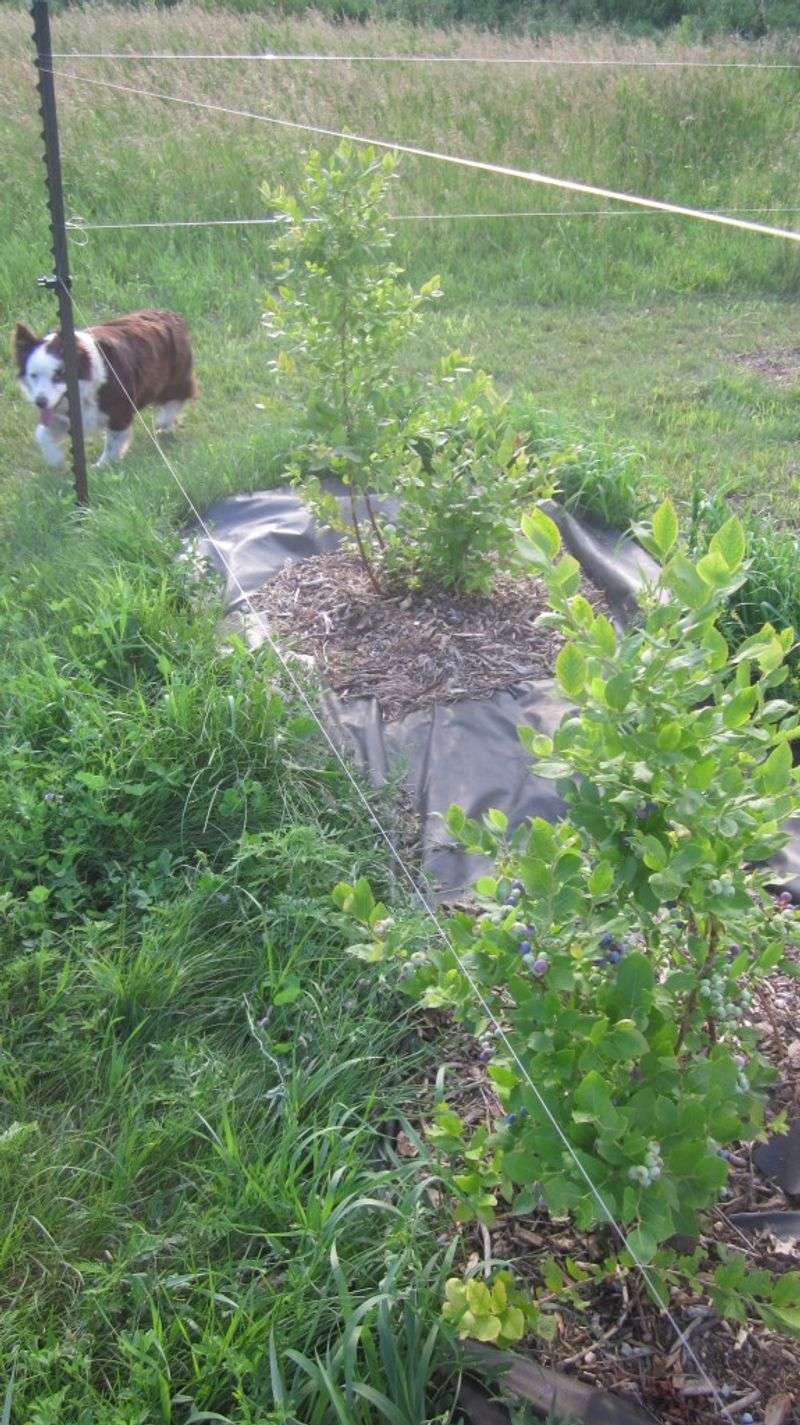
The very thing that makes fishing line appealing, being hard to see, is also its biggest hazard. A line you cannot spot can catch a jogger, a child, or a dog just as easily as a deer.
Keep it off walkways, gate approaches, and any open stretch where people or pets run. Walk the line each day, since breaks and loose ends are tough to see.
Tie on nothing that could snag, and pick up every scrap of broken line.
Oklahoma State advises that fences that are hard for wildlife to see can cause problems, and it suggests visible markers on conventional fences. That advice covers livestock fencing, not garden trials like this one.
Take the caution seriously anyway, and take the line down when the bed no longer needs protection.
Choose sturdier fencing if browsing continues
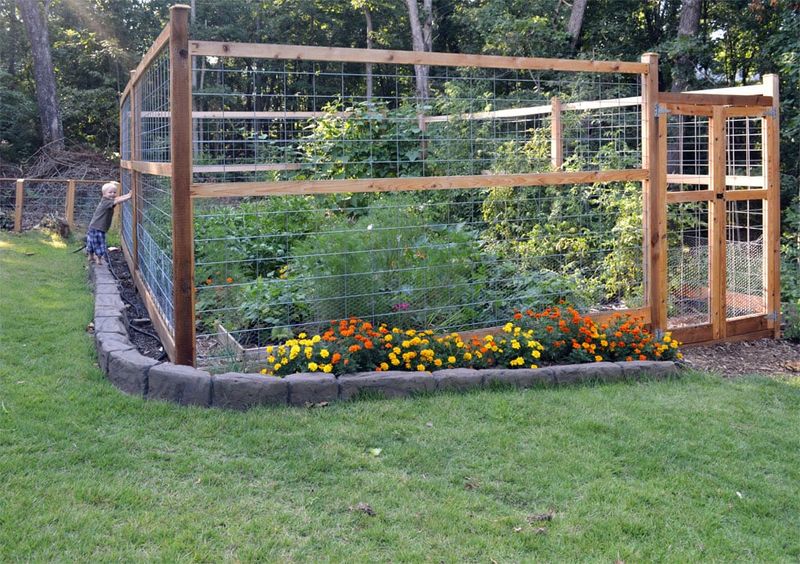
If deer keep reaching the bed, or sightings happen in daylight, move to real fencing. Conventional fences exclude deer more dependably, and the advice varies by purpose.
Iowa State advises 8 feet for an entire garden, with a 50-inch exception for a very small enclosure under 8 by 16 feet.
UF/IFAS recommends at least 6 feet for landscape fencing. Florida’s wildlife agency gives a lower figure of 4 to 4½ feet for landscaping, but that is not a guaranteed vegetable-bed standard.
Match the barrier to the pressure you actually see. Fishing line has a small job, and the fence should handle the rest.