
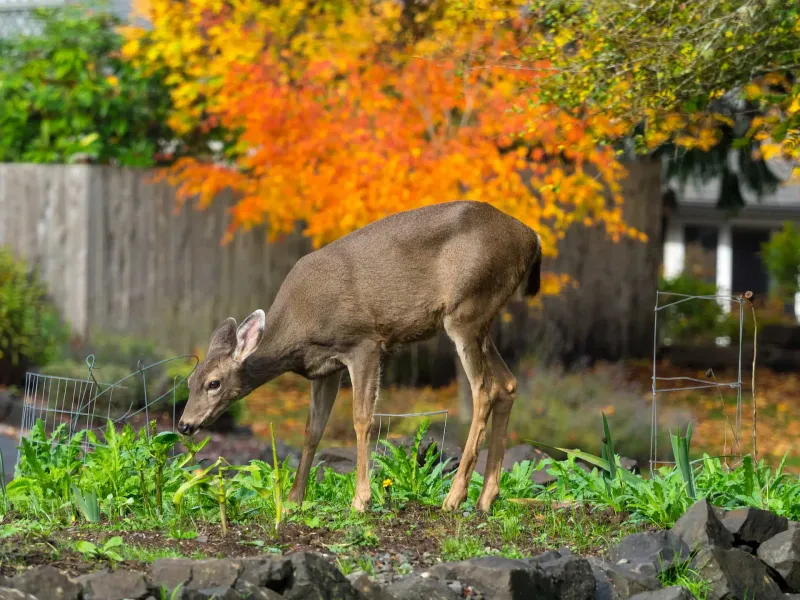
You plant fresh pansies and rows of kale in fall, then wake up to ragged stems and missing leaves. Deer are often the cause, but the timing is not as simple as a single week on the calendar.
Local food, weather, and habitat all play a part. Here is how to protect cool-season beds before the damage gets serious, with separate advice for flowers and food.
Acorns do not create a reliable November countdown
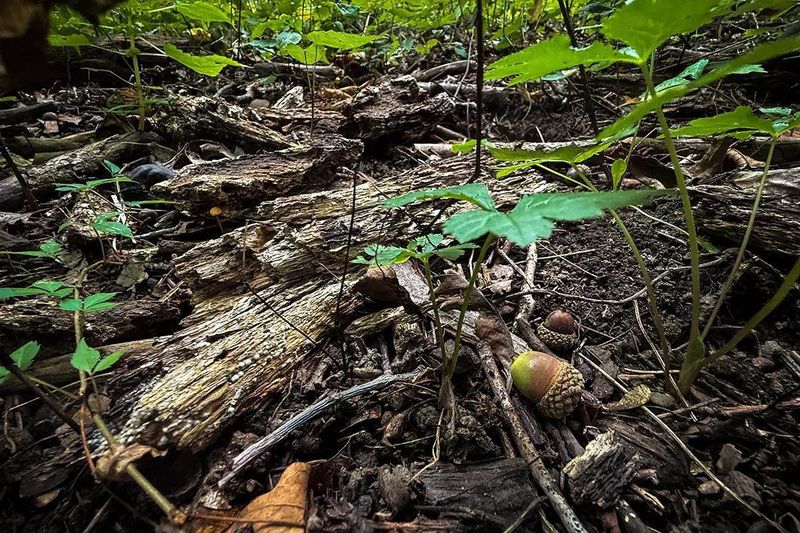
Browsing often does pick up in fall, and many gardeners notice it. Still, no source points to a certain week when acorns run out and deer head for garden beds.
Deer eat acorns through fall and winter when they are available, and University of Florida IFAS Extension describes oaks as a valuable wildlife food.
Acorn crops swing from year to year and from place to place. Deer diets shift with whatever food is nearby, so a heavy oak crop in one neighborhood can look very different from a poor one a few miles away.
Timing of food stress varies too. NC State Extension notes that in the Southeast the tough stretch can come in late summer, before acorns begin dropping.
November will not look the same in Texas, Florida, and the Carolinas.
The practical move is simple. Protect new plantings before you see substantial damage, instead of waiting for a predicted trigger date.
Pansies and kale call for separate protection plans

Pansies and kale share a bed, but they are not the same kind of plant. Pansies are ornamentals, while kale ends up on the dinner table.
That difference changes which products are suitable.
Oklahoma State Extension’s deer damage guide lists pansies among frequently damaged annual flowers. It also lists several brassicas, including broccoli and cabbage, as severely damaged garden plants.
Kale is not named in that guide as a preferred food. Since it is a close relative of those brassicas, it is reasonable to treat kale as potentially vulnerable, but that is an educated comparison rather than a proven finding.
No plant is deer-proof either, because preferences shift with local conditions.
So plan two tracks. Pansies can be a place to try a home spray, while kale needs a more careful, label-based approach, covered in the next sections.
Try egg spray only as a limited option for pansies
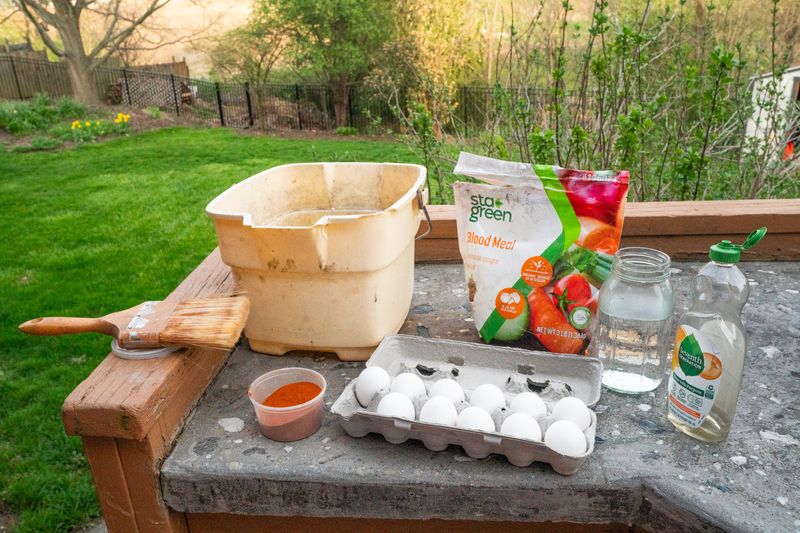
If you want a low-cost trial for ornamental pansies, University of Minnesota Extension describes an egg-based spray. Blend three whole eggs with some water, then add water to make one gallon.
Strain it so the sprayer does not clog, and coat new growth thoroughly.
Plan to reapply every two weeks or after rain. Skipping that schedule is the quickest way to lose whatever protection the spray offers.
Keep expectations modest. In the comparison Minnesota describes, the egg spray did well in summer when applied diligently.
That is not the same as a proven winter fix, and it does not promise an untouched bed.
Stick to the plain recipe. The same guidance says added ingredients can mask the egg odor and reduce effectiveness.
And keep this mixture off kale or any food crop before harvest.
Check the label before using a repellent on kale
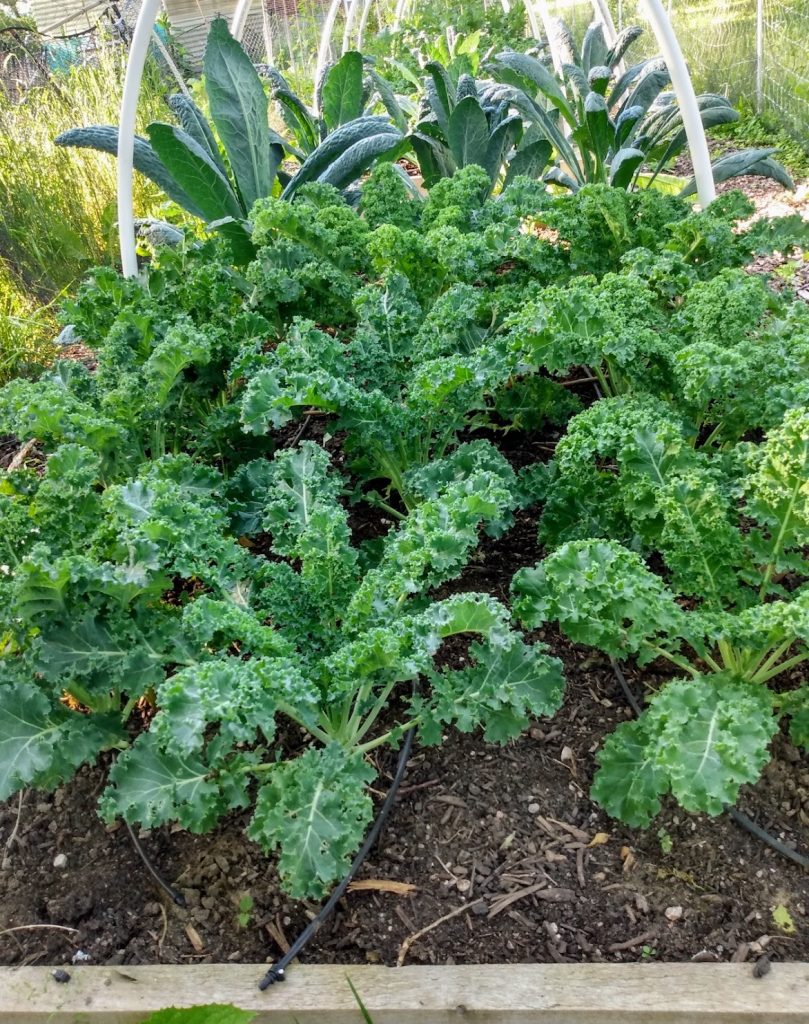
Kale is food, so the rules change. Directions for edible crops differ by product and active ingredient, and University of Maryland Extension notes that some soap-based repellents are permitted on edible crops, while the putrescent-egg products it discusses are not labeled for food.
Before you buy or spray, read the current label. Look for two things: whether kale or leafy vegetables are listed as an allowed site, and whether there is a preharvest interval or other harvest restriction.
Labels get updated, so an old bottle may not match what you remember.
The EPA states that pesticide products must be used according to their labels. If the label does not permit use on kale, skip that product for the kale.
The pansy egg recipe is not a stand-in here. Treat it as an ornamental-only option.
Expect repellent protection to vary
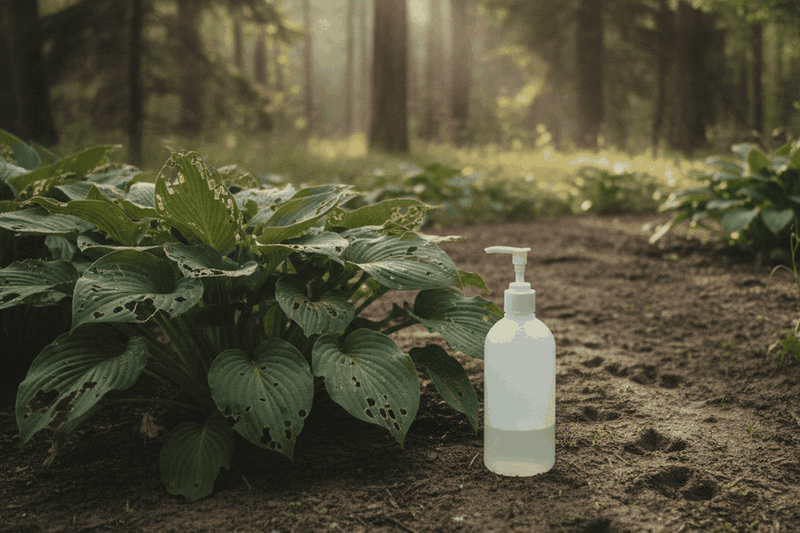
A repellent can lower the odds of browsing, but it cannot guarantee an untouched bed. Extension guidance, including Maryland’s deer management overview, describes repellents as temporary and less reliable when deer pressure is intense.
Several things wear protection down. Rain can wash product off, and new growth comes up untreated.
Deer that visit often may get used to a smell, and when other food is scarce, they may eat treated plants anyway.
Check the bed every few days, especially after storms and after a flush of fresh leaves. Fresh nibbling on tender tips is a sign to reapply sooner, following the schedule printed on your product.
Oklahoma State’s fact sheet also stresses that no single method works everywhere. Think of sprays as risk reducers, not shields.
Fence the vegetable bed for stronger protection
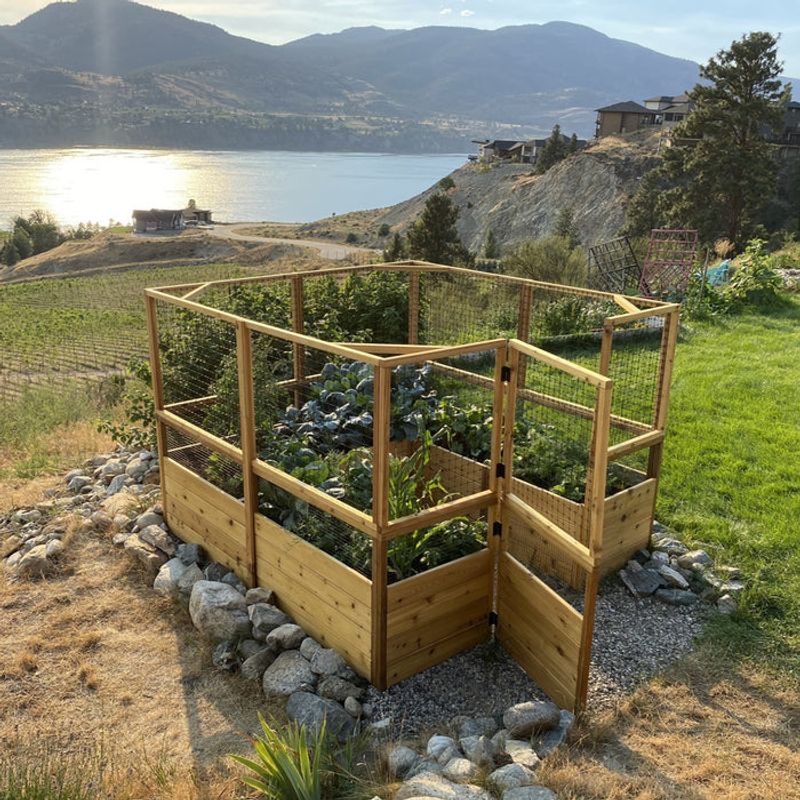
If you can check the bed often and reapply on schedule, a labeled repellent may be enough for light pressure. When you need dependable protection for vegetables, fencing is the stronger choice.
UC IPM identifies properly built, maintained fencing as the most effective way to prevent deer damage.
Fencing takes planning, money, and upkeep. Gaps, sagging sections, and damage after storms give deer a way in, so it is not effortless and may not suit every yard.
Here is the simple split. Try the egg spray on pansies as a limited experiment, and treat kale protection as dependent on a product label that allows that use.
Neither one promises that deer will leave the bed alone.
A fence keeps working on the days you forget to spray.