
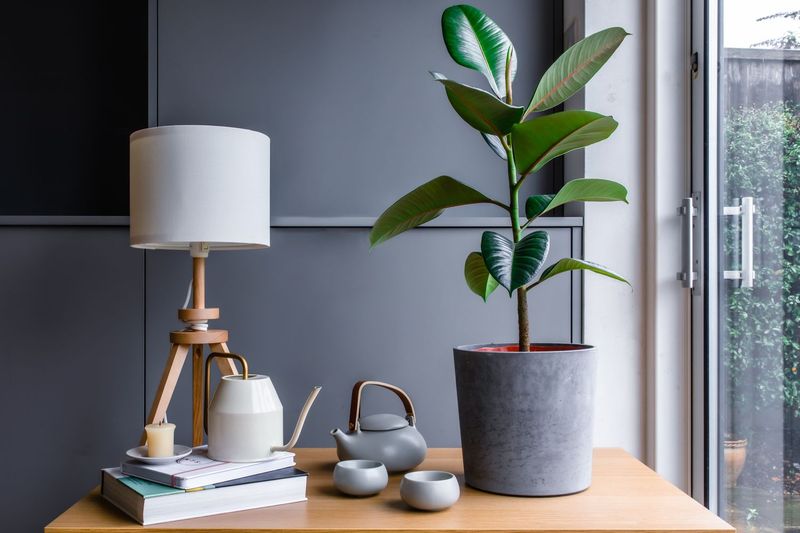
Rubber plants have big, leathery leaves that are supposed to look shiny. When that glow fades, many gardeners worry the plant is struggling.
Sometimes the fix is as simple as a damp cloth. Here is how to check, what to do, and what to look for if the leaves still look tired.
Dust is the easiest cause to check
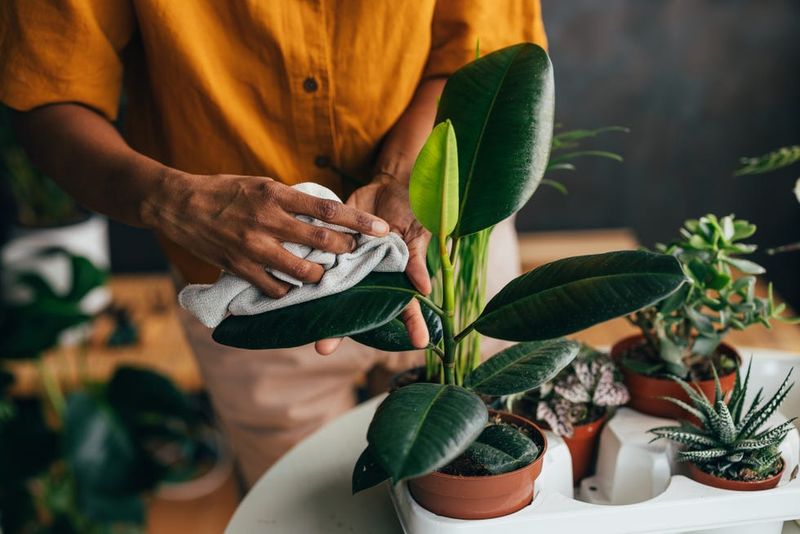
Rubber plant leaves are naturally glossy, which is a big reason people love them. A fine film of household dust can hide that sheen and leave the foliage looking flat and gray-green.
Run a finger across a leaf, and if it comes away dusty, you have found something easy to fix.
Dust is a handy first check, not a diagnosis. Mississippi State Extension notes that dust on houseplant leaves can block light and interfere with normal leaf functions, so cleaning is worth doing for the plant as well as for looks.
Timing can be misleading. You may notice dull leaves during winter simply because the plant sits indoors and gets looked at up close.
That does not make winter the cause. Clemson Extension, in its rubber plant guidance, recommends washing the leaves when they get dusty, and NC State Extension likewise covers leaf washing for container plants.
How to wipe each leaf
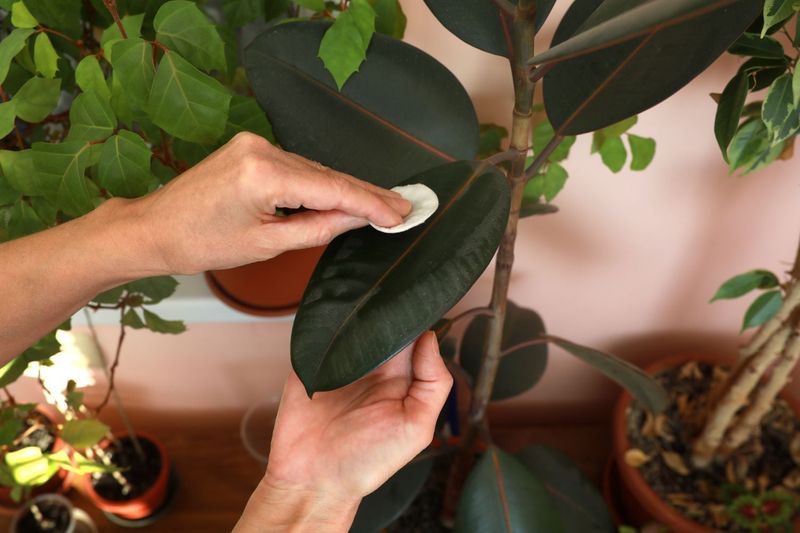
Grab a soft cloth or sponge and dampen it with plain water. Cup one hand under the leaf so it is supported, then wipe the top with the other hand.
Flip to the underside and wipe that too, since dust settles on both sides.
Work slowly and use light pressure. The leaves are thick, but a big one can crack or tear if you bend it or press hard.
Rinse the cloth when it gets gray so you are not just pushing dust around.
Clean as dust builds up rather than waiting for a date. Clemson Extension says to wash rubber plant leaves when they get dusty.
If you like a reference point, Mississippi State’s general houseplant advice is about every two to three months, but treat that as flexible. A plant near a busy doorway or a ceiling fan may need it more often than one in a quiet corner.
A freshly wiped leaf often looks shinier because its surface is clean. That improves appearance, though it does not repair damaged leaves.
When a gentle rinse may help
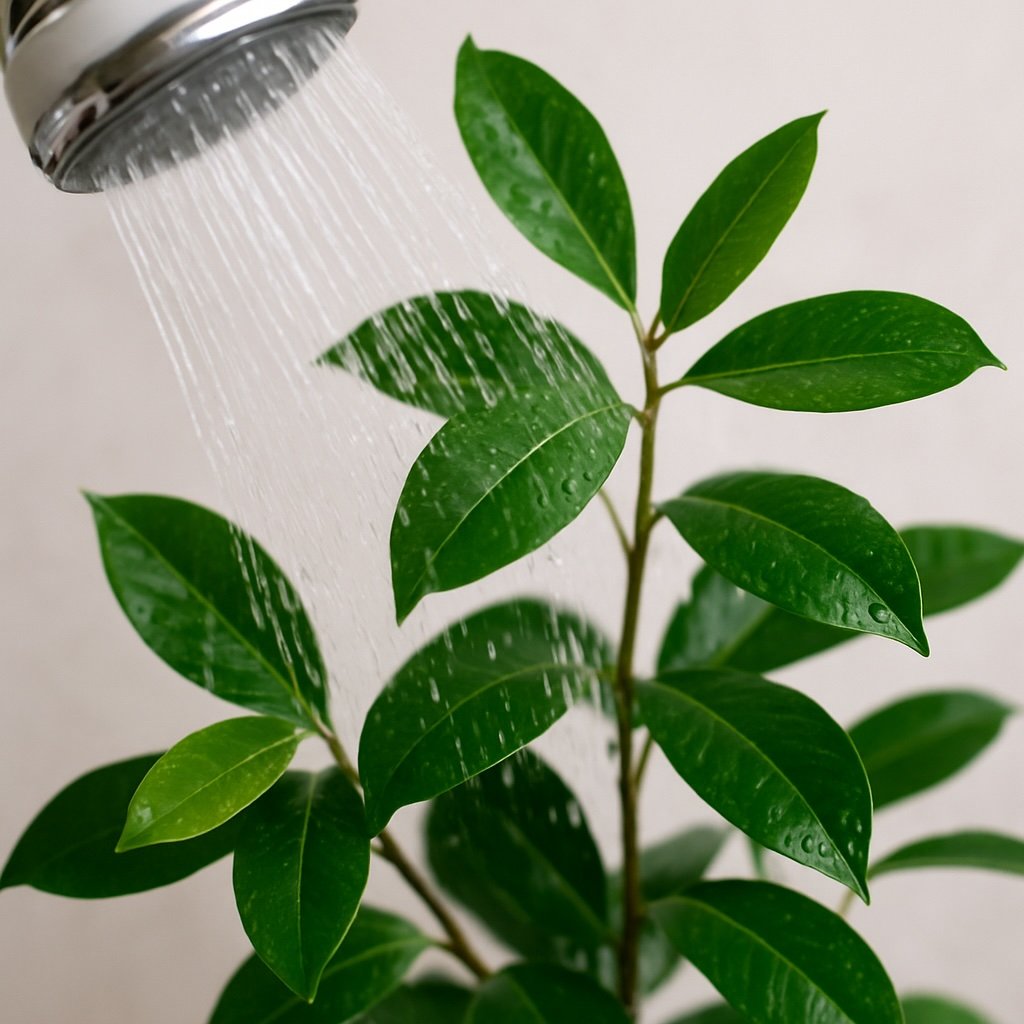
A tall plant with dozens of leaves can take forever to wipe by hand. In that case, a gentle shower or rinse may be the easier route.
Move the plant to a sink, tub, or shower and let lukewarm water run over the foliage with low pressure.
Aim for tepid water, not hot and not cold. NC State Extension gives a range of 60°F to 75°F for washing houseplant leaves, which feels comfortably cool to mildly warm on your hand.
Afterward, let the foliage drip and dry in a bright spot. Do not leave the pot sitting in runoff, because standing water around the roots is a problem.
Tip out the saucer or drain the pot fully before it goes back in place. General houseplant guidance from Oklahoma State Extension also warns against soggy soil.
If the plant is too large to move, skip the rinse and wipe the leaves in sections instead.
Why leaf-shine products are not the answer
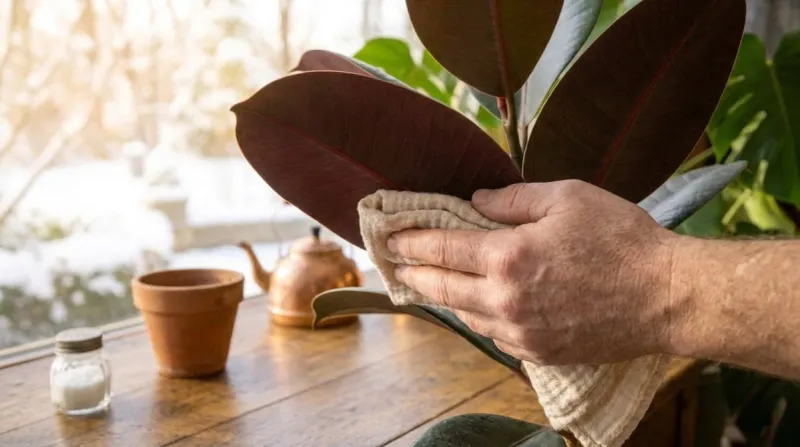
Store shelves offer sprays that promise instant gloss, and they look tempting. But for routine dust removal, plain water does the job.
A damp cloth lifts the dust away without adding anything to the leaf.
NC State Extension specifically warns that leaf-shine products can attract dust, clog stomata, and slow growth. Stomata are the tiny pores leaves use to take in and release gases.
Those cautions apply to leaf-shine products, and it would be a stretch to apply them to every oil or polish.
Think of it this way: a dusty leaf needs cleaning, not coating. A product that leaves a tacky film may hold on to new dust sooner, which sends you right back to wiping.
If you want a glossy look, start with a clean surface. Water, a soft cloth, and a few minutes are usually enough to show whether dust was the issue.
Keep winter care separate from leaf cleaning
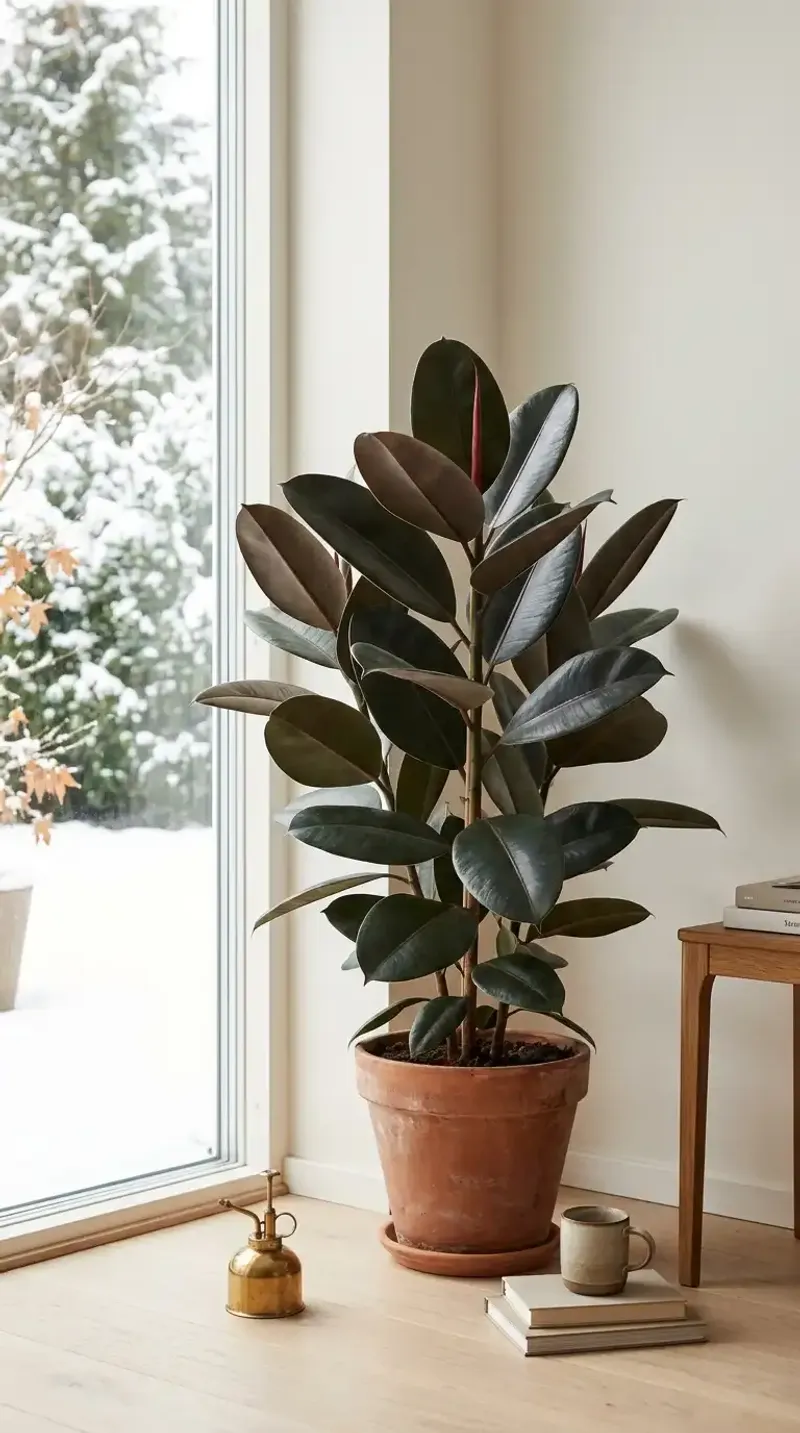
Winter care is worth a look, but it is a separate job from the gloss fix. Cold months simply change the conditions your plant lives in, especially in Southern homes where the heat kicks on for a few chilly weeks.
Give the plant suitable light, such as a spot near a bright window. Keep it away from cold drafts and heating vents, which can stress the leaves.
Clemson Extension covers light and placement in its rubber plant guide.
Check the soil before you water. Push a finger into the top inch or two, and water only if it feels dry.
Dull leaves are never a reason to add water. Colorado State Extension and University of Florida IFAS both warn against soggy soil and overwatering, which can lead to root trouble and leaf loss.
Many people also find that plants need less water when growth slows, so let the soil, not the calendar, decide.
If cleaning does not change the leaves
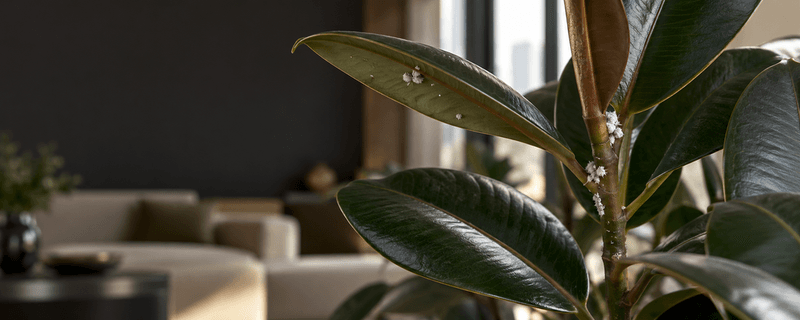
Sometimes a clean leaf still looks dull. That is a clue that something besides dust may be going on.
Cleaning can improve a dusty surface, but it cannot diagnose or repair every underlying problem, and damaged leaves stay damaged.
Take a closer look with good light. Sticky residue, small bumps, or cottony patches on stems and leaf undersides may be pest clues, as noted in the NC State Plant Toolbox entry for Ficus elastica.
They are clues only, not proof of a particular pest, so avoid jumping to a conclusion.
Resist the urge to reach for a leaf-shine spray or extra water. Neither one solves an unknown problem.
Instead, review light, drafts, and soil moisture, then keep watching the plant for a few weeks.
If the signs persist or spread, a local county Extension office can help you identify what you are seeing. A clean leaf at least makes the real clues easier to spot.