
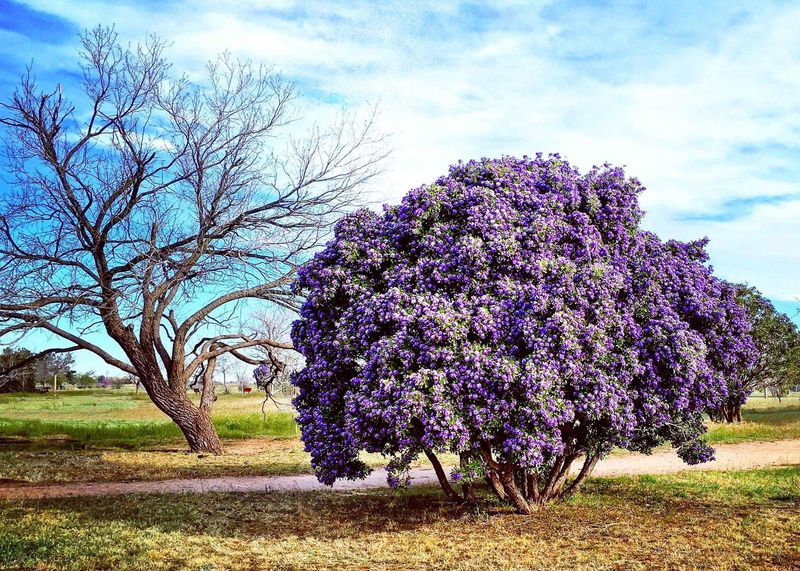
Few spring sights in Central Texas beat a Texas mountain laurel loaded with purple flower clusters that smell like grape drink. Many gardeners want one in the yard, and fall is a popular time to plant.
Cooler weather gives a new tree a gentler start, but a spring show is never a sure thing. Here is how to pick a spot, plant it well, and give it the best shot at blooming.
Fall planting may set up a spring bloom—but cannot promise one
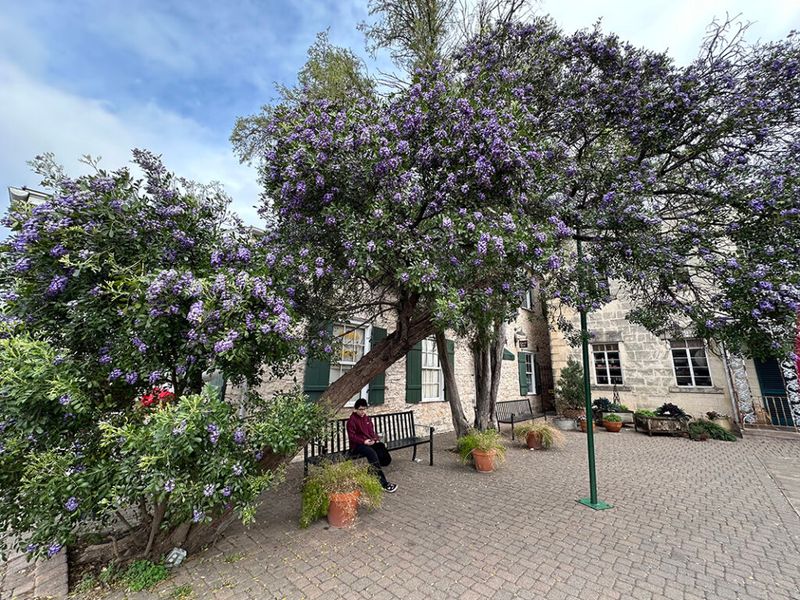
Autumn is a sensible time to put a tree or shrub in the ground around Central Texas. Cooler air and warmer soil let roots spread before the heat arrives.
Texas A&M Forest Service planting guidance supports planting during the cool season, and a Texas A&M AgriLife newsletter makes the same case with its Fall Is for Planting message.
Here is the catch behind the headline. Planting time cannot create flowers.
Texas mountain laurel sets its flower buds the year before it blooms, so a plant has to be mature enough to already carry viable buds when you bring it home. A small, young nursery plant may simply put its energy into roots and leaves for a season or two.
If you want a shot at flowers next spring, look for a larger, well-grown plant and check it for flower buds or clusters from last year’s growth, if the nursery has one. Even then, nothing is certain.
San Antonio Water System garden advice lists freezes, shade, too much water, and insects among the things that can reduce flowering.
There is also no single perfect date. Local weather, soil drainage, and the condition of the plant all matter more than a calendar square.
Aim for a stretch of mild days after the worst summer heat has passed and well before a hard freeze is likely, then judge by your own yard.
Choose a sunny, well-drained place with room to grow
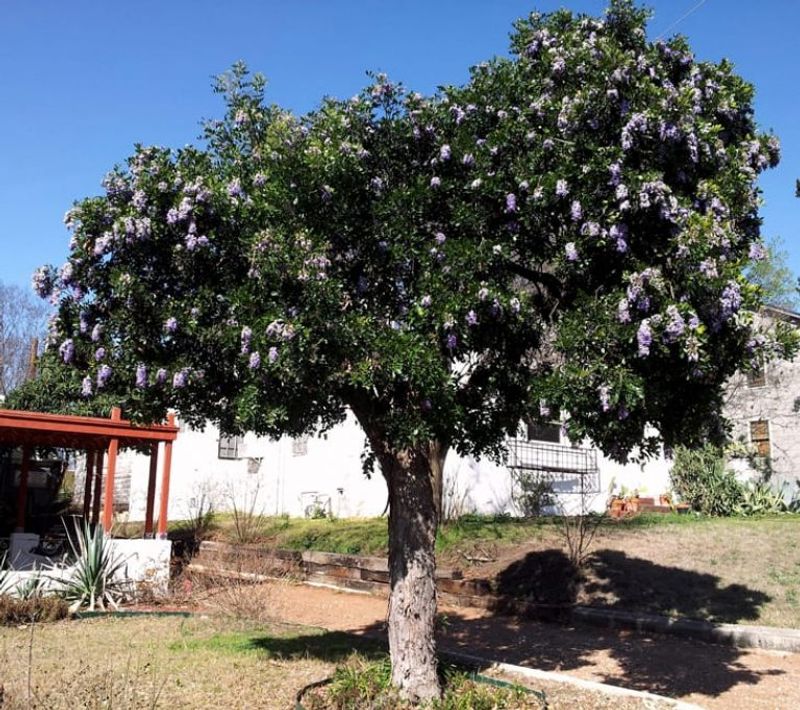
Texas mountain laurel, listed as Sophora secundiflora and also called Dermatophyllum secundiflorum, is a Texas-native evergreen shrub or small tree. It is not the Appalachian mountain laurel (Kalmia latifolia), which wants very different conditions, so skip any care tips written for that plant.
Plan for slow growth. The Texas A&M Texas Tree Selector lists it as drought tolerant and fine in alkaline soils, and mature plants often reach about 10 to 20 feet tall.
That means leaving room for its natural rounded form instead of squeezing it against a wall or under a roofline.
It is native to limestone areas of Central, South, and West Texas, according to Texas A&M Forest Service tree profiles. That history explains why it likes drainage.
A raised bed, a gentle slope, or a spot where rain runs off beats a low corner where water pools.
Sun is the other key. Texas A&M range plant information backs its place in sunny, rocky settings, and shade can cut down on flowers.
A sunny or lightly shaded site works best.
Drought tolerance belongs to established plants. It does not suit every site, and it does not mean a new transplant can skip water.
Set the root ball at grade and check drainage first
Start with a quick drainage test. Dig a hole, fill it with water, and see how long it takes to empty.
Texas A&M Forest Service advises choosing a different spot if water is still standing after 24 hours.
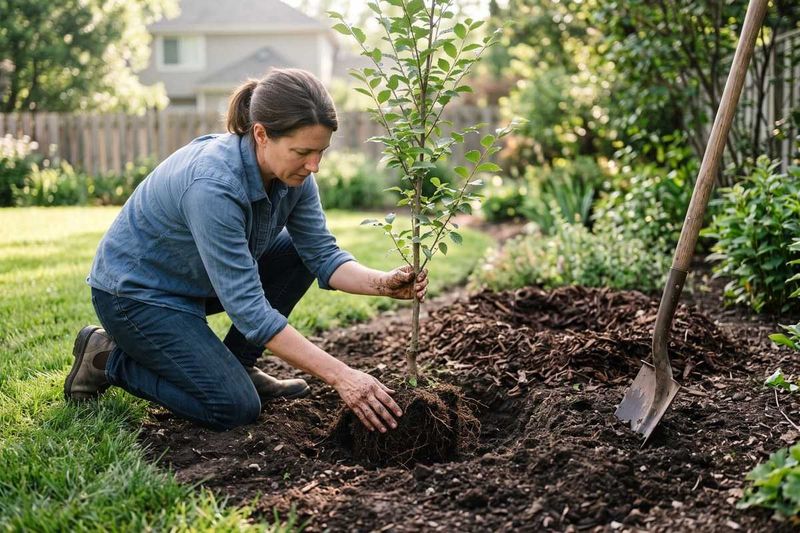
Once the site passes, dig the hole at least twice as wide as the root ball, but no deeper. A wide hole gives roots loose soil to grow into, while a deep hole lets the plant sink and stay wet around the base.
Slide the plant out of its container and loosen any roots circling the outside of the ball. Set it in the hole so the root collar, the spot where the trunk widens into roots, sits at or slightly above the surrounding ground.
On heavy clay, a slightly high setting is a smart safeguard.
Backfill with the same soil you dug out. Skip the bags of rich amendments, since the roots will need to move into the native soil sooner or later.
Firm it lightly with your hands as you go, not your boots.
Finish by watering slowly to settle the soil around the roots. If the ball sinks, add soil and bring it back to grade.
Ongoing watering comes next.
Water through establishment without keeping the soil soggy
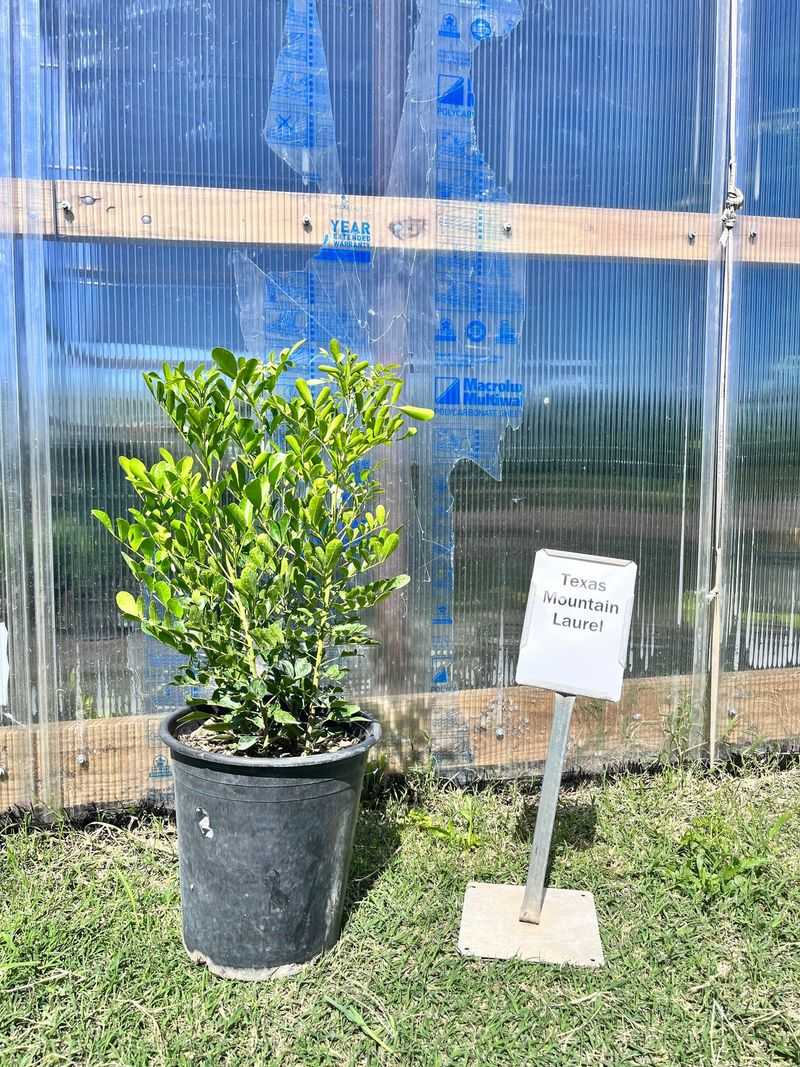
A native plant can still need a helping hand at the start. Drought tolerance describes what a mature tree can handle, not what a fresh transplant can.
The Texas Tree Selector from Texas A&M AgriLife notes the drought tolerance of the species, which applies once roots are settled.
Water newly planted trees for at least the first two years, as Texas A&M Forest Service recommends, while taking care not to overwater. There is no magic schedule.
Rain, temperature, and soil type all change what a plant needs.
Check the soil instead of the calendar. Poke a finger a few inches down near the root ball.
If it is dry, water slowly and deeply. If it is damp, wait.
After a soaking fall rain, you may not need the hose at all. Constant wet feet are a bigger risk for this plant than a missed watering in cool weather.
Spread 2 to 3 inches of mulch over the planting area to hold moisture and moderate soil temperature. Keep it pulled back from the trunk so bark stays dry.
Hold off on fertilizer during the first growing season. Let roots do the early work.
Protect the buds behind spring’s grape-scented flowers
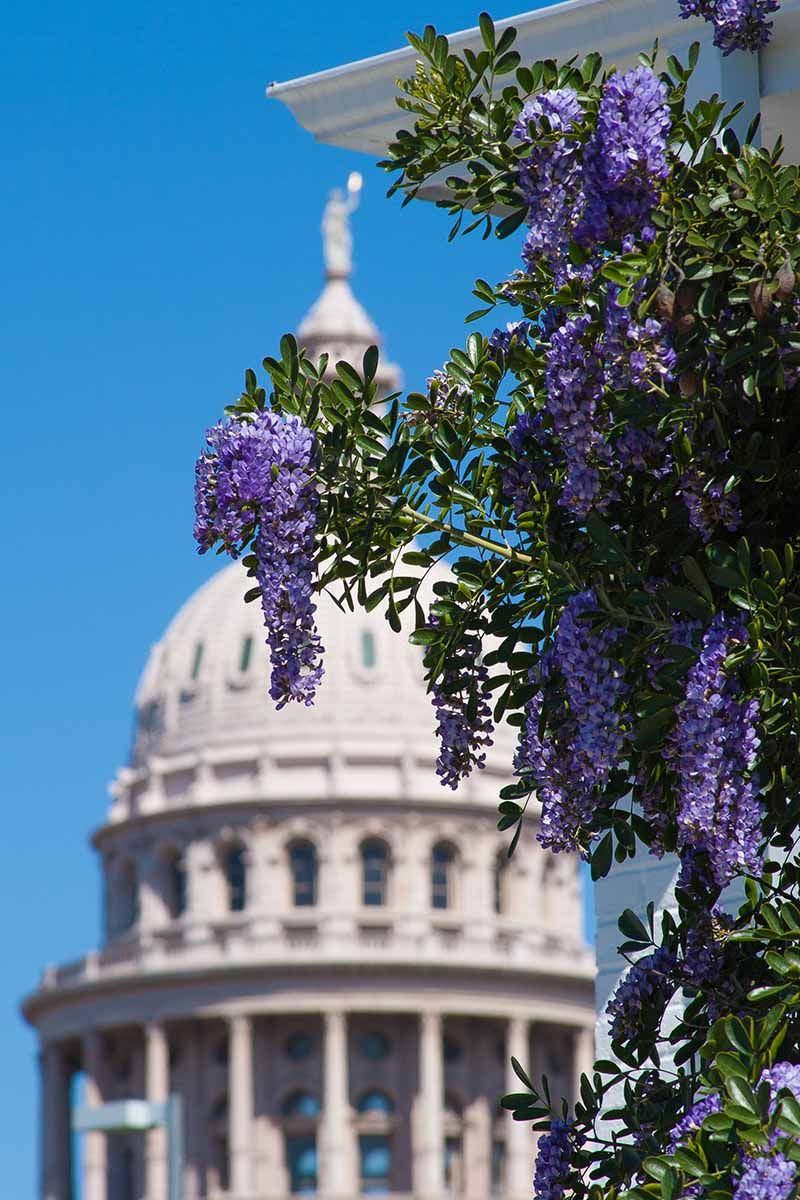
When it does bloom, the payoff is memorable. Wildflowers of Texas from UT Austin lists February, March, and April as flowering months, and Texas A&M Forest Service describes a scent like grape drink.
Those flowers come from buds formed the year before. A newly planted tree may skip next spring unless it was mature enough and already carried viable buds when you planted it.
Do not take a quiet first spring as a sign you did something wrong.
Pruning is the easiest way to remove a bloom by accident. Texas A&M Earth-Kind guidance points toward minimal pruning at planting, and with this plant, routine trimming in summer, fall, or winter can cut off next spring’s buds.
If you must remove a dead or damaged branch, take only that.
Even a budded plant can miss a year. San Antonio Water System garden advice names freezes, shade, too much water, and insects as reasons for fewer flowers.
A late cold snap during bud time can wipe out a season.
Your best moves are simple: sun, good drainage, restrained watering once established, and a pair of pruners left in the shed.
Keep the poisonous seeds out of reach
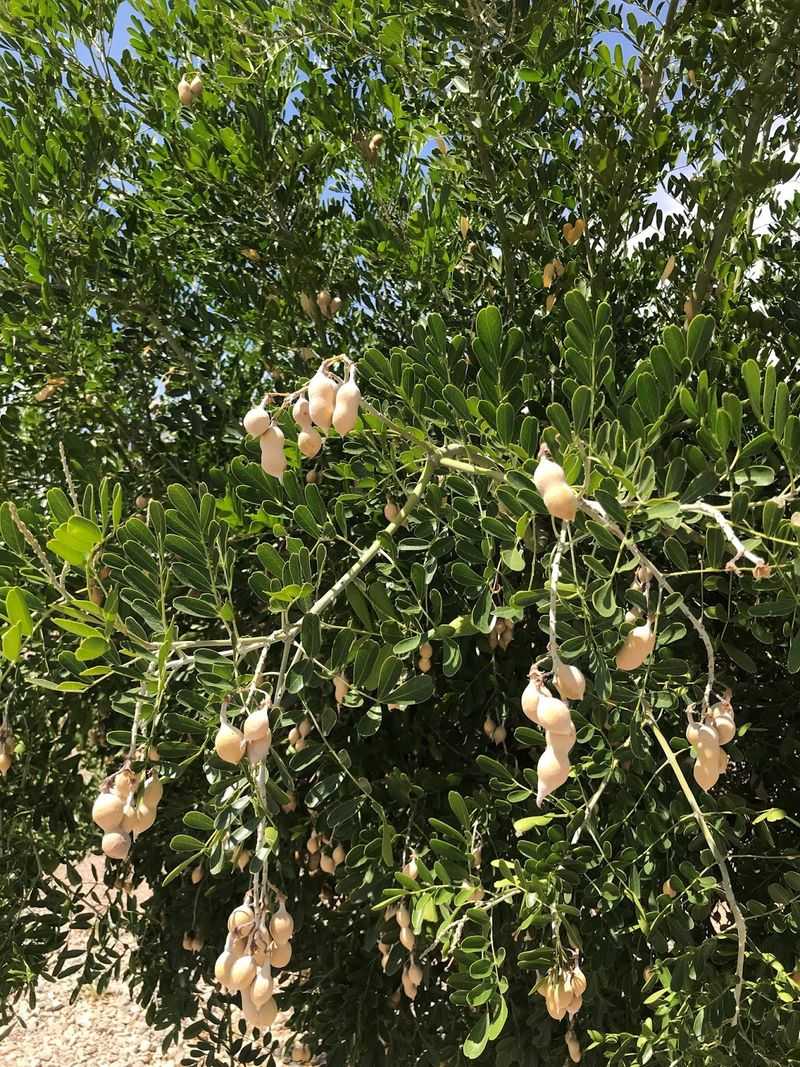
After the flowers fade, fuzzy gray seed pods can form, holding hard, bright red seeds. They look like beads, which is exactly why they deserve a warning.
Texas A&M Forest Service identifies the seeds as poisonous to humans.
Texas A&M AgriLife Extension also documents toxicity concerns for livestock, particularly from chewed or ground seeds. Treat the seeds as something to keep away from children and pets, and fence or plant accordingly if animals roam your property.
A few easy habits keep the risk low. Rake up and bin fallen pods if little ones play nearby.
Do not use the seeds as snacks, craft beads, or jewelry. Wash your hands after handling them.
With that sensible caution, this remains a lovely native choice for a sunny Central Texas yard. Plant it where it can grow in peace, and let the spring flowers surprise you when they are ready.