
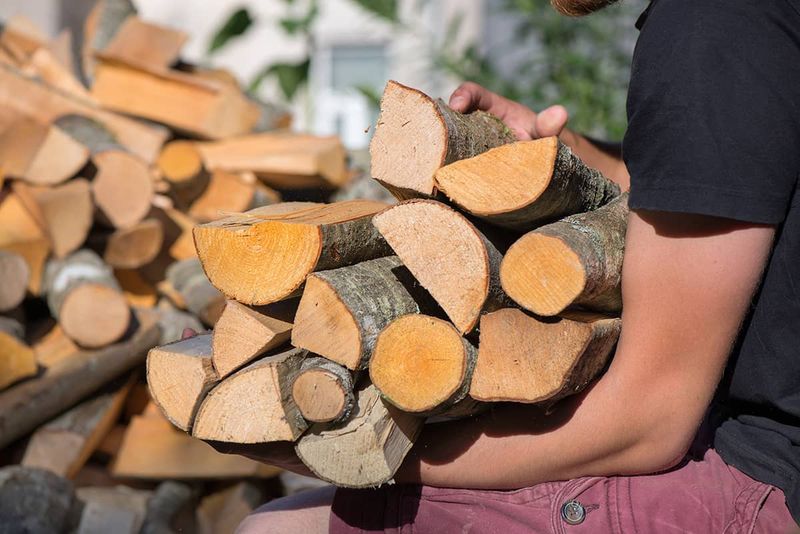
Many California homeowners stack firewood right beside the house because it is handy on a chilly night. That tidy-looking pile can also be a cozy hiding spot for rats and black widow spiders.
Where you put it, and how you stack it, makes a real difference. Here is how to store wood so it is easier to use, safer to handle, and less welcoming to pests.
A woodpile offers nearby shelter, not a proven route indoors
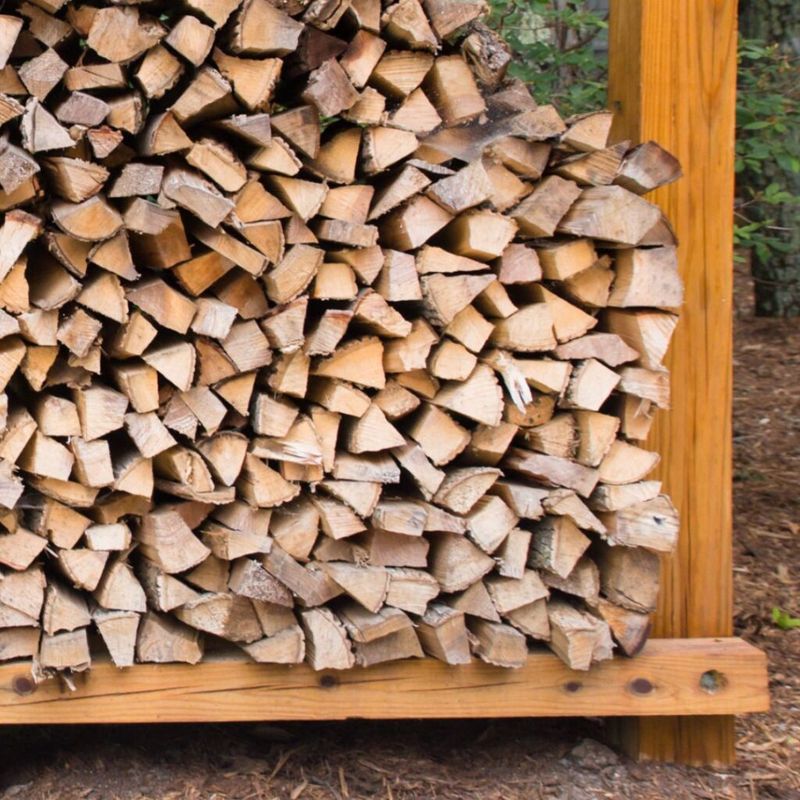
Picture a stack of oak logs leaning against the side of a house in the Central Valley or the Bay Area. To a rat or a spider, the gaps between those logs look like a cozy, protected spot.
UC IPM’s rat guidance lists woodpiles among the places where rat nests can turn up, and it treats a nest there as a sign that rats are around.
Widow spiders like quiet, undisturbed corners too. UC IPM’s widow spider page describes woodpiles as the kind of sheltered site where they may set up a web.
That does not mean every pile has spiders or rats. It means a pile can offer them a place to stay.
So what changes when the pile sits against your wall? It puts that possible hiding place right next to the structure.
Still, the sources do not show that a woodpile alone makes rats or black widows come indoors, and they do not say how much it raises the odds. Rats still need a way inside, and spiders usually stay outside.
Think of the pile as one piece of the puzzle. Moving it is a sensible, low-cost step, but it works best alongside a few other habits covered in the sections below, including how you handle logs, how you deal with rat food and entry points, and where California fire rules say wood should go.
Black widows generally stay outdoors, but inspect logs you bring inside
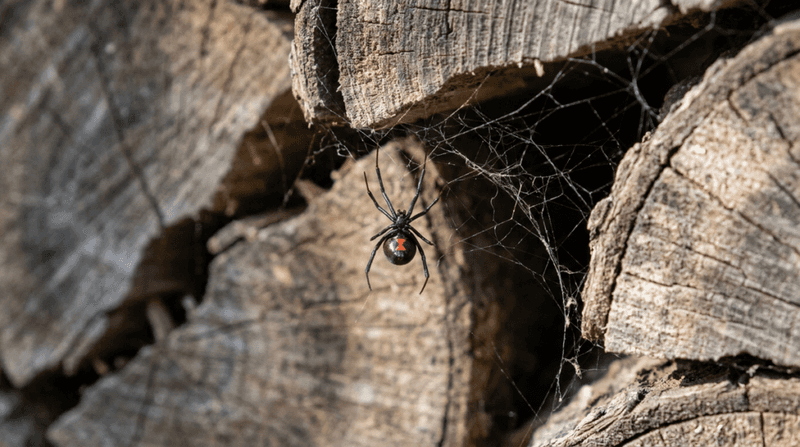
Black widows live across much of California, and a dry, shady gap in a woodpile suits them fine. According to UC IPM, these spiders generally stay outdoors and out of sight.
Most of the time, a widow in your yard is simply living its quiet life and not heading for your living room.
The one common way indoors is by hitchhiking. A spider can ride inside on a log you carry to the fireplace.
That is why a quick look at each piece of wood before it crosses the threshold is worth the few seconds it takes.
Wear gloves whenever you pick up firewood, as UC IPM advises. Skip bare hands, and do not reach blindly into the back of a stack that has sat untouched for months.
Pull logs from the front, give each one a glance and a gentle shake, and look for the messy, irregular webbing widows build.
Keep the risk in proportion. UC IPM’s general spider page describes bites as rare, even in places where spiders are common.
Not every pile hides a widow, and you do not need to fear your woodshed. Good habits are enough.
Also know that widows cannot realistically be wiped out of a yard, so the goal is fewer surprises, not zero spiders.
Rats need access to the house as well as shelter in the yard
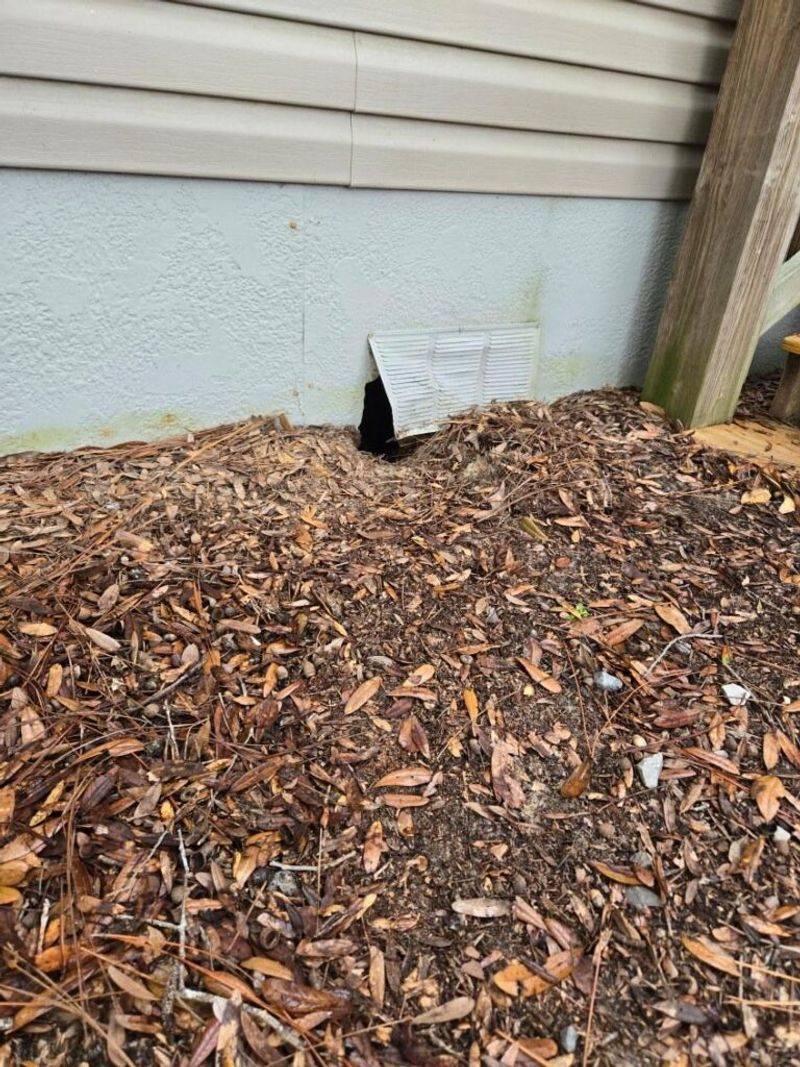
A rat that nests in a pile outside is still outside. To get into a building, it needs an opening, and rats can squeeze through surprisingly small ones.
UC IPM advises sealing any hole larger than one-quarter inch and keeping doors, windows, and screens tight.
A woodpile may be one part of a rat-friendly yard, but it is rarely the whole story. Rats look for food, water, and cover.
Pet food left out overnight, fallen fruit from citrus and persimmon trees, unsecured trash, bird seed spills, and leaky hose bibs all play a part. Dense vegetation and clutter give them extra hiding places.
Walk your property with that list in mind. Pick up fruit, store pet and bird food in sealed containers, use lidded bins, and trim thick shrubs and vines away from the walls.
Then check the house itself: gaps around pipes, foundation vents, garage door edges, and attic openings.
This is why relocating firewood cannot stand in for the rest of the work. UC IPM describes rat management as a mix of sanitation, exclusion, and population control.
Moving the stack removes one handy shelter, while cleanup and sealing take away the food and the doorway.
Move the stack away, and keep it tidy and raised
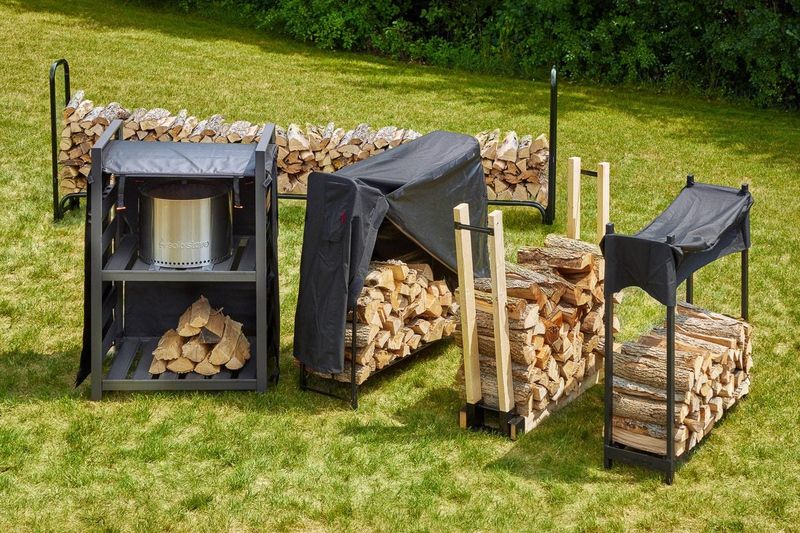
Start with three simple habits: set the stack away from the house, keep it orderly, and lift it off the ground. UC IPM says woodpiles should be moved away from the house.
A neat, raised stack leaves fewer dark pockets, and UC IPM’s rat advice notes that tidy, off-the-ground storage makes an area less suitable for rats and makes their presence easier to spot.
A rack, pallet, or a few concrete blocks under the first row works well. Keep the stack tight, use older wood first, and clear weeds and debris from around the base.
If you see droppings, gnawed bark, or shredded nesting material, you have learned something useful.
How far is far enough? Sources disagree.
The CDC suggests 100 feet or more when possible, while Cornell Cooperative Extension says 30 feet is adequate. UC IPM recommends moving the pile but gives no number.
Treat those figures as a range, not a magic cutoff. On a small suburban lot, 100 feet may be impossible, and no one has shown that a certain distance guarantees a pest-free house.
Move the wood as far as your lot and local rules reasonably allow, and then pair that with the other steps in this article.
California defensible-space guidance also affects placement
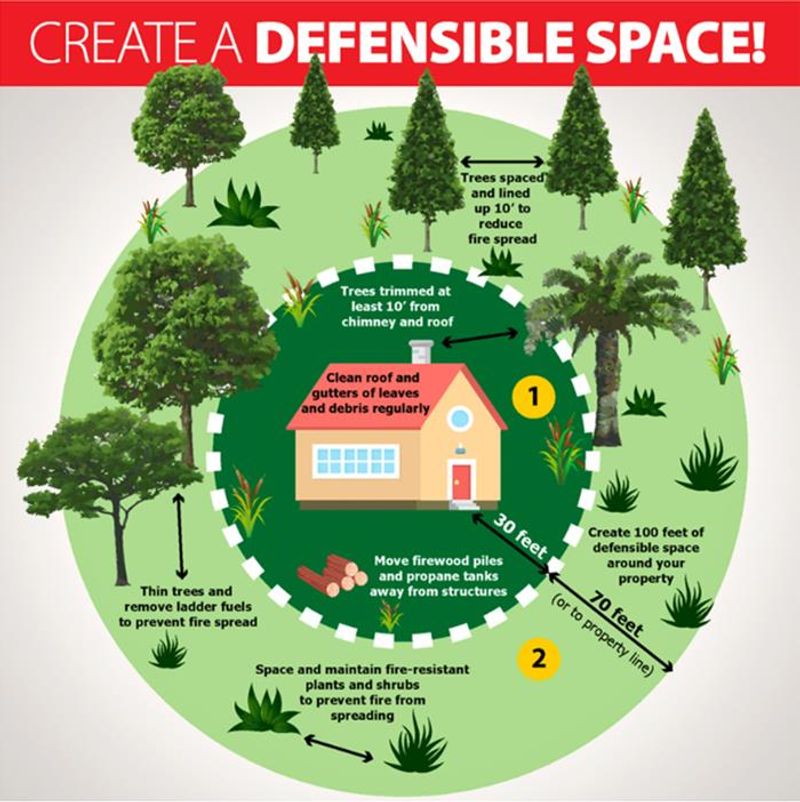
In California, pests are not the only reason to rethink where firewood sits. Wildfire safety matters too, and it follows its own rules.
CAL FIRE’s defensible space guidance says to relocate firewood and lumber to Zone 2, which starts beyond the first 30 feet from the home.
CAL FIRE also calls for 10 feet of clearance around exposed woodpiles. That means clearing dry grass, brush, and other fuel around the stack so a stray ember has less to catch.
Think of it as a bare-dirt or gravel apron around the pile.
Keep these two ideas separate. The 30-foot mark in the fire guidance is about slowing wildfire near your home.
It is not a pest-control distance, and it should not be mixed up with the CDC or Cornell numbers from the last section. They answer different questions, even if the answers sometimes overlap on a big lot.
Local rules can be stricter than the state advice. Your city, county, or fire protection district may have its own defensible-space standards, especially in hillside and wildland-edge neighborhoods.
Call your local fire department or check its website before you build a permanent woodshed. If you are on a smaller lot, ask what they accept for firewood placement.
Use a storage and prevention routine that fits your property
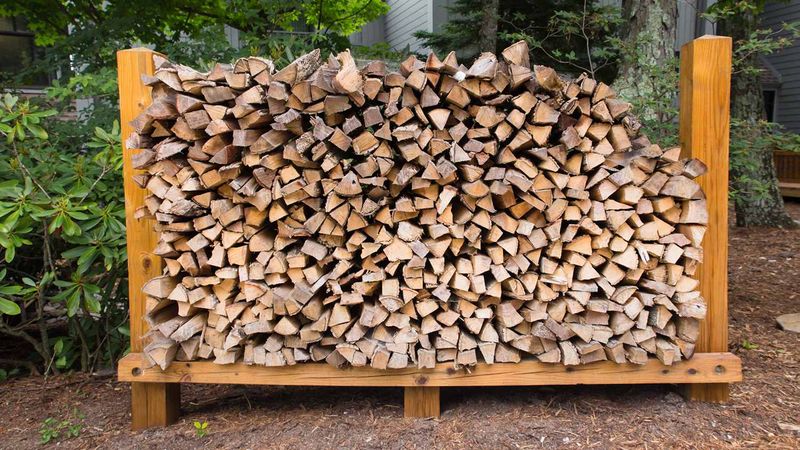
Here is a simple routine. Place the stack away from the house, following CAL FIRE and local rules.
Keep it tidy and raised. Wear gloves, check each log, and bring in only a few days’ worth at a time.
Then work on the rat side: remove food and extra shelter, and seal gaps over one-quarter inch, as UC IPM recommends. Since widow spiders cannot practically be eliminated, aim for fewer hiding spots, not perfection.
A woodpile is only a pile of wood until it sits where it should.