
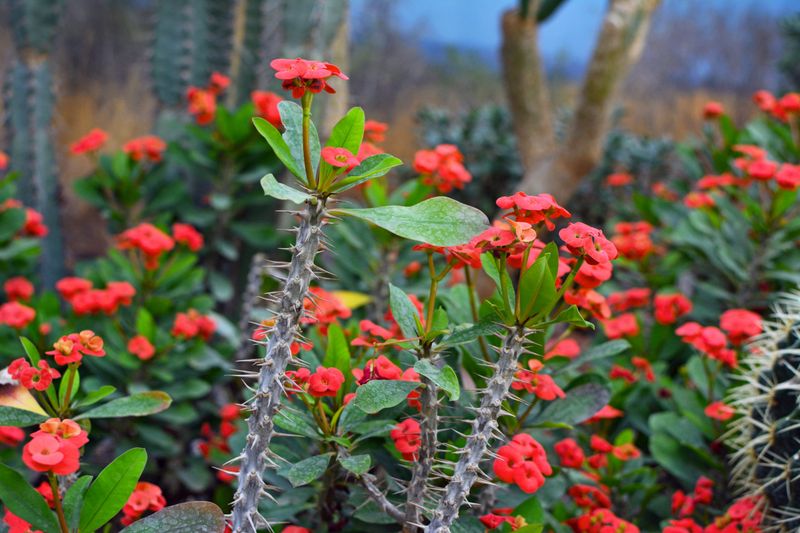
A crown of thorns can look perfect, with plenty of green leaves and sturdy stems, and still show no color at all. Many Florida gardeners assume a good-looking plant must be getting everything it needs.
Light is the first thing worth checking, and it is easy to miss. A few simple steps can help you figure out what your plant is telling you.
Healthy foliage does not guarantee enough light for flowers
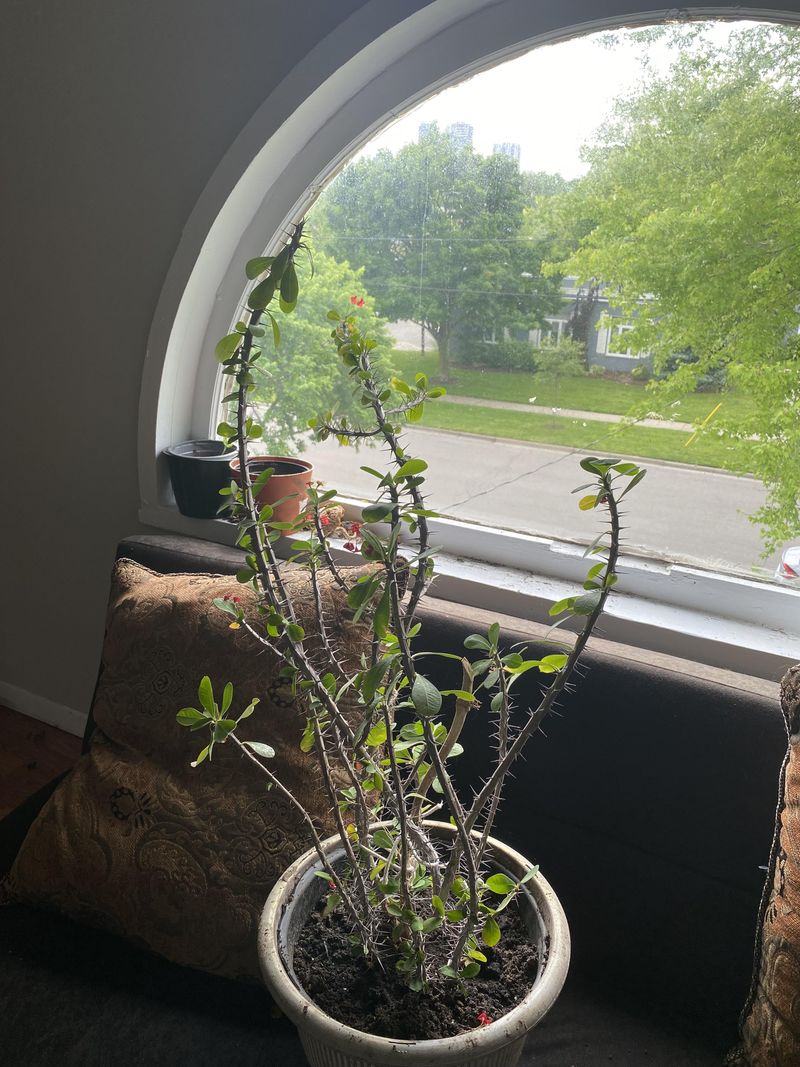
Green leaves and thick stems tell you a plant is alive and growing. They do not tell you the plant is getting enough light to bloom.
Crown of thorns is tough, and it can keep up a handsome look in conditions that are not bright enough to push out many flowers.
Light is the best-supported first thing to investigate. The New York Botanical Garden points to light as the most important factor for flowering.
University of Wisconsin Extension also notes that flowering can drop off when the plant grows in part shade.
Think of it like a tomato plant that grows tall and leafy but sets little fruit. The plant is not sick.
It simply is not getting the conditions that support the show you want.
Light is not a magic answer for every plant, though. Too much fertilizer and soil that stays wet can also hold back flowers, and blooming varies from one yard and one plant to the next.
Some plants you bring home may never have flowered for you at all, so there is no need to assume something went wrong.
Start with light because it is simple to check and costs nothing. The next section shows you how to look at your plant’s real exposure.
Check where direct sun reaches the plant
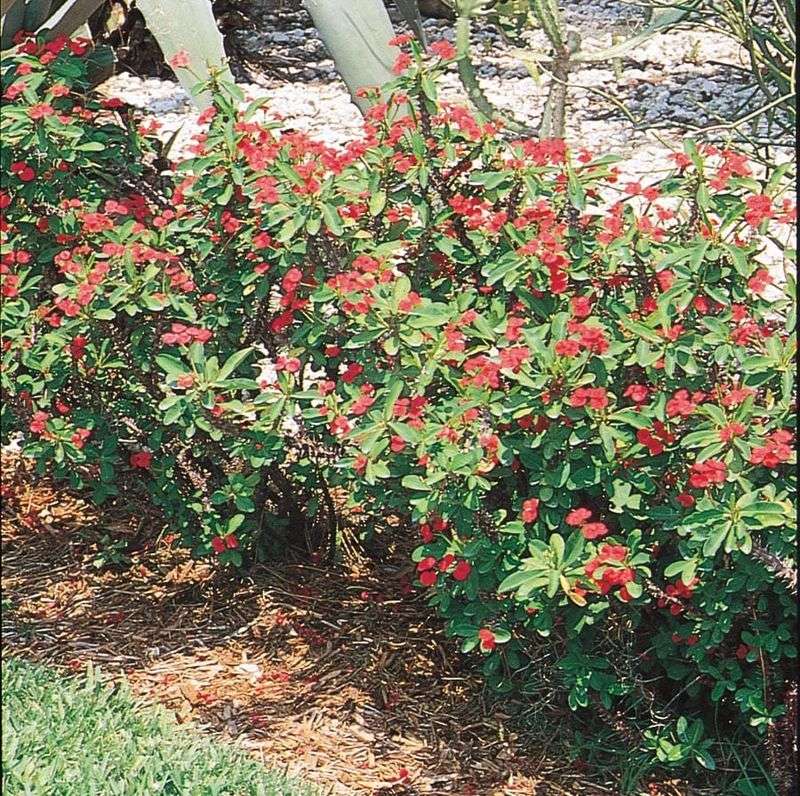
A spot can feel bright to you and still give the plant very little direct sun. Open sky, a white wall, or a screened porch can all make a space look sunny.
What matters is whether sunlight actually lands on the leaves and stems.
Walk out several times through the day and watch where the shadows fall. Look for shade from oak and palm canopies, roof eaves, porch covers, fences, and neighboring buildings.
Shade also shifts with the seasons, so a spot that was sunny in winter may be shaded once trees leaf out.
Florida guidance makes this the first practical check. UF/IFAS Gardening Solutions recommends full sun for best results.
A UF/IFAS Nassau County Extension answer says crown of thorns does best in full sun and that shade is a common reason for poor performance.
You do not need to count exact hours. Simply ask whether the plant sits in shade for much of the day.
If the answer is yes, you have a strong lead.
Jot down a quick note or snap a few photos at morning, noon, and late afternoon. It makes the pattern easy to see.
Move it toward brighter light gradually
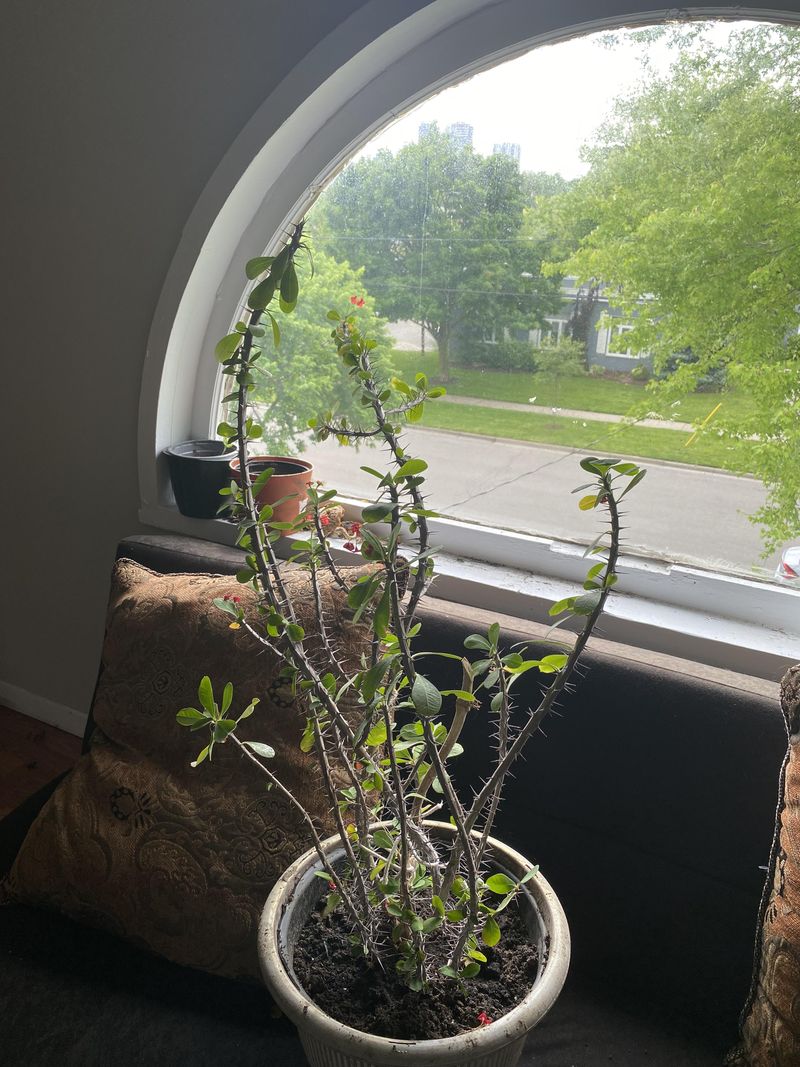
If your plant is shaded, a slow change is safer than a big jump. Plants adjusted to shade can scorch when suddenly placed in strong sun.
University of Wisconsin Extension advises acclimating plants gradually to stronger outdoor light to prevent sunburn.
With a potted plant, shift it a little closer to open sun every few days. Morning sun is a gentle place to start.
Watch the leaves for bleached or brown patches, and back off if you see them.
Brighter does not mean harsher at all costs. NC State Extension recommends midday shade for plants grown outdoors in hot summer climates.
In Florida, that means you can aim for plenty of direct sun without forcing the plant to sit in punishing midday heat all summer.
Plants in the ground are harder to move. If shade is the issue, trimming back nearby branches or choosing a sunnier spot for a new planting may be the better fix.
Treat this as a careful adjustment, not a promise. New growth in better light may take a while, and nobody can predict a flowering date for your plant.
Avoid overwatering and overfertilizing
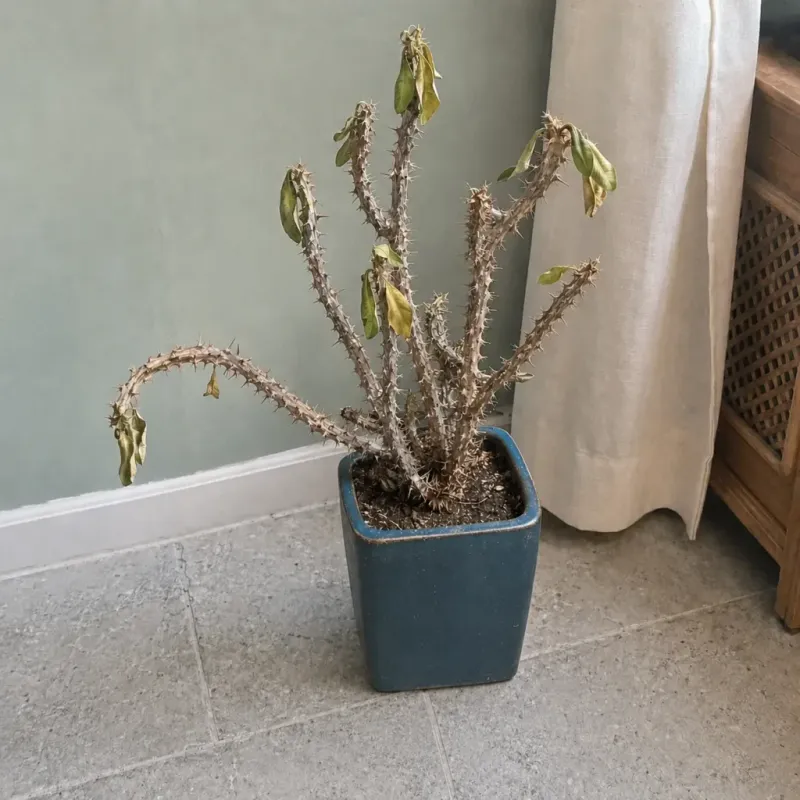
When flowers do not show up, it is tempting to give the plant more water and more food. Both can backfire.
Extra care of that kind does not trigger blooms.
Crown of thorns is drought-tolerant once established, according to UF/IFAS. A UF/IFAS Nassau County Extension answer warns that overwatering can quickly lead to root decay.
Soil that stays wet all the time is a bigger risk than a dry spell.
Plant it in a container or site that drains well. Florida’s sandy ground drains fast, which suits this plant, but a pot with no drainage holes or a heavy mix can hold water.
Let the growing medium dry between waterings instead of following a fixed calendar. Poke a finger into the soil to check.
Fertilizer needs a light hand too. University of Wisconsin Extension says overfertilizing can promote soft, leafy growth and fewer flowers.
Keep feeding modest and skip high-nitrogen products.
Check labels for micronutrients as well. The same source notes this species can be sensitive to boron, so a product with extra boron is not a good choice for a plant you are trying to coax along.
Fix light first, keep water and food modest, and give the plant time to respond.
Recognize the blooms and set realistic expectations
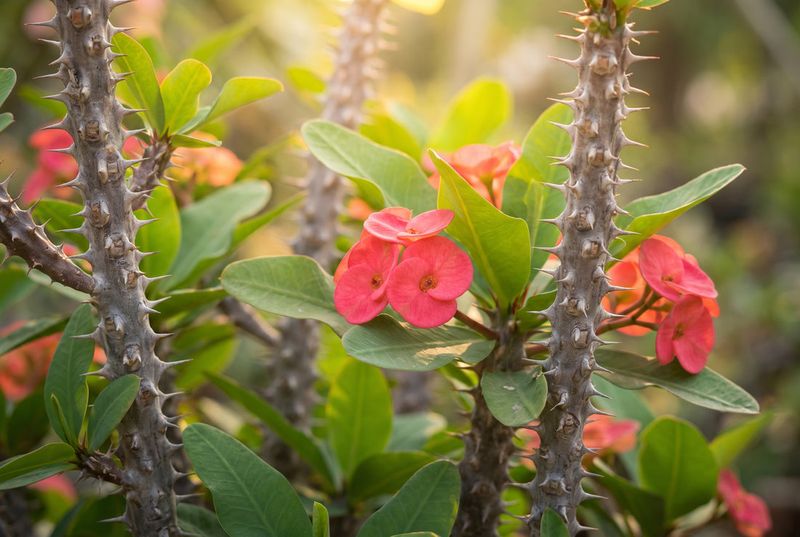
Those bright red, pink, or yellow dots are not quite petals. The showy colored parts are bracts, which are modified leaves that surround very tiny flowers.
NC State Extension describes this arrangement, and you can spot the small flowers at the center of each bract pair.
Knowing this helps you recognize early color. Small clusters at stem tips count as blooms, even when the display is modest.
The New York Botanical Garden notes that flowers form on actively growing stems and describes a possible seasonal flowering period.
Florida gardeners sometimes hear that crown of thorns blooms all year. UF/IFAS does describe year-round bloom.
Still, flowering varies with conditions and location, and NC State Extension says bloom timing depends on where the plant grows. A plant in North Florida may act differently from one in the Keys.
Keep your expectations realistic. Plants differ, and no source supports promising year-round color for every plant.
Check direct sun first, change exposure gradually, and let the plant set its own schedule.
Protect yourself from spines and sap
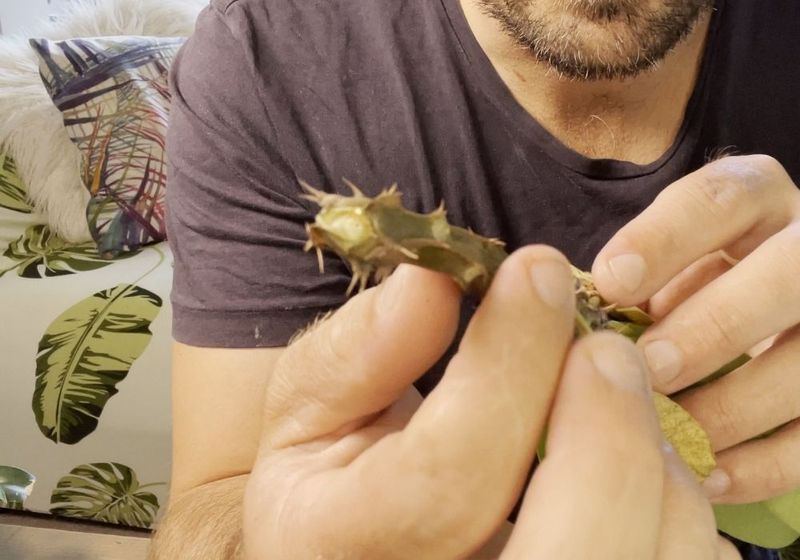
Moving or pruning your plant means handling sharp spines and milky sap, so gear up first. The University of Wisconsin Extension lists the spines and sap as hazards to be aware of.
Poison Control advises covering your skin and wearing eye protection when working closely with Euphorbia plants. Thick gloves, long sleeves, and safety glasses are a sensible setup.
A folded newspaper or towel wrapped around the stems can help when lifting a pot.
If sap lands on your skin, wash the area with soap and water. If it gets in your eyes, rinse them with water for 15 to 20 minutes.
Contact a medical professional or poison control if irritation continues.
Keep kids and pets away while you work, and clean up trimmings so no one touches them later.
A little preparation keeps a repositioning job simple and safe.