
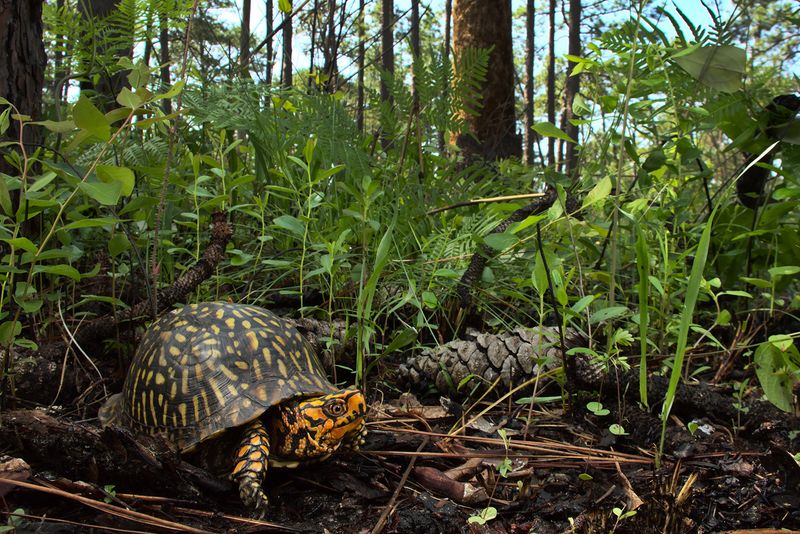
Fire ants are known for their painful stings, but their effects on small wildlife get less attention. Worker ants roam well beyond their mounds, and tiny hatchlings and chicks cannot run away.
Research from other states shows real risks in certain settings, though that is not the same as a problem in every North Carolina yard. Here is what the science says and what you can do about it.
The risk is to vulnerable wildlife, not from the mound itself
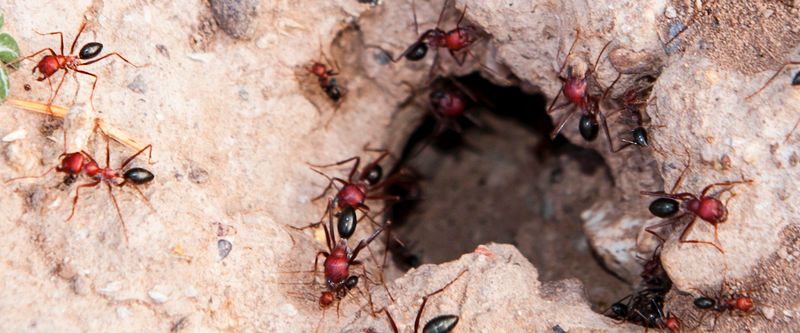
A fire-ant mound is just the top of an underground home. It does not attack anything.
The risk comes from worker ants that leave the colony to find food, and those workers may sting or feed on animals that cannot move away, such as newly hatched turtles, chicks, or eggs that are already pipping.
Researchers have documented this in particular places. In Florida, a wildlife management study on invasive ants looked at ground-nesting wildlife and ways to manage ants without pesticides.
That work shows the hazard is real for vulnerable young animals in some settings.
Still, a documented nest-level risk is not the same as routine losses. Healthy, intact turtle eggs are a different matter from hatchlings caught in the open, and the evidence is stronger for the second group.
A USGS review of a decade of research found that effects on wildlife are hard to measure across whole populations, since many studies were short, covered small areas, or had limited designs.
For a North Carolina homeowner, the practical meaning is simple. A mound in your yard does not prove that a turtle or bird is in danger.
It is a reason to pay attention, not a reason to panic or reach for a sprayer.
Workers forage beyond the mound

Picture a mound as a front door and a long hallway behind it. Underground, a colony spreads out, and workers travel along tunnels and over the surface to search for food.
That means ant activity does not stop at the edge of the dirt pile you can see.
Mound size can hint at how big a colony is, but it is a poor measure of danger to wildlife. According to NC State Extension, workers range outward from the colony.
A small mound near a nest does not make a nest safe, and a big mound far away does not make it a threat.
Poking or disturbing a colony can backfire. NC State Entomology notes that disturbance may lead ants to move the queen or start satellite mounds nearby.
Kicking a mound apart is not a fix.
Not every yard has these ants either. The NC Department of Agriculture says portions or all of 81 counties are generally infested.
That count includes red, black, and hybrid imported fire ants, so a yard in a listed county may have a different species or none at all. Confirm what you have before making plans.
Bird studies show nest-level effects, not a statewide crisis
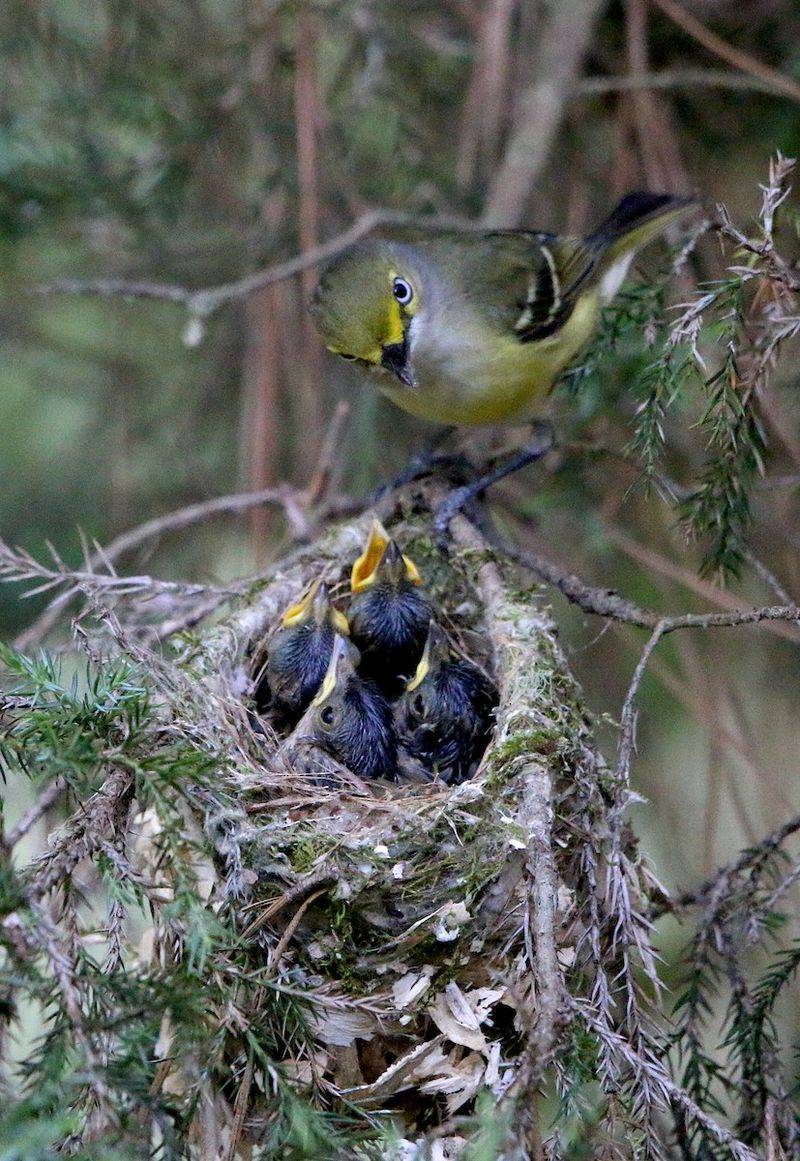
The best-known bird experiment took place in central Texas. Researchers studied white-eyed and black-capped vireos, two small songbirds that nest low in shrubs.
The Texas study found that when red imported fire ants were excluded from areas around nests, more nests survived.
That is a clear nest-level result, but it comes from one region and two species. It does not tell us how North Carolina backyard birds are doing, so it should not be copied over to your cardinals, towhees, or wrens.
Zooming out, the picture gets less certain. The USGS review found that many studies were limited in time, area, or design.
Texas Parks and Wildlife describes effects on whole wildlife populations as controversial and largely undocumented.
So claims that fire ants are wiping out ground-nesting birds go too far. A fair reading is that a nest can suffer in some settings, while the bigger population story remains unclear.
Box-turtle nest concerns call for caution, not panic

Eastern box turtles really do nest in North Carolina yards, and their numbers are a conservation concern. The NC Wildlife Resources Commission offers nest advice, yet it does not name fire ants as a leading local threat.
It points instead to digging predators such as raccoons, which may be drawn by freshly disturbed soil.
Florida adds some context. The Florida management study dealt with invasive ants affecting ground-nesting wildlife there.
Those findings show what can happen in that setting, not how often it happens in North Carolina neighborhoods.
Ants as a group may matter too. Research on sea turtles, such as a loggerhead nest study, linked both native and non-native ants to lower emergence success.
That is a reminder not to blame every ant-related loss on imported fire ants.
If a nest fails, the cause could be a raccoon, another ant, weather, or something else. Without evidence, guessing at the culprit can lead to the wrong response.
Leave a suspected box-turtle nest undisturbed
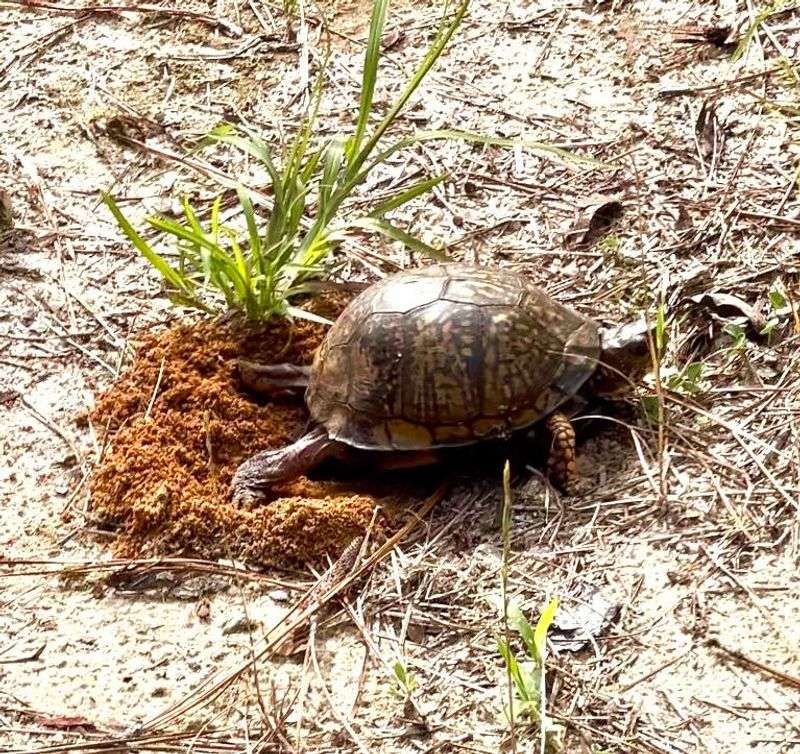
Spotted a turtle digging, or a small patch of fresh soil that looks like a nest? Step back.
Do not dig into it to check, and do not apply pesticide over or near the spot. Digging can harm eggs, and fresh disturbance may attract the very predators you worry about.
Timing helps explain why patience matters. According to the state wildlife agency, box turtles nest in North Carolina during spring.
The species profile adds that young may hatch later or even overwinter in the nest, so a quiet patch in autumn may still be occupied.
The agency says no action is required to protect a nest. Some people choose to set a temporary cover to discourage digging predators.
That step is optional, and if you use one, check it regularly so it does not get forgotten and left in place.
A practical routine is to keep mowers, string trimmers, and pets away from the spot, and mark it from a distance with a note on your calendar. Then let nature do its work.
Target confirmed active colonies instead of spraying the whole yard
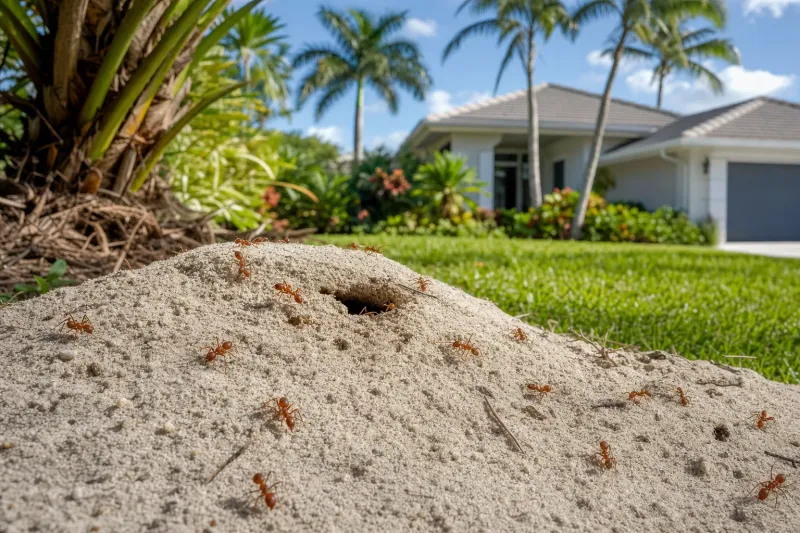
Control makes sense when a confirmed, active colony needs managing, such as one near a play area. A mound sitting close to a turtle or bird nest is not enough reason by itself.
Proximity does not prove danger.
Spraying the whole yard is the wrong tool. NC State Extension notes that broadcast treatments can disrupt other ant communities, and those neighbors are part of a healthy yard.
Wiping them out can leave room for fire ants to move in.
Spot treatment is the better path. According to NC State guidance on managing fire ants, bait is generally placed around the mound, not on top of it.
Workers carry it back to the colony.
Products differ, so the label is your rulebook. Weather, soil moisture, timing, and amounts all vary by brand.
Read it fully before you open anything, and never treat a suspected nest site directly.
Skip mound-kicking and digging as well. Neither protects wildlife, and both may only push the colony to a new spot.
Protect people, wildlife, and water when treating

Treating a colony does not end when the product goes down. Keep children and pets out of treated areas for as long as the label says.
That time period differs by product, so check yours instead of guessing.
Water deserves extra care. Do not let treatments wash into ponds, streams, ditches, or other water.
NC State Extension advises following label directions, and Texas Parks and Wildlife cautions that pesticide products can harm non-target organisms, especially aquatic ones. If your yard slopes toward a pond or creek, skip treatments before heavy rain.
Wildlife benefits from a measured approach. A nearby mound alone does not prove a nest is threatened, and the state box turtle guidance still says to leave nests undisturbed.
Any control you choose should stay targeted and match the label.
Think of it as a small act of stewardship. A turtle crossing your lawn next spring will never know what you decided, but it benefits from your restraint.