
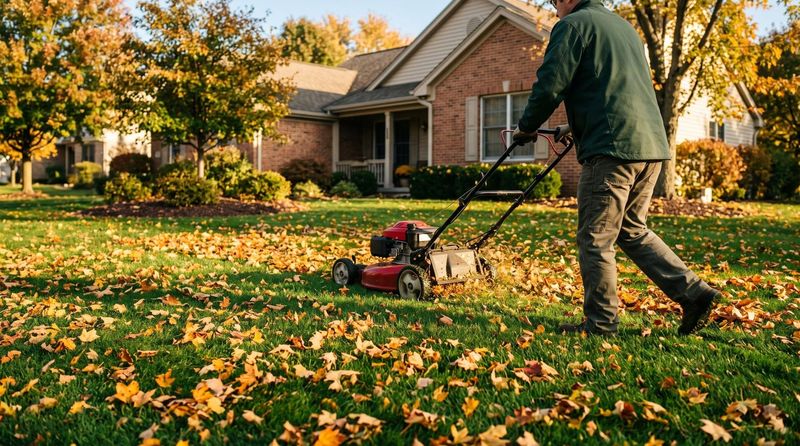
Those fallen leaves blanketing your yard do not have to end up at the curb. With a mower and a little timing, many homeowners can chop a manageable amount right into the lawn.
It saves a weekend of raking and bagging, and the pieces break down where they land. Here is how to do it well, and when to put the mower down and move leaves elsewhere.
Mulch-mowing keeps some leaves on the lawn
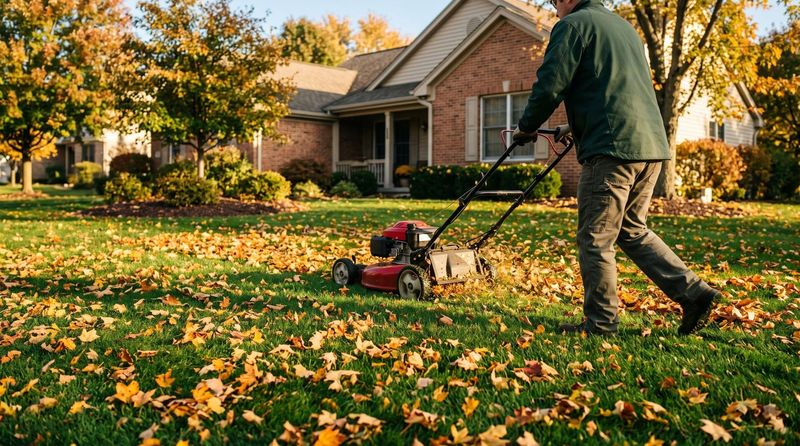
Chopping leaves with your mower is one way to keep some leaf material on the lawn instead of hauling it off the property. It is an option, not a rule, and it is not a proven improvement over raking leaves into a compost pile or landscape beds.
Those uses are just as sensible.
The key condition is size. Iowa State Extension guidance points to mowing leaves into small pieces so they work down into the grass rather than lying on top.
UConn Extension describes the same approach, called mulch-mowing, for established lawns.
If the leaves are chopped fine enough to sift between the grass blades, the lawn can take them in. If they stay in big flakes or mats, the grass underneath may be shaded, and you will want a different plan for those leaves.
Leaves contribute to soil as they decompose
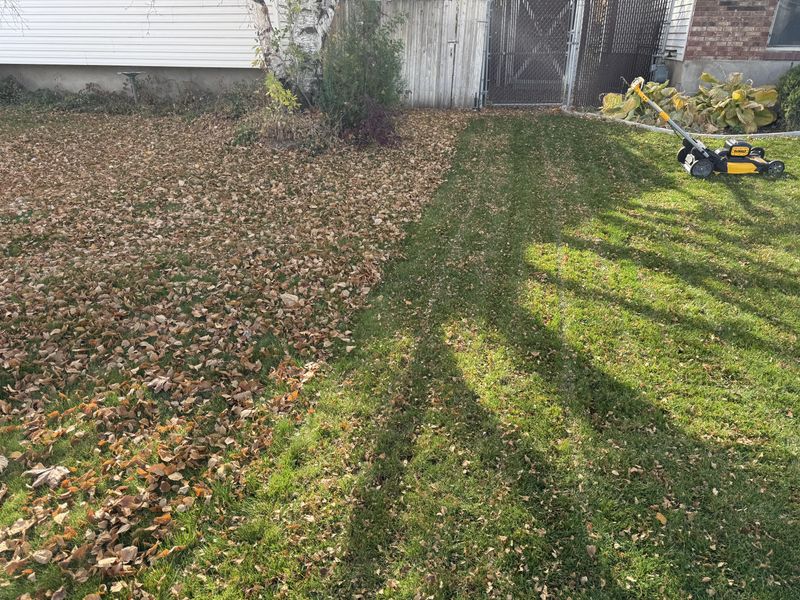
Once chopped leaf pieces settle into the turf, they start to break down. As they decompose, they return organic matter and nutrients to the soil.
That is a slow, steady contribution, not a quick feeding.
Think of it as a small bonus rather than a bag of fertilizer. UConn Extension estimates that mulching a two-inch layer of leaves over a season adds nutrients, but those nutrients are released gradually as the material rots.
Leaves are not a complete fertilizer, and they do not replace a lawn fertility program.
UConn says fertilizer reductions may be considered for mature, established turf. That is a possibility for certain lawns, not a promise of savings.
Virginia Cooperative Extension likewise describes leaf recycling as adding organic matter over time. Your lawn’s condition, not the leaves alone, should guide what you feed it.
Mow dry leaves before they build into a mat
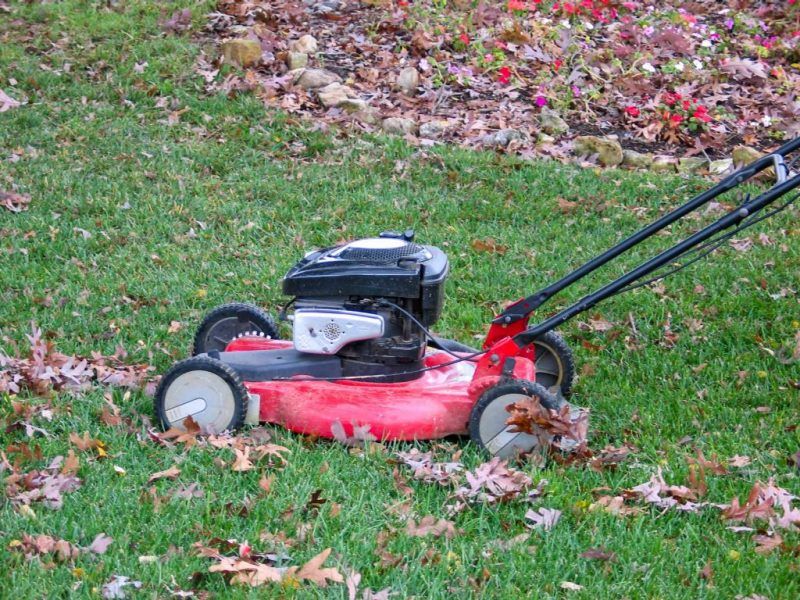
Timing does most of the work here. Mow often enough that leaves never pile up deep, because a few passes over a light scatter beat one struggle with a heap.
If you have a mulching mower, use it. Otherwise, raise the deck and make multiple passes, as Iowa State and UConn both suggest.
Before you start, walk the yard and pick up sticks and other debris. Mow when the leaves are dry.
Virginia Tech warns that leaves so wet they strain the mower may not chop cleanly.
Wear eye protection, since bits can fly. Virginia Tech also recommends respiratory protection against dust, and UF/IFAS lawn guidance likewise stresses mowing safely and keeping the lawn dry.
If the mower bogs down or clumps, stop and wait for drier conditions.
Check that the chopped pieces settle between grass blades
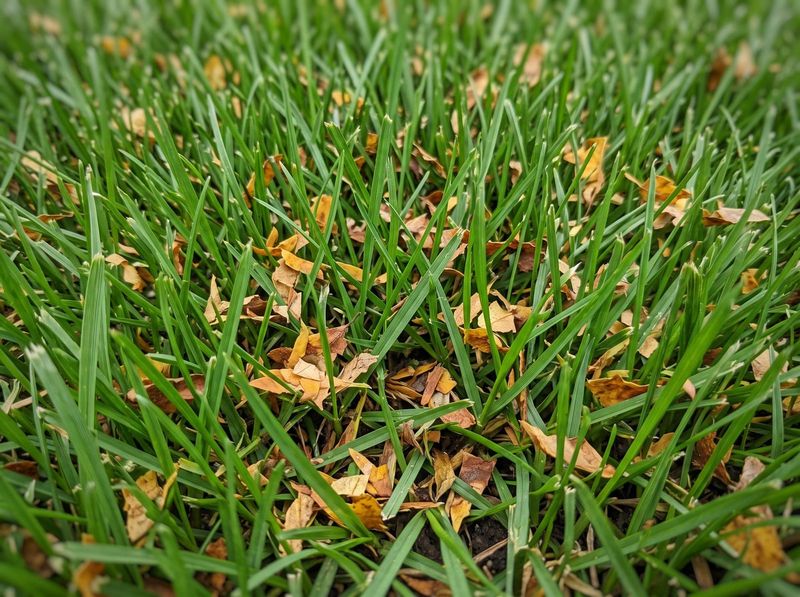
Walk the lawn after you mow. Finely chopped pieces should drop down between the grass blades, and you should see little leaf residue sitting on top.
If the lawn looks mostly green, you passed the test.
If you still see flakes or patches, that is a cue to make another pass rather than a reason to guess at a leaf depth. Mowers vary, and so do leaves.
Virginia Tech notes that mower capacity differs, so what one machine handles, another may not.
A thick visible layer can shade the grass, and that is your signal to deal with the excess. Iowa State and UConn both stress that grass needs to stay visible.
When it is not, move on to the next step.
Move excess leaves to compost or beds
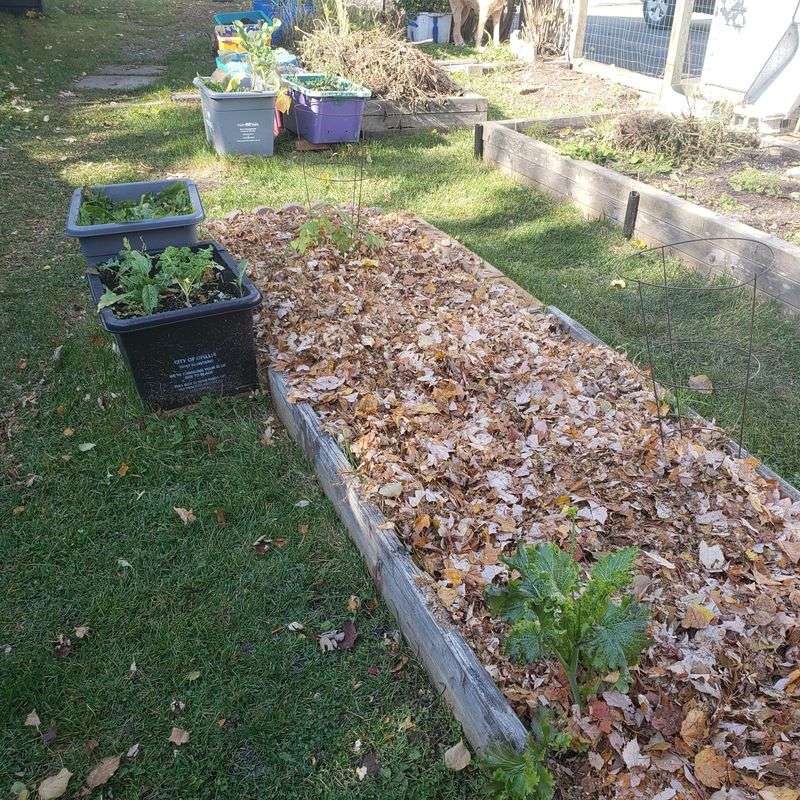
Some yards drop more leaves than any lawn should absorb. When little grass shows through the pile, do not force it all through the mower.
Rake, bag, compost, or move the extra leaves to a landscape bed where they make sense.
UConn Extension advises that no more than 20 percent of the turf should remain covered after mulching. That is that source’s guidance, not a universal threshold, so use it as a rough check rather than a hard rule.
Iowa State also points to thick cover as the problem for grass.
Keep in mind that chopped leaves on turf are different from intact leaf litter. Whole leaves left in beds or undisturbed corners can shelter overwintering beneficial insects, and mowing would chop that habitat up.
If wildlife matters to you, save a patch.
A weed benefit is possible, not guaranteed
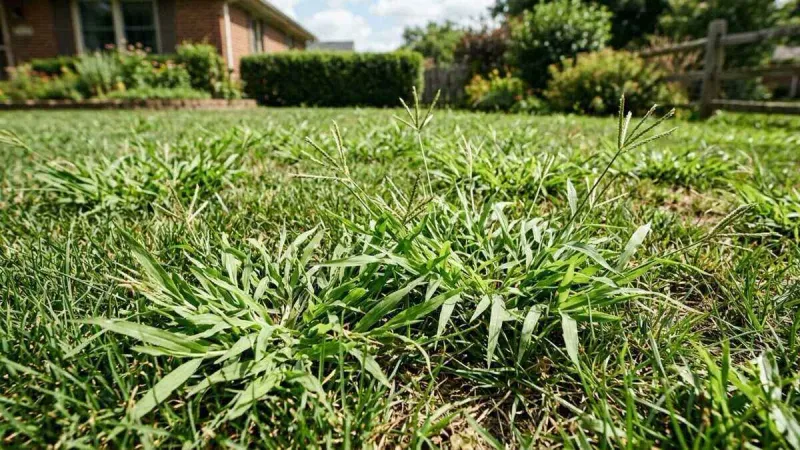
Fewer weeds would be a nice payoff, and some research hints at it. In Michigan State research, plots mulched with maple leaves had fewer broadleaf weeds and less crabgrass in a reported weed count.
Other studies tell a different story. Virginia Tech summarizes leaf-mulching research that found no change in weeds.
The results depend on the study, the grass, and the conditions. So treat any weed benefit as a maybe.
It does not mean your yard will have fewer weeds next spring, and it does not replace your usual weed management.
Apply the guidance to local grass and leaf-drop patterns

Much of the turf research people cite was done on cool-season grasses like perennial ryegrass and Kentucky bluegrass, outside the South, such as this Michigan State turf summary. It supports the general practice, but it does not prove identical results on Florida or Texas warm-season lawns.
Your grass type matters. UF/IFAS notes that Florida turf species have different recommended mowing heights and seasonal mowing needs, so check yours before changing the deck.
Leaf timing varies too. UF/IFAS notes that live-oak leaves and other yard debris can pile up before the summer rainy season, not just in autumn.
For Texas, no Texas-specific leaf-mulching recommendation is offered here, so lean on your local extension office.
Mulch only what the lawn can handle
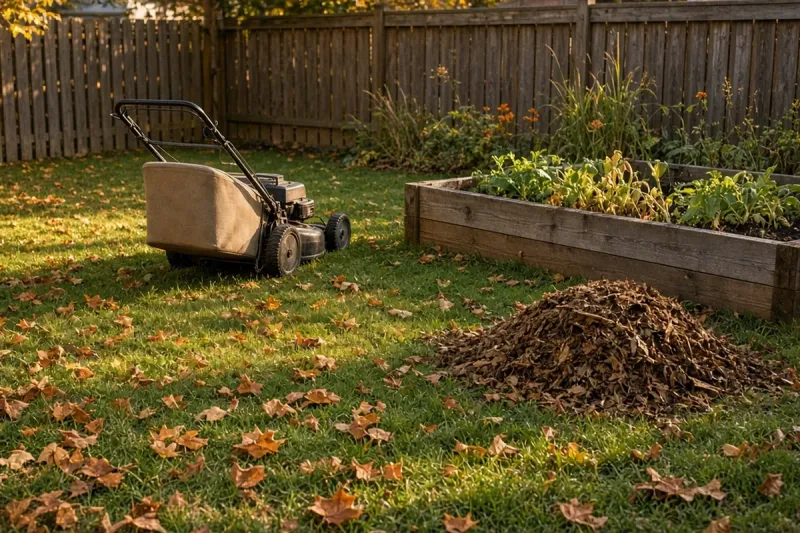
Mulch-mow when the lawn can absorb finely chopped pieces, and move the leaves that stay too thick to process. The practice recycles leaf material, but it is not instant fertilizer and it does not promise fewer weeds.
Check UConn’s guidance as a reference point.
Let the grass show through, and the mower will have done its job.