
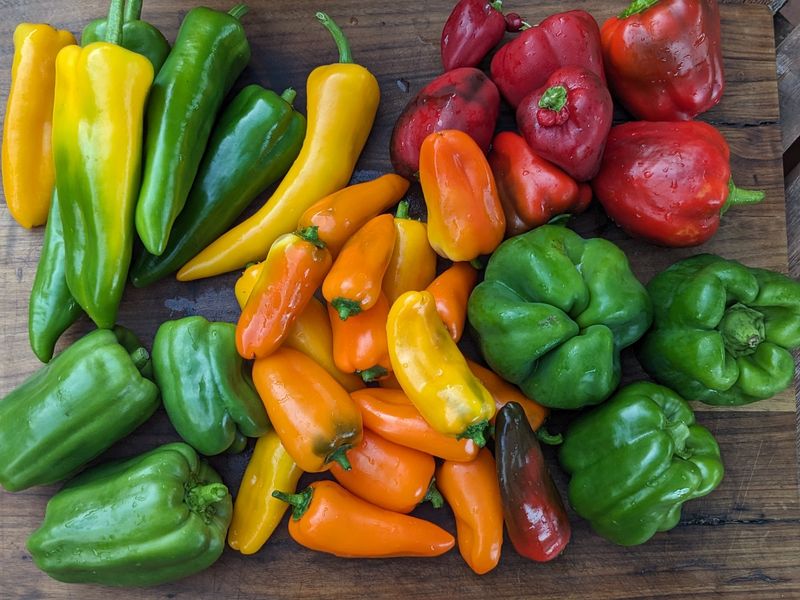
You walk out to the garden in November and the pepper plant is loaded with fruit, but every pepper is still green. Cool nights may be part of the reason, though they are not the only one.
Knowing what is going on helps you decide whether to wait, cover the plant, or pick. A little planning now can save a lot of good peppers.
Chilly nights can slow color, but they are not the only explanation
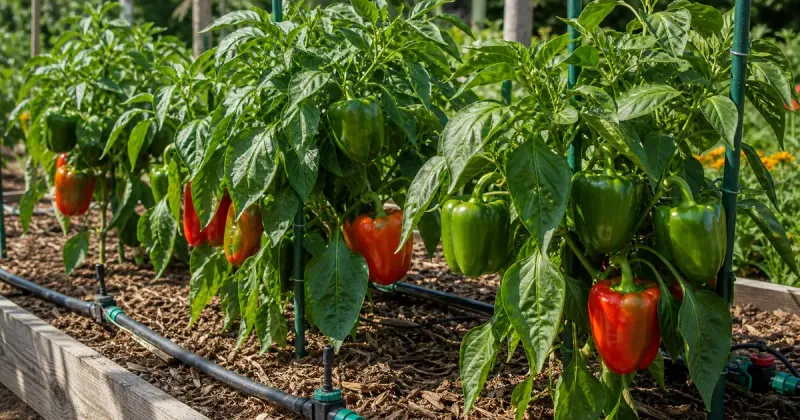
Temperature has a big say in how peppers develop. Oregon State reports that red pigment forms best at about 65 to 75 degrees F, and that below about 55 degrees it slows dramatically and can stop.
Peppers also grow poorly in cool weather, and frost can injure them.
That makes chilly nights a reasonable suspect when fall fruit sits green. It is only a suspect, though.
Fruit that set recently may simply be young, and the variety may not be one that turns red at all. Other growing conditions can play a part too, and University of Maryland Extension lists varietal differences and environmental stress among the possible causes of delayed color.
So before you blame the weather, look at the plant itself. Check the size of the fruit, think back to when the plant bloomed, and read your seed packet or plant tag.
Warm weather may help some peppers color up, but it will not fix every green pepper.
Some green peppers simply need more time
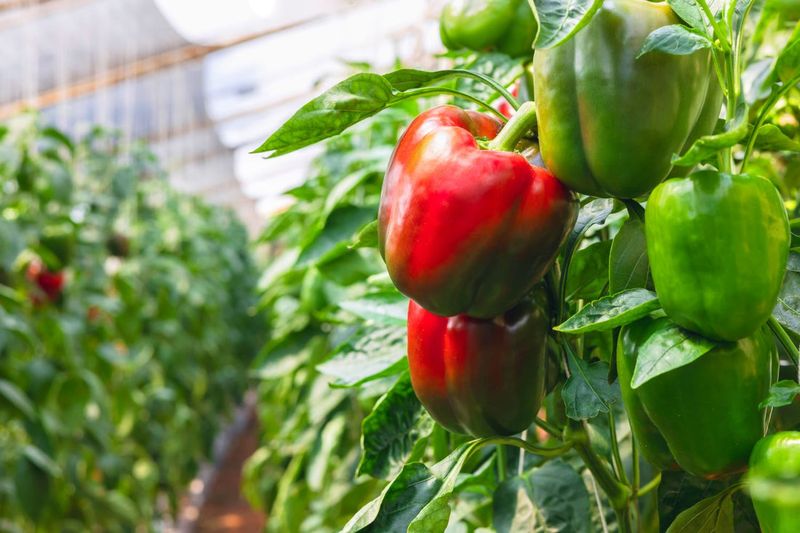
Peppers are slow to finish. Utah State Extension says full color often takes about 35 to 45 days after flowering, depending on temperature and variety.
A pepper that reached full size only last week may just be on its normal schedule.
Try a quick count. If you remember when the plant was blooming, add those weeks and see whether the fruit is even due.
Cooler days stretch that timeline, so a fall pepper may take longer than a summer one.
Then check the variety. Mature color is not always red.
Depending on the type, ripe peppers can turn yellow, orange, purple, brown, or other colors, and some stay green-looking for a long while. Your plant tag is the best clue to what finished fruit should look like.
If the fruit is full size, firm, and the variety is simply slow, patience may be the right call.
Leave full-size fruit attached while conditions allow
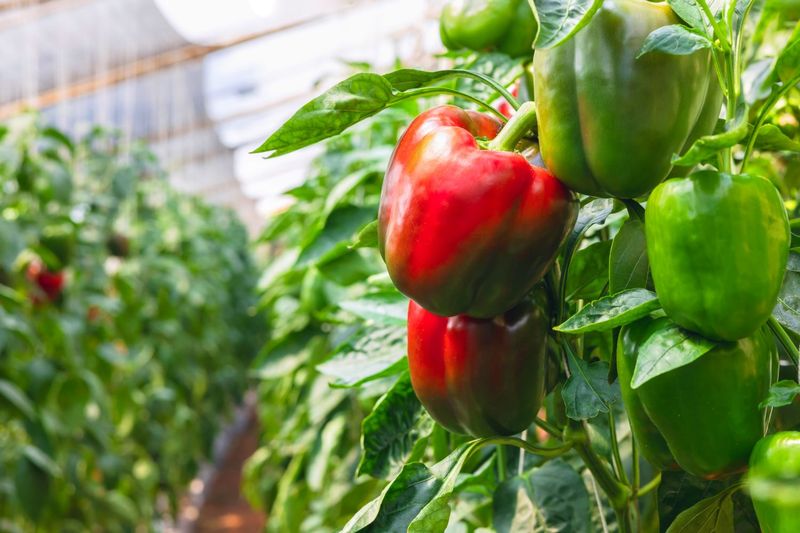
When frost is not close, you have two good choices. You can pick sweet peppers at full size and use them green, or leave them on the plant so many varieties can develop their mature color.
University of Maryland Extension notes that green peppers are usable, and that waiting lets many types color up.
Either path works, so choose based on what you want in the kitchen. Green peppers have a sharper, more grassy bite.
Colored ones tend to taste sweeter, which is why many gardeners wait.
Whenever you harvest, grab pruners or scissors. Clemson Cooperative Extension advises cutting rather than pulling, because pepper branches are brittle and snap easily.
Leave a bit of stem on each fruit.
Picking a few ripe ones also lets the plant put energy into the fruit that remains.
A row cover buys limited time, not a frost-proof season
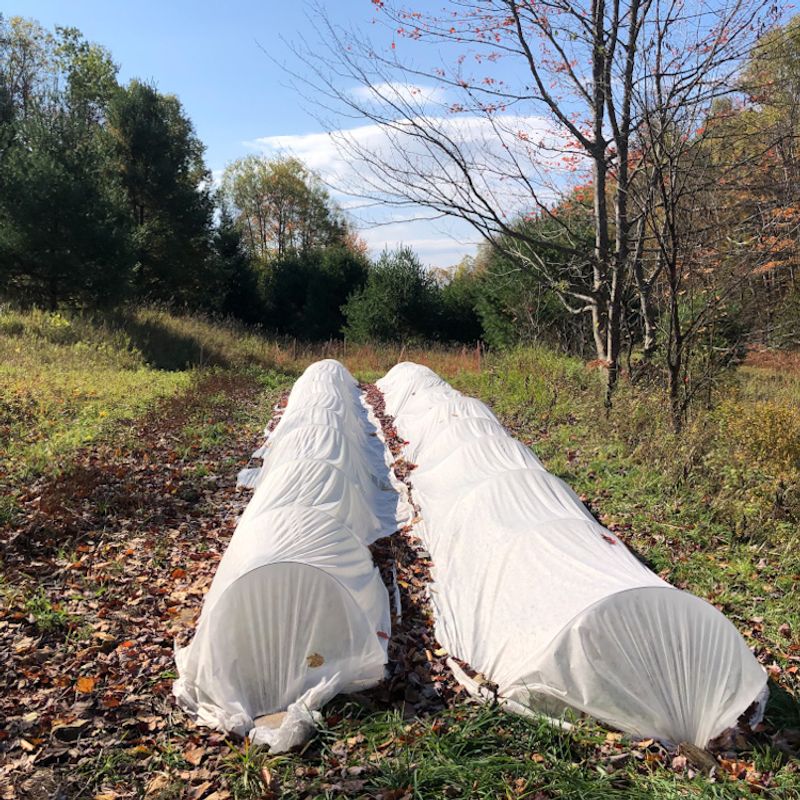
A row cover can take the edge off a cold night. Utah State Extension describes covers as a buffer, and how well they work varies with the fabric and the weather.
They do not make peppers frost-proof.
Think of a cover as a short-term helper. It may get fruit through a brief chilly stretch, but it will not guarantee survival in a hard freeze and it will not keep a plant producing all winter.
Watch for overheating, too. On a sunny day, the space under a cover can get hot fast, and UF/IFAS notes that heat buildup can harm peppers, especially in Florida.
Open the sides or take the cover off once the day warms.
Before you put one up, check your local forecast. A single cold night is a good use.
A long freeze is a signal to pick.
Harvest firm, full-size peppers before a killing frost

When a killing frost is on the way, stop waiting for more color. Utah State Extension advises picking full-size, firm fruit, whether it is green or partly colored, before the frost hits.
Leave the tiny ones behind. Small, immature peppers are less likely to finish, so they are not worth much effort.
Look for fruit that is full size for its variety, glossy, and solid when you squeeze gently.
You can also pull the whole plant and hang it upside down in a warmer place, such as a garage or porch that stays above freezing. University of Maryland Extension mentions this method.
It may help some fruit keep changing color, but it does not promise that every pepper will ripen.
Either way, a full basket of green peppers beats a plant of frost-damaged ones.
Indoor warmth may change color without finishing ripening
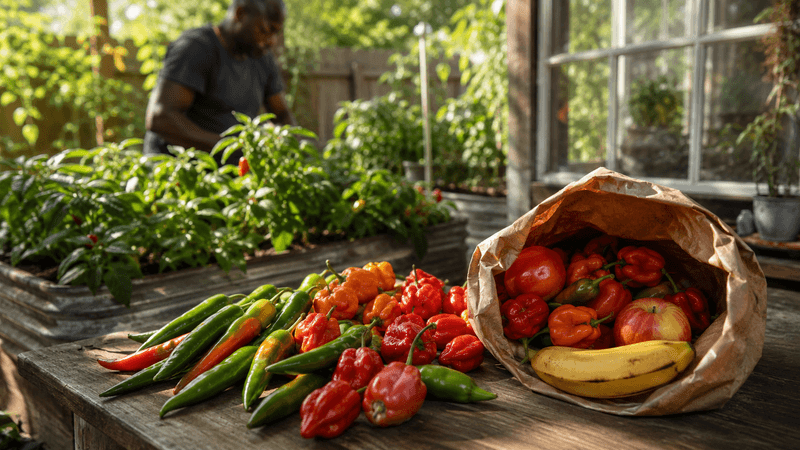
Tomatoes keep ripening after you pick them. Peppers mostly do not.
UC Davis explains that peppers are nonclimacteric and respond very little to ethylene.
That means the banana-in-a-paper-bag trick is not a dependable plan for peppers. A fully green pepper that is picked may simply stay green.
Warmth can help in a smaller way. Peppers that already show some color may develop more of it on a warm counter.
Even so, color change is not the same as full ripening, and the flavor may not match a pepper that finished on the plant.
Set your expectations accordingly. Keep partly colored fruit somewhere warm and check it every few days.
If a pepper stays green, it is still good to eat, so slice it into stir-fries, fajitas, or stuffed pepper recipes.
Let local weather guide the harvest decision
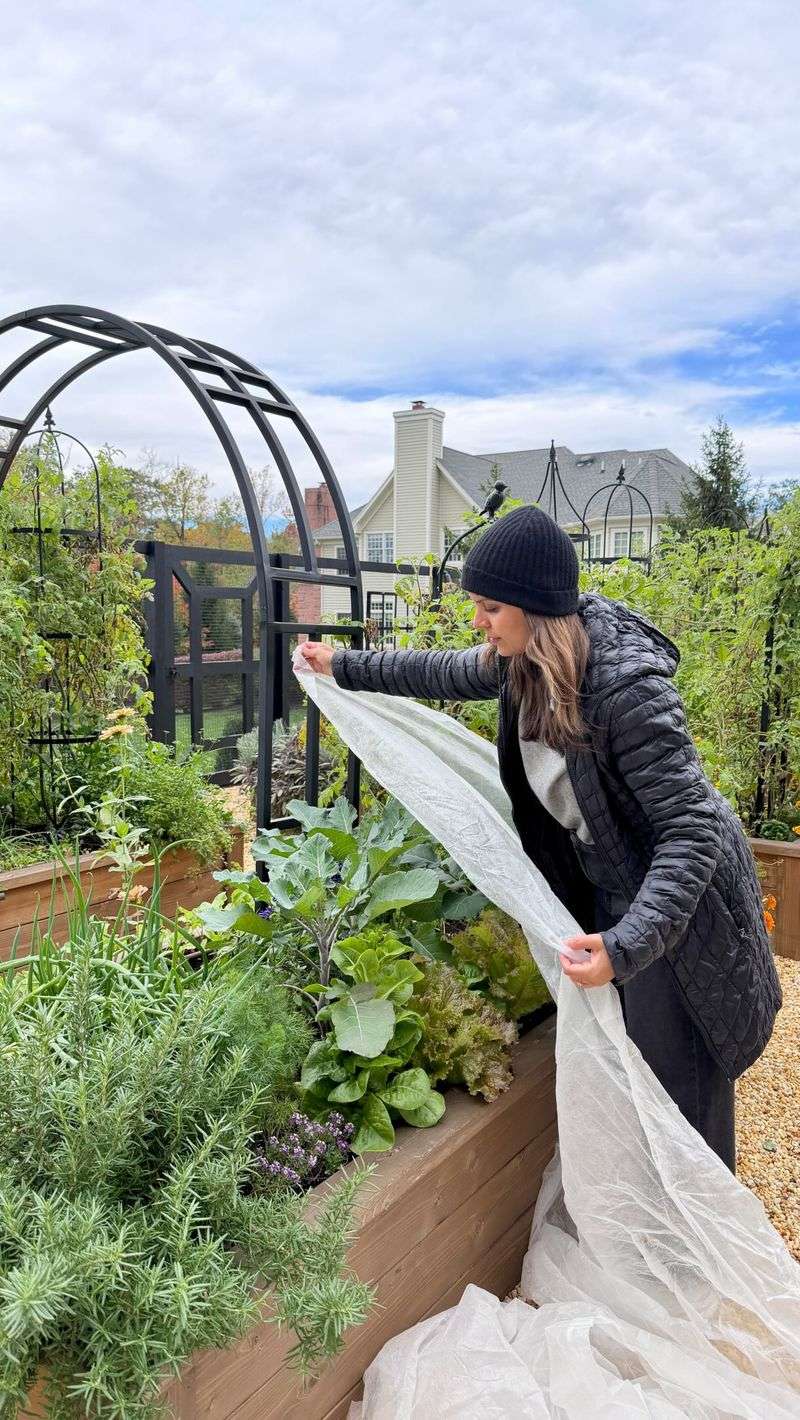
Here is the simple path. Leave full-size fruit on the plant while the weather allows, use a row cover for a brief cold snap, and pick firm, full-size peppers before a killing frost.
Florida and Texas do not share one November calendar. UF/IFAS gives different pepper planting windows by Florida region, and Texas A&M AgriLife Extension notes that peppers are frost-susceptible and lists region-specific fall dates.
Your county extension office can tell you more.
So watch your own forecast, not a date on the wall. The plant will tell you the rest.