
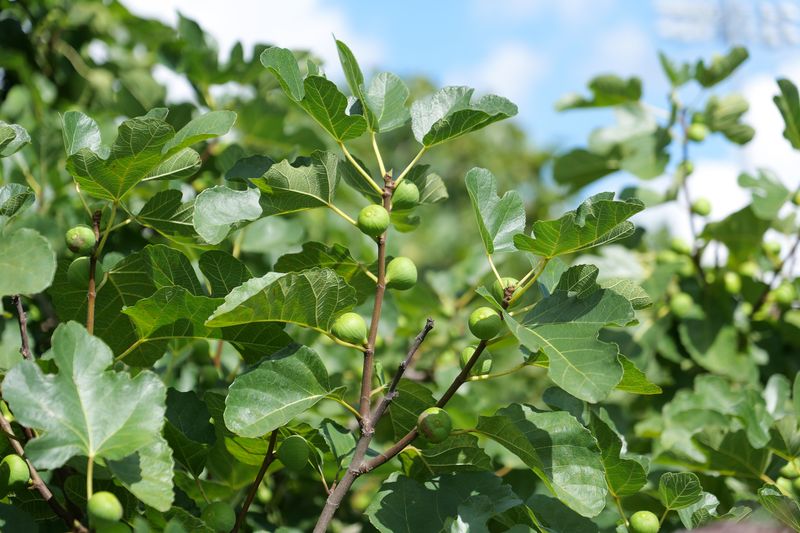
Late October rolls around, and your fig tree is still hanging onto hard green fruit. Do you wait, pick, or pull them off before frost?
The answer depends on whether the figs are still attached, what variety you grow, and how much warm weather your area has left. Here is how to sort it out and protect the tree at the same time.
Read ripeness by feel and shape, not color alone
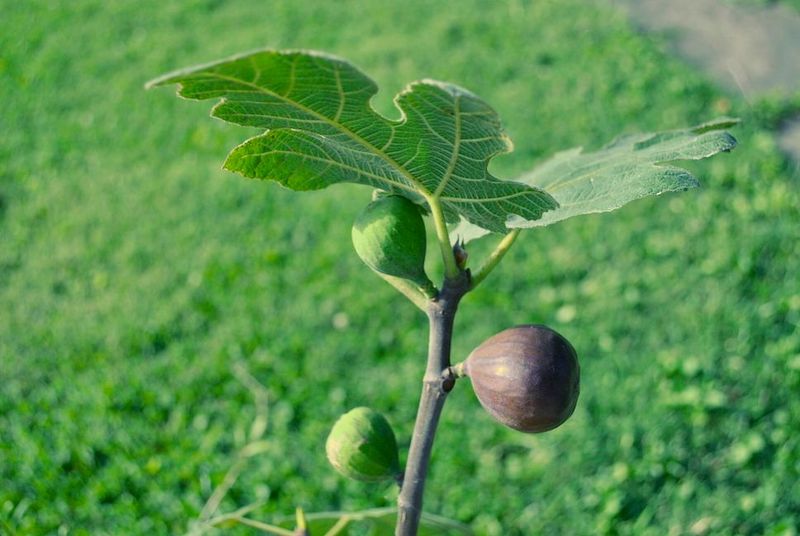
Green skin does not always mean a fig is unripe. UF/IFAS lists green-fruited cultivars, including Green Ischia, that stay green even when mature.
So start by learning what your own variety looks like when it is ready. Then check the fruit itself.
Ripe figs commonly get larger, feel softer when you give them the lightest squeeze, and droop on the stem instead of sticking out stiffly.
A fig that is small, rock hard, and pointing upward is telling you something very different from one that is plump and hanging down, even if both are green. New Mexico State University Extension notes that some varieties can stay hard or rubbery without enough heat.
Use these checks before you decide to leave a fig on the tree or pick it. Color is just one clue, and for some cultivars it is not a useful one.
Late figs need enough warm time to finish
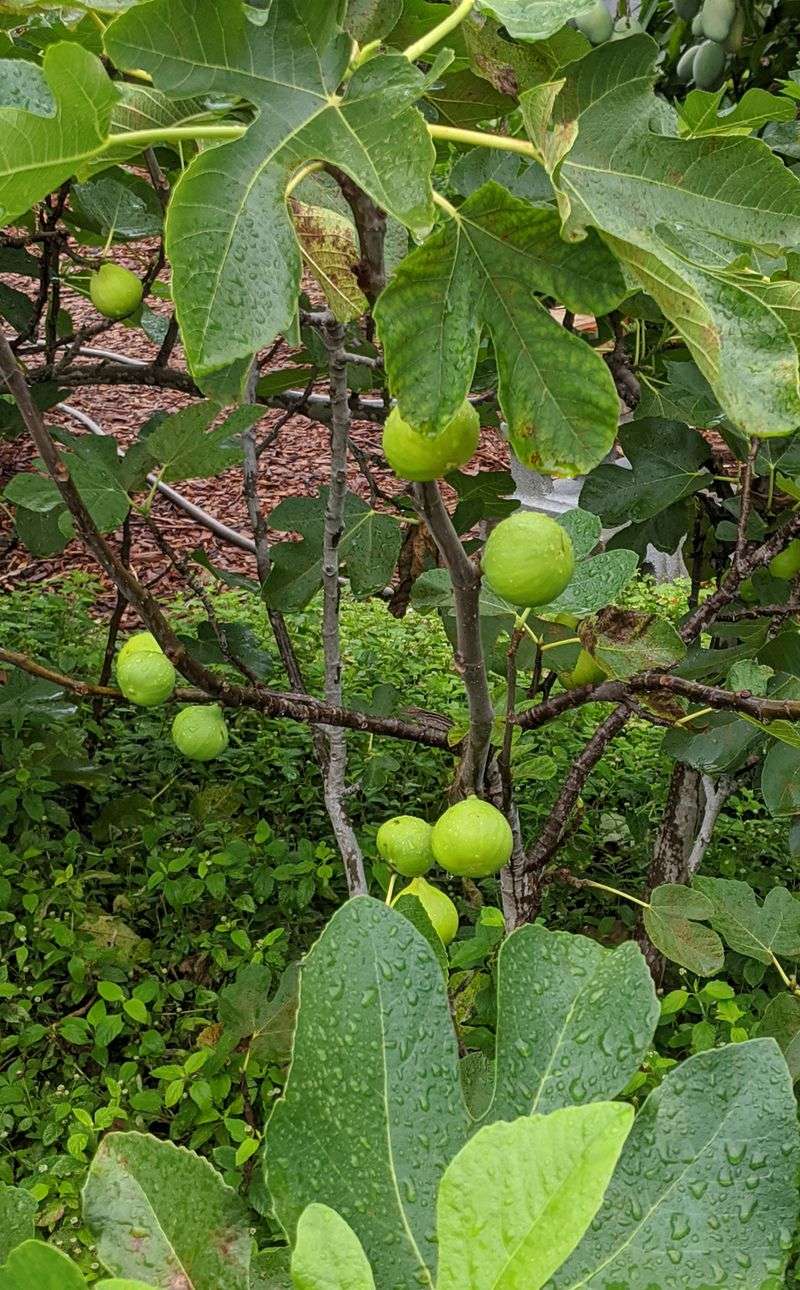
Figs are not quick. Clemson Extension describes the ripening season as a gradual process, and cool weather can slow it down further.
Some varieties simply need more heat than the end of the season provides.
That is why “late October” means different things in different yards. A Florida garden may still have plenty of warmth, while inland Texas or a colder corner of the South may be close to its first frost.
UF/IFAS gives July through October as a general Florida harvest window, but that is only an example, not a schedule for everyone.
Some cultivars do ripen later. Pasquale, for instance, can ripen in November and December, though it is often frost-damaged and is not recommended for the Southeast.
UF/IFAS Gardening Solutions is a good place to compare varieties.
Check your local forecast and your variety before you give up on a fig that is still attached.
A hard-picked fig generally will not ripen indoors
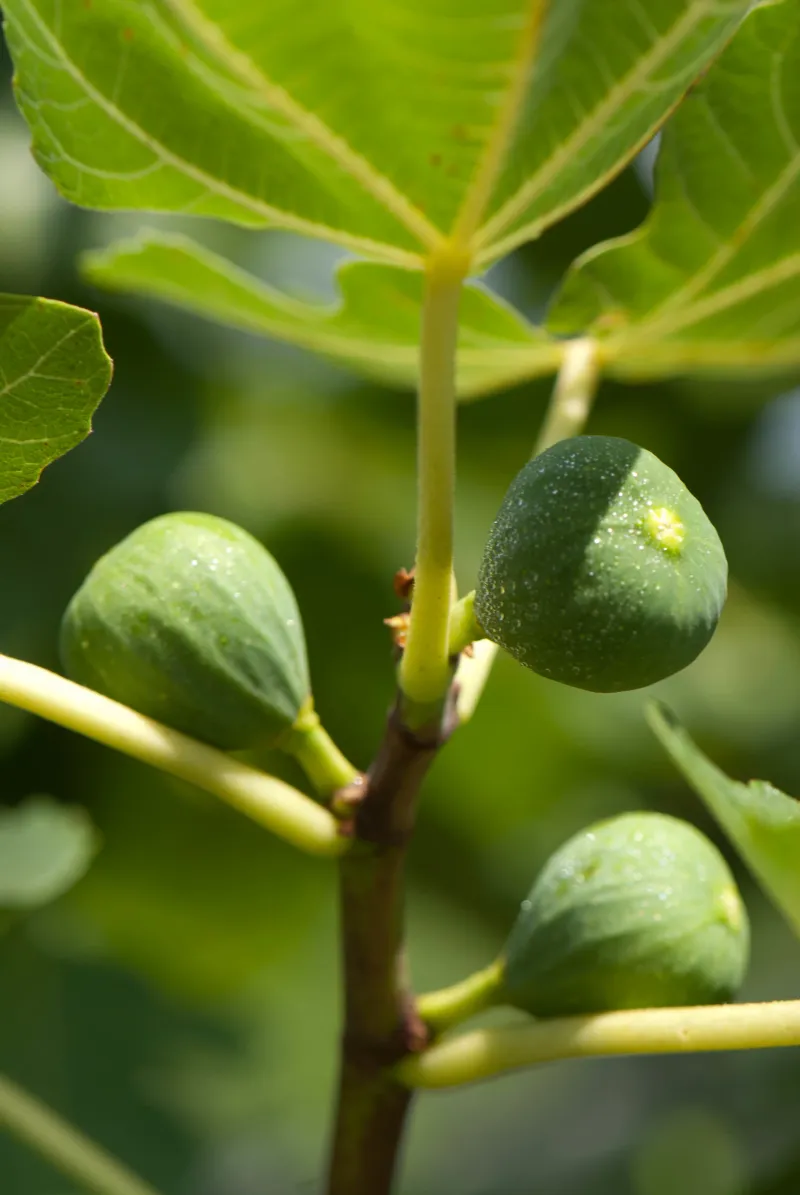
Picture two figs on your kitchen counter. One was picked rock hard and green.
The other was already coloring up and feeling a little soft when you picked it.
They will not behave the same way. University of Maryland Extension advises against picking figs early, since they do not ripen well off the tree.
Fruit that has begun to color and soften may keep softening and sweetening a bit indoors.
UC Davis postharvest specialists note that fresh-market figs are normally harvested nearly ripe, which tells you how little finishing a fig can do after picking.
Clemson’s guidance on watching figs as they ripen points the same way: let fruit show its cues on the tree. A hard green fig set on the counter is unlikely to turn into good fresh fruit, so do not count on it.
Leave attached fruit only while a warm window remains
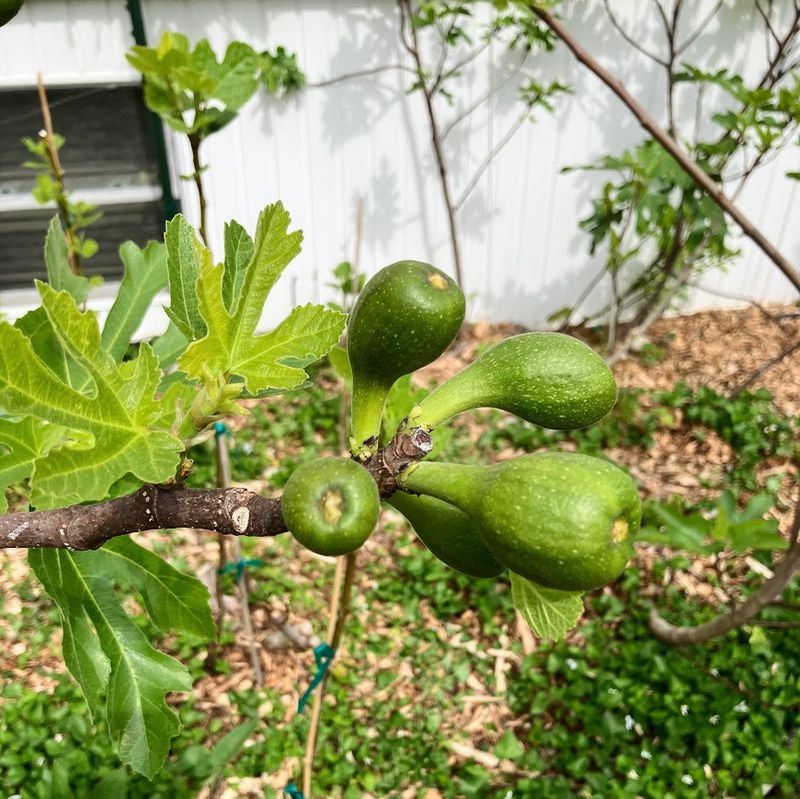
Here is a simple rule for figs still on the tree. If they are enlarging or just starting to soften, and your forecast still shows mild, warm days, leave them alone and keep checking.
Hard fruit that is not changing is a different story. Look at it every few days, and watch the forecast.
Maryland Extension says it can take up to two months from fruit formation to ripeness, so figs that formed late may simply run out of time.
When the warm window closes or frost arrives, stop waiting. Penn State Extension recommends removing leftover fruit after a hard frost, though that advice is written for a colder climate.
Nothing in the Southern sources says you must strip hard figs in October to keep a healthy tree. Your local ripening cues and forecast should drive the timing.
A frost cover offers limited, short-term protection
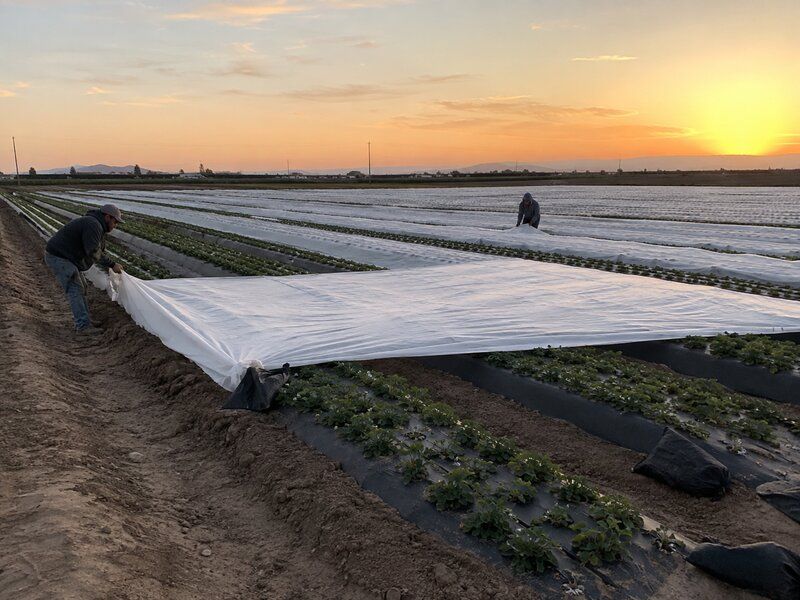
Covers and winter protection are two separate jobs. A cover is a short-term tool for a frost night.
It may help a little, but it cannot be counted on to ripen hard figs or to carry a tree through every freeze.
Placement matters. Texas A&M AgriLife advises draping covers loosely and extending them outward to trap heat rising from the ground.
UF/IFAS adds that covers should reach the ground and should not rest on the foliage.
Skip the sprinkler trick. UF/IFAS warns that a typical home irrigation system may not supply enough water and can do more harm than good.
Freeze protection by sprinkling takes proper application and continuous running through freezing and thawing, so it is not a casual fix.
Winterize the tree without risking next year’s crop
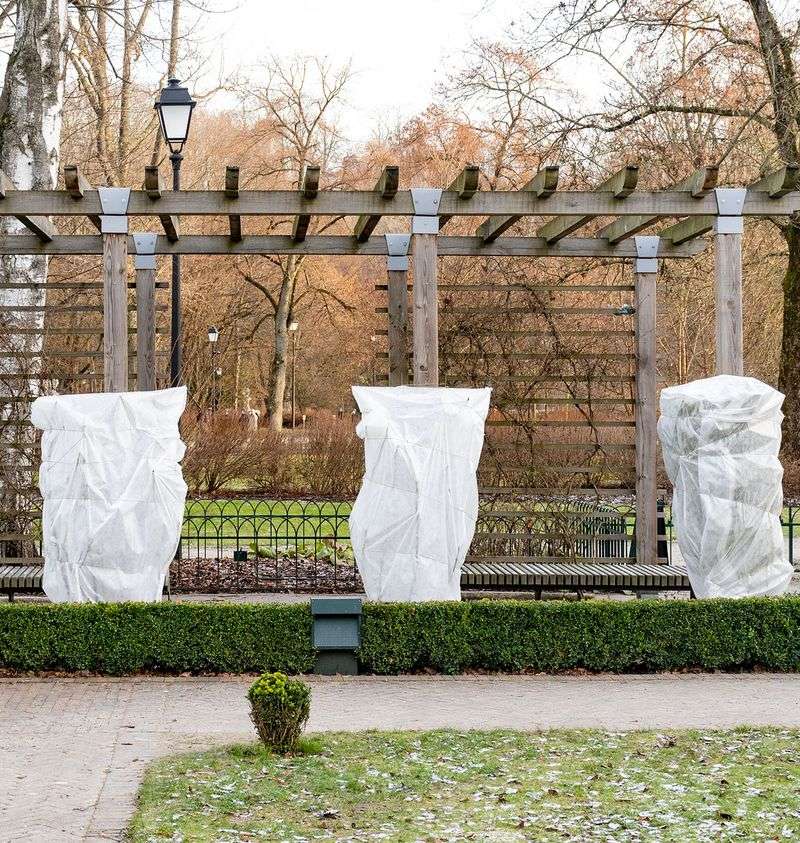
Once the fruit question is settled, put your energy into the tree. Texas A&M AgriLife suggests mounding hay around mature trees, or building a wire cage filled with hay, clippings, or leaves around young ones.
Young, tender trunks are more prone to cold injury.
Do not rely on one magic temperature. Cold damage depends on the cultivar, the age of the tree, soil moisture, and how well the tree has adjusted to cooling weather.
A mild dip may do nothing in one yard and hurt a young tree in another.
Two tempting moves are best skipped. Late fertilizer can push tender new growth, and UF/IFAS notes that such growth can be killed by temperatures just below freezing.
Heavy winter pruning can remove the wood that carries next year’s crop.
If sap bothers your skin, wear gloves and long sleeves while you work. A tucked-in tree usually does more for next summer’s figs than a basket of hard green ones ever will.