
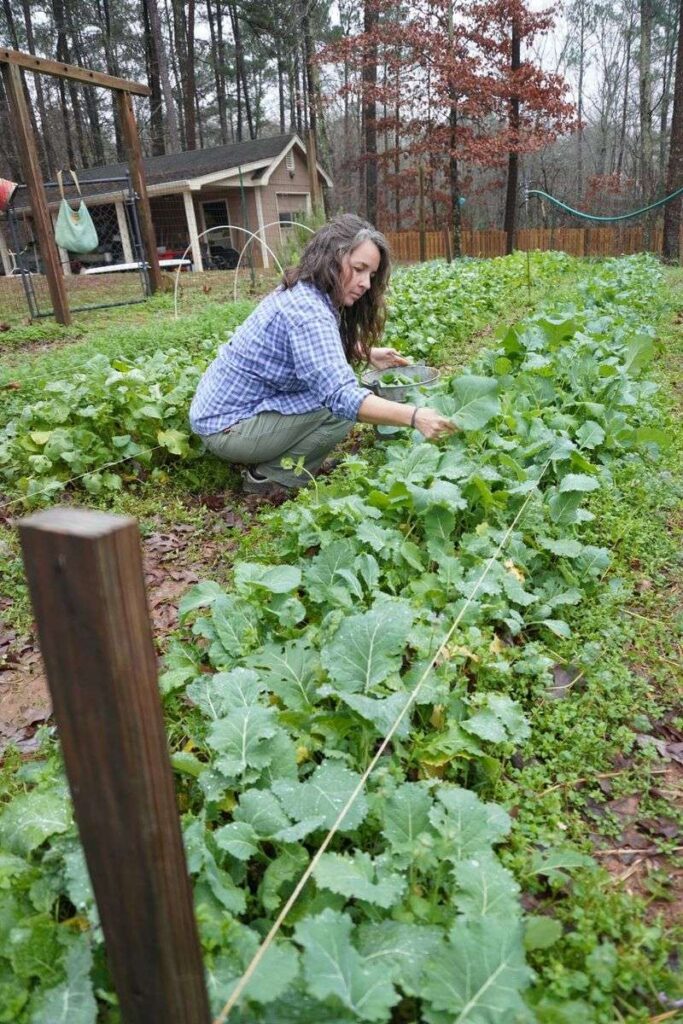
A healthy collard plant can feed you for weeks, but only if you pick it the right way. Grabbing leaves without a plan can cut short a patch that could have kept producing.
A simple order of picking helps you take the best leaves now while the plant keeps growing new ones. Here is how to do it, plus a few real-world limits to keep in mind.
Start with mature lower leaves to extend picking
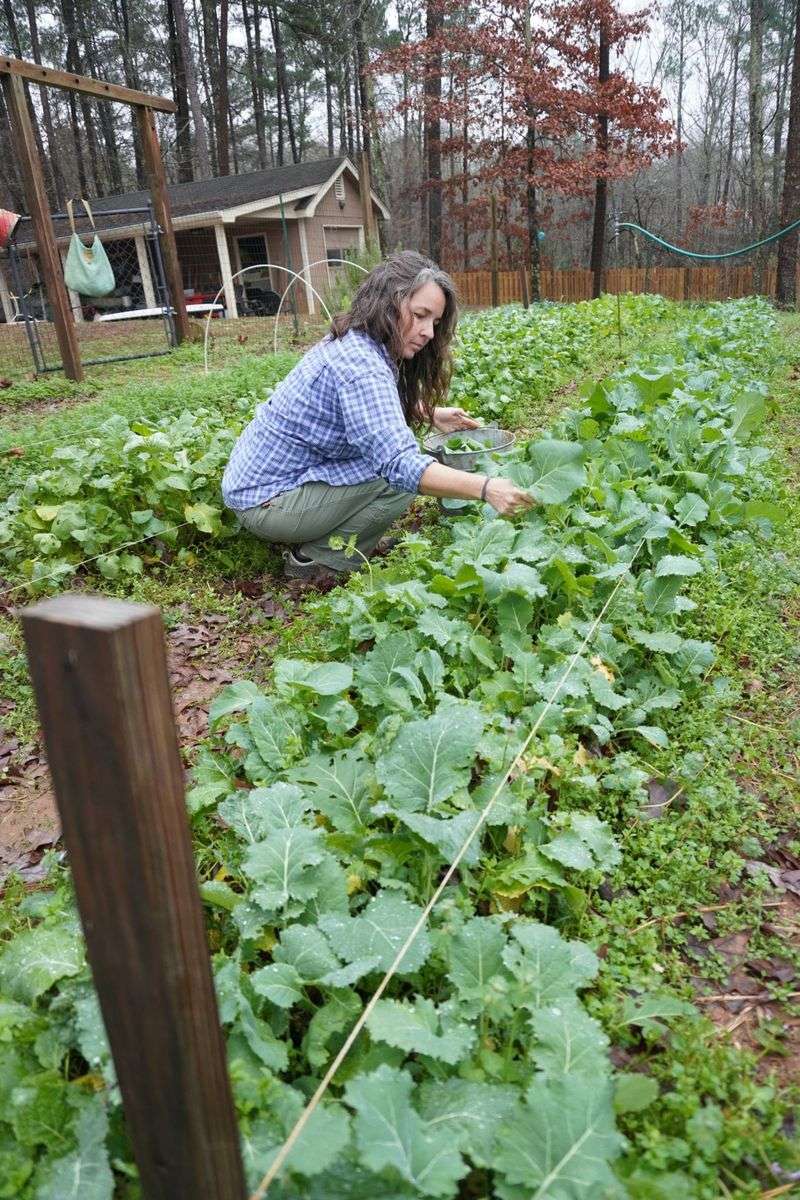
Think of a collard plant as a leaf factory. When you remove the big, usable leaves near the bottom or outside of the plant, the younger leaves above and inside keep developing.
UF/IFAS guidance recommends harvesting lower leaves as they mature.
Timing matters too. Arkansas Extension says the bottom leaves give maximum yields when you pick them before they get too old.
So a quick pass every few days or each week beats waiting until the lowest leaves turn tired and yellow.
Picking leaf by leaf is a different job from cutting the whole plant. Harvesting the entire plant gives you a big pile of greens at once, but it ends the plant’s ongoing production.
If you want a long season of dinners from the same row, take a few leaves per plant and leave the rest.
Keep expectations honest. Bottom-up picking is a smart way to keep a patch producing, not a proven cure for bitterness or tough texture.
Preserve the crown, not every upper leaf
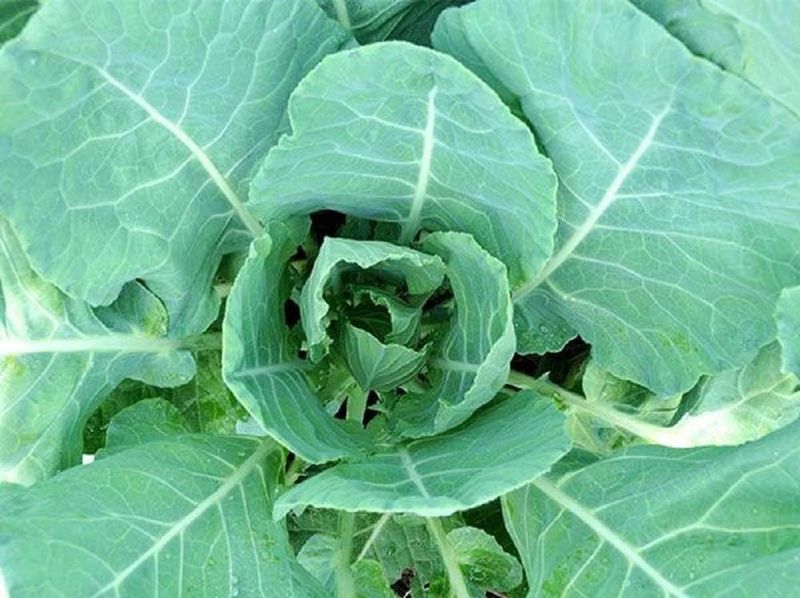
Here is where the word top gets confusing. The top of a collard can mean two different things: the large mature leaves on the upper part of the stem, or the young central growth and growing point at the crown.
For a plant you want to keep picking, protect that crown.
Removing one upper mature leaf is not a disaster. Nothing suggests that taking an upper leaf automatically hurts quality or stops production.
The real risk is cutting out the small center leaves that will become your next several harvests.
There is also a tender-leaf option. Arkansas Extension notes that gardeners may harvest the inner young rosette when they want tender leaves.
That works, but it is a different goal from keeping a plant growing for repeated picking, since you are taking the very growth that fuels future leaves.
A handy habit is to look at the center before every harvest. If you can see a healthy tuft of small leaves, pick around it and let it grow.
Use leaf maturity to judge when to pick
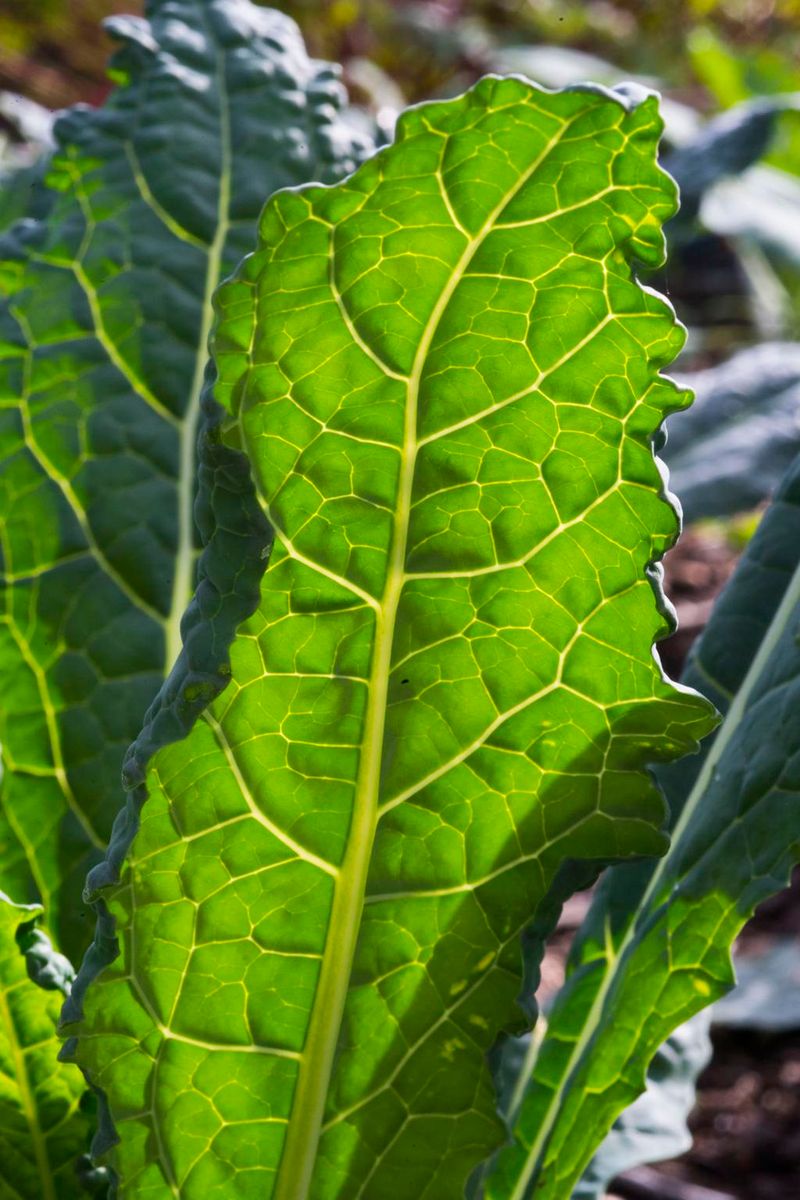
Leaf age is its own quality check, and it has nothing to do with which part of the plant you pick from. UGA Extension lists bright-green leaves with small midribs as the optimum harvest stage.
Large midribs are a sign of fibrous leaves.
Run your thumb along the center rib before you snap a leaf. A slim, flexible rib and a fresh green color mean the leaf is in its sweet spot.
A thick, stiff rib means the leaf has gone past its best.
An overgrown leaf stays overgrown no matter where it sits on the plant. Picking from the bottom does not reverse that, so the goal is to harvest leaves before they get that far.
If a few lower leaves have already gotten big and stiff, you can still use them in long-cooked dishes, or trim away the thick rib. Then shift to a regular picking schedule so the next round of leaves gets picked at a better stage.
A light frost may affect flavor
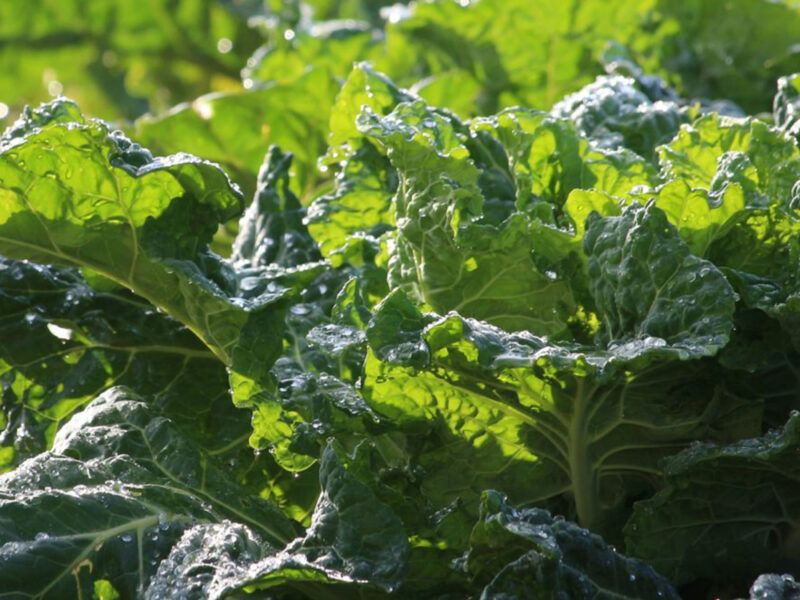
Many gardeners swear fall collards taste better after a chilly night. That may be true.
Arkansas Extension says a light frost may improve flavor.
That is about as far as the claim goes. Frost is a possible bonus for flavor, not a guarantee, and it says nothing about how tender a leaf is.
Leaf texture comes down to maturity. A big leaf with a thick midrib will still be fibrous after a frosty night, so keep picking at the right stage rather than waiting on cold weather to fix things.
In a mild stretch with no frost, do not worry. Keep harvesting on schedule, and if a cool snap arrives, take it as a pleasant extra.
Taste a leaf from your own patch and decide for yourself.
Local conditions determine how long the crop lasts
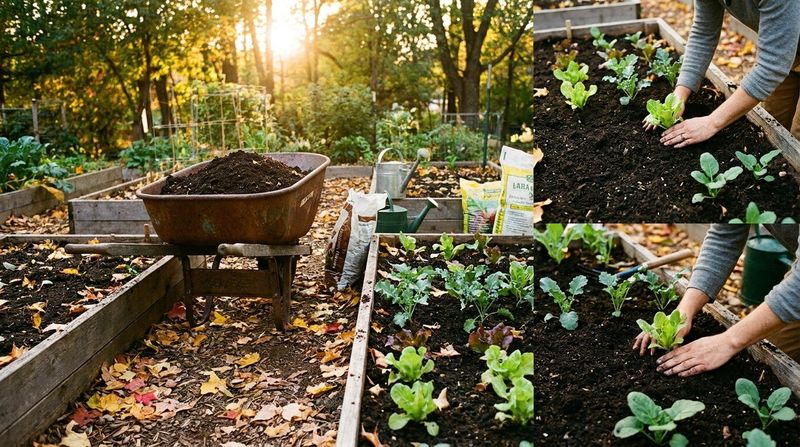
Collards handle cold better than many crops. Texas A&M identifies them as frost tolerant.
That does not mean every garden will keep producing all winter.
Planting windows differ a lot across the South. Texas A&M’s fall guide gives different collard planting dates for five Texas regions.
Florida varies too, and UF/IFAS lists separate windows for North, Central, and South Florida.
So skip any single planting date you read online. Look up your own region’s calendar through your county Extension office, and plan around your typical first and last frost.
Winter weather in your area, plus how well plants are established going into cold, will shape how long you can pick. Bottom-up harvesting helps you get the most from the weeks you have, but it cannot promise a winter harvest everywhere.
Rinse harvested leaves under running water
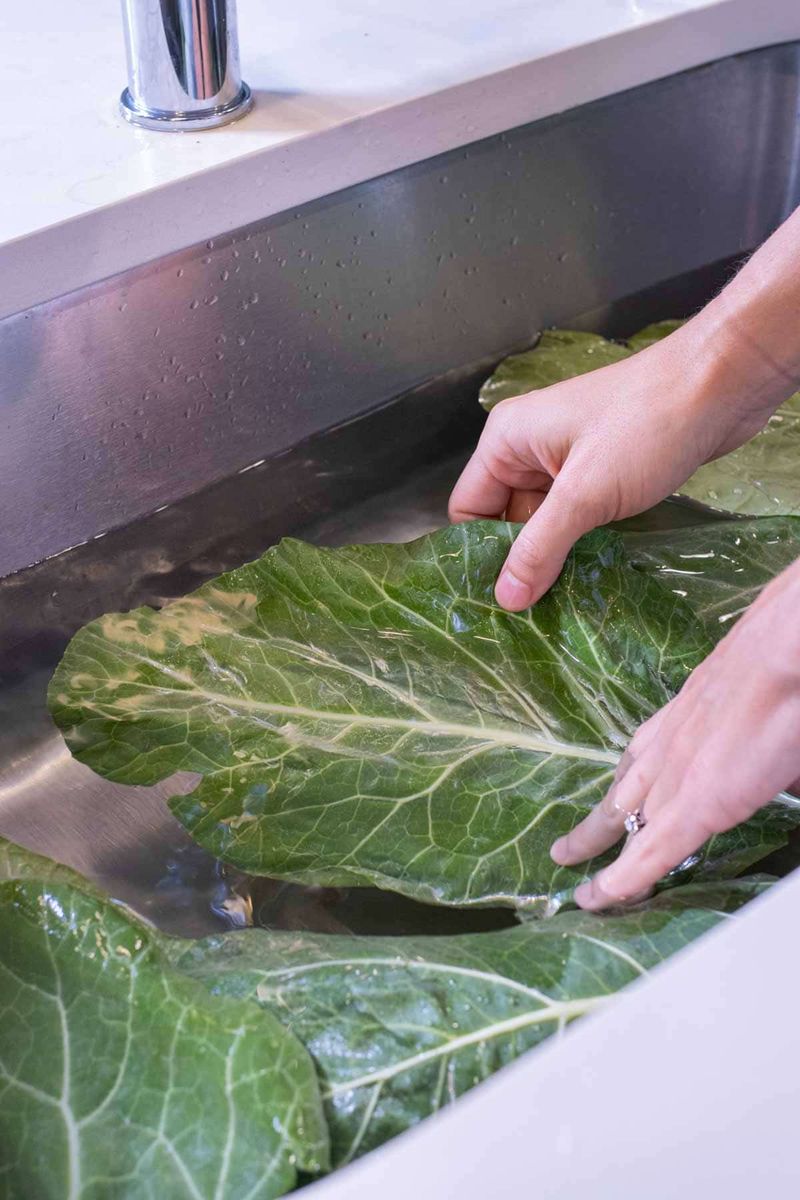
Once the basket is full, head to the kitchen and rinse each leaf under clean running water. Rub gently with your hands to loosen soil and grit, especially around the stem and the crinkled edges.
Skip the soap, bleach, and other household cleaners. FoodSafety.gov advises against washing produce with them.
Rinsing is about clean, safe food. It will not change flavor, tenderness, or how well the plant keeps producing, so treat it as its own step.
Collards are a sturdy crop, but a quick rinse is the finishing touch of a good harvest.