
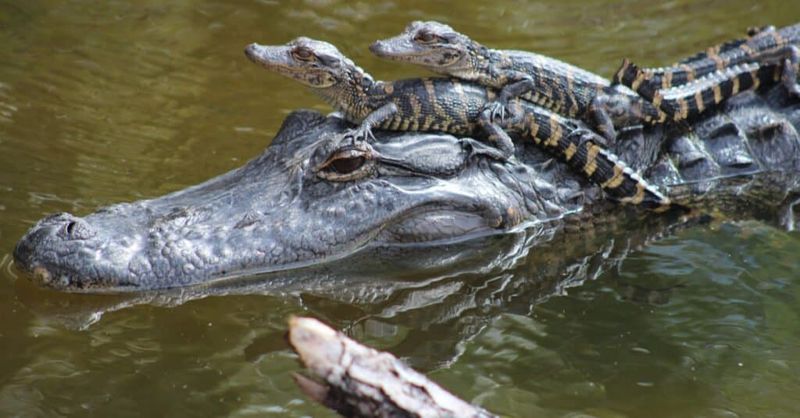
A small, repeated chirp near a Florida pond can make anyone stop and listen. One possible source is a baby alligator, and baby gators do have a family story that matters for safety.
But plenty of other animals make noise around water, so a sound alone does not tell you much. Here is how to think about it calmly and keep your family and pets safe.
What alligator hatchling calls mean
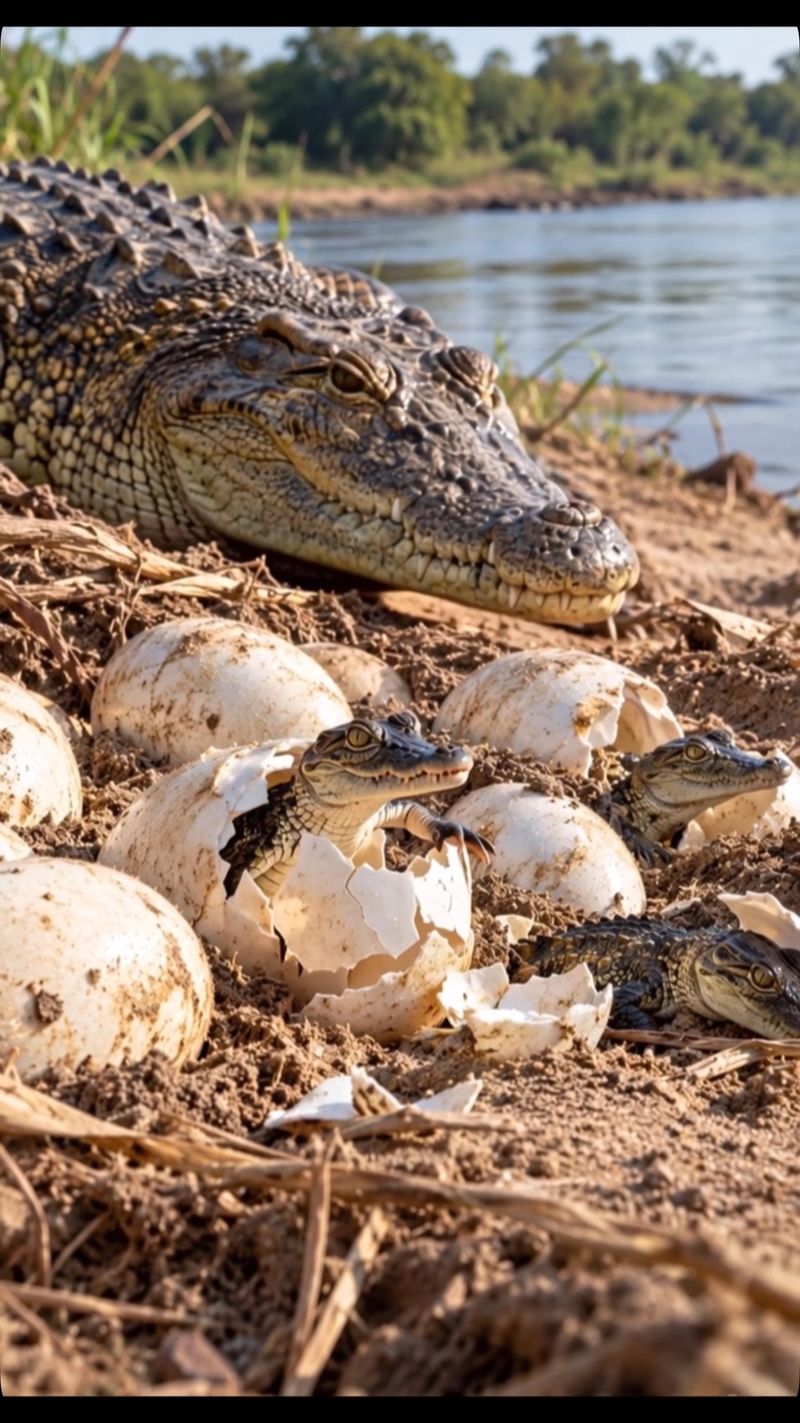
Baby alligators start talking before they ever see daylight. As hatching gets close, the young call from inside their eggs.
According to UF/IFAS, those calls prompt the female to open the nest so the hatchlings can get out.
That is the strongest link between a tiny chirp and a mother gator. If a sound truly comes from hatchlings, a female may be somewhere close.
The word that matters there is “if.”
Calls from inside eggs are only one kind of alligator sound. Young alligators also make contact calls and distress calls after they hatch, which help keep the group in touch.
A peer-reviewed study of how juvenile alligators respond to contact calls shows these sounds are part of how young gators communicate.
None of this turns an unknown pond-side noise into proof. The research describes what hatchlings do when they are confirmed to be the callers.
It does not give homeowners a way to name a mystery sound or pinpoint where a mother is.
Think of it as background knowledge. It explains why wildlife experts take baby gator calls seriously, while leaving room for the many other creatures that sound off near Florida water.
Any chirp you hear is simply a reason to stay alert and give the water’s edge some space.
When Florida hatchlings emerge
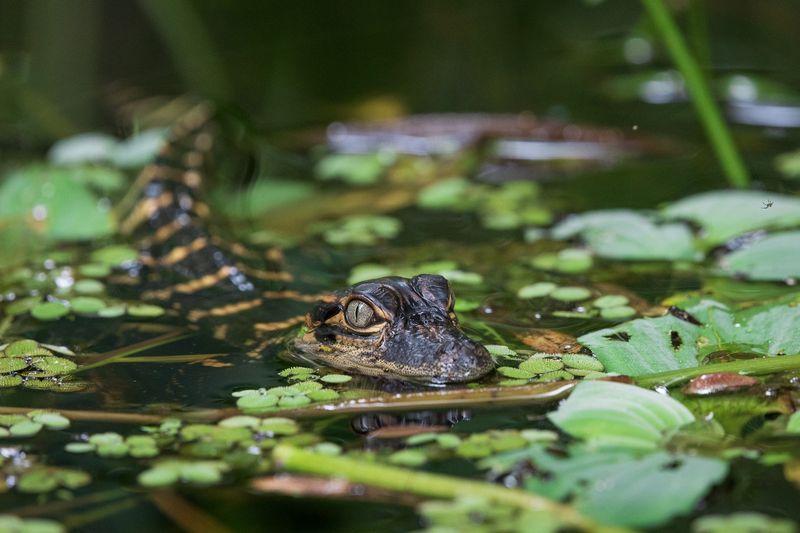
Late summer is the season to keep in mind. In Florida, hatchlings emerge mainly in August and September, based on UF/IFAS guidance.
That is right when many yards are still hot, wet, and busy with outdoor activity.
Once they hatch, young alligators may stay near the nest site for a couple of years. So the neighborhood around a nest can hold small gators well beyond the first few weeks.
This is a general pattern, not a fixed schedule for every hatchling or every pond.
Timing can make hatchlings one possibility worth considering if you hear a small, repeated call in August or September. Say you hear it on a warm evening in late August.
The date fits the season, but it does not tell you who is calling.
The calendar cannot prove that your pond has a nest. It also cannot prove that a particular sound came from a hatchling.
Nests are not guaranteed at any given pond, and some ponds never have them.
Use the season as a prompt for caution rather than a conclusion. Late summer is a good time to review your family’s pond habits, because the water’s edge is worth respecting all year in Florida.
A pond-side chirp is not an identification
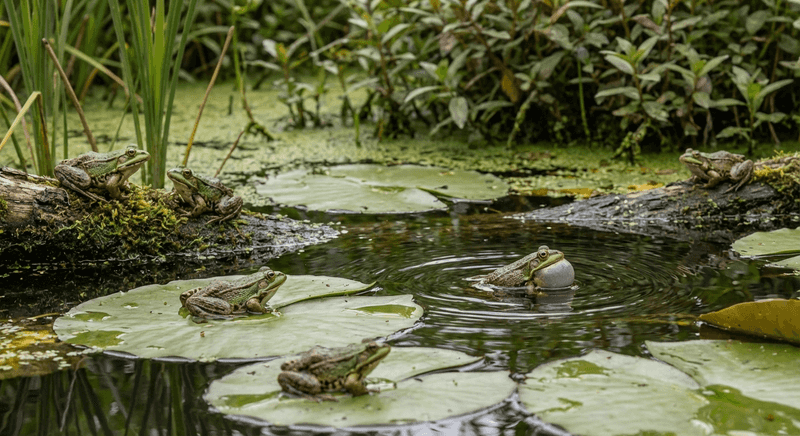
Florida water is a noisy place after dark. Frogs are common callers around ponds, ditches, and wet yards, and the Florida Museum of Natural History offers recordings of many Florida frog calls.
Some of them are high, short, and repeated, which is exactly what people describe as chirping.
That is why listening alone is not a reliable way to identify a sound. A cricket-like peep, a chirp, or a trill could come from any of several frog species.
A high-pitched noise does not point to alligators any more than it points to frogs.
If you want to learn more, try a safe approach from the comfort of your patio or porch. Compare what you hear with the museum’s recordings while staying well back from the water.
Matching a call to a known frog species can take pressure off the guessing game.
Please do not walk to the shoreline to find the source. Getting close to the water at night puts you in the very spot where a gator could be, and it can disturb animals.
UF/IFAS also advises against trying to get closer to see animals, which is useful advice if the sound happens to be a hatchling.
The practical takeaway is simple. Treat the sound as unknown, keep your distance, and let the water’s edge stay off limits for kids and pets either way.
Respect suspected nests without assuming an attack

Female alligators care for their nests and young, and that care can look protective. UF/IFAS notes that a female may hiss or approach when people come near a nest, and it says to avoid investigating a suspected nest or trying to get closer to see or record animals.
Defensive behavior is a warning, and it is not a promise of an attack.
The same extension resources report very few bites linked to females guarding nests or young, according to UF/IFAS wildlife conflict guidance. So calm, not panic, is the right mindset.
Respect works better than fear.
A mother is not always right beside visible hatchlings either. She may be nearby, or she may be somewhere else in the water.
Seeing a tiny gator does not tell you where she is, which is another reason to keep your distance.
Here is how that looks in practice. If you think you may have spotted a nest, such as a mound of plants near the water, back away and do not poke around in the vegetation.
Skip the phone zoom from the bank, and do not try to get a closer video.
Never pick up or move a hatchling, even if it looks lost. Even small alligators can cause injury, and moving one could draw a response from a female you cannot see.
Give the area room, and let the animals sort themselves out.
Keep children and pets away from the water’s edge
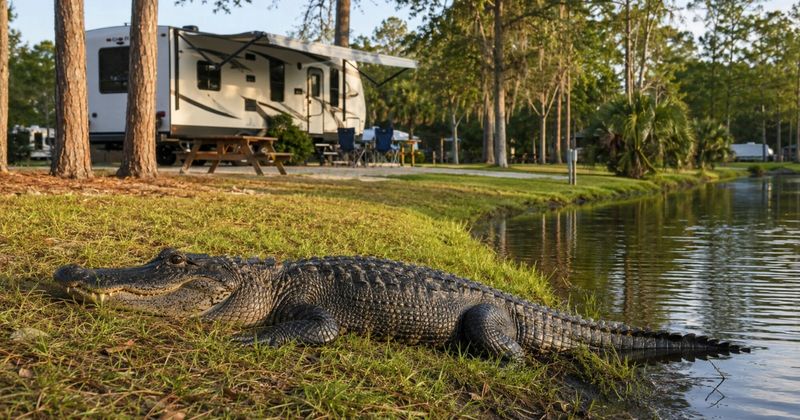
Safety around ponds comes down to a few steady habits. Keep children and pets away from the water’s edge anywhere alligators may be present, as UF/IFAS advises.
That includes ponds in neighborhoods, golf courses, and backyards.
For dogs, a leash is your best tool. Keep pets leashed and away from the water, and do not let them swim or explore pond edges.
A dog nosing through shoreline plants can disturb wildlife you never see.
Set up a routine that makes this easy. Walk pets on the side of the path farthest from the water.
Teach kids that the lawn is for play and the pond bank is not, and keep toys and balls from rolling toward the shore.
Never feed an alligator, and do not toss scraps, fish, or bread into the water. Feeding teaches gators to link people with food, which makes them more likely to cause trouble later.
It is also against the rules in Florida.
If a sound has you curious, resist the urge to settle it up close. Do not handle hatchlings or walk to the bank to see what is chirping.
Staying back is the safest answer when you cannot tell what is making the noise.
When to contact wildlife officials
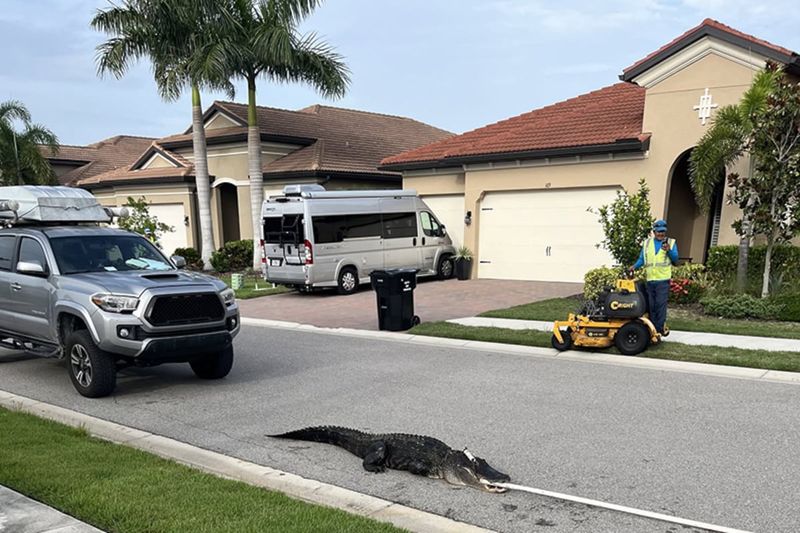
Not every alligator needs a phone call. According to UF/IFAS, the trigger is an alligator at least 4 feet long that you believe threatens people, pets, or property.
In that case, call the FWC Nuisance Alligator Hotline at 866-FWC-GATOR (866-392-4286).
Keep the number saved in your phone. Describe where the animal is and why you are worried, and stay well back while you do.
Trained contractors handle the rest.
A small alligator is a different situation, but it is still not a job for a homeowner. Do not handle even a small alligator, since small ones can bite and cause injury.
Leave them alone and keep people and pets away from the water.
That brings us back to the chirp that started all this. A pond-side sound by itself neither confirms an alligator nor locates a mother, so it is not a reason to call the hotline.
It is a reason to keep your distance and your habits steady.
Florida ponds hold plenty of mysteries after dark, and most are best solved from the porch.