
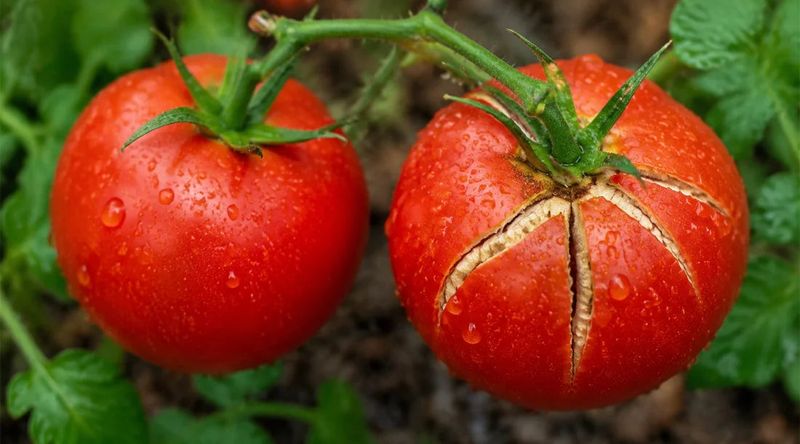
You walk out to check your tomatoes and find deep splits across the best fruit after a soaking storm. It is frustrating, especially when frost or more rain is on the way.
The good news is that mature fruit can often be rescued if you pick it at the right time. Here is how to spot the problem, harvest smart, and ripen tomatoes on your counter.
Why tomatoes crack after a wet spell

Splits show up in two common patterns. Some cracks radiate outward from the stem end like spokes, and others circle the shoulder of the fruit in rings.
Heavy rain or a sudden jump in soil moisture after a dry stretch is closely linked to this problem, according to Iowa State University Extension. When roots take up a rush of water, the inside of the fruit can swell faster than the skin can stretch, and the skin gives way.
Ripening fruit is especially vulnerable.
Cold itself has not been shown to be the direct cause of ordinary growth cracks, so try not to blame every split on a chilly shower. Soil that swings from bone dry to soaked is the better suspect.
Extension guidance on tomato disorders describes cracking as a common result of uneven moisture, which is why a wet week after a dry one can hit so hard.
Which tomatoes can finish ripening indoors?
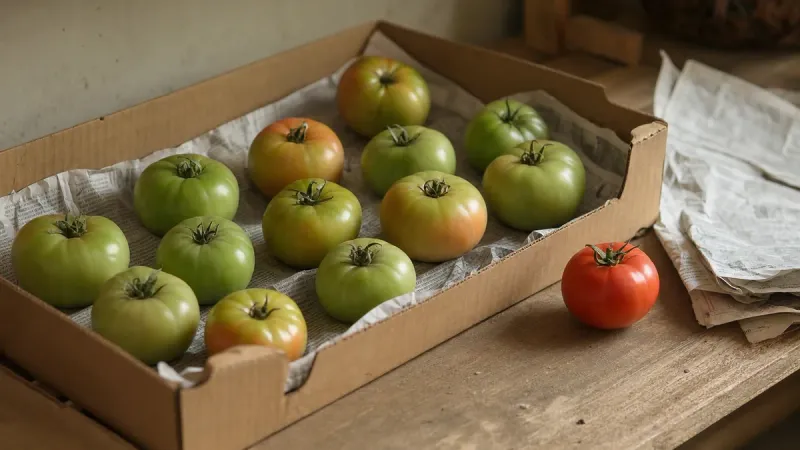
Before you grab a basket, it helps to know which fruit is worth picking. A tomato at the breaker stage, meaning the first visible shift from green toward its ripe color, can keep ripening after it leaves the plant.
Full-sized, mature-green fruit can finish indoors too.
Small, hard, truly immature green tomatoes are the problem. Guidance from University of Minnesota Extension notes that fruit picked before it is mature may fail to ripen satisfactorily.
Florida’s UF/IFAS handling guide likewise recognizes mature-green and breaker stages as the points when harvested tomatoes can ripen.
Color alone will not tell the whole story. Judge size too: a fruit near the full size for its variety, with a glossy, firm skin, has a far better chance than a runt of the cluster.
Think of first blush as a handy shorthand, not a guarantee.
Pick mature fruit when local weather threatens
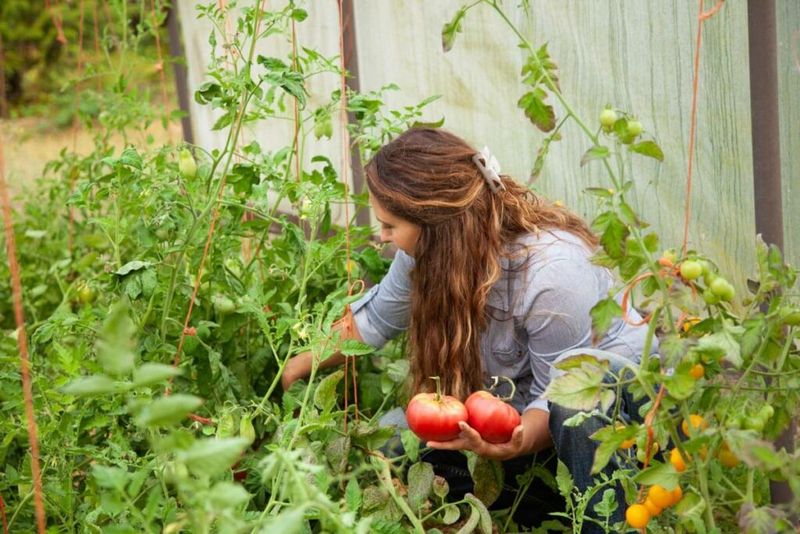
Your own forecast should set the schedule. Frost dates and rainy spells vary widely across the South, so there is no single deadline that fits every garden.
Watch for heavy rain in the coming days or a cold snap in your local outlook.
When either one is on the way, harvest tomatoes that have begun to color and full-sized mature-green fruit instead of waiting for every last one to redden. Pulling them early reduces their exposure to soaking rain and chilly nights.
Guidance from UC IPM backs picking at these stages when weather turns.
Keep expectations realistic. Tomatoes ripened on the vine under good conditions offer the highest quality, as Illinois Extension points out.
Early picking is a way to salvage mature fruit, and some tomatoes may still spoil or taste milder than garden-fresh ones.
Ripen harvested tomatoes in a warm, shaded spot
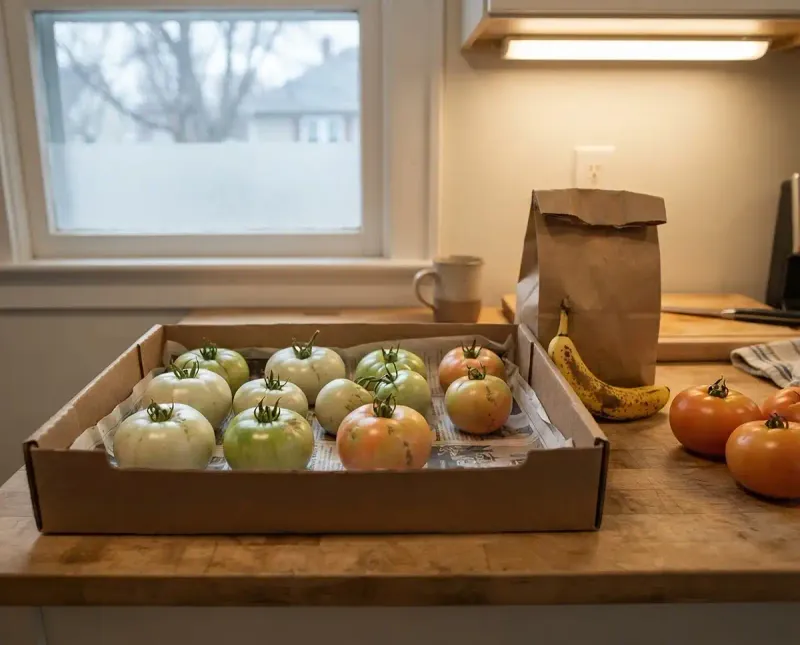
Pick a room that stays around 65 to 75 degrees F. A kitchen counter, pantry shelf, or spare room all work.
Skip sunny windowsills, since direct sun can heat fruit unevenly and does not speed up good ripening.
Wipe off dirt, then spread tomatoes in a single layer, stem side up, so they are not touching. Extension guidance from Oregon State University supports warm indoor storage, and Illinois Extension describes ripening picked fruit indoors as a practical option.
A paper bag can hold in a little ripening gas, but it is optional. Whatever you choose, check the tomatoes every day or two, pulling out ripe ones and any that look soft or moldy.
Expect good eating, though the flavor may not match a tomato ripened on the vine in ideal weather.
Inspect cracked fruit before using it
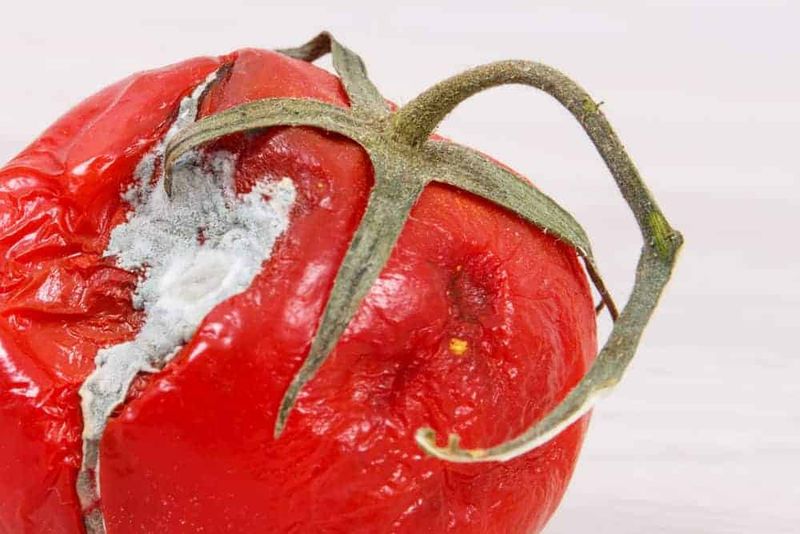
A split in the skin is an open door. Fungi and bacteria can move in through cracks and lead to rot, a risk noted in extension guidance on tomato disorders.
Keep cracked tomatoes in their own bowl, apart from intact fruit, and look them over daily. If a tomato is still firm, clean, and sound, use it promptly in a sauce, sandwich, or salad.
Cut away nothing questionable: if you see mold, a sour smell, weeping liquid, or soft decayed spots, throw the fruit out.
Do not put cracked tomatoes into home-canned salsa. University of Minnesota Extension’s salsa canning guidance warns that damaged tomatoes can compromise safety.
Save only perfect, uncracked fruit for canning.
Keep soil moisture more even to reduce cracking risk
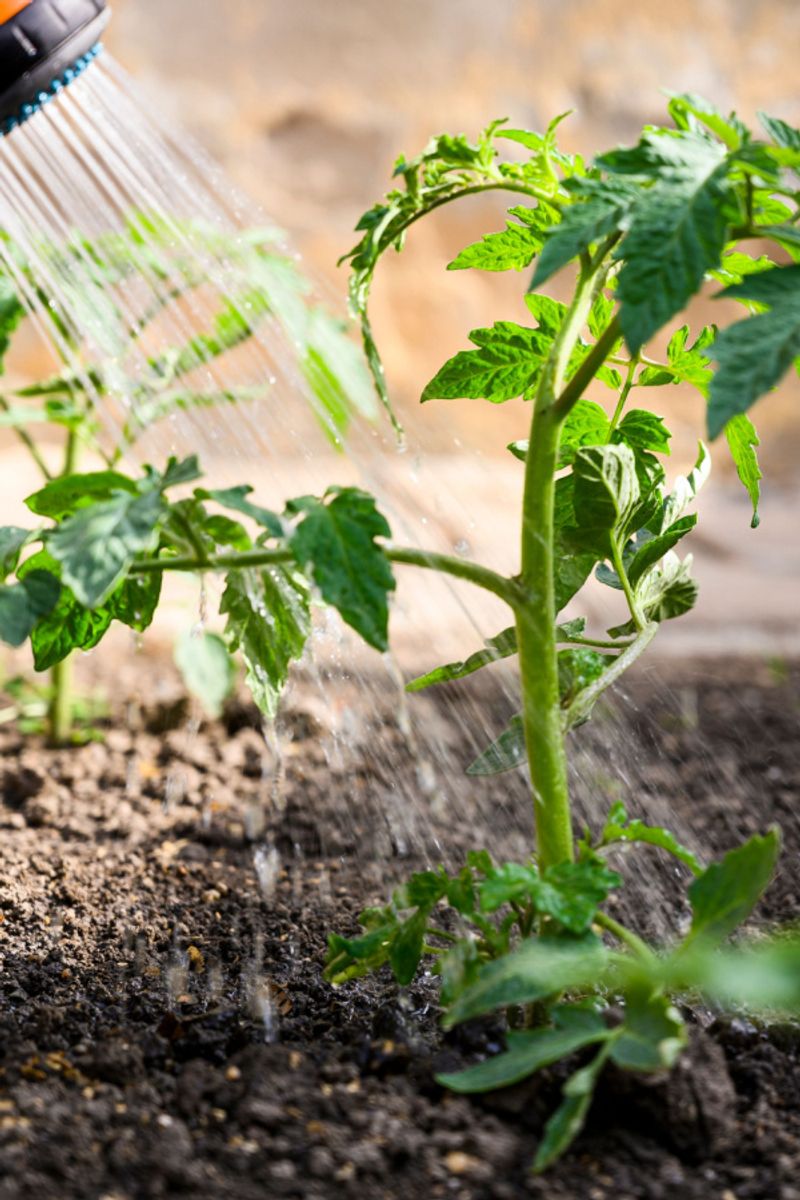
Steady moisture is the best defense. Water on a regular schedule rather than letting beds dry out and then drenching them, and add a few inches of mulch such as straw or shredded leaves to slow evaporation.
Iowa State University Extension recommends this kind of even watering with mulch.
Go easy with the pruners, too. Leaves shade fruit and help protect it, so stripping too much foliage leaves tomatoes exposed.
Fact sheets like University of Delaware’s guide to fruit cracking also point to consistent moisture as a key habit.
These habits lower the odds of splitting, but they cannot stop every crack, especially when a storm follows a long dry spell. Even then, a tomato picked on time can still make it to the table.