
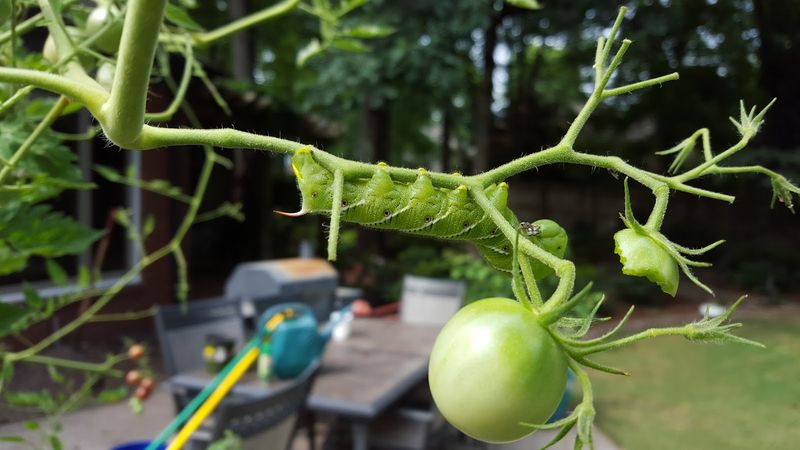
Your tomato plant looks a little thinner than it did last week, and a few stems are bare. Somewhere on that plant, a green caterpillar the size of a finger may be blending in perfectly with the leaves.
Hornworm larvae are masters of disguise, so the clues they leave behind often get noticed first. Here is how to read those clues, confirm the culprit, and respond in ways that protect your plants and the helpful insects in your California garden.
Why you may see damage before the caterpillar
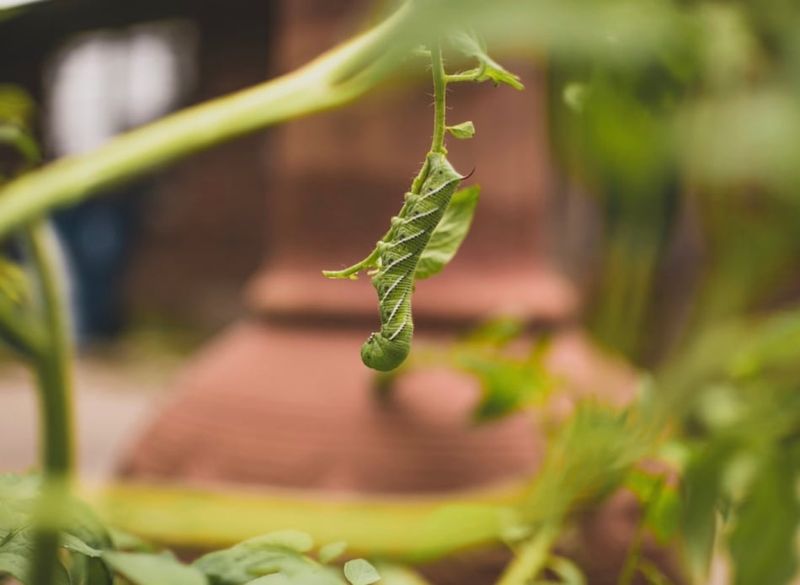
Hornworm eggs hatch into larvae, and the larvae are the only stage that feeds on tomato plants. Once they hatch, they start chewing.
That timeline is simple, but spotting the pest is another matter, because the caterpillar’s green body blends in with tomato foliage so well.
This is why a gardener may notice the feeding clues first. A bare stem or a ragged leaf is easy to see, while a plump green caterpillar lying along a stem can be almost invisible.
Missing it for a day or two says nothing about your attention. It says a lot about how good the camouflage is.
Timing in California varies by region. According to UC IPM home garden guidance, hornworm damage is most common in midsummer, with a possible smaller peak in late summer.
Damage also tends to be more severe in warm inland areas, such as the Central Valley and inland Southern California, than along the cooler coast.
Because local weather and garden conditions shape the season, there is no single date that works statewide. A better habit is to check plants regularly through the warm months.
Utah State University Extension also points out that larvae can be hard to find until feeding has begun, so the leaves often tell the story before the caterpillar does.
Look for leaves and droppings
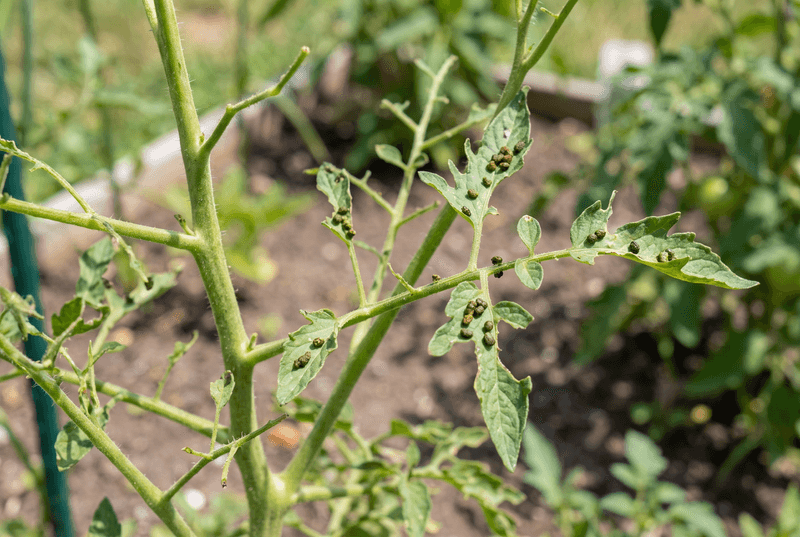
A few clues can lead you straight to a feeding larva. Look for missing leaves or stems, and for light feeding on the upper or newer growth.
Hornworms often start there, so a tip that looks nibbled can be worth a closer look.
Then check for droppings, which gardeners call frass. Maryland Extension describes them as dark green or black pellets on leaves or on the soil under the plant.
They are fairly large, so they stand out against mulch or bare ground.
Frass falls downward, so it can point you toward a caterpillar feeding higher up. If you find pellets on a lower leaf, look at the stems and foliage directly above.
Utah State University Extension also notes that droppings can help locate larvae that are hiding.
Treat these signs as a reason to inspect, not as proof. Other pests chew tomato leaves too.
UC IPM agricultural guidance cautions that when foliage damage is severe, it is worth checking whether hornworms or other caterpillars, such as armyworms, are responsible. You can read more in the UC IPM tomato guidelines.
Finding a caterpillar on the plant is the best confirmation. Until you do, hold off on any treatment and keep looking.
Search the plant for eggs and larvae
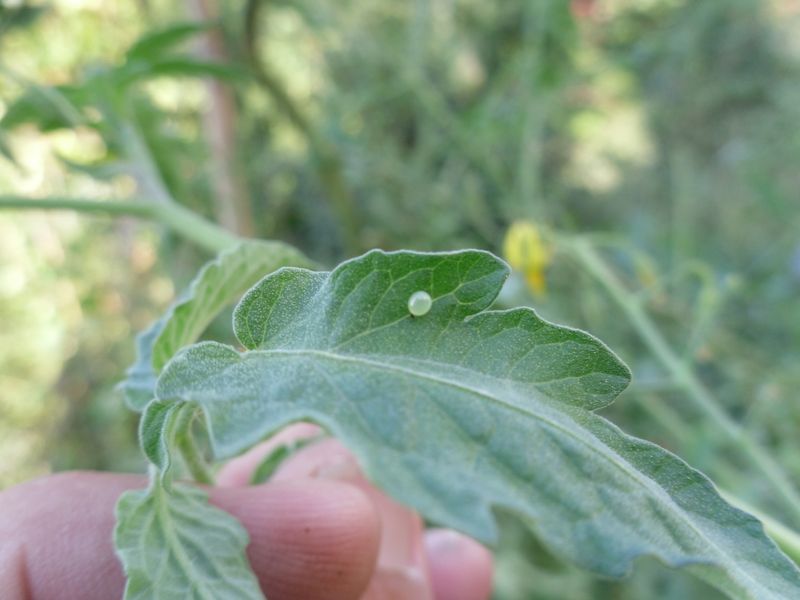
Once you have a clue, turn it into a routine. Start with the upper growth, then lift leaves and check the undersides.
Females lay eggs singly, often on the underside of a leaf, so you will not find clusters.
Try checking in early morning or evening. Larvae can hide during the day, and cooler hours may make them easier to find.
A flashlight at dusk can help you scan stems, where the stripes and lines break up the caterpillar’s outline.
It helps to know which stage does the damage. According to UC IPM, larvae are the only damaging stage.
Eggs, pupae, and adult moths do not feed on the plant. Larvae eat leaves, and they can also chew blossoms and fruit, including large pieces of green fruit.
Two species can show up on tomatoes. UC IPM tomato guidelines explain that the tobacco hornworm has seven diagonal stripes along its sides, while the tomato hornworm has eight V-shaped or chevron markings.
You do not need to sort out the species before acting. Both feed in similar ways, and the same sensible steps apply.
For more on hiding habits and monitoring, see Utah State University Extension.
Remove active feeders and spare cocooned caterpillars
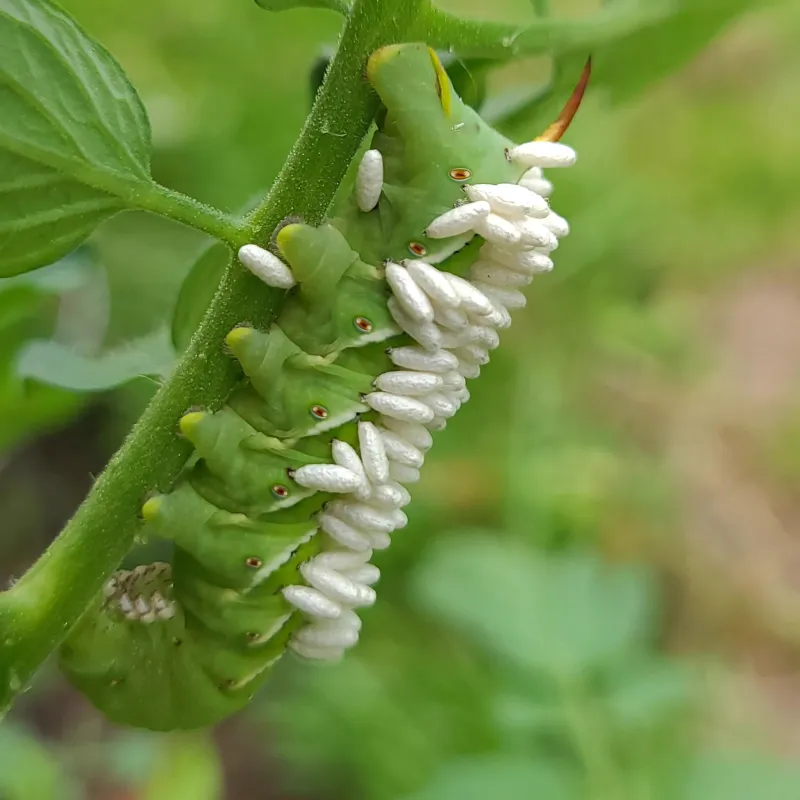
For a few plants, hands-on removal is a fine place to start. UC IPM recommends handpicking or snipping off visible caterpillars.
Dropping them into a bucket of soapy water is one way to dispose of them, as Maryland Extension describes.
Before you pick one up, look it over. Small white, rice-like cocoons on a hornworm’s back are not eggs.
They belong to parasitoid wasps, which are natural enemies of the hornworm.
When practical, leave a cocooned caterpillar where it is. A parasitized hornworm stops eating and eventually dies, and the wasps go on to help control future caterpillars.
You can remove other hornworms nearby and let this one do its quiet work.
Some gardeners consider a spray. If you do, it should be secondary to checking plants and hand removal.
The product is Btk, a form of Bt, and UC IPM says it works against smaller larvae.
Btk affects caterpillars broadly, so it can also harm butterfly and moth larvae that feed on treated foliage, as described in UC IPM leaf-feeding caterpillar guidance. Apply it only to the plants that need it, and follow the product label.
After harvest, soil disturbance may reduce pupae
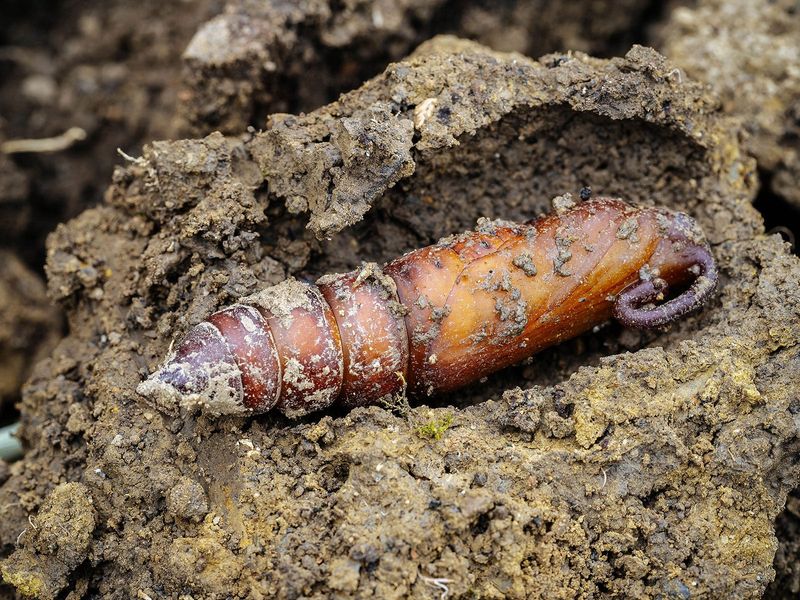
Hornworms have a life stage you cannot see from above. Both species overwinter as pupae in the soil, waiting to emerge as moths.
That makes the soil under your tomatoes worth a thought once the season ends.
For California, UC IPM recommends discing or rototilling after harvest to destroy pupae. The UC IPM tomato guidelines describe this step for commercial fields.
For a home garden, Maryland Extension says spring or fall tilling may uncover and kill pupae. Turning the soil can expose some to predators and weather, so it may lower the number that survive.
Think of it as a possible way to reduce numbers, not a guarantee. Moths can fly in from other yards, and some pupae may be missed.
Soil work is optional, not a required winter chore.
There is also no single date that fits all of California. Coastal, valley, and inland gardens finish their seasons at different times, so work the soil after your own harvest is done.
A light turn of the bed with a fork or tiller is enough for most small plots.
Use the clues to guide your next check
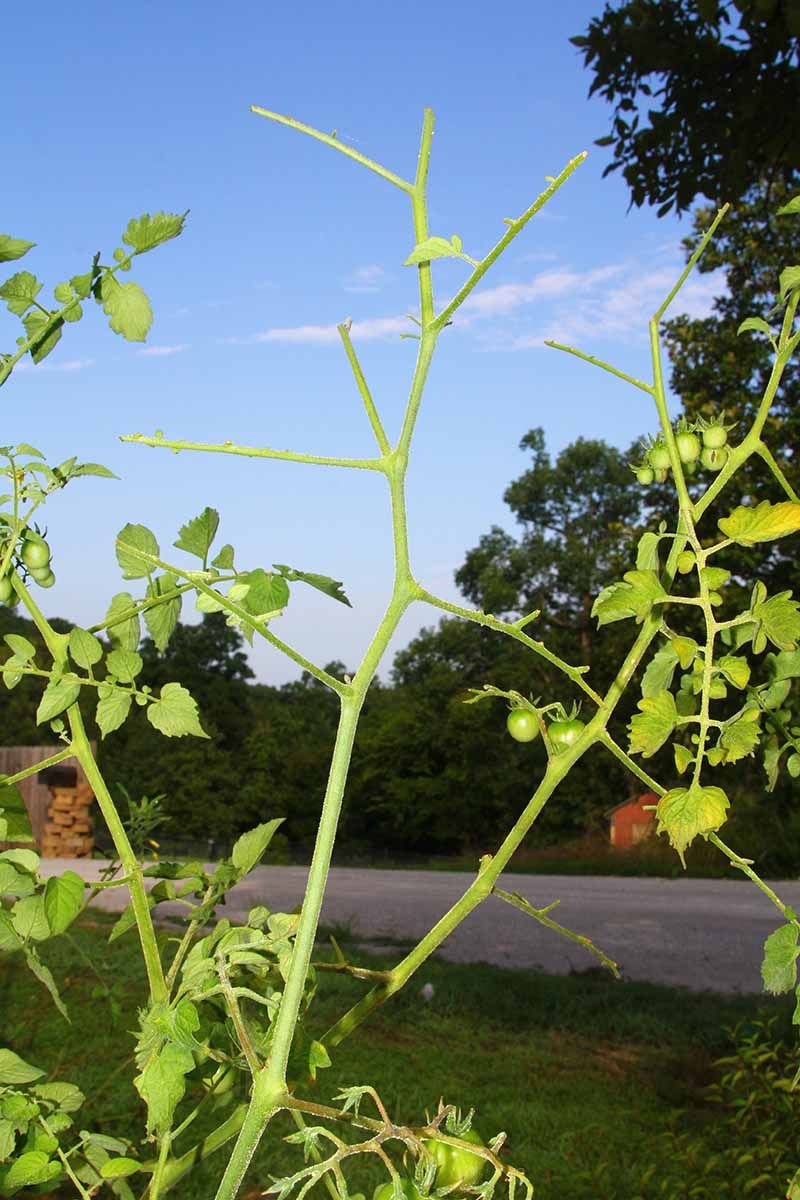
Next time a tomato plant looks chewed, let the leaves and droppings send you looking. Confirm you have a hornworm before you act, since other caterpillars can cause damage too.
Hand-remove the feeders you find, and leave any caterpillar wearing white cocoons for the wasps.
After harvest, turning the soil may reduce the pupae waiting below, and UC IPM and Maryland Extension both discuss it. No single step keeps a garden hornworm-free, but together they keep you in control.
A well-camouflaged caterpillar is easy to miss, but its chewing never is.