
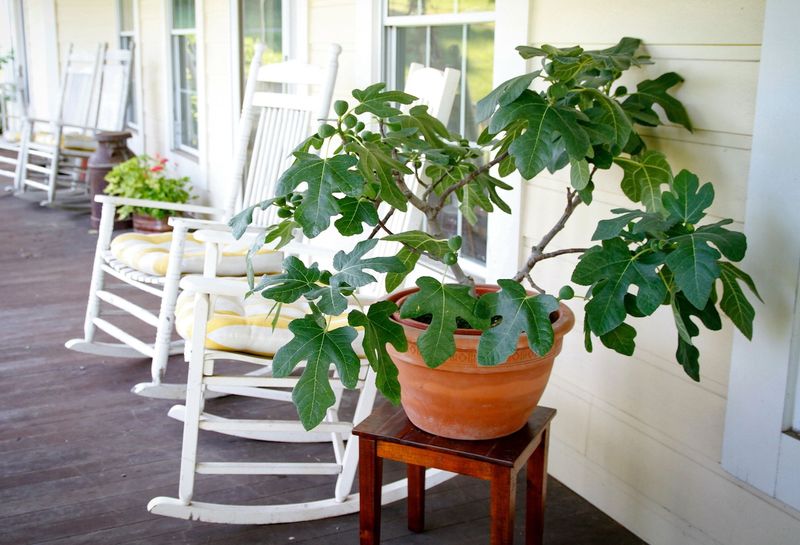
A fresh fig picked warm from your own tree sounds like something that needs a big backyard. Many California gardeners find that a compact fig in a roomy pot can work on a small patio, as long as there is space for the container.
Pruning helps manage the size, but it works best as part of regular care, not as a single magic cut. Here is how to set up a container fig and what to expect from it.
A patio fig needs a realistic size plan
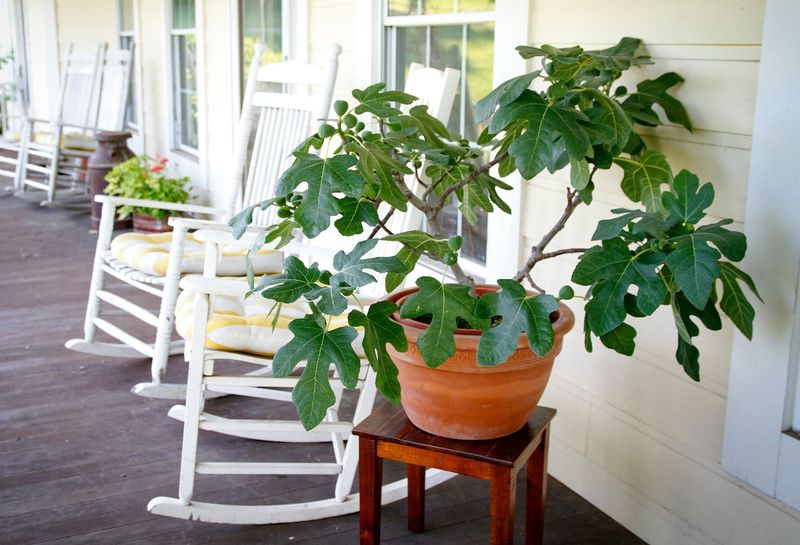
Yes, an edible fig can live in a container on a patio. The catch is that a compact result comes from several choices working together: the variety, the pot, the sunshine, and steady care through the year.
No single cut keeps a fig small forever.
Space matters too. University of Arizona Extension guidance recommends a pot at least 24 inches across for container figs, so a patio needs room for a substantial planter, not a miniature one.
A small patio can work, but a tiny balcony corner may not.
Pruning is the tool that manages the canopy. UC IPM notes that figs tolerate heavy pruning, but it also advises gentler pruning as trees mature.
Cutting too hard can also cost you some fruit, which we will cover below.
The plan in the next sections is simple: pick a compact fig, give it a big pot and good light, prune selectively while it is dormant, and keep checking the container as the roots grow.
Choose a container-suited fig and a substantial pot
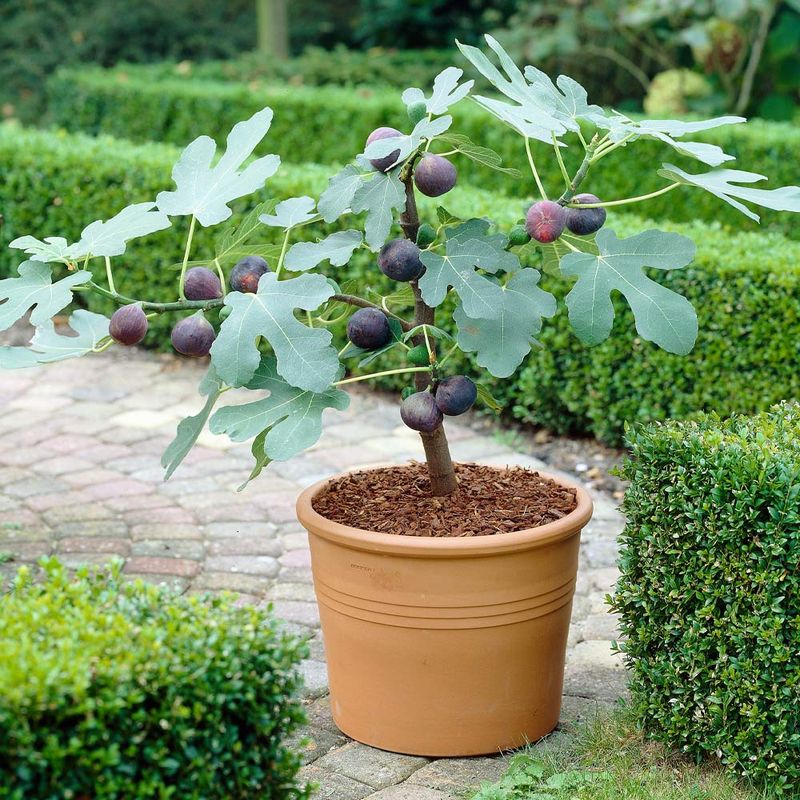
Variety is your first size-control decision. Starting with a fig bred or known for container life is easier than trying to squeeze a large, vigorous tree into a pot.
The University of Arizona Extension lists ‘Fignomenal,’ ‘Little Miss Figgy,’ and ‘Little Ruby’ as container-friendly options.
Next comes the pot. The same Arizona guidance recommends a container at least 24 inches in diameter.
That number comes from Arizona Extension, not from a California standard, but it is a useful benchmark for planning how much patio floor your tree will claim.
The growing medium counts as much as the pot size. The source calls for a porous mix, meaning one that drains freely instead of staying soggy.
A heavy, packed soil can hold too much water around the roots.
Also expect to water more often than you would for a fig planted in the ground. A big pot holds more moisture than a small one, which helps, but it still dries out faster than garden soil.
Before you buy, measure your patio and picture a 24-inch pot with a leafy tree above it. If that fits with room to walk around it, you are in good shape.
If not, a smaller pot will likely mean more frequent stress for the plant.
Give the tree sun and monitor its water
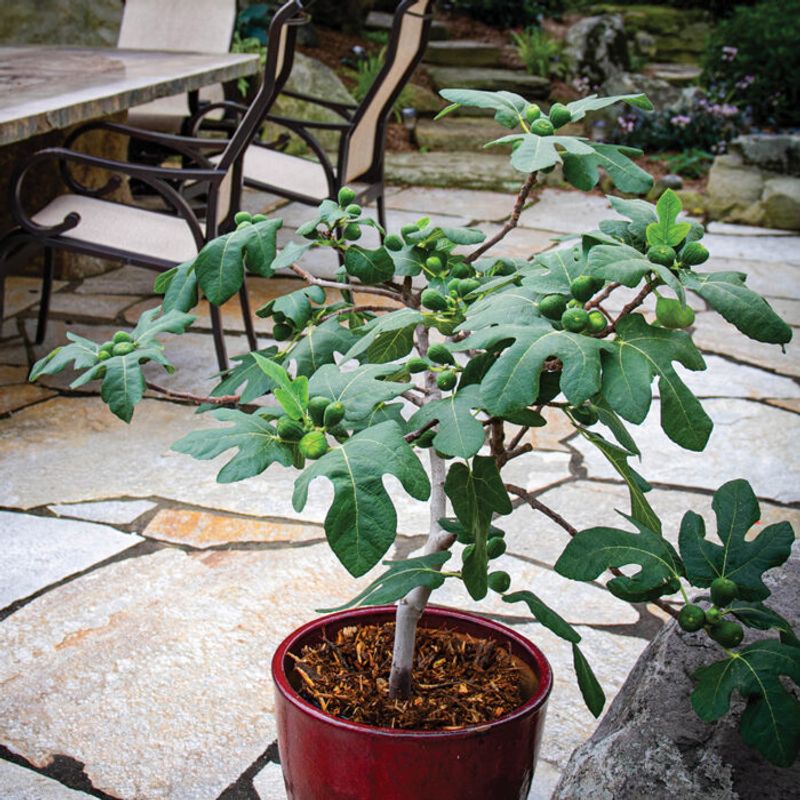
Sunshine is the easy part in most of California. UC IPM says figs do best in full sun, so pick the brightest spot on your patio, ideally one that gets sun for most of the day.
Water is where containers demand more of you. The Arizona Extension container guidance warns that potted figs are sensitive to water stress and should not be allowed to dry out.
A bright patio against a warm wall can dry a pot quickly during our long dry summers. Try pushing a finger a couple of inches into the mix each morning.
If it feels dry, water slowly until it drains from the bottom.
Curling or drooping leaves on a hot afternoon can be a clue that the pot is running low. Check the soil before assuming something else is wrong.
Water-wise habits help here. Mulch on top of the mix and a saucer-free, well-draining setup let you water deeply and less wastefully than frequent sprinkles.
Use dormancy as your California pruning cue
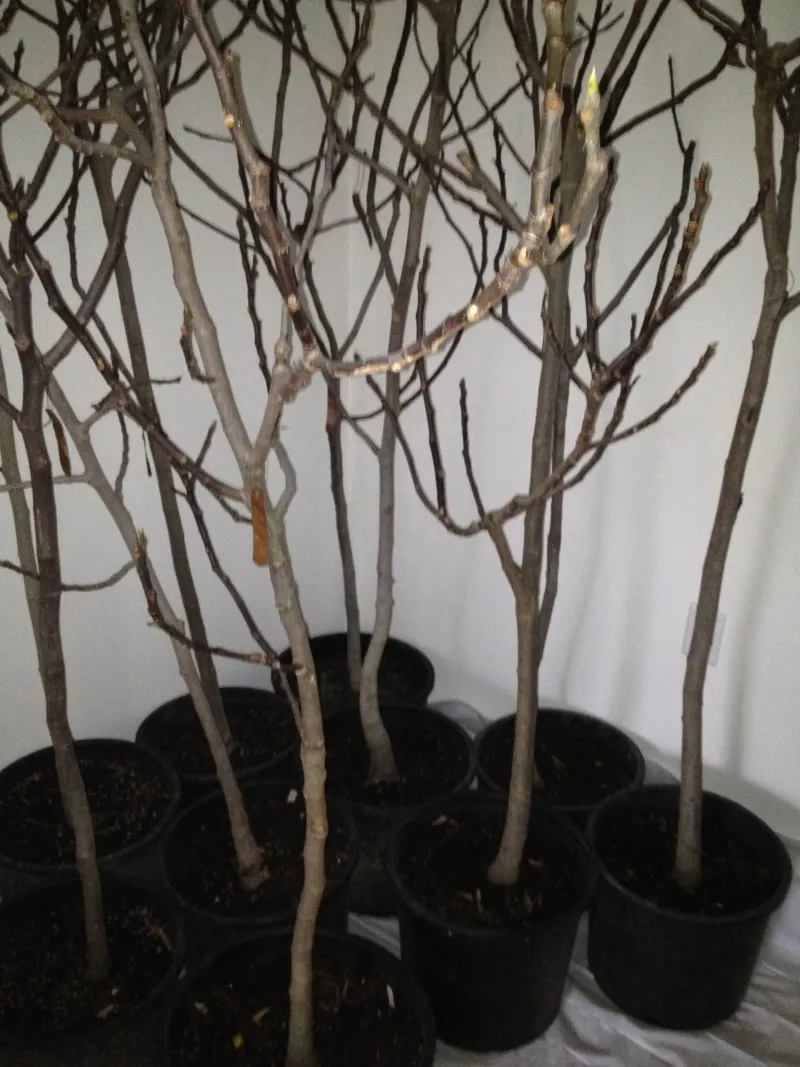
Ask five California gardeners when to prune and you may hear five dates. That is because climate varies from foggy coast to hot inland valley.
The better cue is the tree itself: wait until it has dropped its leaves and gone dormant.
UC IPM recommends dormant-season pruning to remove interfering or broken branches and to manage structure. Sonoma County Master Gardeners also describe winter pruning.
Your local weather decides when dormancy actually arrives.
If the tree still has leaves, or new growth is pushing during a mild spell, it is not ready. Wait and watch.
Be careful about borrowing advice from other states. UF/IFAS recommends pruning Florida figs after harvest, generally in late summer, and warns that heavy winter pruning there can remove next year’s crop.
That timing is for Florida, not California.
Thin and shorten selectively to manage the canopy
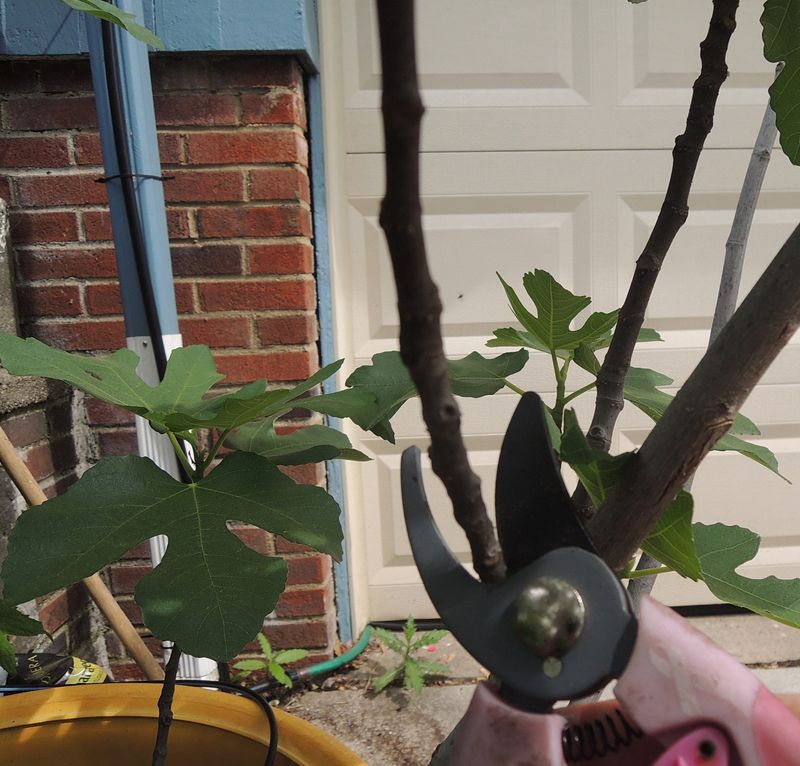
Start with the easy decisions. Remove branches that are broken, dead, or rubbing against each other.
UC IPM advises taking out interfering or broken branches during the dormant season as part of managing the tree’s structure.
Next, look at height and crowding. Thinning means taking a branch off at its base so light and air reach the center.
Shortening means trimming a branch back to a point that keeps the tree within its space.
Step back often while you work. Your goal is a canopy that fits the patio and still has an open, balanced shape, not a row of identical stubs.
You may come across the idea of cutting every branch back to a set number of buds. Sonoma County Master Gardeners describe cutting back to a few nodes as one way to hold height down.
It can work for some trees, but it is not a rule for every fig, since variety, age, and your crop goals all matter.
Also plan to ease off as the tree ages. UC guidance calls for less vigorous pruning as trees mature, so your first years may involve bolder shaping than later ones.
A practical habit is to make a few thoughtful cuts each year instead of one big cut every few years. Small, regular adjustments are easier on the tree and easier on you.
Balance canopy size against the harvest
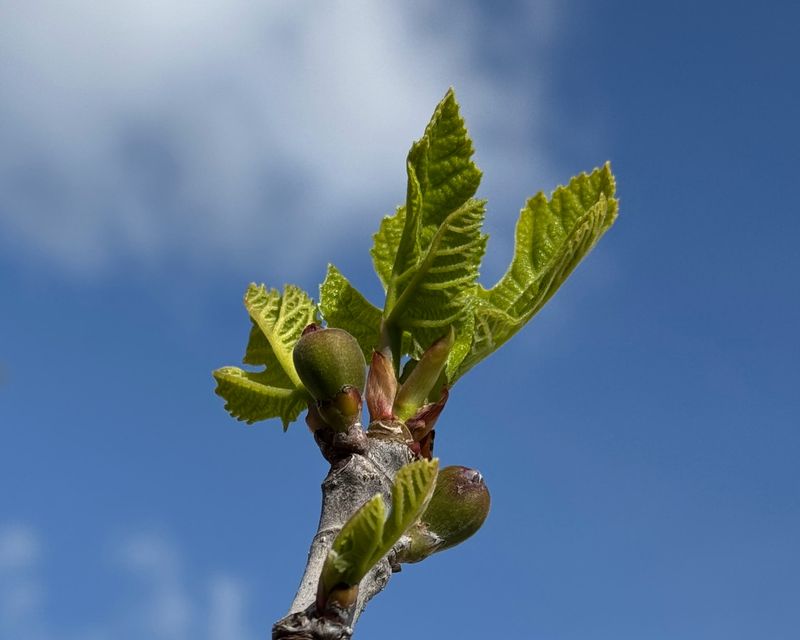
Here is the tradeoff behind every size-control cut. According to UC IPM, mature figs set fruit on current-season growth, but some also produce an earlier breba crop on previous-year growth.
That means cutting back last year’s wood can remove those early figs. UC Master Gardeners of Santa Clara County caution against heavy winter pruning when it would take off previous-year fruiting wood.
Repeated size-control pruning can also trim the harvest overall. California Rare Fruit Growers warns that it can reduce the crop.
Heavy pruning is not a shortcut to more fruit.
So decide what you want most. If a compact shape matters more, you may accept a lighter early crop.
If you love those first figs of the season, prune more gently and leave some of last year’s branches.
A simple test is to look at which branches carried fruit last summer. Keep a few of those, and do your shortening on the others.
Results vary by variety and tree age, so keep notes year to year.
Keep up with the container as the fig grows
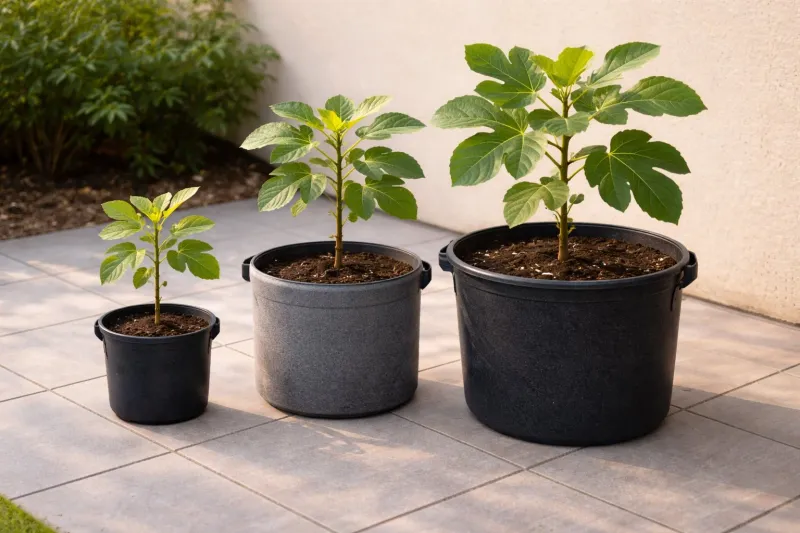
Planting day is only the beginning. A container fig needs drainage, so make sure the pot has holes at the bottom and that water runs out freely after you irrigate.
Standing water around roots can cause problems.
Keep checking moisture as the seasons shift. A pot that stays damp in spring may dry within days in July, so your routine should change with the weather.
Roots deserve attention too. Arizona Extension advises increasing pot size as roots develop.
Clues that the tree is outgrowing its home include roots poking from drainage holes, water running straight through, or growth that slows.
A pot does not hold a fig at a fixed size forever, and it is not a maintenance-free way to restrict one. It is a tool that works only when you keep up with watering, root checks, and pruning.
Mark a yearly date on your calendar to lift the pot slightly and look underneath. That quick check can tell you whether it is time to move up a size.
Protect your skin while pruning
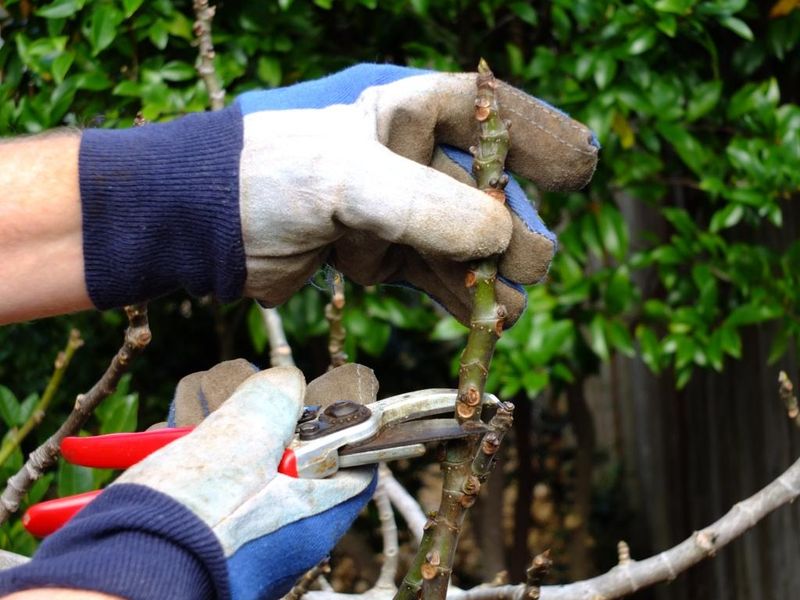
Fig branches ooze a milky sap when cut, and it can bother your skin. University of Maryland Extension recommends gloves for handling figs, and UF/IFAS also lists the latex as a skin irritant.
Wear gloves, long sleeves, and long pants when you prune. Eye protection is a good idea too, since branches can spring back.
Sunlight adds another reason for care. A case report describes a skin reaction after fig sap met skin and ultraviolet light.
It is not common, but it is easy to avoid.
If sap lands on bare skin, wash it off promptly with soap and water and keep that area out of the sun. Fig pruning is a simple chore when you dress for it.