
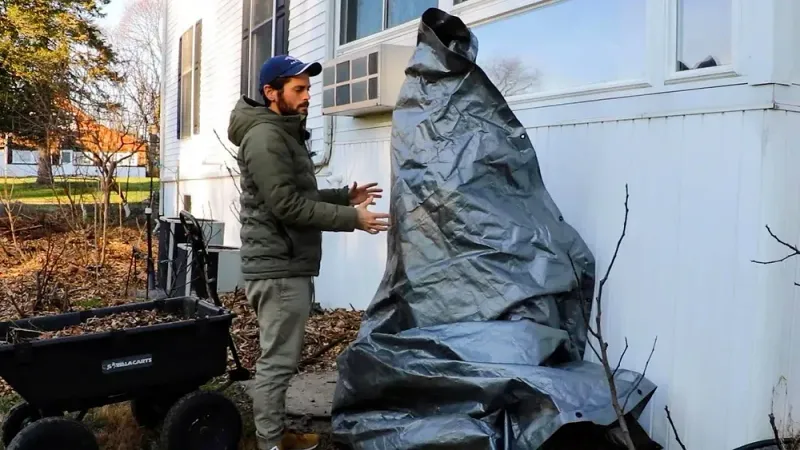
A fig tree that freezes back to the ground can cost you a year or more of fruit. Some gardeners build a supported, insulated wrap around the stems to cut down on winter damage.
The best-documented version of this method comes from New York, so North Carolina yards need some adjusting. Here is how to adapt it step by step, and what it can and cannot do for your tree.
A wrap may limit dieback, but it cannot promise a harvest
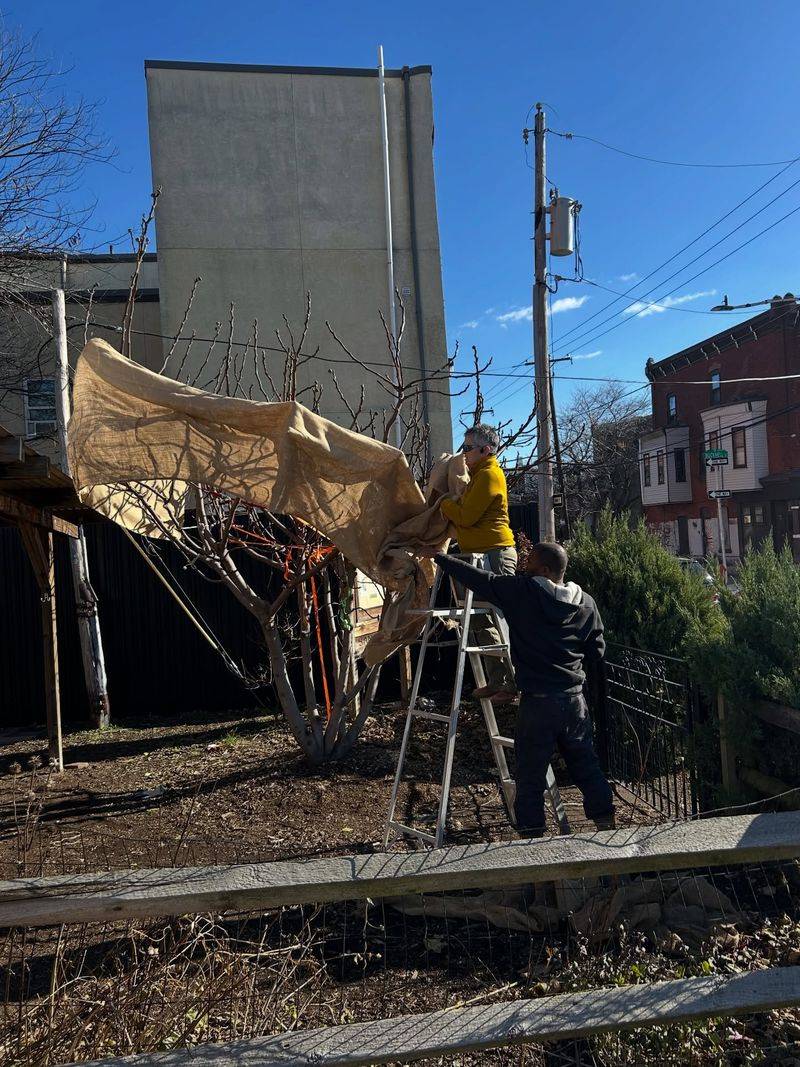
Wrapping a fig is about keeping aboveground wood alive, so the tree keeps its framework of stems. A good wrap may help limit winter dieback.
It cannot promise the stems survive a hard freeze, and it cannot promise fruit next summer.
Temperature numbers are warning points, not exact kill lines. NC State Extension says North Carolina figs can freeze back to the ground at 20°F or below, and that fruiting may be delayed until new growth emerges.
University of Maryland Extension describes injury to aboveground wood after sustained temperatures below 20°F.
The word sustained matters. How long the cold lasts, which cultivar you grow, how dormant the tree is, and where it sits in your yard all affect the damage.
A fig on a sheltered south wall may fare differently than one in an open, windy lawn.
Severe injury can also set the tree back. Shoots that sprout from the roots after a bad freeze may not ripen fruit in that same season.
Full recovery after serious damage can take longer than one year.
So why wrap at all? Because saving even part of the old wood can give you a head start, and the effort is modest.
Go in with realistic hopes, and treat any fruit as a bonus.
Time protection to dormancy and local cold risk
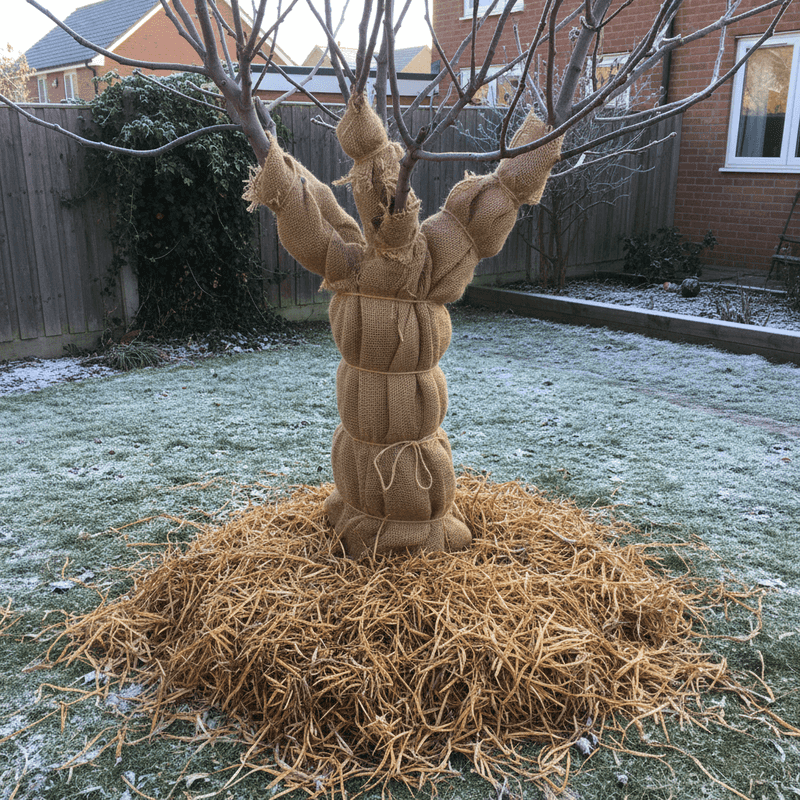
Forget a single calendar date. North Carolina stretches from the mountains through the Piedmont to the coastal plain, and first-freeze timing differs across them.
Your own yard adds another layer, since low spots, open fields, and sheltered corners all behave differently.
Two things should guide you: whether the tree has gone dormant, and whether severe weather is in the forecast. NC State Extension advises protecting figs when severe weather is predicted.
Wrapping a tree that is still actively growing, or on a mild day, gives you little benefit.
For young trees, NC State suggests mounding loose soil or mulch 1 to 2 feet around the trunk in late fall. In spring, pull that mound away once frost is no longer a hazard.
It is a simple first layer of protection before you build anything bigger.
Site matters too. NC State also recommends shielding figs from winter sun and cold winds.
Notice where wind hits your tree hardest, and plan your enclosure with that in mind.
A practical habit is to gather materials in early fall, then watch forecasts. When a hard cold snap shows up, you are ready.
Bundle dormant stems before building the enclosure
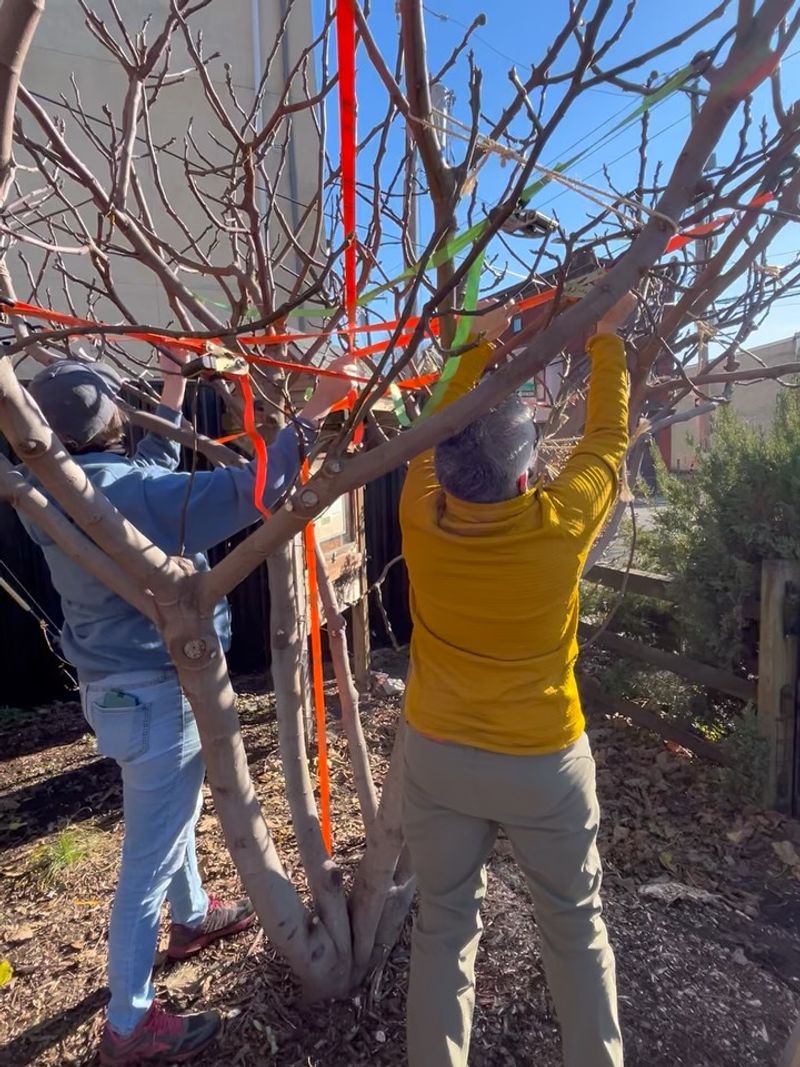
Once the tree is dormant, the first job is to gather its stems so they fit inside a protective enclosure. The Brooklyn Botanic Garden method starts by tying the stems together before the cage goes up.
Think of bundling as prep work. A gathered tree takes up less room, so the frame around it can be smaller and easier to fill with insulation.
Work gently. Do not cut away healthy wood just to make things tidy, and do not force a stiff branch into place.
A branch that resists is better left alone than snapped.
The source does not give exact rules for pruning, tie materials, or how far to bend stems, so this article will not invent any. Use your own judgment and a soft, secure tie, and check that the bundle sits snugly without strain.
When the stems are gathered and the tree is standing as a compact bundle, you are ready for the frame.
Use a concrete stake as a reference, not the whole frame
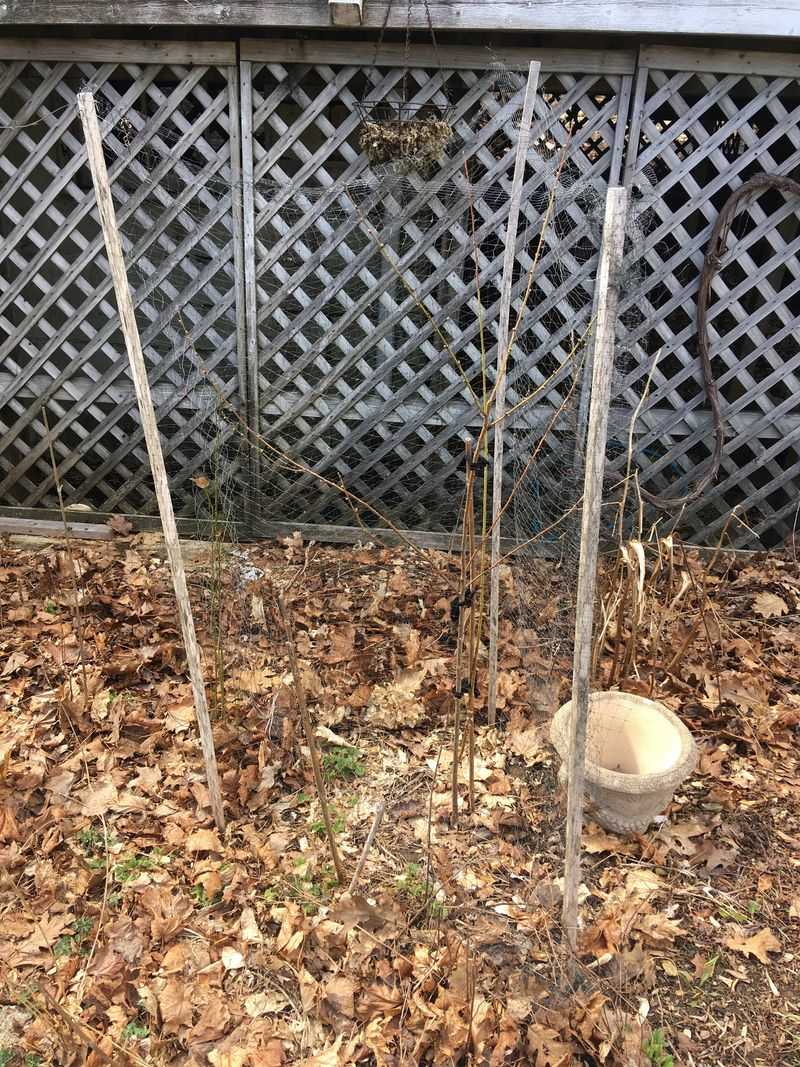
A frame keeps protective material from resting heavily on the branches. That is the point of support.
The Brooklyn Botanic Garden design builds a chicken-wire cage on three stakes, not one.
So where does a concrete stake fit? Use it as an organizing reference, such as a marker for the center of the tree or a point to measure your frame from.
One stake by itself is not shown to hold up an enclosure or protect a fig.
Adapt the idea to your tree. Set a supported cage around the bundled stems, with enough room for insulation to fill the space.
This article gives no exact measurements or attachment details, since the source does not supply them. Size the frame to your own tree and make sure it stands firmly.
Keep expectations honest. This design comes from a New York garden reporting its own experience.
NC State guidance supports covering figs and mounding the trunk but does not prescribe this cage. Treat it as an adaptation to try, not a North Carolina-tested formula.
Add insulation and an outer layer to shed rain
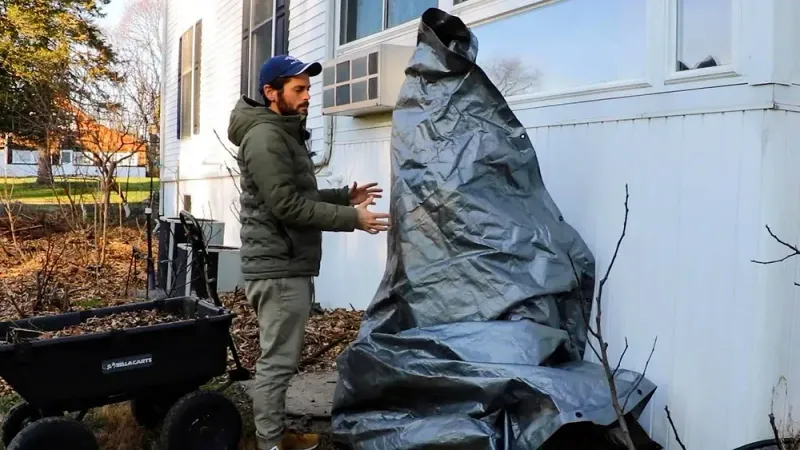
With the frame standing, fill it with insulating material. The Brooklyn Botanic Garden approach packs the cage with shredded leaves, then adds an outer layer to shed water.
Dry insulation works better than soggy insulation, which is why the outer layer matters.
No source here gives a temperature rating for this setup. Think of it as a practical arrangement that may help limit dieback, not a promise about how cold it can handle.
The outer layer can be plastic, and this is where details count. University of Maryland Extension describes a plastic tarp as an outer rain-shedding layer over an insulated wire enclosure.
That is very different from plastic wrapped directly against the plant.
Keep the leaves between the stems and the shield, and do not let plastic touch the tree. Other options in extension guidance include straw inside wire fencing, or burlap and blankets.
Pick what suits your yard and keep it dry on the outside.
Keep a seasonal enclosure separate from a freeze-night cover
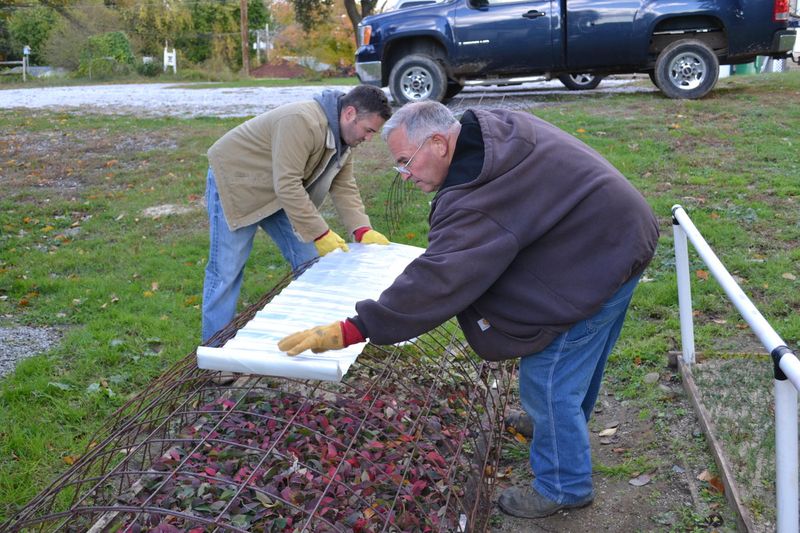
These are two different setups. A seasonal enclosure stays up through the cold months with insulation inside.
A freeze-night cover goes on for a short cold spell and comes off.
For temporary covers, UGA Extension advises covering plants to the ground and anchoring the cover to trap heat rising from the soil. It also warns that plastic can damage plants if it touches them or stays on during daylight.
On a sunny day, covered plants can overheat.
That is why plastic does not belong against the fig, and why a freeze cover should be taken off in the morning. Plastic in a seasonal cage is only an outer shield, kept away from the stems by insulation.
Also think about who might move in. University of Maryland Extension notes that insulating material can shelter voles, which may feed on tender fig bark.
Build the enclosure so you can open it and look inside. Check now and then for gnawed bark or damp, matted leaves, and be ready to remove everything if problems appear.
Remove protection when winter risk passes and assess the wood
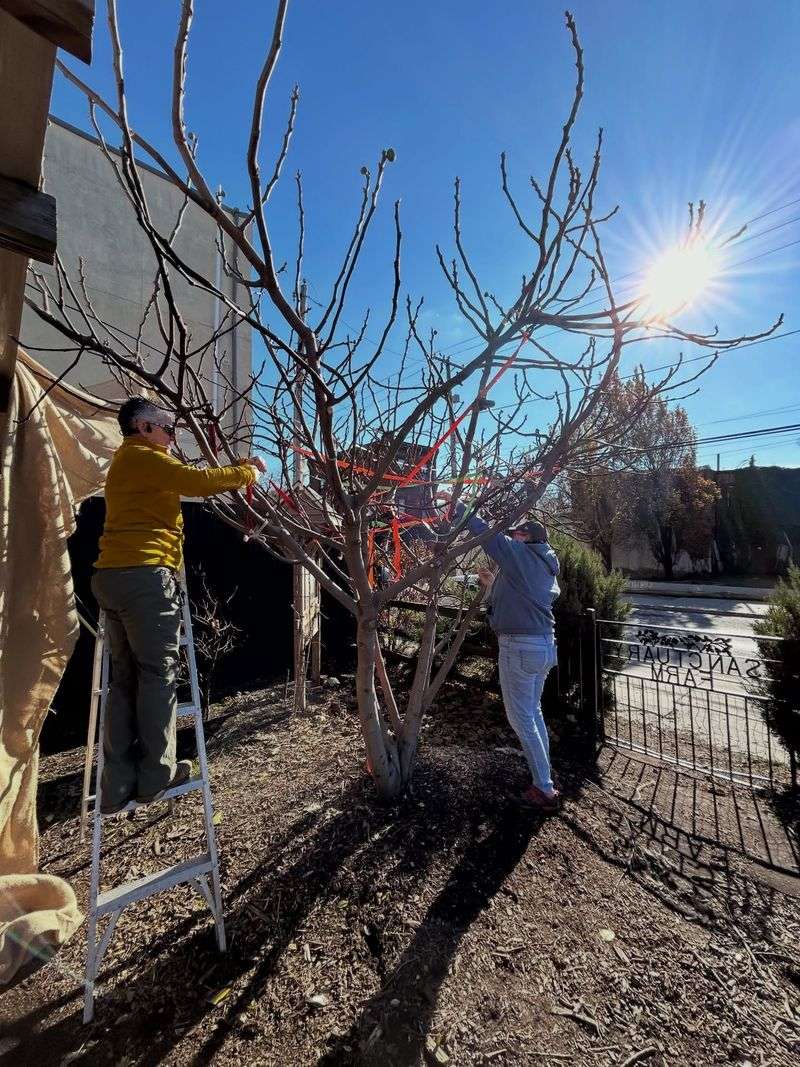
When winter risk has passed, take the enclosure down. Pull away the soil or mulch mound too, which NC State Extension says to do in spring once frost is no longer a hazard.
Your local last-frost timing, not a set date, is the signal.
Then look at the wood. Healthy stems may leaf out, while damaged ones may stay bare or die back.
Give the tree time before judging it.
Crop expectations need care. University of Maryland Extension says most figs form their main crop on current-year growth.
UC ANR adds that some cultivars also bear an earlier breba crop on last year’s wood.
So saved old wood may keep the tree’s framework and, for some cultivars, breba fruit. A wrap cannot guarantee either crop, or how fast the tree recovers.
Even a freeze-back fig is rarely finished, since it can regrow from living wood below the damage. The wrap is a cheap bet, and the new growth tells you how it went.