
A chilly October evening can make any citrus grower reach for a blanket and worry about the fruit. The good news is that ordinary cool nights are not the same as a damaging freeze.
What really matters is your own overnight forecast, your tree, and your spot in the yard. A little planning now means you can protect your harvest without wasting water or effort.
Cool nights are not the same as a damaging freeze
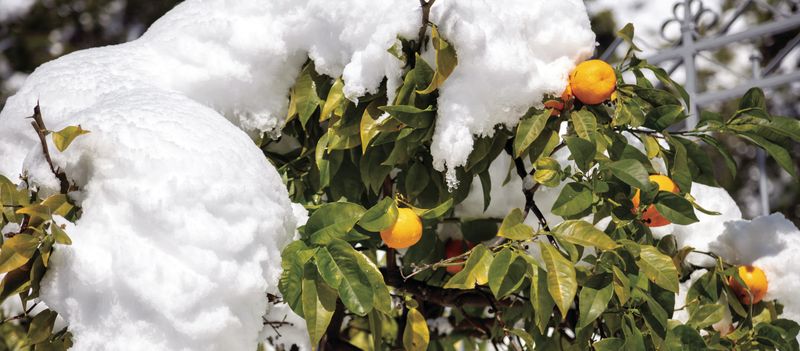
Sweater weather is not citrus-damaging weather. A crisp October evening in the 40s or 50s is ordinary for much of California, and it does not automatically threaten your fruit.
Trouble starts when temperatures fall close to freezing, and even then the outcome depends on several conditions.
Frost and freezing are related but not identical. Freezing means the air temperature is at or below 32°F.
According to UC IPM guidance on freezing and frost damage, plant tissue can cool to freezing on a clear night even when the reported air temperature is above 32°F. That is why a forecast of 34°F on a still, clear night deserves a closer look, while a 52°F night does not.
UC IPM also notes that fruit may be damaged below roughly 26°F, but treat that as an approximate marker, not a rule for every tree. Lowest temperature, how long it lasts, fruit maturity, variety, and tree condition all shift the risk.
California does not cool down on one schedule. A coastal yard in Santa Barbara, an inland valley lot in Fresno, and a foothill property in the Sierra foothills can have very different nights on the same date.
Some areas may not see a damaging freeze all season. Skip the calendar and look at your local overnight forecast, ideally from a source that covers your neighborhood and not just your county.
For site-related background, UC IPM site selection advice for citrus explains why some spots run colder than others.
Variety and yard conditions change the risk
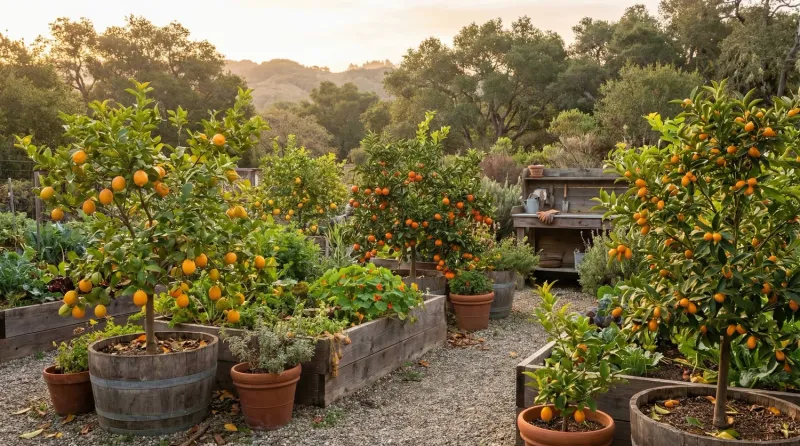
Two trees in the same yard can face different risks on the same night. Variety is the first thing to check.
Eureka lemon and grapefruit are among the more cold-sensitive citrus types, while mandarins, Meyer lemon, and sweet orange tolerate cold better, as described in UC IPM freezing guidance. Young trees and fruit are especially vulnerable, so a first-year sapling deserves more attention than a mature tree.
Next, look at where the tree stands. Low spots collect cold air that drains downhill on calm nights.
A tree on an open slope or in a wide-open lawn loses heat to the sky quickly, while one tucked near a south-facing wall or under an overhang often stays warmer. UC IPM site selection guidance covers these exposure differences in more detail.
Duration matters too. A brief dip just under a threshold is usually gentler than several hours at that temperature.
Tree health plays a part as well, since a stressed or recently damaged tree has less resilience.
Do not expect one magic number. UC ANR Publication 8100 gives variety-specific guidance and notes duration effects, and its figures are not interchangeable with the approximate numbers in other UC pages.
Use them as a range to weigh against your forecast, and accept that some uncertainty remains.
Water dry soil ahead of a forecast frost
Moist soil holds and gives back heat better than very dry soil. That is the narrow idea behind pre-frost watering.
UC IPM advises watering dry topsoil at least three days before a forecast frost so the soil can absorb heat during the day and reradiate it at night.
Notice the conditions built into that advice. It applies when a frost is actually forecast, and it applies when the topsoil is dry.
If the soil is already damp a few inches down, you have nothing to add.
This is not a reason to keep the ground soggy. Citrus roots dislike waterlogged soil, and UC IPM site selection guidance stresses well-drained sites.
Overwatering is not frost protection, and it wastes water in a state where every gallon counts.
A simple check helps. Push a trowel or screwdriver into the soil under the canopy.
If it slides in easily and comes out with moist soil, wait. If the top layer is powdery and dry, give the tree a normal, measured irrigation a few days ahead and let it soak in slowly.
Skip routine extra watering just because October has arrived. A regular schedule adjusted to your tree and weather is plenty until a real frost shows up in the forecast.
Cover the tree for a forecast frost, but know the limits
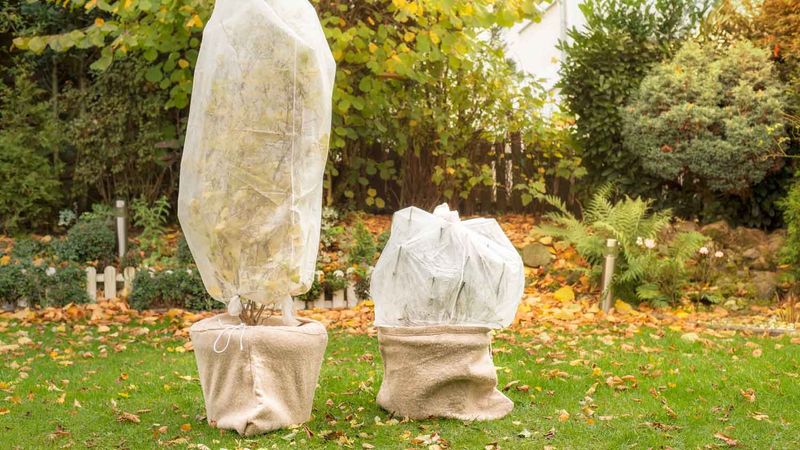
When a frost is forecast, a cover can help a smaller tree. Use cloth or a similar breathable material, not plastic, and put it on in the evening.
Take it off during the day so the tree can warm up in the sun. UC IPM guidance recommends this approach.
How you arrange the cover is where sources differ. UC IPM advises leaving the cover open at the bottom, while another UC ANR resource suggests bringing it close to the ground to trap heat.
Since the advice is not uniform, no single setup is the right answer. Choose what fits your tree and keep the cover from crushing branches.
Know the limits. In a hard freeze, a cover alone does little.
UC IPM says covers are of little help unless paired with a heat source. If you use lights, choose outdoor-rated equipment, keep cords and connections protected from moisture, and keep bulbs away from fabric that could scorch or ignite.
Electrical and fire hazards are real.
Sprinklers need a warning label. UC ANR explains that continuous sprinkling for freeze protection requires uninterrupted water and uses a great deal of it.
If the water stops, damage can get worse, and the practice is considered inappropriate in drought-stricken California. It is not a casual home fix.
Keep the effort proportional. A cover is a response to a forecast frost, not a nightly ritual for every cool evening.
Harvest ripe fruit before a damaging freeze, not before fall
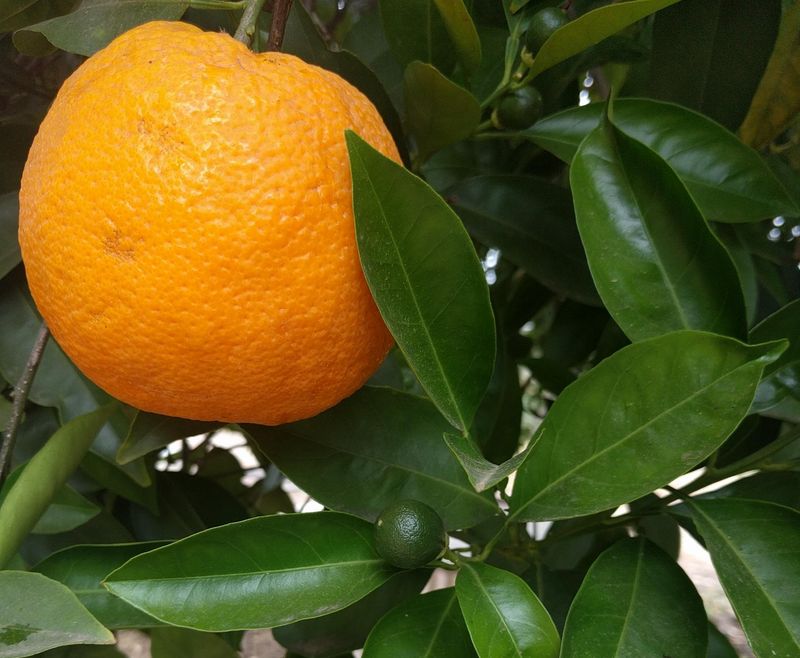
Stripping the tree because nights feel cooler is a mistake. The better move is narrower: if a damaging freeze is forecast, pick the fruit that is already ripe first.
Fruit that is not ready can stay on the tree through ordinary cool weather.
Tasting beats judging by color. UC IPM notes that cool nights can bring out orange rind color, and green citrus can be perfectly ready to eat.
An orange rind does not prove the fruit is sweet, and a green tinge does not prove it is sour. Pick one, cut it open, and taste.
Remember that citrus does not keep ripening once it is off the tree. A fruit picked early will not sweeten on the counter, so harvesting too soon just locks in tartness.
Cool nights paired with warm days may favor flavor in some navel oranges, but that does not mean every variety needs cold nights. Many types ripen fine in mild coastal yards where nights stay gentle.
Before an expected hard freeze, UC IPM freezing guidance supports picking ripe fruit ahead of time. Taste a few from different spots on the tree, harvest what passes, and leave the rest.
Share extras with neighbors or squeeze juice to freeze.
Avoid tender new growth and wait to prune cold damage
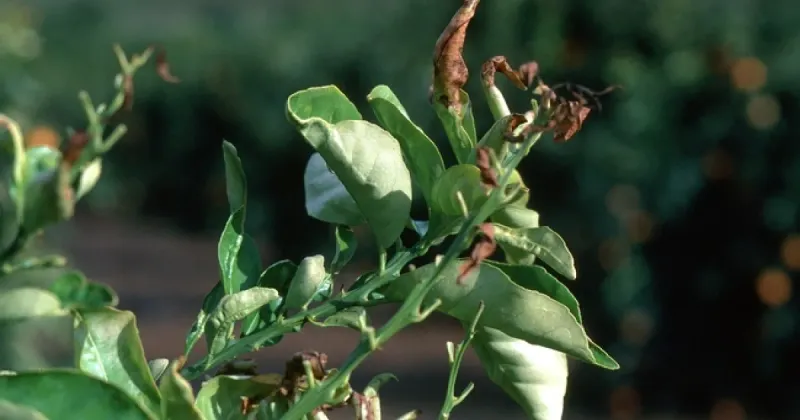
Soft new shoots are the first thing a frost burns. Anything that pushes a flush of growth late in the season sets the tree up for trouble, so hold off on heavy pruning and on fertilizing that encourages tender leaves as winter approaches.
UC IPM also advises skipping fall oil sprays.
If you have been planning a tidy-up, it can wait. The tree is better off going into the cold season with its growth settled.
Suppose frost does damage the tree. Leaves may brown, curl, or drop, and the damage can look dramatic.
Resist the urge to cut right away. Dead-looking twigs may still be alive, and pruning too early can remove wood that would have recovered or expose fresh cuts to the next cold night.
The better approach is patience. Wait until new growth appears in late spring or summer, then prune back to where healthy buds are pushing.
The new growth shows you exactly where living wood ends.
The exception is a safety problem. If a damaged branch hangs over a walkway, roof, or fence and could fall, remove that branch now and leave the rest alone.
Otherwise, give the tree time.
Let the local forecast set your next move
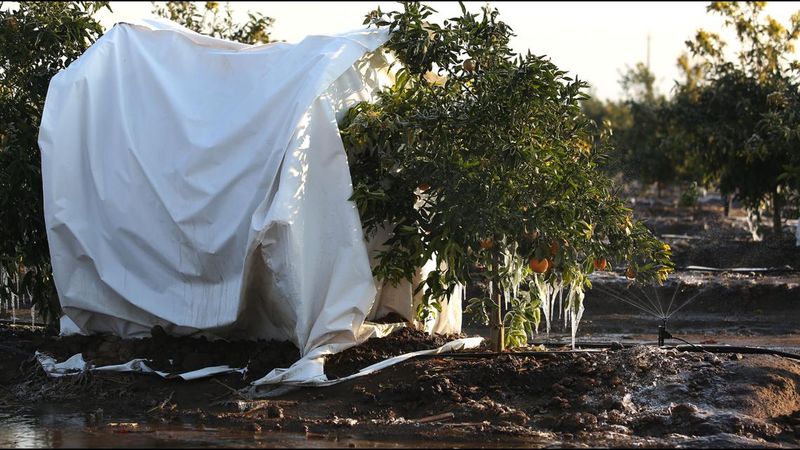
Start with the overnight forecast for your neighborhood. Then think about the tree: its variety, its age, and where it sits in the yard.
If frost or a damaging freeze is on the way, water dry topsoil several days ahead, cover the tree overnight, and pick ripe fruit.
If the forecast shows ordinary cool nights, do nothing special. UC IPM freezing guidance and its site selection page are good bookmarks for reference.
The payoff is a protected harvest without wasted water or worry. Your tree cares about the lowest temperature on the worst night, not the date on the calendar.