
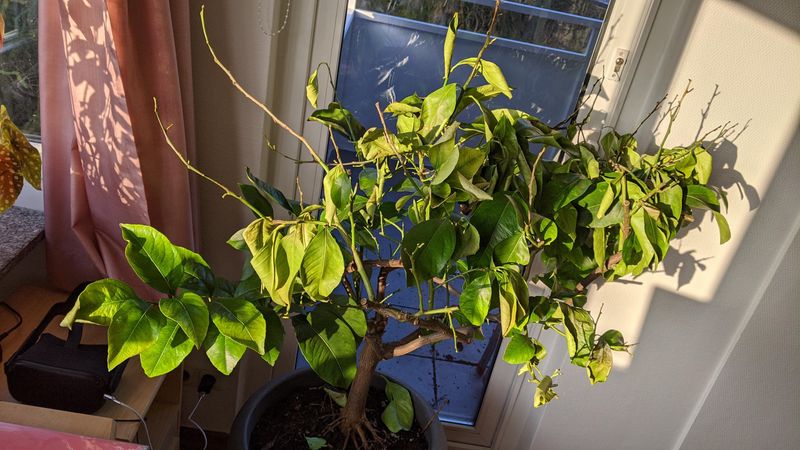
Few things feel worse than carrying a healthy lemon or lime tree inside and finding leaves on the floor a few days later. A bare-looking tree can make any gardener worry that it is failing.
Moving indoors changes light, temperature, and moisture all at once, and the tree may react. Here is how to ease the move, spot the likely causes, and know when to look deeper.
An indoor move changes more than the light
Carry a citrus tree from a sunny patio into a living room, and the difference is bigger than it looks. Even a bright room usually has far less light than open sky, and the temperature and humidity are different too.
A tree that has been growing happily outside may respond by shedding some leaves.
Some shedding can happen while the tree adjusts, but that does not mean every fallen leaf is harmless. A sudden drop in light is one possible trigger.
Maryland Extension citrus guidance points to changes in temperature, moisture, and humidity as other reasons citrus may drop leaves, and watering problems, drafts, and pests can add to the stress.
So think of this article as a plan with two parts. First, lower the stress of the move so the tree has a better chance of keeping most of its foliage.
Second, if leaves keep falling, check the other likely causes one at a time instead of blaming a single one. No method promises a tree that never loses a leaf, but each step can help.
Acclimate the tree before bringing it inside
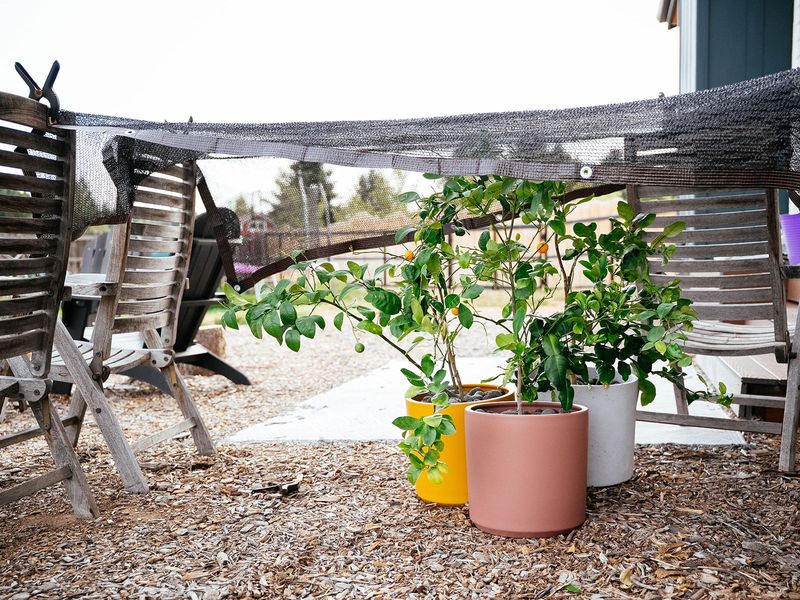
Whenever the weather allows, give the tree a slow runway. Move it into partial shade first, then reduce how much light it gets bit by bit.
Texas A&M citrus guidance suggests doing this over two to four weeks before an all-winter move, which can help prevent excessive leaf drop.
A simple routine is to shift the pot from full sun to a spot with morning sun only, then to bright shade under a porch roof or tree. That way the leaves adjust gradually to lower light instead of facing the change in a single afternoon.
Freezing weather comes first, though. Container roots are exposed to cold, so if a freeze is coming, bring the tree in right away and skip the slow transition.
Do not leave it outside in freezing weather to finish acclimating.
Also, not every Southern tree needs a whole season indoors. UF/IFAS citrus advice notes that suitability depends on location.
Your local freeze risk, the variety, and where the pot sits all matter more than any single temperature rule. In many places, a tree only needs to come inside on the coldest nights.
Give it the brightest practical indoor spot
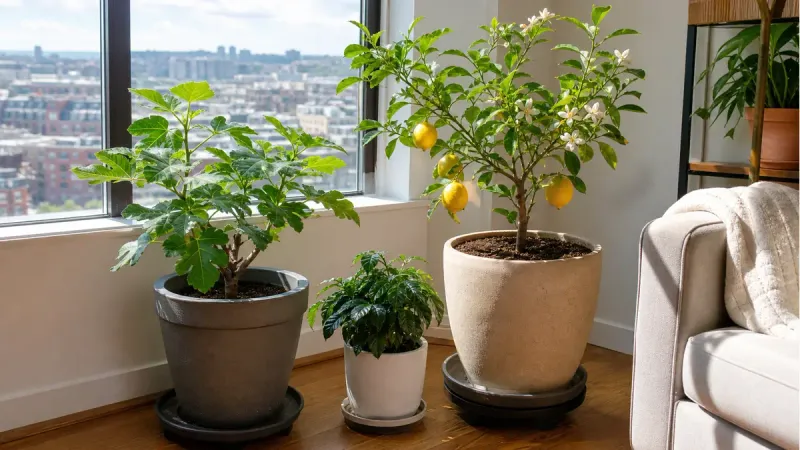
Once the tree is inside, light is the thing to maximize. Indoor light is often much weaker than outdoor sun, even right beside glass.
A sunny south- or west-facing window is usually the best practical choice, but it is a helpful spot, not a cure.
Keep the pot close to the glass, and turn it now and then so all sides get a turn in the light. Clean the window too, since dusty glass blocks more than you might expect.
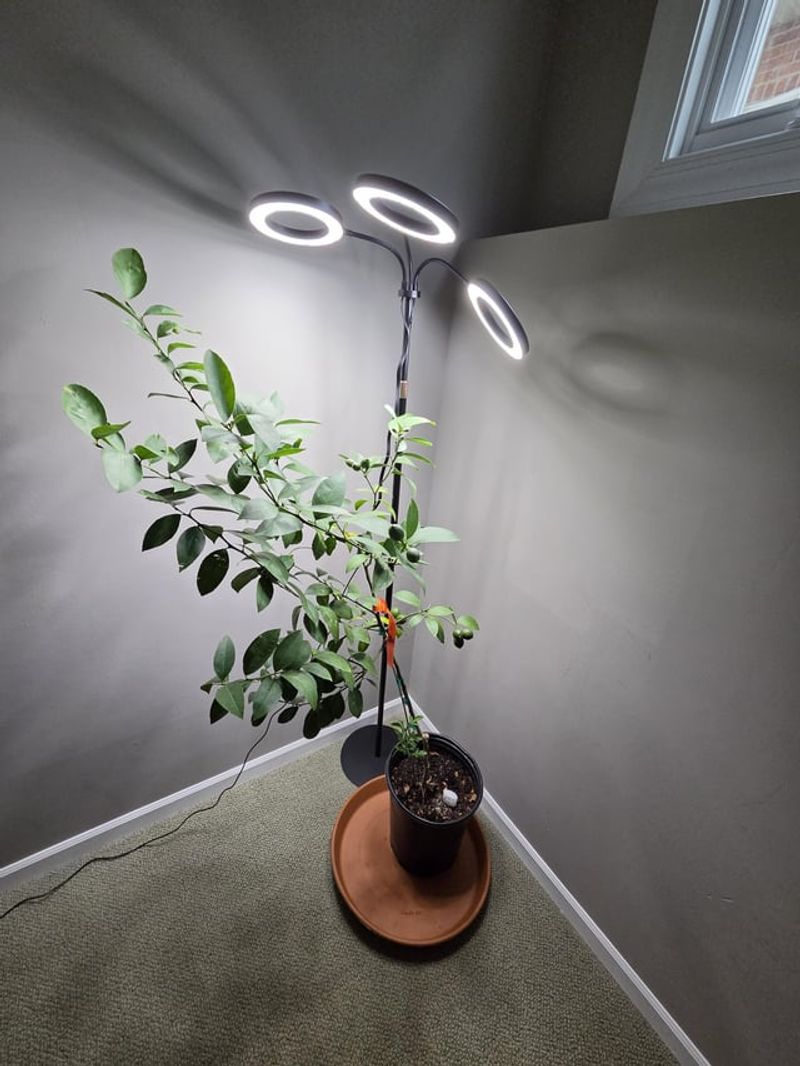
Supplemental grow lighting may be useful if your windows are shaded or small. Wisconsin Extension says citrus needs added light for fruit production when it gets less than six hours of direct light a day.
That advice is about flowers and fruit, not a promise that leaves will stay on the tree.
Foliage can often adapt to lower light, as Iowa State Extension notes in its indoor citrus advice, but a bright window does not guarantee zero leaf loss. It simply gives the tree a better footing.
Keep temperature changes and drafts in view
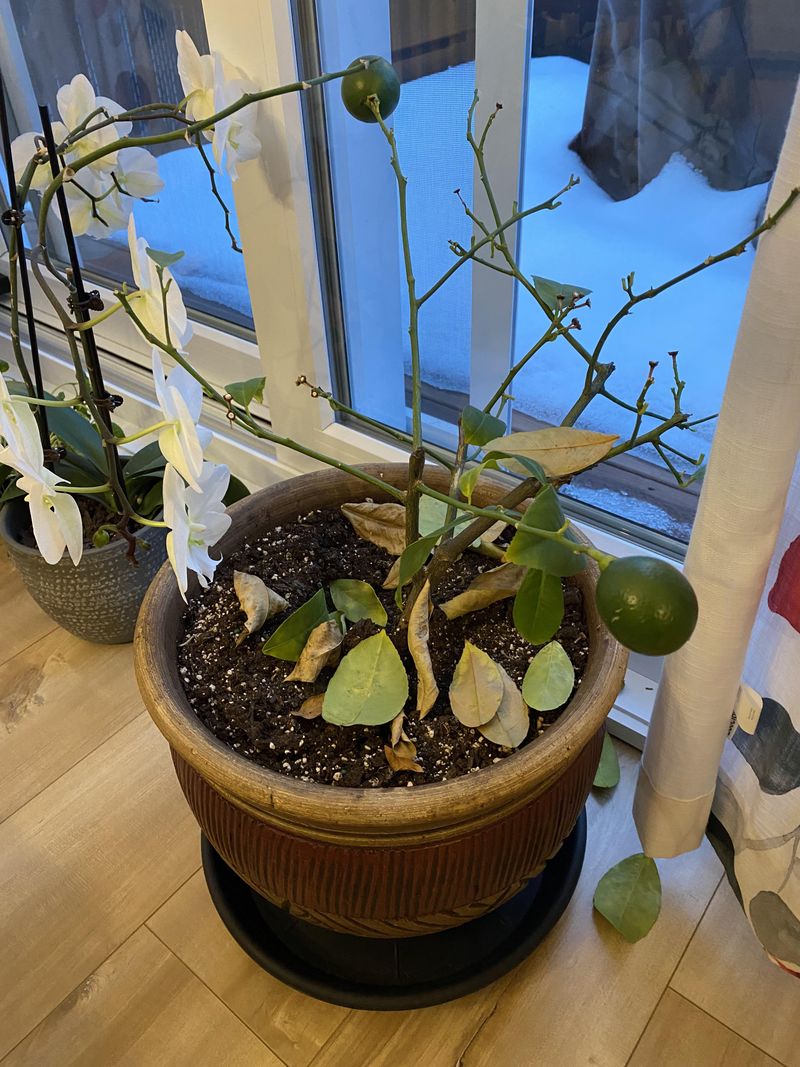
Sudden swings in temperature can stress a citrus tree, and so can humidity changes. Indoor air is often drier than the air outside, especially when heaters run.
These shifts are possible stressors, not proven causes in every case, so treat them as clues rather than answers.
If a tree keeps shedding, look at where it sits. Maryland Extension lists temperature and humidity changes among the triggers for citrus leaf drop.
A spot beside a heating vent, a door that opens to the cold, or a drafty window may be causing repeated jolts.
Houseplant problem guides, like the UC IPM houseplant page, also tie leaf drop to abrupt environmental changes. Try to give the tree a steady place and avoid moving it around once it settles.
If the tree is dropping leaves near one of these trouble spots, shifting it a few feet and watching for a couple of weeks is a reasonable test.
Water by the potting mix, not by the leaf drop
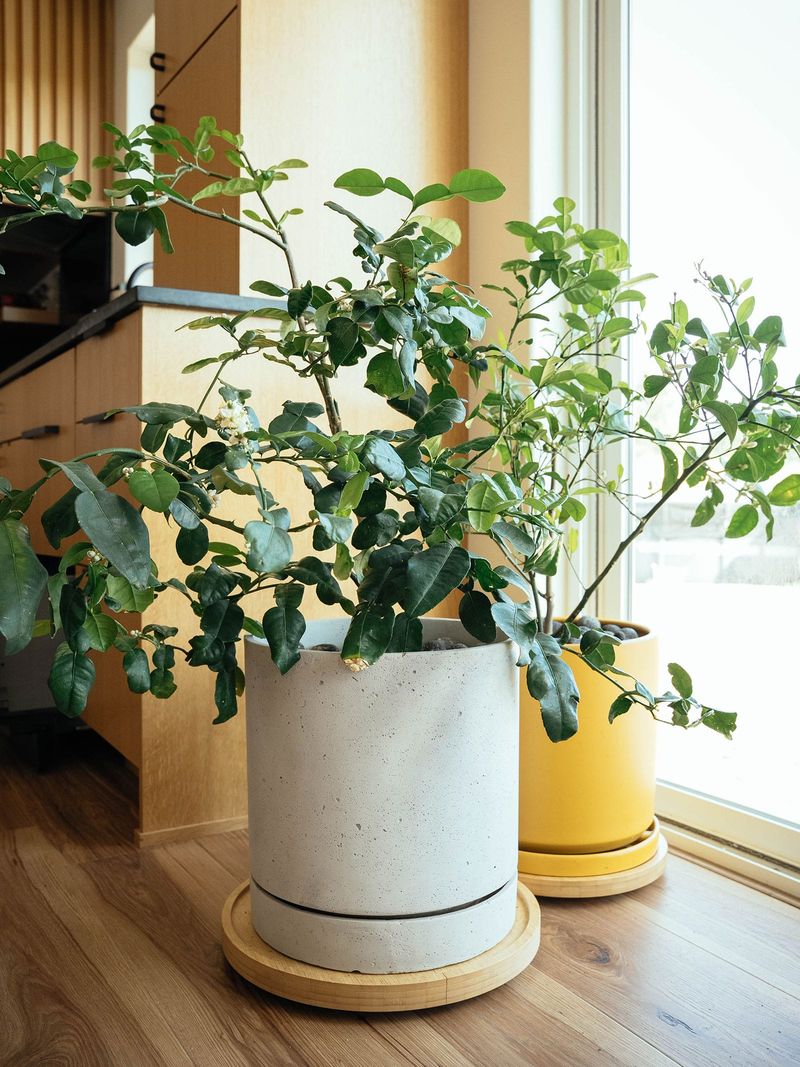
Bare branches tempt many of us to grab the watering can. Resist that urge until you have checked the pot.
Water should follow how dry the mix is, not a calendar and not how many leaves are on the floor.
Here is a quick test. Push a finger into the soil.
Texas A&M guidance recommends letting the top inch dry out before watering, then letting the extra water drain away. Empty the saucer so the roots are not sitting in a puddle.
Expect the tree to need water less often in winter, since growth slows when days are short and light is low. Overwatering is a common container problem, and soggy roots can lead to leaf loss as well.
The Maryland guide lists both too much and too little water among the possible causes.
If the mix is still damp, wait. If the pot feels very light and the mix is dry well below the surface, water thoroughly and let it drain.
Checking first keeps you from fixing one problem by creating another.
If the shedding continues, inspect for other problems
A few fallen leaves in the first couple of weeks can be part of adjusting. Widespread loss, or shedding that keeps going, deserves a closer look.
Start with a slow inspection of leaves and stems, including the undersides.
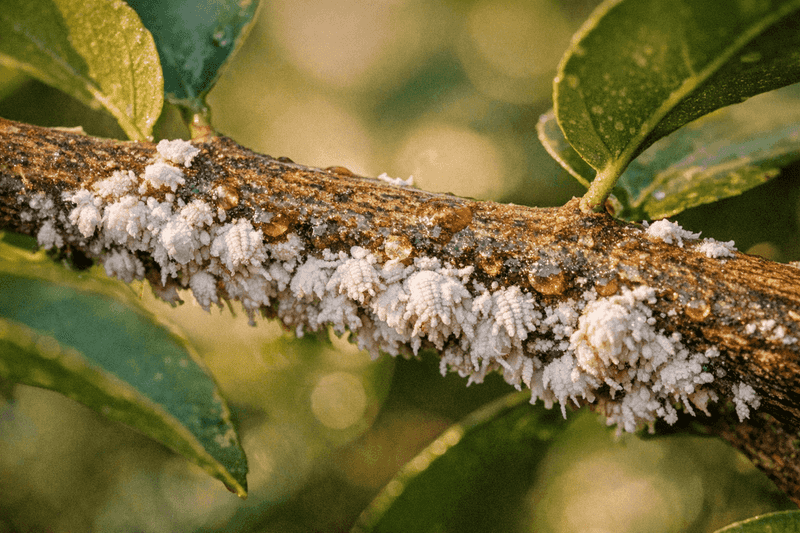
Indoor citrus can attract scale, mites, mealybugs, whiteflies, and aphids. Maryland Extension recommends monitoring pests and, once you know what you have, treating according to product directions.
Do not spray for a pest you have not identified. Sticky residue, tiny webbing, cottony spots, or small bumps on stems are all useful clues.
Pests are only one possibility. The UC IPM houseplant guide is a handy reference for sorting out indoor plant problems.
Then recheck the basics in turn: light, moisture in the mix, temperature, and drafts. Texas A&M also reminds growers that container citrus needs protection from freezing, so confirm it was never exposed to cold.
Gradual acclimation and good indoor care can lower stress, yet they cannot promise a tree that keeps every leaf. A citrus tree that holds on to its buds and branches will usually grow new foliage once it settles.