
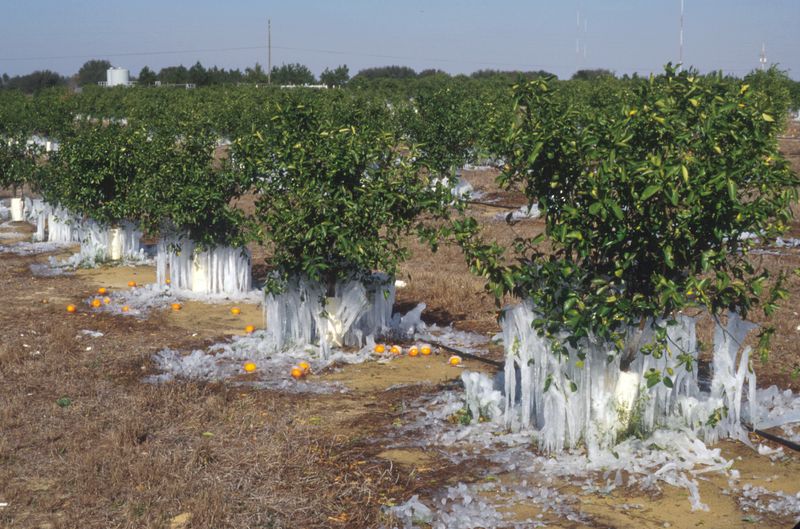
A lemon, satsuma, or orange tree can take years to bring into fruit, and one hard freeze can undo that work in a night. The good news is that a few smart steps taken ahead of time can lower the damage.
Some steps protect only the trunk, while others cover much more of the tree. Knowing the difference helps you pick the right protection for your yard.
Start with the tree, not a temperature chart
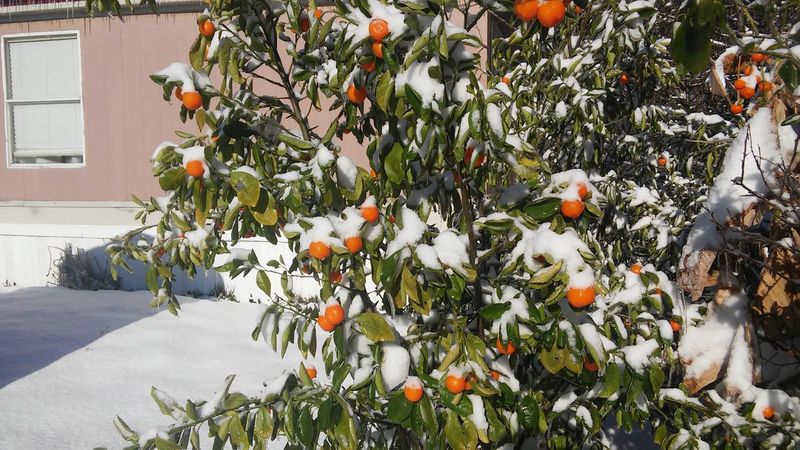
Every freeze warning comes with a number, but that number alone cannot tell you whether your tree will make it. Cold injury depends on the type of citrus, the age and health of the tree, how well it has adjusted to cooler weather, and how long the cold lasts.
A low of 28 degrees for an hour is a very different event from the same low lasting all night.
Timing matters too. Texas A&M gives a satsuma example: a tree might tolerate 18°F in early February after months of cold exposure, yet be seriously damaged at 24°F in early December, before it has hardened off.
Treat that as an illustration of why season matters, not as a safe temperature for your tree.
Type matters as well. UGA Extension describes satsumas as generally more cold-hardy than sweet oranges, and sweet oranges as hardier than lemons and limes.
None of them is freeze-proof, and rootstock, location, and tree condition all shift the picture.
Lemons deserve a closer look. UC IPM separates the cold-sensitive Eureka lemon from the relatively more cold-hardy Meyer lemon, so a neighbor’s lemon story may not apply to yours.
Use what you know about your tree to decide how much protection to give it. That assessment guides your choices, but it cannot guarantee how the tree comes through a severe or prolonged freeze.
Prepare the soil, fruit, and container before the freeze
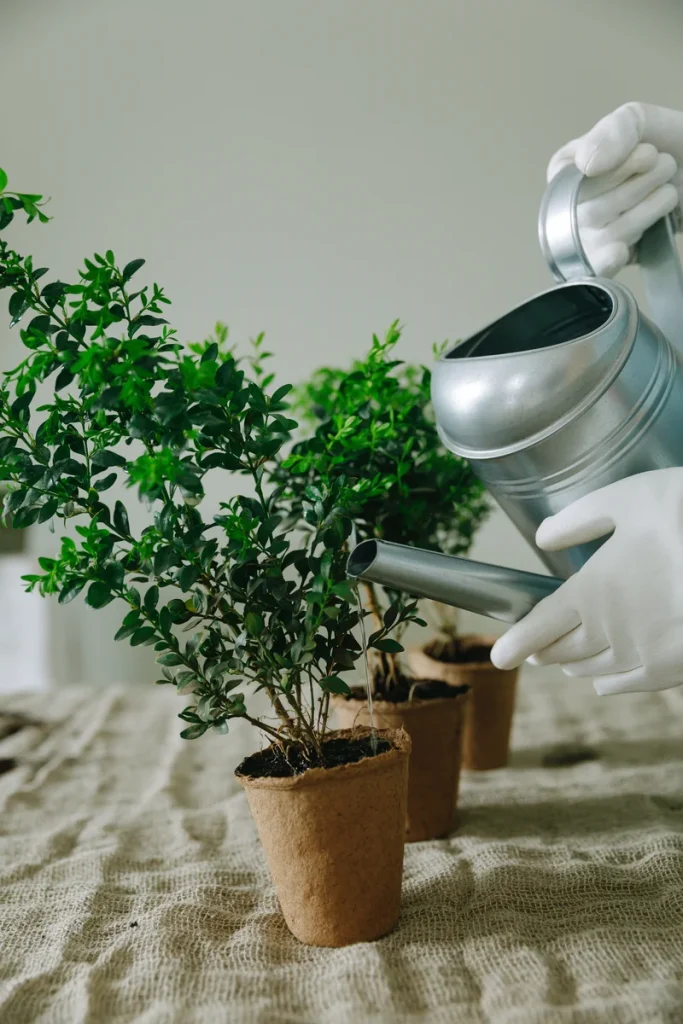
Some of the most useful freeze prep has nothing to do with fabric. Several days ahead, Texas A&M recommends thoroughly irrigating the tree and the soil around it.
Moist, bare ground can take in and give off more heat than dry or mulched ground.
Keep expectations modest here. Watering the soil is a small helper, not a stand-in for a cover, and it will not stop damage in a hard freeze.
It is also a different job from running sprinklers over the branches, which comes up later.
Fruit is next. Protecting the crop is not the same as protecting the tree, and ripe or nearly ripe fruit is vulnerable to freezing.
UGA Extension advises harvesting before the first winter freeze where freezing is a concern. Pick what is ready, and use or share it while it is fresh.
Container trees face a different situation. Roots in a pot sit exposed to cold air on all sides, so they are more vulnerable than roots buried in soil.
Moving the pot indoors, into a garage, or onto a sheltered porch during freezing weather may be the simplest protection you have. Lift with a hand truck if the pot is heavy, and bring it in before dark.
An in-ground tree cannot move, which is why it leans more on soil moisture and covers.
A trunk wrap protects only the trunk
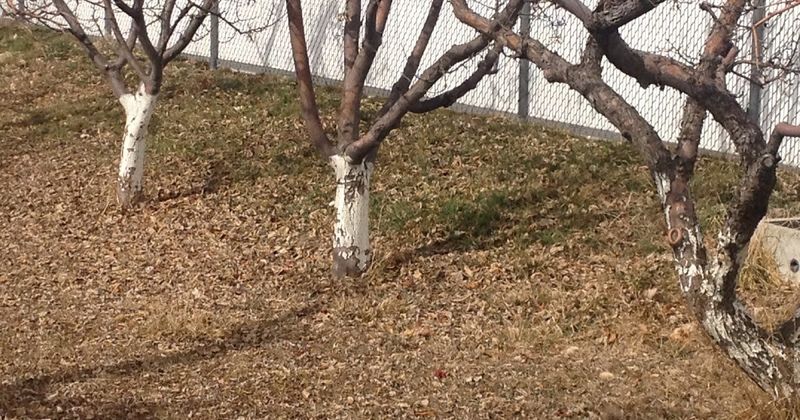
Many people picture wrapping a citrus tree as tying something around the trunk and calling it done. That wrap does a real but narrow job.
It protects the trunk and the graft union, the spot where the fruiting variety joins the rootstock. It does nothing for the leaves, branches, and fruit above it.
The protection is also limited in size. Texas A&M notes that trunk wraps generally provide only a few degrees of protection.
That can matter for a young tree whose trunk is the main thing you hope to save, but it should never be treated as whole-tree protection.
UGA Extension makes a similar point: each wrap or cover protects only the area it covers. If the canopy is bare to the wind, the canopy takes the cold.
So start by asking what you want to protect. If the goal is to keep the trunk and graft alive so the tree can regrow from a healthy base, a trunk wrap helps.
If you also want to protect leaves, branches, and the structure of an in-ground tree, you need a cover that goes over the canopy.
Even a broader cover cannot guarantee survival. A severe or prolonged freeze can overwhelm it, so think of any wrap as lowering risk, not removing it.
Cover the parts of the tree you want to protect
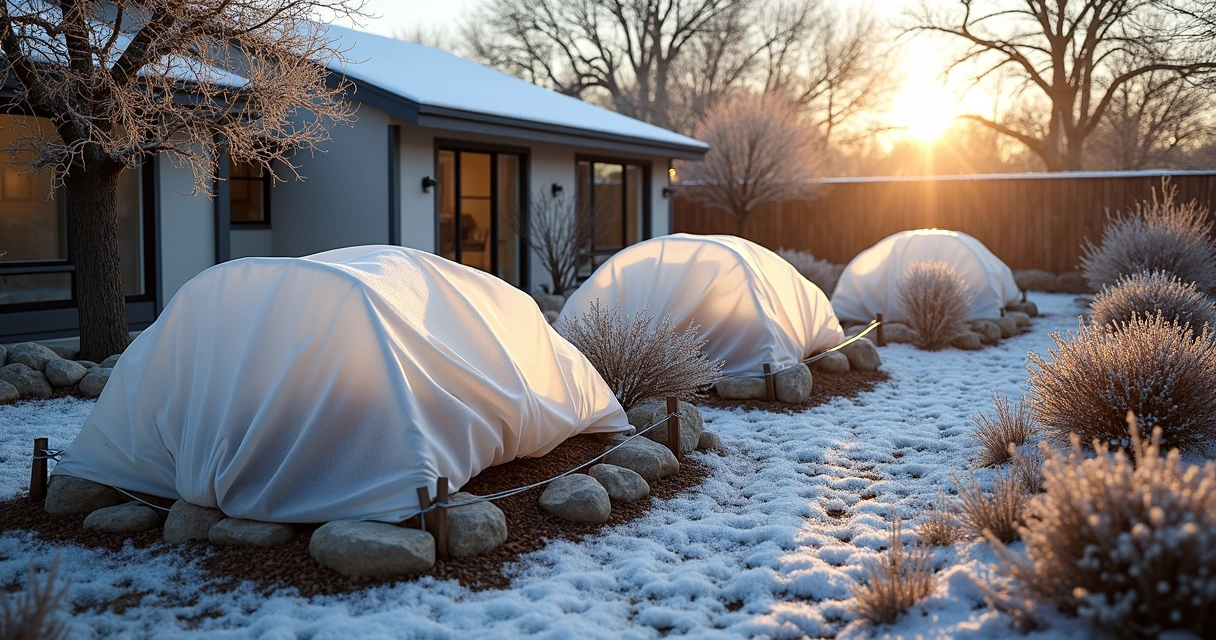
Whole-tree coverage starts with size. Choose frost cloth or a similar cover large enough to reach the ground, so cold air has less room to slip in from below.
Add the trunk and graft union to the covered area. UGA Extension warns that a canopy cover that leaves them exposed can leave those parts vulnerable.
Wind is the next concern. Secure the edges with stakes, bricks, clips, or soil so the fabric stays put on a gusty night.
Taller trees may need a frame or a few poles to keep the cover from crushing branches.
Timing counts. Put the cover on before freezing temperatures arrive.
Texas A&M suggests anchoring covers the afternoon before the freeze, which gives you daylight to work and to fix problems.
You do not need an airtight seal, and not every setup follows the same instructions. Texas A&M describes covers draped over the top rather than fully enclosing the tree in some cases, particularly when supplemental heat is used.
Choose the method that fits your tree, your equipment, and the shape of your yard.
Remember what a cover can and cannot do. It lowers the risk of injury to the parts it protects, but a severe or prolonged freeze can still get through.
Add heat only with outdoor-rated equipment
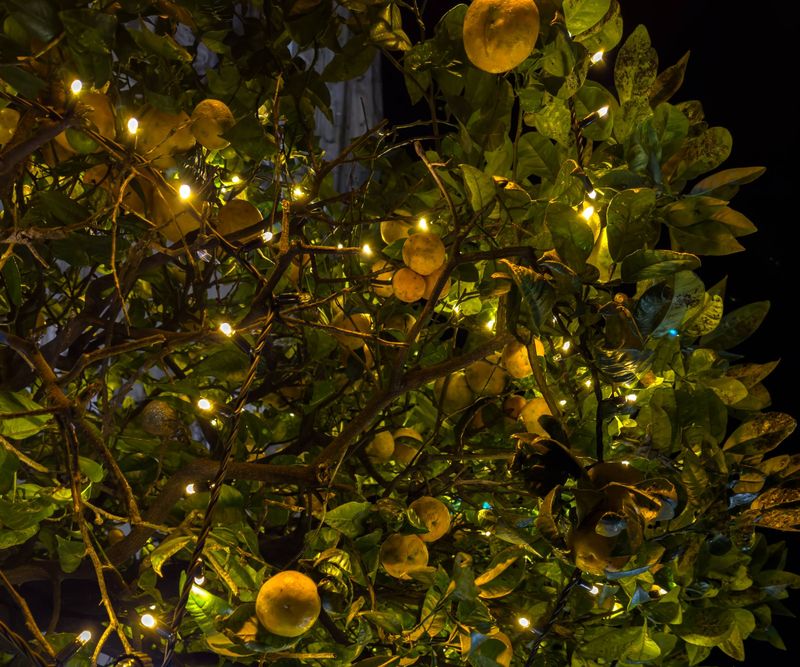
Extra warmth under a cover is optional. Plenty of gardeners rely on a good cover alone, and heat adds risk along with benefit.
If you choose to use it, keep the setup simple and cautious.
UC IPM says outdoor-rated incandescent lights may help under a cover, while warning about shock and fire hazards. Use only equipment specifically rated for outdoor use, check cords and plugs for damage, and keep every connection off wet ground.
Keep electrical equipment away from water and combustible material. Dry leaves, fabric, and mulch can all catch fire if a bulb touches them, so give bulbs space and do not bury them in the cloth.
Open flames are off the table. Do not put camp stoves, grills, or any open flame beneath fabric covers or near foliage.
The fire risk is too high for a casual homeowner setup, even if older advice mentions fuel-burning heat sources.
Texas A&M also describes covers draped over the top when supplemental heat is used, so heat and cover design go together. Even so, added warmth has limits.
A string of lights will not overcome every freeze, and a long, hard cold spell can beat both cover and heat.
Check covers in daylight—and do not improvise with sprinklers

Cover care does not end when the sun comes up. Sources differ a little here.
UC IPM advises removing covers during the day, and recommends cloth or similar material over plastic for overnight covering. Texas A&M says permeable covers may stay on until freeze danger ends, and calls for removing plastic on sunny days.
The practical move is to check the cover and the daytime conditions. Take particular care with plastic, which can heat up fast in sunshine and cook the foliage underneath.
Plastic is not universally safe or effective, and cloth is the steadier choice for most yards.
Now to sprinklers. Soil watering days before a freeze is one thing.
Running sprinklers over the canopy for freeze protection is a specialized method, not a casual overnight trick.
Texas A&M explains that overhead water must be applied continuously, started before the temperature reaches the critical level, and kept going until ice begins melting. Stopping while it is still freezing can leave the plant worse off.
The risks are real. Ice loading can break limbs, and prolonged irrigation can waterlog the soil.
If you cannot run the system correctly for the whole event, skip it and rely on covers.
Wait for recovery growth before pruning
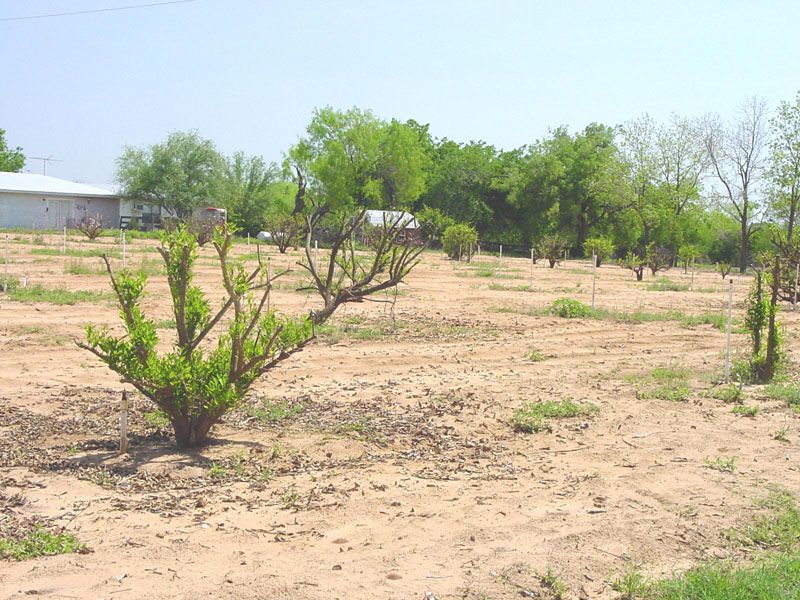
After a freeze, the tree may look rough, but the full story takes time. Damage can take weeks or months to become clear, and branches that look dead may still push out new growth.
Cutting too soon can remove wood that would have recovered.
Texas A&M advises delaying pruning until May. UGA Extension similarly says to wait for recovery growth and prune later in spring or early summer.
Once new shoots show where the live wood ends, you can cut back to healthy growth with confidence.
Until then, leave the brown leaves in place if you can stand it. They offer a little shade to the branches beneath, and removing them gains you nothing.
Preparation can lower your tree’s risk, from picking the right protection to securing it before the cold arrives. It cannot make any citrus tree immune to a severe or prolonged freeze.
Good protection buys your tree a better chance, and patience in spring lets it show you what it has left.