
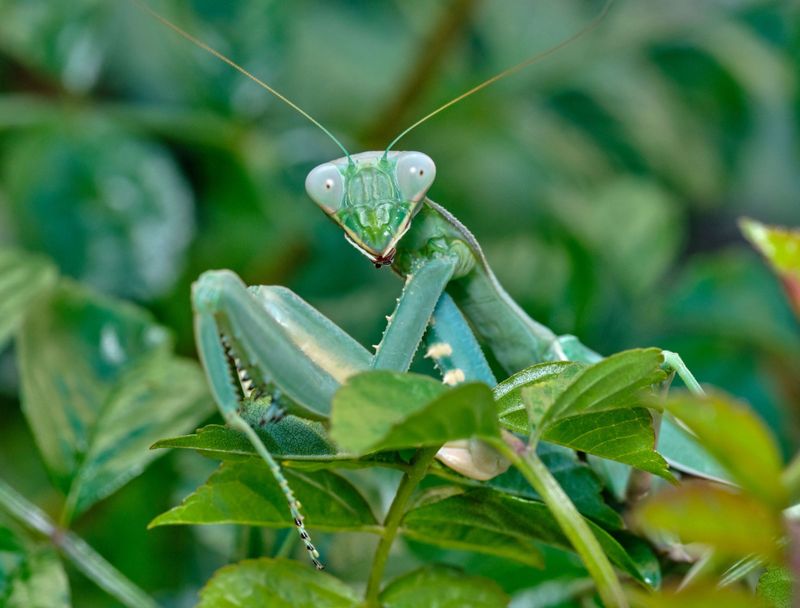
Spotting a praying mantis perched on your tomato cage feels like a small win, and it is. These fascinating insects do eat aphids, grasshoppers, and other garden pests, but they work on their own schedule and their own terms. Understanding what mantises can and cannot do for your vegetable beds will help you make smarter choices about yard care, pesticide use, and the bigger community of beneficial insects that actually keeps your garden in balance.
A mantis can eat garden pests without controlling your bed
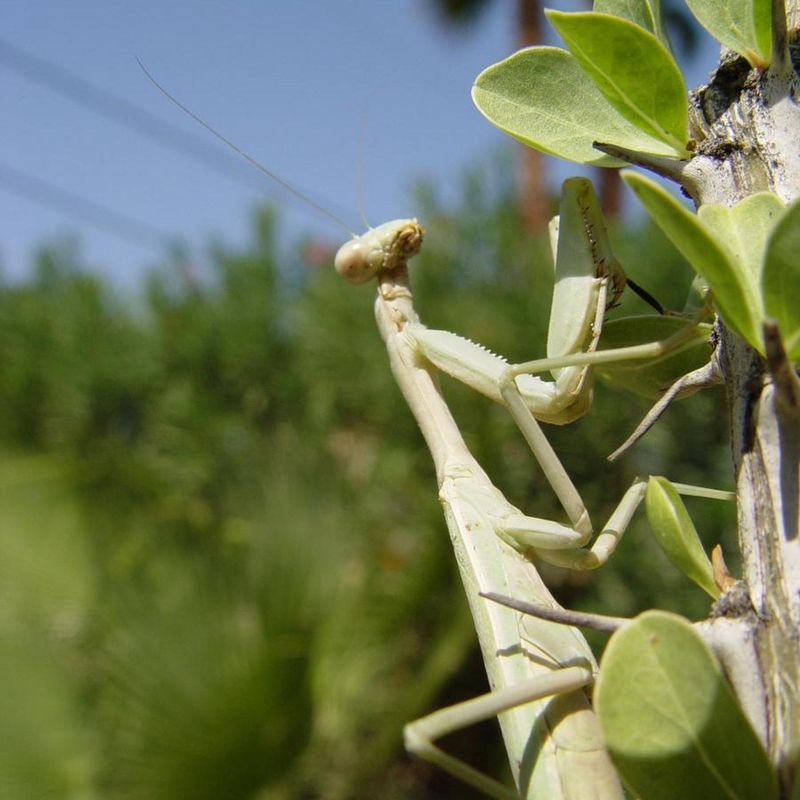
Watch a praying mantis long enough and you will almost certainly see it catch something. These insects are ambush predators that hold perfectly still, then strike with startling speed when a medium-sized insect moves within reach. Aphids, grasshoppers, caterpillars, beetles, and flies are all fair game, and that is exactly what makes a mantis exciting to find in your vegetable bed.
The catch is that mantises do not discriminate between pests and the insects you actually want around. Bees visiting your squash blossoms, syrphid flies that lay eggs near aphid colonies, parasitic wasps that kill caterpillars from the inside, and butterflies passing through your yard are all potential prey. A mantis stationed on a flowering plant is as likely to intercept a pollinator as a pest.
According to UC IPM’s guide on mantids, mantises are of little or no practical value for biological pest control because they are relatively inactive, each individual consumes comparatively few insects, and their generalist diet means they take beneficial insects alongside harmful ones. Watching one mantis eat one aphid is genuinely interesting, but it does not mean the aphid population on your pepper plants is under control.
Mantises occur at low densities across a yard, so even a healthy mantis population removes only a small fraction of any pest outbreak. Reliable pest suppression in a California vegetable bed comes from a community of natural enemies working together, including parasitic wasps, ground beetles, lacewings, and predatory flies, all supported by diverse plantings and reduced pesticide pressure. A mantis is one small, worthwhile part of that community, not the whole solution.
California mantises follow a seasonal life cycle
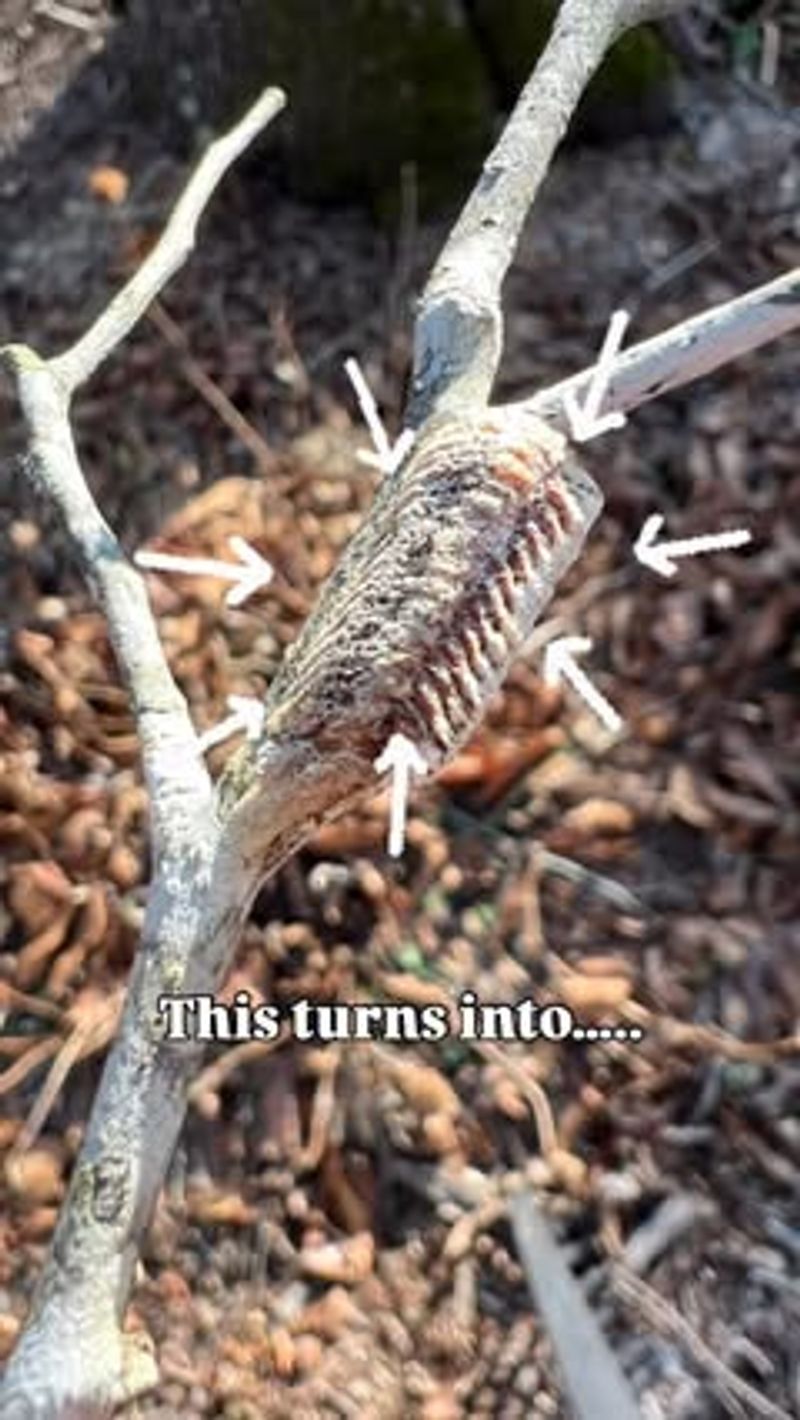
Knowing when mantises appear, and what they look like at each stage, is the most practical thing you can do before you start pruning shrubs or clearing out spent vegetable beds. The egg case, called an ootheca, is a hardened, tan or brown frothy mass roughly the size of a large grape. Females attach these cases firmly to twigs, woody stems, fence posts, or other sturdy surfaces in fall, and the cases remain in place through winter.
California mantises generally complete one generation per year. Nymphs hatch from overwintering egg cases in late winter to spring, looking like tiny versions of adults but wingless. They grow through a series of molts and are present as nymphs and adults from spring through fall. Females deposit new egg cases in autumn, completing the cycle.
UC IPM’s mantid resource notes that California hosts at least nine mantid species, including native ones such as the California mantid, bordered mantid, and small gray mantid, alongside introduced species like the Chinese, European, Mediterranean, and South African mantises. Native and introduced species share habitat across the state, so a mantis or egg case you find in your yard could belong to either group.
That mix matters for a few practical reasons. First, you cannot assume a mantis is native just because it is in your California garden. Second, introduced species are widespread and well established, so the goal is not to eliminate them but to understand what you are looking at before making decisions. Becoming familiar with the ootheca shape and the seasonal window from late winter through fall gives you the timing you need to avoid accidental disturbance during the most sensitive parts of the life cycle.
Leave an egg case in place when yard work allows
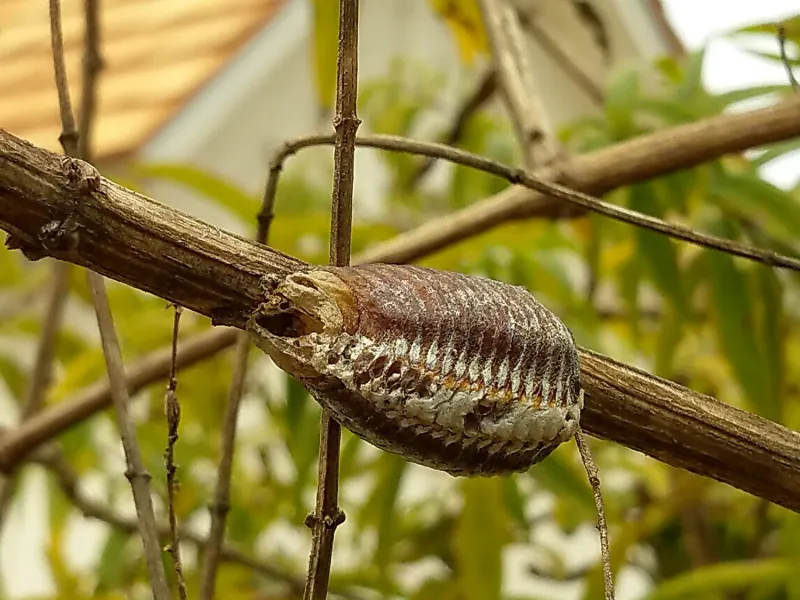
Fall and early winter are prime cleanup time in California yards, which is also when freshly laid mantis egg cases are easiest to find and easiest to accidentally remove. The straightforward approach is to look before you cut. Before pruning a shrub, clearing a spent vegetable bed, or bundling up trimmings, spend a moment scanning stems and twigs for the tan, ridged ootheca described in the previous section.
When you spot one and the branch does not need to come off for safety, maintenance, or fire-clearance reasons, simply leave it. The case is attached firmly and will overwinter without any help from you. That is genuinely the least disruptive option, and it requires almost no extra effort once you know what to look for.
If a branch carrying an egg case does need to be removed, you do not have to discard the case along with the clippings. UC IPM recommends preserving the attached twig or branch and tucking it into a nearby shrub or other suitable outdoor plant so the nymphs can hatch into appropriate habitat in spring. A similar caution applies to holiday trees: Penn State Extension warns that egg cases on cut Christmas trees brought indoors will hatch prematurely in the warmth, releasing dozens of tiny nymphs inside the house. The same logic applies to any cut branches you bring indoors for decoration.
Avoid unnecessary handling of adult mantises during yard work as well. Moving one out of the way so you can weed or harvest is fine, but there is no reason to relocate mantises routinely or to handle them more than necessary. Minimize disturbance where you can, and let the insect return to hunting on its own terms.
Buying egg cases is not the same as conserving wild mantises
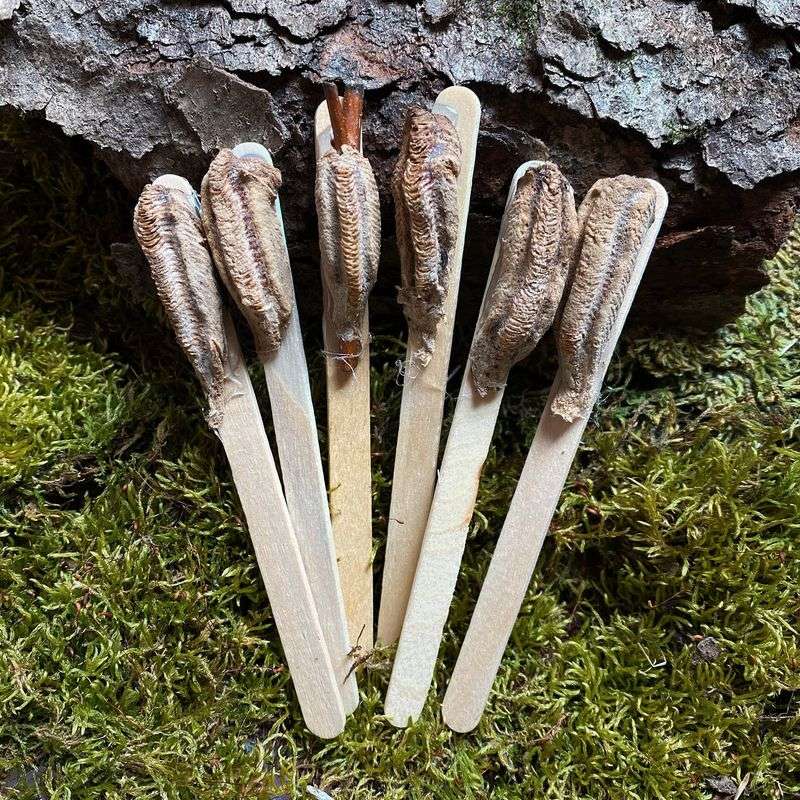
Garden centers and online retailers sell mantis egg cases every spring, often marketed as natural pest control for vegetable beds. The appeal is obvious: buy a few cases, release the nymphs near your aphid-covered kale, and let nature take over. Unfortunately, the results rarely match the promise.
UC IPM identifies commercially available mantises as primarily Chinese and Mediterranean species, both introduced in California. More importantly, UC IPM states directly that mantises provide little value for biological pest control. Released nymphs disperse quickly, many do not survive, and those that do will eat whatever insects are available, including the beneficial ones already working your garden. You are not deploying a targeted pest-control agent; you are releasing generalist predators into an ecosystem that already has them.
Purchasing egg cases also bypasses the actual conservation goal. Wild mantises already present in your yard are acclimated to local conditions, established in their hunting territories, and part of the existing food web. Supporting them through habitat and reduced pesticide use is more meaningful than adding commercially raised insects of introduced species.
Some gardeners worry that finding an egg case of an unknown species means they should destroy it. The available California guidance identifies introduced mantis species but does not provide a simple homeowner protocol for removing every nonnative egg case. Unless a qualified local authority, such as a UC Cooperative Extension advisor or county agricultural commissioner, has identified the species and recommended removal, leave the case alone. Destroying unidentified egg cases based on a guess about species is not a recommended practice.
Protect the whole natural-enemy community from routine sprays

A single mantis moving through your yard matters less than the broader community of insects working alongside it. Parasitic wasps, lacewings, ground beetles, predatory midges, and syrphid flies collectively suppress far more pest pressure than any one predator. Keeping that community intact starts with one straightforward rule: stop applying broad-spectrum insecticides unless a specific pest problem genuinely requires them.
UC IPM’s guidance on protecting natural enemies and pollinators explains that carbamates, organophosphates, pyrethroids, and some systemic insecticides can kill beneficial insects outright or leave residues on plant surfaces that affect insects arriving days later. A spray applied to control one problem can wipe out the predators and parasitoids that were quietly managing three others.
Building habitat that supports a range of natural enemies is the practical alternative. UC IPM recommends plantings that provide nectar, pollen, and shelter across a long bloom season. In California, this might include native buckwheats, salvias, yarrow, and phacelia, which attract parasitic wasps and predatory flies that are far more specialized and numerous than any mantis.
One important limit applies here, especially for homeowners in fire-hazard areas. Dense, dry, unmanaged vegetation around a structure is a fire risk, not a wildlife sanctuary. Habitat plantings should be placed outside required clearance zones or maintained in ways that meet local defensible-space standards. A well-spaced, irrigated pollinator garden on the outer edge of your property supports natural enemies without creating fuel.
Cluster plantings thoughtfully, keep them watered through the dry season, and check with your local fire agency if you are unsure whether a planting location complies with Zone 0 or Zone 1 requirements.
Handle serious aphid and grasshopper damage directly
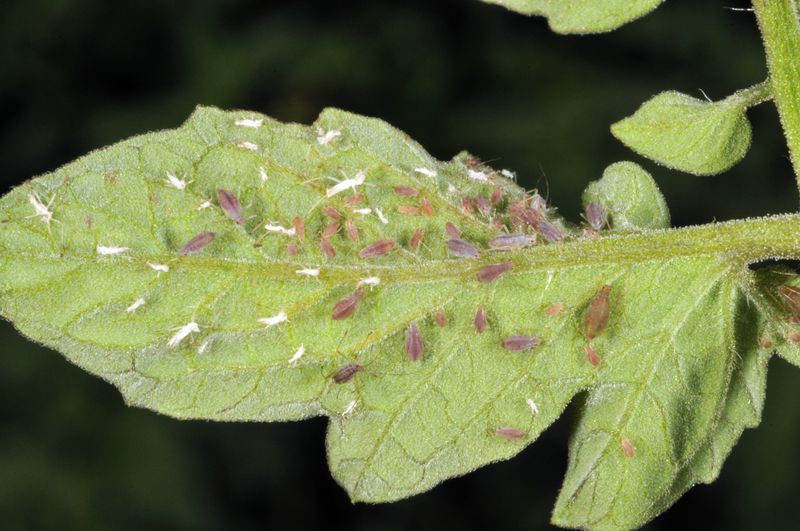
Aphids and grasshoppers are the two pests most often linked to mantis predation in garden marketing, and both require hands-on management when populations reach damaging levels. Mantises may eat individual specimens of either pest, but they cannot reliably suppress an outbreak. Here is what actually works.
For aphids, monitoring is the starting point. UC IPM recommends checking plants at least twice weekly during periods of rapid growth, when aphid populations can explode in a matter of days. Most established plants tolerate low to moderate aphid numbers without significant yield loss, so the question is whether populations are growing or leveling off. When action is needed, prune heavily infested leaves or stems and dispose of them away from the garden.
A strong stream of water knocks aphids off plants effectively and does not harm natural enemies.
Ants complicate aphid management in ways that catch many California gardeners off guard. Ants actively protect aphid colonies from predators and parasitoids because they harvest the sticky honeydew aphids produce. UC IPM’s ant management guidance recommends physical barriers around plant trunks or stems, ground-level baits, and pruning branches or vines that give ants a bridge onto plants. Reducing ant access to aphid colonies lets the natural enemies already present, including parasitic wasps and lacewings, do their jobs.
Grasshoppers present a different challenge. UC IPM stresses early management because adult grasshoppers are genuinely difficult to control once populations are established. Small nymphs are far more vulnerable, so acting in late spring before adults develop is the most effective window. UC IPM also cautions that common spray insecticides used against grasshoppers can be highly toxic to bees, natural enemies, and aquatic life.
If sprays are considered, follow the product label exactly and comply with California pesticide requirements.
Fire safety sets the limit on leaving mantises alone
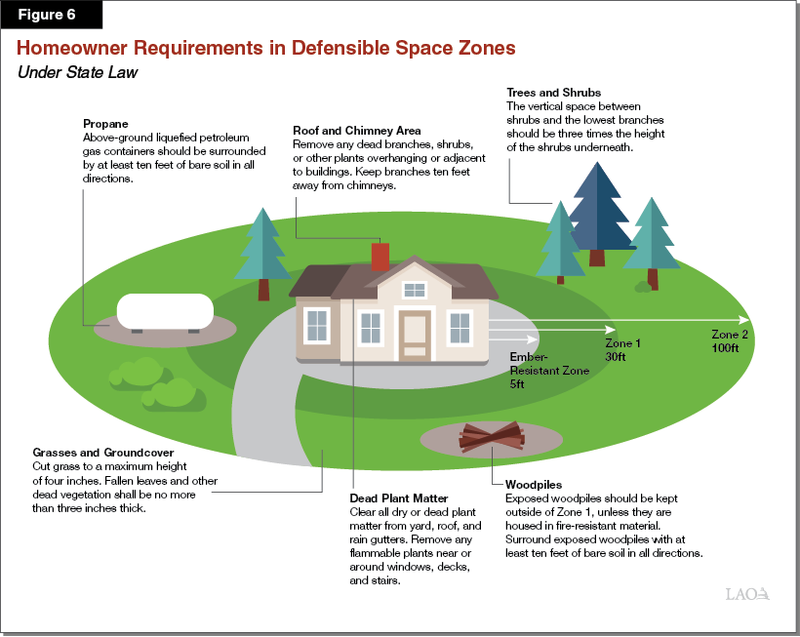
California homeowners in fire-hazard areas operate under rules that can and should override a preference for leaving vegetation undisturbed. A mantis egg case attached to a dry, dead branch in a clearance zone does not change the obligation to remove that branch. Wildlife conservation is a genuine value, but it works within fire-safety requirements, not above them.
CAL FIRE’s defensible-space guidance establishes clearance zones around structures, with the strictest standards applying in Zones 0 and 1 closest to the building. These zones require removal of dead and dry vegetation, adequate spacing between plants, and elimination of continuous fuel ladders. Local agencies may impose requirements stricter than the state minimum, so check with your county fire department or local fire safe council for the standards that apply to your specific address.
Habitat improvements for natural enemies belong outside required clearance areas, or they need to be maintained in ways that meet local standards. A drip-irrigated planting of low-water native perennials on the outer edge of your property, kept green through the dry season and properly spaced, can support beneficial insects without adding fire risk. A dense, dry tangle of shrubs tucked against your fence in Zone 1 cannot.
Pesticide use in and around the yard also carries California-specific obligations. The California Department of Pesticide Regulation states that the product label is the primary legal guide for safe and lawful pesticide use. Read the label before applying anything, follow the rate and application instructions exactly, and comply with any state or local restrictions on the product. No article, including this one, overrides the label or state law.
Measure success by a healthier yard, not more mantises
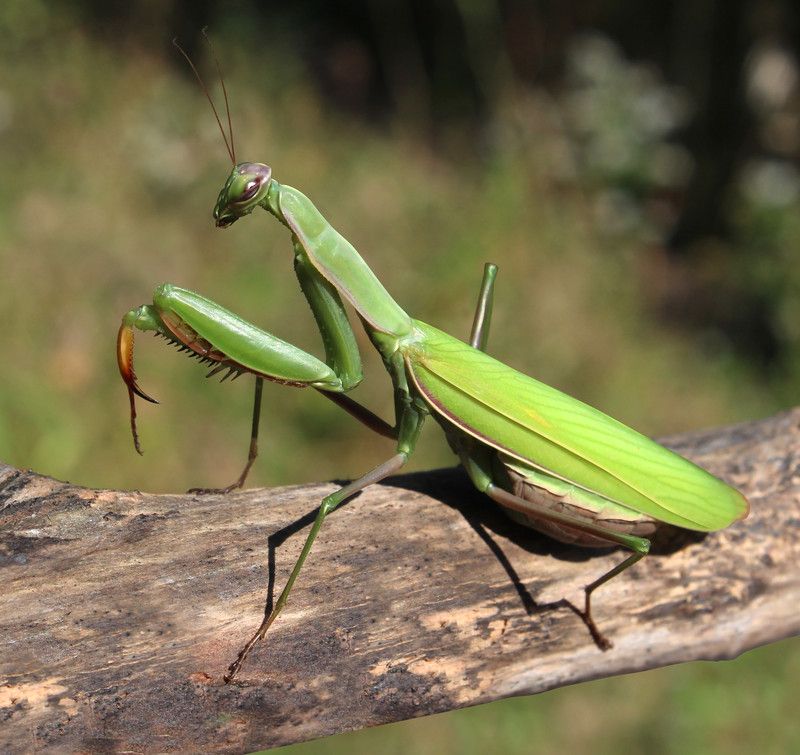
The clearest decision rule for California homeowners is also the simplest: leave a wild mantis or egg case undisturbed when doing so does not conflict with pruning needs, safety work, or fire-clearance requirements. Avoid broad-spectrum pesticide applications that are not tied to a specific, monitored pest problem. Maintain diverse plantings that support multiple natural enemies, placed and managed in compliance with local fire rules. When aphids or grasshoppers reach damaging levels, use monitoring and targeted controls rather than waiting for mantises to solve the problem.
UC IPM’s mantid guidance and its broader biological-control framework both point toward the same goal: a yard with a functioning community of natural enemies, not a yard optimized for any single predator. Mantises are worth noticing, worth protecting when it costs you nothing, and worth appreciating as part of a living California landscape. A yard where parasitic wasps, lacewings, ground beetles, and the occasional mantis all find what they need is one where pests rarely get the upper hand for long.