
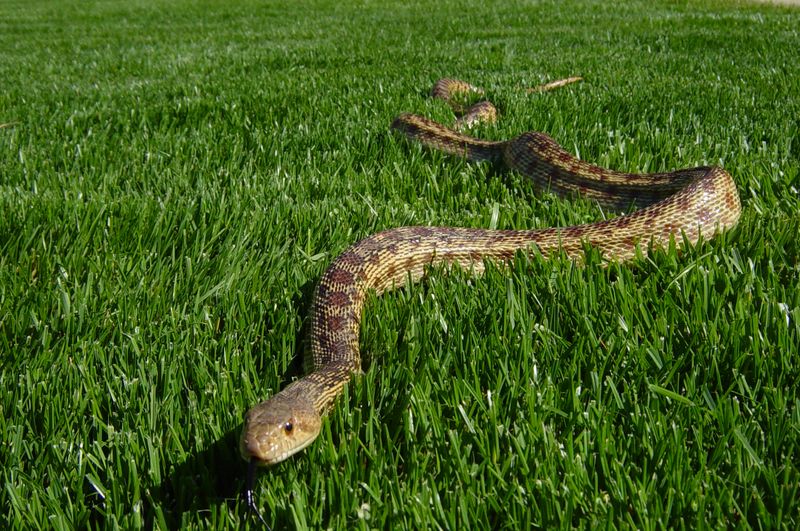
Most California homeowners who spot a large, patterned snake in the yard reach for a shovel without a second thought. That reflex may be costing them a free, poison-free ally.
California gopher snakes are native, nonvenomous predators that eat the same rodents chewing through gardens and lawns. Understanding what these snakes actually do, and what they cannot do, can change how you manage your yard all season long.
Gopher snakes may help control rodents—but they will not clear a yard
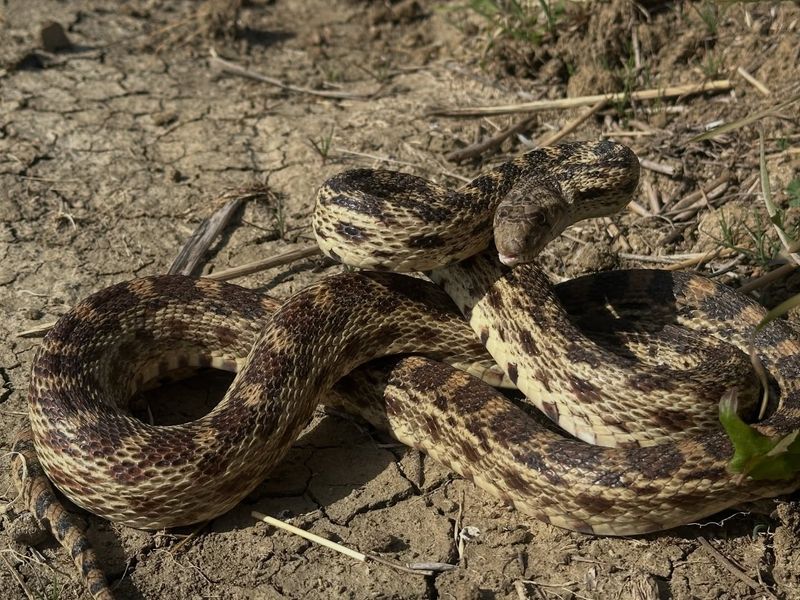
California gopher snakes (Pituophis catenifer) are one of the most widespread native snakes in the state, turning up in coastal scrub, inland valleys, open fields, and suburban yards from the Oregon border to Baja. Adults typically reach four to six feet in length, and their tan, brown, and black patterning helps them blend into dry grass and bare soil.
They are constrictors, meaning they subdue prey by squeezing rather than injecting venom, and California Fish and Wildlife specifically notes that snakes provide an ecosystem benefit by helping control rodents.
That benefit is real, but it comes with an honest limit. A single snake crossing your property is not a pest-control contract.
No research shows that one gopher snake will eliminate the mice, rats, or pocket gophers living in a particular yard. What the evidence does support is that gopher snakes eat mammals regularly and that killing them removes a native predator from your local food web for no practical gain.
“Support” in this context has a narrow, practical meaning. It means not killing or harassing a snake you encounter, avoiding unnecessary handling, and giving it room to move through the yard on its own terms.
It does not mean stocking your property with snakes, waiting for one predator to solve a serious infestation, or skipping direct rodent management when damage is actively occurring. The CDFW life-history account for gopher snakes confirms they are native, ecologically valuable, and nonvenomous, making tolerance the simplest and most defensible starting point for any California homeowner who finds one in the yard.
Their diet explains the benefit—and the limits
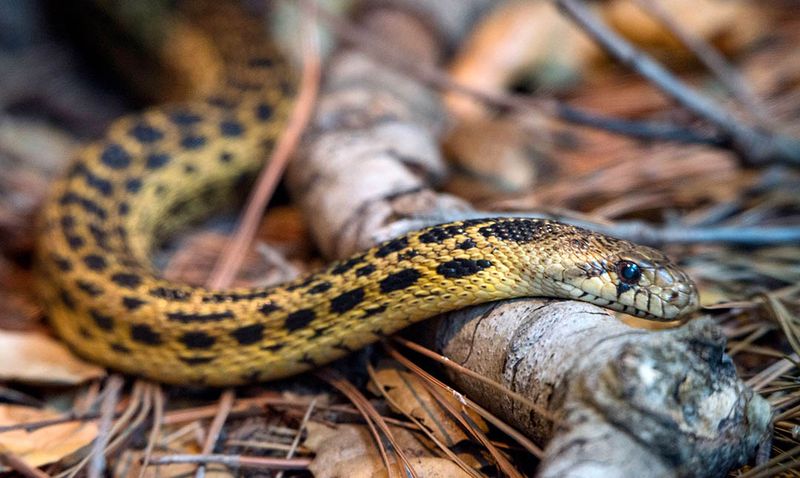
A peer-reviewed study of more than 2,600 gopher snake specimens found that mammals made up 74.8% of identified prey items, making them the clear dietary staple. Recorded prey includes pocket gophers, mice, kangaroo rats, ground squirrels, rabbits, and, in documented cases, roof rats, along with birds, eggs, and lizards.
That breadth matters: the name “gopher snake” is a common name, not a job description. Prey selection shifts with what is available in a given region, what size the individual snake has reached, and what opportunities arise during a foraging bout.
The rodent-eating record is solid. What it does not tell you is how many gophers or rats a snake removes from your specific half-acre over a summer.
A snake showing up near a garden bed is more likely to be following a scent trail toward existing prey than moving in to clear the property. Predators often concentrate where food is abundant, so a gopher snake in the yard may reflect a rodent population nearby rather than signal that one is disappearing.
Activity patterns add another layer of qualification. The CDFW life-history account reports that gopher snakes are generally active from roughly April through October, with more daytime movement during cooler spring and fall conditions and a shift toward early morning or evening foraging during hot summer months.
Snakes in Southern California’s warmer climate tend to have a longer active window than those in cooler inland or northern areas. Temperature, microhabitat, and local prey availability all shape when and where a particular snake moves, so no single activity description fits every yard in every part of the state.
UC IPM’s pocket gopher guidance reinforces that natural predators rarely eliminate all gophers, a reminder that diet evidence and pest-control outcomes are two different things.
Give an encountered snake space to leave
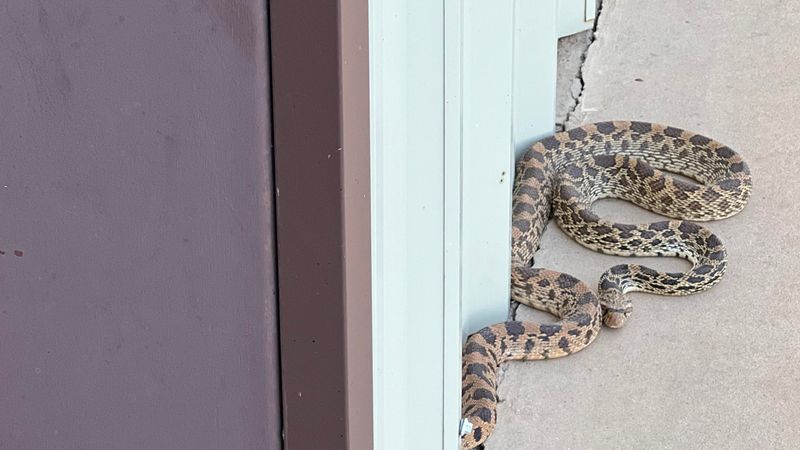
Finding a snake near the back door is startling, and the reflex to do something is understandable. The safest and most useful response is also the simplest: back away, keep children and pets inside or at a distance, and leave the snake a clear, unobstructed path to move off on its own.
Most encounters end within minutes when the animal is not cornered or threatened.
The challenge is that a frightened gopher snake is easy to mistake for a rattlesnake. National Park Service documentation of gopher snake behavior describes a defensive display that includes hissing loudly, coiling the body, flattening the head into a wider shape, striking toward a perceived threat, and vibrating the tail rapidly against dry leaves or soil.
That combination of behaviors mimics a rattlesnake closely enough that experienced outdoors people have been fooled. Do not approach the snake to get a better look at its head shape or check for a rattle.
A gopher snake in threat posture will flatten its head, making the triangular-head test unreliable. Some rattlesnakes also have damaged or immature rattles that are easy to miss from a distance.
As the NPS gopher snake profile notes, gopher snakes are nonvenomous, but “nonvenomous” does not mean incapable of biting. Any wild snake may defend itself when grabbed, cornered, or mishandled, and a bite from a large gopher snake is painful and carries infection risk.
California Fish and Wildlife advises people not to touch or handle snakes, whether alive or dead. If you are genuinely uncertain about species identification, especially in an area where rattlesnakes are known to live, contact a qualified local wildlife professional or licensed snake-removal service rather than attempting your own close inspection.
The CDFW human-wildlife conflict page for snakes can help connect you with appropriate resources.
Preserve suitable habitat only within defensible-space rules
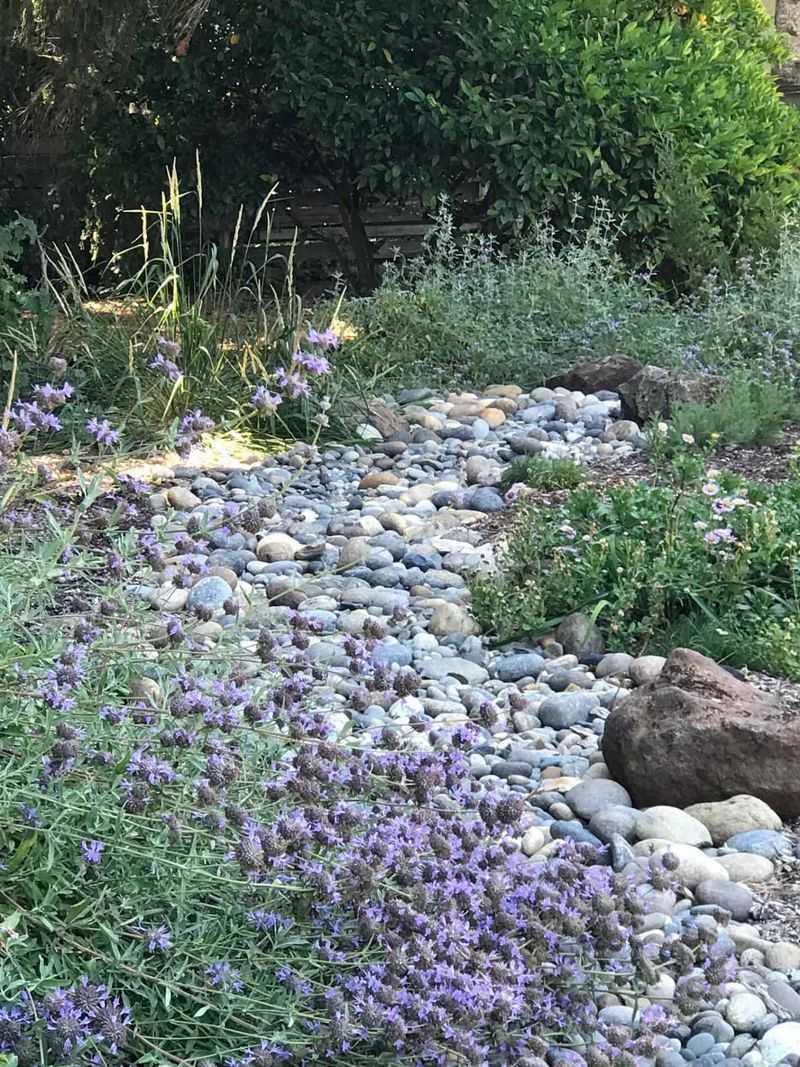
Gopher snakes use a variety of microhabitats across California. The CDFW life-history account describes adults foraging on open ground, in shrubs, inside mammal burrows, and under existing cover such as rocks, logs, and boards.
A yard that already has flat rocks along a garden border, an undisturbed patch of open soil, or natural ground-level cover in a low-traffic corner offers the kind of structure a gopher snake may use without any deliberate modification by the homeowner.
The guidance here is to avoid unnecessarily disturbing what is already present in safe, appropriate parts of the yard, not to build new features specifically designed to attract snakes. That distinction matters enormously in California, where wildfire risk shapes what is and is not responsible yard management.
Adding brush piles, stacking woodpiles against a fence, or planting dense combustible groundcover near a structure to create “snake habitat” can directly conflict with defensible-space requirements that exist to protect your home and your neighbors.
CAL FIRE’s defensible-space program requires removing dead vegetation, maintaining spacing between plants, and keeping combustible materials away from structures within the required zones. Local fire authorities or your county may enforce rules that are stricter than the state minimums.
Before making any yard changes in the name of wildlife support, check your local requirements. A rock border along an already-cleared garden bed is very different from a woodpile stacked against a fence in a high-fire-risk zone.
Fire safety is the controlling condition for any habitat decision in California, and a gopher snake’s potential benefit never outweighs the risk of a poorly maintained defensible space.
Use bait carefully to reduce unintended wildlife harm
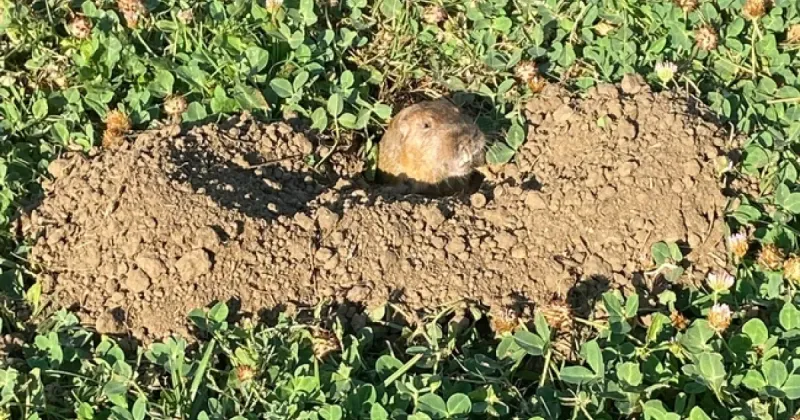
Choosing to leave a gopher snake alone does not require abandoning every other rodent-control tool. The two approaches can coexist, but one common mistake can undermine both: placing rodent bait aboveground or in locations where non-target animals can reach it.
UC IPM is direct on this point. The UC IPM Pest Notes on pocket gophers state that toxic bait must be placed directly inside burrow systems, not broadcast across the soil surface.
Bait left aboveground or spilled near burrow openings can be found by pets, foraging birds, and other nontarget wildlife that have no role in the rodent problem you are trying to address. A dog or cat that picks up loose bait can become seriously ill, and the label on any registered rodenticide is a legal document that specifies exactly how and where it must be applied.
The practical steps are straightforward. Read the entire product label before opening the container.
Use only the amount specified. Place bait inside the burrow system using the method the label describes, then close the burrow opening to limit exposure.
Check placements on the schedule the label requires and remove or reapply as directed. Following UC IPM’s integrated approach to gopher management keeps bait where it belongs and reduces the chance that your rodent-control effort harms the yard’s broader wildlife community, including any native predators that happen to be passing through.
Treat active gopher damage with integrated management
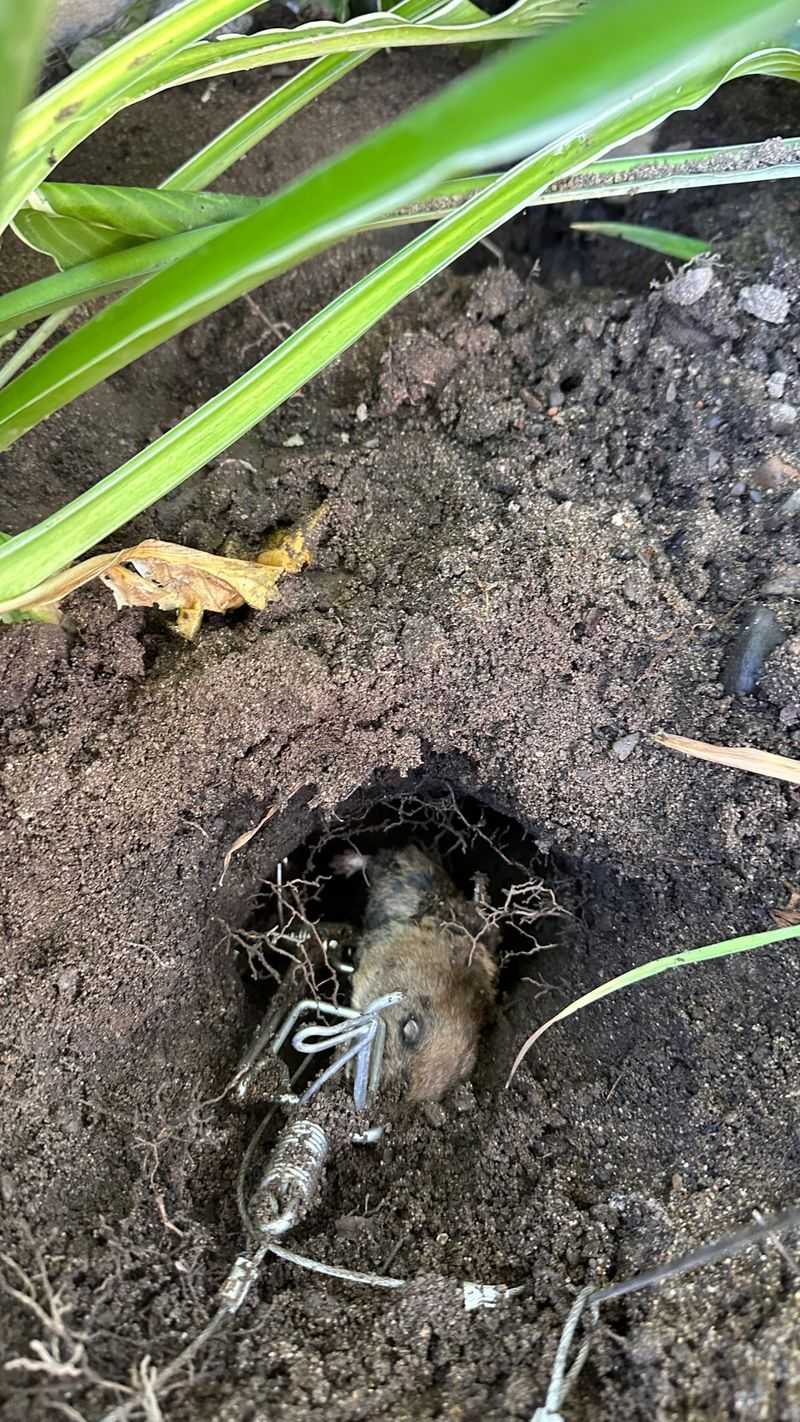
Pocket gophers are remarkably good at surviving predator pressure. They spend most of their lives underground in a sealed burrow system, and when a predator enters a tunnel, they can block the passage with a soil plug and retreat deeper into the network.
That behavior makes complete gopher control difficult for snakes and for most other predators, regardless of how often they patrol a yard.
UC IPM’s pocket gopher management guidance is clear: natural predators rarely eliminate all gophers, particularly in small, bounded areas like suburban yards. When gophers are actively chewing through plant roots, heaving up mounds in a lawn, or tunneling under raised beds, waiting for a snake to resolve the situation is not a management plan.
Trapping is described as one of the most reliable control methods, and exclusion, such as lining planting beds with hardware cloth or using wire baskets around vulnerable root zones, addresses the problem structurally rather than depending on any single predator.
The distinction between tolerating a wild snake and trying to relocate one is also worth stating plainly. If a snake is inside a garage, under a door threshold, or in a space where it genuinely cannot leave on its own, the answer is not to grab it and carry it to a nearby park.
Handling creates a real bite risk, and wildlife relocation in California may be regulated in ways that make do-it-yourself transport legally and ecologically problematic. The CDFW wildlife rehabilitation regulations page explains the rules around capturing and moving native wildlife.
For a snake in a difficult location, contact your local animal services agency or a licensed wildlife professional who can assess the situation safely and legally.
Make the snake one useful part of your pest plan
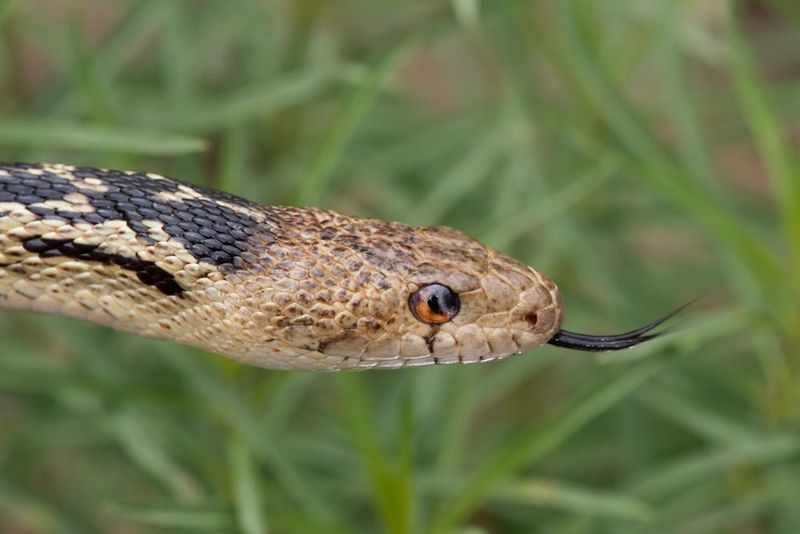
A gopher snake in the yard is worth a second look before any other action is taken. California Fish and Wildlife recognizes snakes as ecologically beneficial native predators, and that recognition translates into a straightforward homeowner response: leave it alone, give it room to leave, and let it go about its business.
Beyond that encounter, two other pieces keep the approach grounded. First, any habitat you preserve or create must stay within your local defensible-space requirements.
CAL FIRE’s defensible-space standards set the boundary for what is safe and legal in California yards, and no wildlife benefit justifies a fire risk. Second, when gophers or other rodents are causing active damage, UC IPM’s integrated pest management tools, including trapping and exclusion, are the reliable next step.
A native predator can be one part of a functioning yard ecosystem without being the whole solution.
Killing a gopher snake on sight removes a native animal that costs nothing, requires no maintenance, and may occasionally take a rodent that would otherwise reach your garden. Tolerating it, on the other hand, takes about thirty seconds of stepping back and letting the snake find its own way out.
That trade is about as simple as yard management gets.