
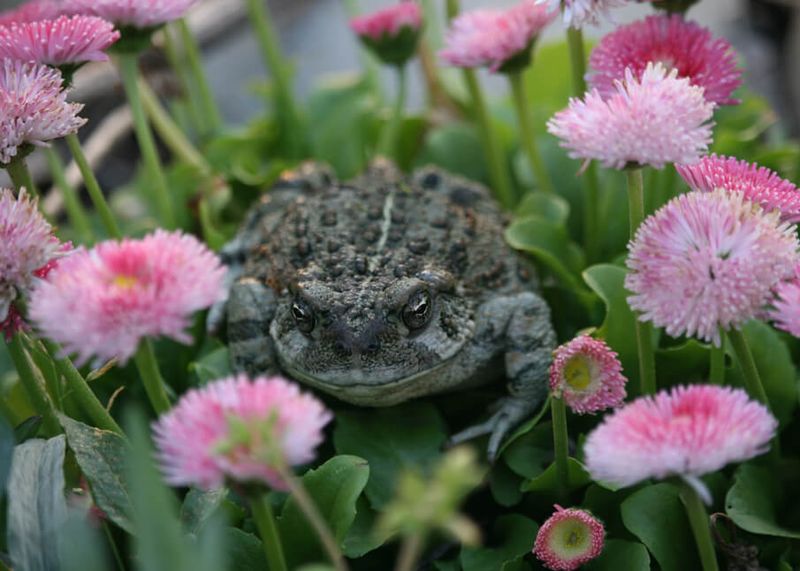
California toads are a native part of many backyard ecosystems, and homeowners who share their yards with these animals are already ahead in the wildlife-gardening game. These toads do eat a broad mix of terrestrial insects and small arthropods, which can add some natural predator pressure to your garden.
However, they are not a replacement for pest management, and the slugs and cutworms you are fighting likely need more targeted attention than any toad can provide. Making your yard more welcoming to local toads is still worth doing, and this guide explains exactly how.
What California toads can—and cannot—do for a garden
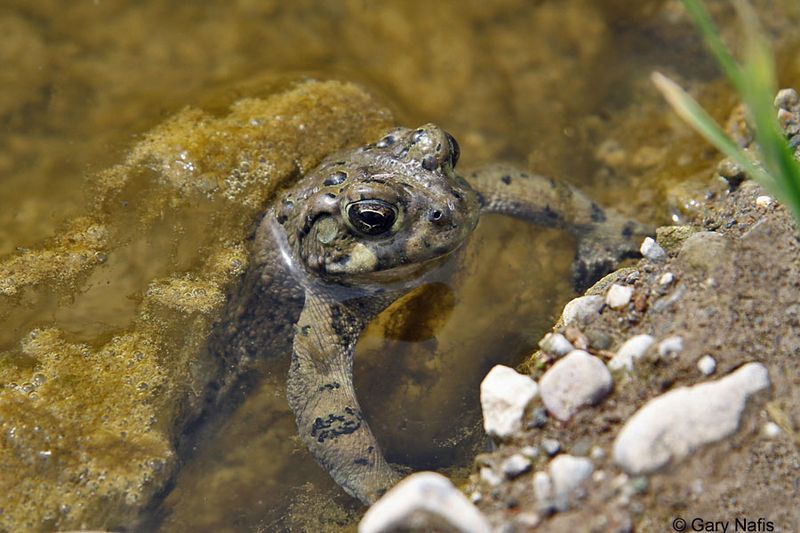
The “California toad” is the California subspecies of the western toad, Anaxyrus boreas halophilus, and the guidance here applies only where this subspecies naturally occurs in the state. Adults spend most of their time on land and are often most active at night or during humid conditions, which is precisely when many garden pests are also moving around.
That timing overlap is real, but it does not automatically translate into meaningful pest control.
According to the California Department of Fish and Wildlife life history account for the western toad, adults eat a varied range of terrestrial insects and small arthropods, and snails and slugs appear as less common prey items. That distinction matters.
A toad foraging through your garden beds on a summer night will likely pick up beetles, ants, and isopods before it finds a slug, and there is no evidence it will seek cutworms out in any reliable way.
A residential-lawn study from Bakersfield, documented in the California Office of Environmental Health Hazard Assessment’s diet record for western toads, analyzed 320 fecal pellets from six adult toads. Beetles accounted for about 54% of occurrences, isopods about 31%, and Lepidoptera larvae – the category that would include cutworms – only about 2.67%.
Six toads and one study site in one city cannot tell us what toads eat across every California yard, season, or landscape type, so these numbers are illustrative, not a universal promise.
UC IPM’s guidance on snails and slugs lists toads among the natural enemies of these pests but states directly that natural enemies are usually not effective enough by themselves to provide satisfactory garden control. The same principle applies to cutworms.
UC IPM’s cutworm management page notes that natural enemies exist but that their populations are typically insufficient to prevent significant damage. A toad in your garden adds wildlife value and some predator pressure, and that is genuinely worth having.
It is not a substitute for monitoring, cultural controls, or targeted treatment when pest damage crosses a threshold that matters to you.
Check whether California toads belong in your local yard
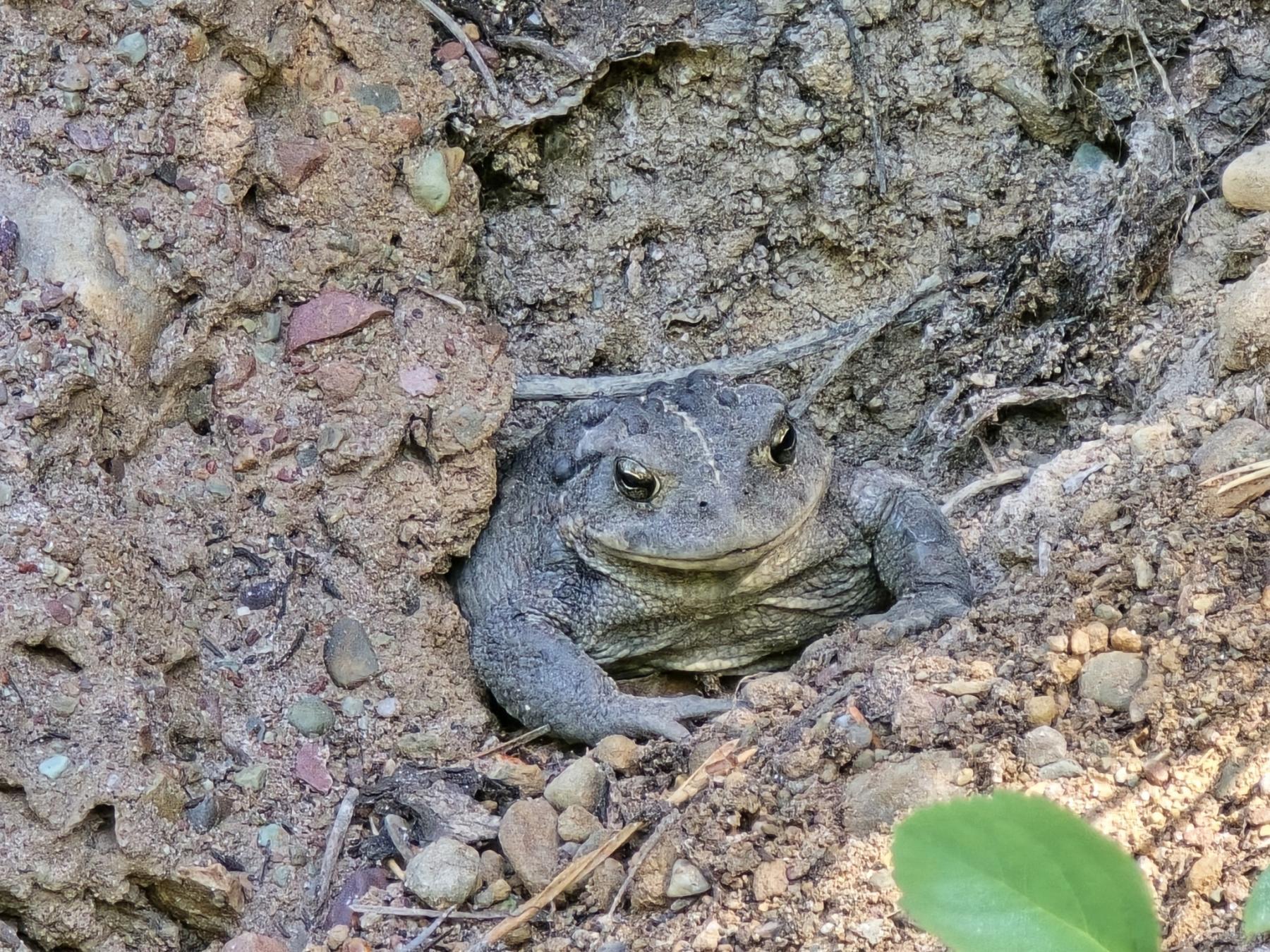
Before setting up a shelter or a water dish, it helps to know whether California toads are part of your local wildlife picture at all. The California subspecies of the western toad occurs across a broad swath of the state, from coastal foothills and inland valleys to mid-elevation mountain slopes.
However, as the CDFW western toad life history account makes clear, this subspecies is absent from California’s desert regions and the state’s highest mountain elevations.
If your property sits in the Mojave or Sonoran desert, or above the elevation band where western toads are documented, habitat improvements aimed at California toads will not bring them in, because the animals simply are not there to find your yard. Homeowners in those areas should instead identify which native amphibians actually belong in their region and focus habitat support on those species.
National Wildlife Federation guidance on backyard toad habitat notes that different toad species are native to different parts of the country, and matching your habitat work to local species is the right starting point.
For homeowners within the natural range, the practical question is whether your yard already offers conditions that could support a passing toad: some moisture, shelter from the sun, reduced pesticide exposure, and proximity to at least seasonal water for breeding. Habitat improvements do not guarantee that a toad will colonize your property or stay permanently.
They make the yard a better candidate for animals already moving through the landscape. Think of it as leaving a door open rather than guaranteeing a guest will walk through it.
Build a shaded daytime shelter
A toad that forages at night needs somewhere cool and shaded to rest during the day. Without a suitable spot, the animal will move on or remain exposed to heat and drying conditions that stress it.
Providing a simple shelter is one of the most direct things a homeowner can do to make a yard hospitable to any local toad that wanders in.
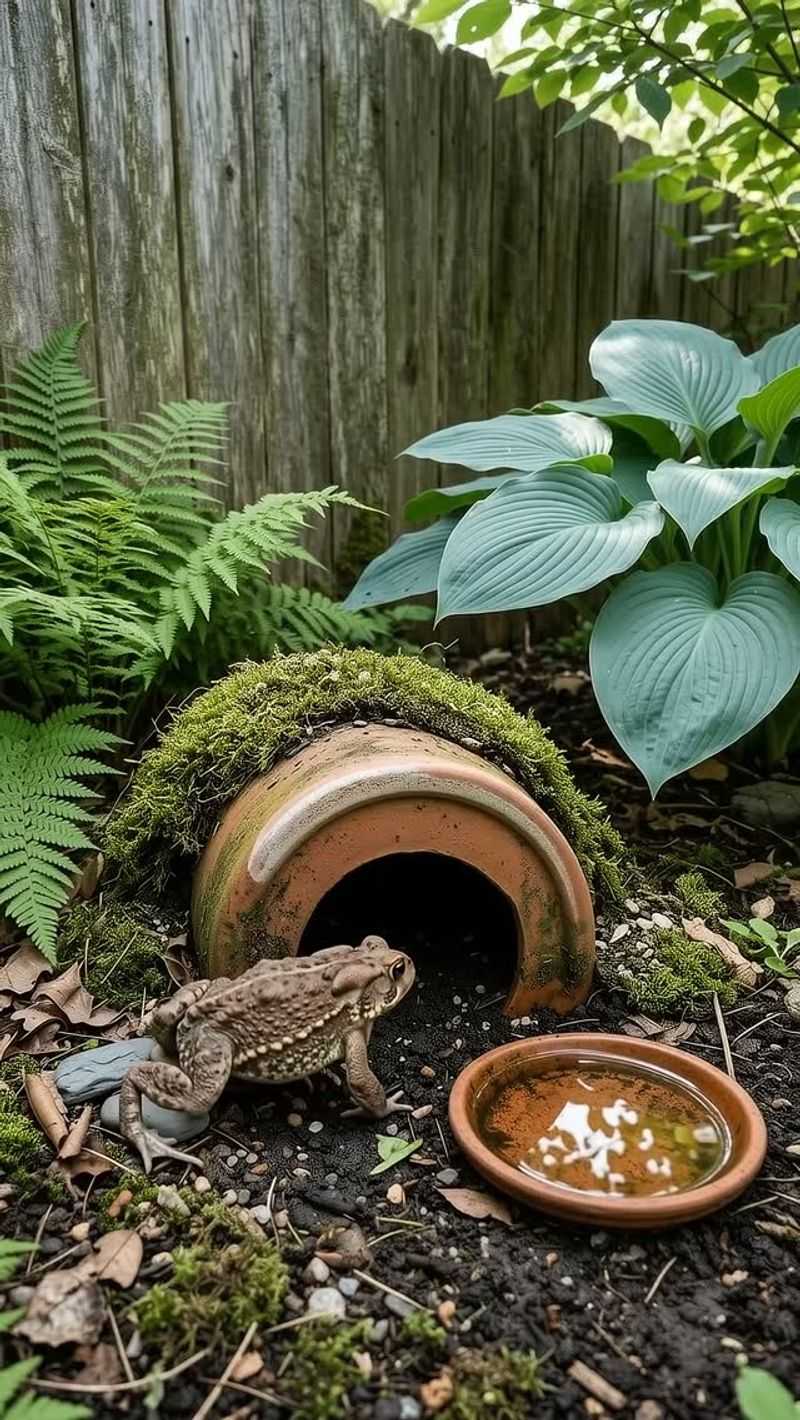
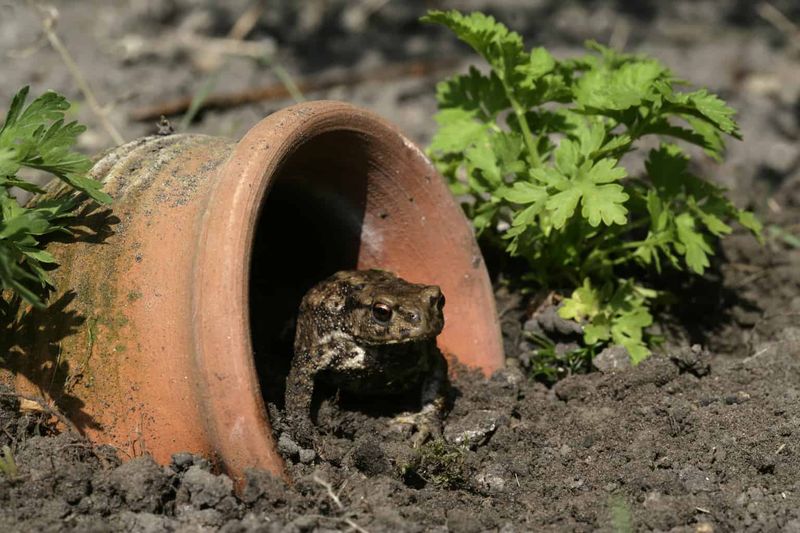
University of Illinois Extension’s wildlife-friendly garden guidance recommends propping one side of an overturned terra-cotta pot on a small stone or piece of wood to create a toad-sized entrance. The pot should sit directly on bare soil rather than on a solid floor, so the animal can access the cool, moist earth beneath it.
Flat rocks stacked to create a gap, a half-buried pot, or an untreated wooden structure that forms a shaded cavity all work on the same principle. NWF’s backyard toad house guidance suggests placing shelter in a shaded location near a moist area, which gives a resting toad easy access to the damp conditions it needs without requiring a pond or elaborate water feature.
Placement matters beyond moisture. A shelter tucked against a fence or under a dense shrub in the shadiest corner of the yard serves a toad better than one sitting in open sun.
Avoid placing it so close to a structure that it conflicts with fire safety, however. California homeowners in wildland-urban interface areas or any fire-prone neighborhood are required to maintain defensible space around their homes, and that means keeping combustible material, including leaf litter, brush piles, and untreated wood logs, at a safe distance from buildings.
NWF’s guidance on leaf litter and backyard wildlife acknowledges that litter and organic debris support many beneficial animals while also cautioning that accumulation near structures can be a fire hazard in drought-prone regions. Follow your local defensible-space ordinance and use the toad shelter itself, rather than piles of brush or thick leaf litter, as the primary habitat feature near the house.
A simple pot or rock cluster placed in a compliant part of the yard does the job without adding fire risk.
Offer clean shallow water without inviting mosquitoes
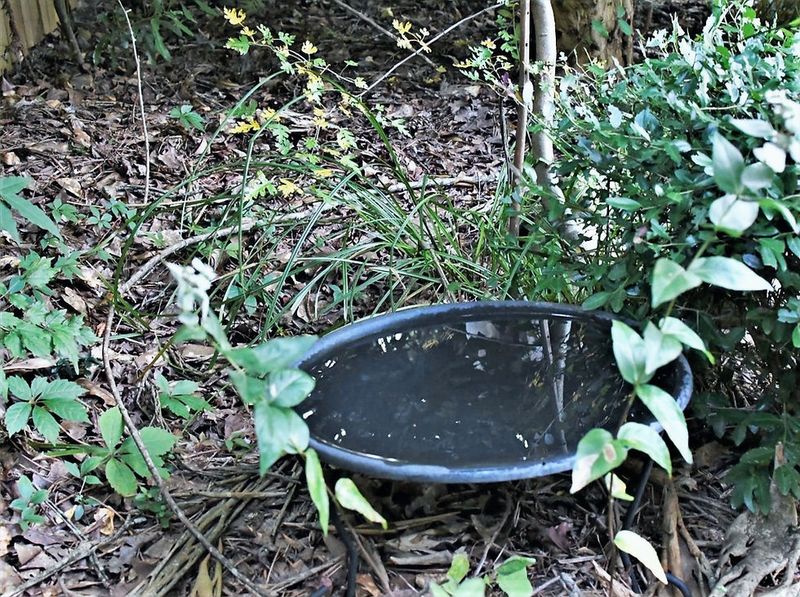
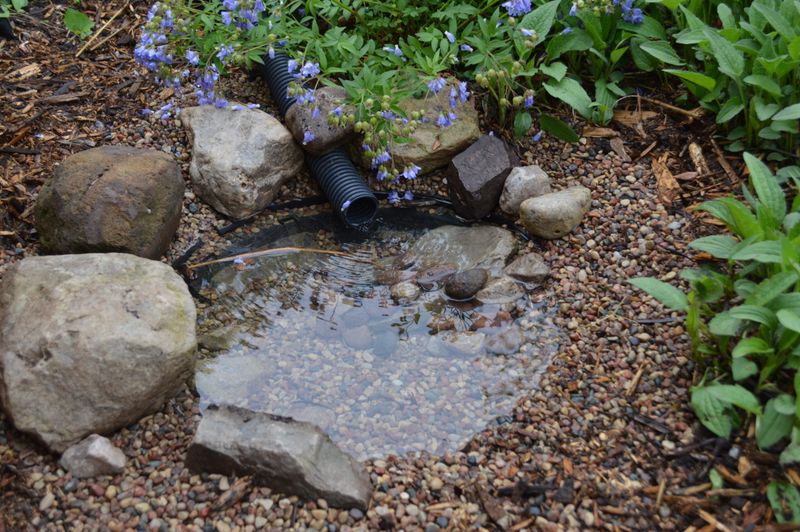
Amphibians absorb water through their skin rather than drinking it in the conventional sense, which means a shallow dish or basin for soaking can genuinely support a toad using your yard. A deep pond is not required for this purpose.
A wide, shallow container – a terracotta saucer, a low-rimmed ceramic dish, or a small basin with a few smooth pebbles for footing – placed in a shaded spot near the shelter gives a toad what it needs to rehydrate between nightly foraging runs.
University of Illinois Extension recommends cleaning wildlife water features like birdbaths two to three times per week, and Utah State University Extension’s wildlife-friendly yard guide similarly advises refreshing water two to three times per week to keep it clean and safe for wildlife. Follow through on that schedule consistently.
Standing water that sits for more than a few days can become a mosquito-breeding site even in a small container, because mosquitoes need only a bottle cap’s worth of stagnant water to complete their early life stages.
Scrub the dish with a brush and rinse it thoroughly when you change the water. Do not leave cleaning products, soap residue, or bleach behind, since these can irritate or harm the same animals you are trying to help.
Refill with plain tap water and let it sit for a few minutes before placing it back.
One point worth stating plainly: the water dish is an amphibian hydration feature, not a mosquito-management tool. UF/IFAS integrated pest management guidance for mosquitoes around homes is explicit that natural predators cannot consume every mosquito and should not be relied upon for disease protection.
Maintaining the dish carefully keeps it from becoming part of the mosquito problem, but it will not create a mosquito-free yard on its own. Source reduction, screens, and proven personal protection remain the foundation of any real mosquito plan.
Reduce pesticide exposure around amphibian habitat
Amphibians are more vulnerable to pesticide exposure than most homeowners realize, and the reason comes down to skin. Toads absorb both water and contaminants through their permeable skin, which means a pesticide residue on damp soil near a shelter or water dish can reach an animal directly without it ever touching a treated plant.
That exposure pathway exists on land and in water, which is why pesticide choices matter especially in the parts of the yard where toads are most likely to rest or forage.
EPA research on pesticide uptake and toxicity in frogs confirms that amphibians can be exposed through dermal contact with contaminated soil and water, not just through direct spray. The EPA’s T-HERPS risk model for amphibians and reptiles accounts for multiple exposure routes when assessing pesticide risk, which underscores that the hazard is not limited to a single application event.
Risk also varies by active ingredient, formulation, dose, life stage, and environmental conditions, so no single rule covers every product.
A practical sequence for managing pests in a toad-friendly yard starts with identification. Know what pest you have and whether the damage level actually warrants treatment.
Cultural and mechanical measures – removing hiding places, improving drainage, hand-picking, using physical barriers – should come first. When treatment is necessary, spot-treat only the affected area rather than applying broadly, and select the least-disruptive labeled option for the specific pest.
The EPA’s pesticide hazard brochure for frogs in California recommends keeping pesticides out of water and areas near water, avoiding applications before heavy rain, applying in calm conditions to minimize drift, and following all label instructions. Labels are legally binding, and following them is the baseline for any application.
One more point: an organic or natural label does not automatically make a product safe around amphibians. The active ingredient, formulation, and exposure conditions still determine the risk, so read every label regardless of how the product is marketed.
Manage slugs and cutworms with targeted garden tactics
Resetting expectations about toads and pest control is not a reason to give up on managing slugs and cutworms. Both pests cause real damage, and there are effective tools available that do not depend on a toad being present.
UC IPM’s guidance on snails and slugs lists toads as natural enemies of slugs but states plainly that natural enemies are usually not effective enough by themselves to provide satisfactory control. Pennsylvania State University Extension makes a similar point, describing toads as natural slug enemies that are “not very dependable” as a standalone strategy.
For slugs, the most productive starting point is a night inspection. Go out after dark with a flashlight and hand-pick slugs directly into a container of soapy water.
University of Minnesota Extension’s slug management guide recommends reducing hiding places by cleaning up boards, dense mulch, and debris where slugs shelter during the day. Watering in the morning at the root zone rather than in the evening keeps the soil surface drier at night, which slugs prefer to avoid.
Improving drainage and air circulation between plants also makes beds less attractive to them.
Cutworms are moth larvae, not actual worms, and they hide in soil or debris during the day while feeding on plant stems at night or just below the soil surface. Evidence that California toads substantially reduce cutworm populations in home gardens is especially thin.
The Bakersfield diet study recorded Lepidoptera larvae in only about 2.67% of fecal-pellet occurrences, and no study has demonstrated meaningful cutworm suppression by toads in residential settings. UC IPM’s cutworm page and University of Minnesota Extension’s cutworm guide both note that natural enemies exist but are typically insufficient to prevent significant damage on their own.
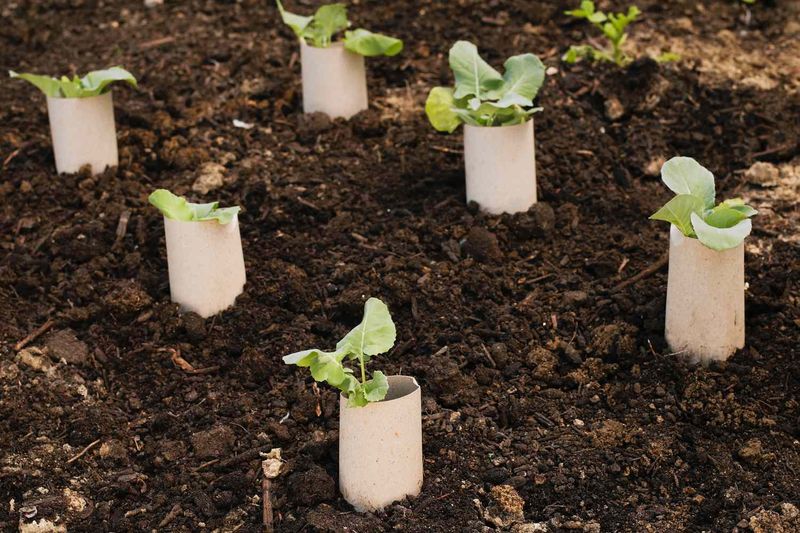
Physical collars placed around transplant stems at planting time, hand removal after night inspections, and tilling soil to expose pupae are all practical first responses.
When nonchemical methods are not enough, diagnose the pest precisely before choosing a product. UC IPM identifies iron-phosphate slug baits as a lower-toxicity option compared to some other formulations, but product safety still depends on the exact product, how it is applied, and conditions at the time of use.
Read the label completely and follow all restrictions, including any guidance about keeping the product away from water and wildlife habitat.
Control mosquitoes at their sources
Mosquito control deserves its own section because the connection between toads and mosquitoes is easy to overstate. Adult toads are generalist predators and may eat a mosquito if one happens to land within reach, but that is opportunistic, not targeted.
University of Wisconsin-Madison’s mosquito resource on amphibians and other predators does not support the idea that adult frogs or toads meaningfully reduce mosquito populations. Tadpole predation on mosquito larvae is species-specific and poorly established as a reliable backyard strategy.
UF/IFAS integrated pest management guidance for mosquitoes around homes and neighborhoods is direct on this point: natural predators cannot consume every mosquito and should not be relied upon for disease protection. Some mosquito species also feed on frogs and toads, which makes the relationship more complicated than a simple predator-prey framing suggests.
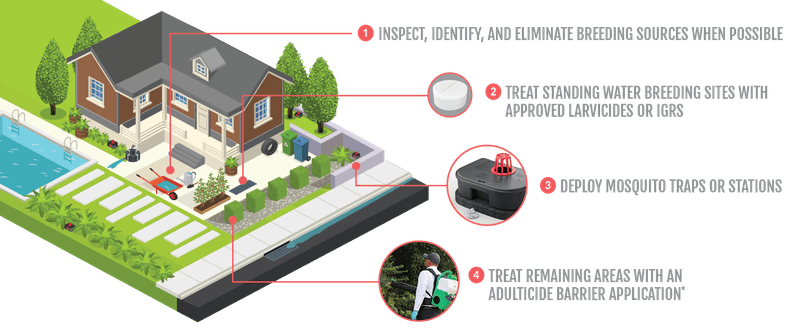
Effective mosquito management centers on eliminating or appropriately managing the standing water where mosquitoes breed. Walk your yard and empty anything holding water: plant saucers, buckets, clogged gutters, low spots in tarps, and any container left out after rain.
Clean gutters so water drains freely. Repair dripping faucets or hose connections that keep soil persistently wet.
Ornamental ponds should be aerated or stocked with mosquito fish where appropriate, and water should circulate enough to prevent the still-surface conditions mosquitoes need to lay eggs.
Screens on windows and doors, long sleeves and pants during peak mosquito hours, and EPA-registered repellents applied according to the label are the personal-protection side of the plan. The shallow water dish you maintain for toads needs to be part of this management effort, not separate from it.
Refresh and scrub it on a regular schedule so it never sits long enough to become a breeding site. A well-maintained dish supports amphibian hydration without adding to your mosquito problem, but only if you keep up with it consistently.
Let wild toads arrive naturally and keep pets safe
One of the most common mistakes well-meaning homeowners make with native wildlife is trying to speed things up by collecting or purchasing animals and releasing them. For California toads, that approach is both legally risky and ecologically harmful.
California Fish and Game Code generally prohibits taking amphibians except as specifically authorized, and purchasing or importing toads for release in your yard falls outside the kind of authorized activity most homeowners would qualify for. Moving amphibians from one location to another can also spread pathogens such as chytrid fungus, which has contributed to amphibian population declines globally.
CDFW’s living-with-wildlife guidance encourages homeowners to support conditions that allow native animals to arrive and use habitat on their own terms. A shelter, a clean water source, and a reduced-pesticide yard are an open invitation.
If toads are present in your neighborhood or the surrounding landscape, some may eventually find your property. That natural arrival is the goal, and it is worth being patient about.
When a toad does show up, handle it as little as possible. CDC guidance on hygiene practices around animals recommends washing hands thoroughly after contact with amphibians or reptiles and their habitat.
Toads produce defensive skin secretions that can irritate human mucous membranes, and children who touch a toad and then rub their eyes may experience discomfort. Teach children to observe without grabbing.
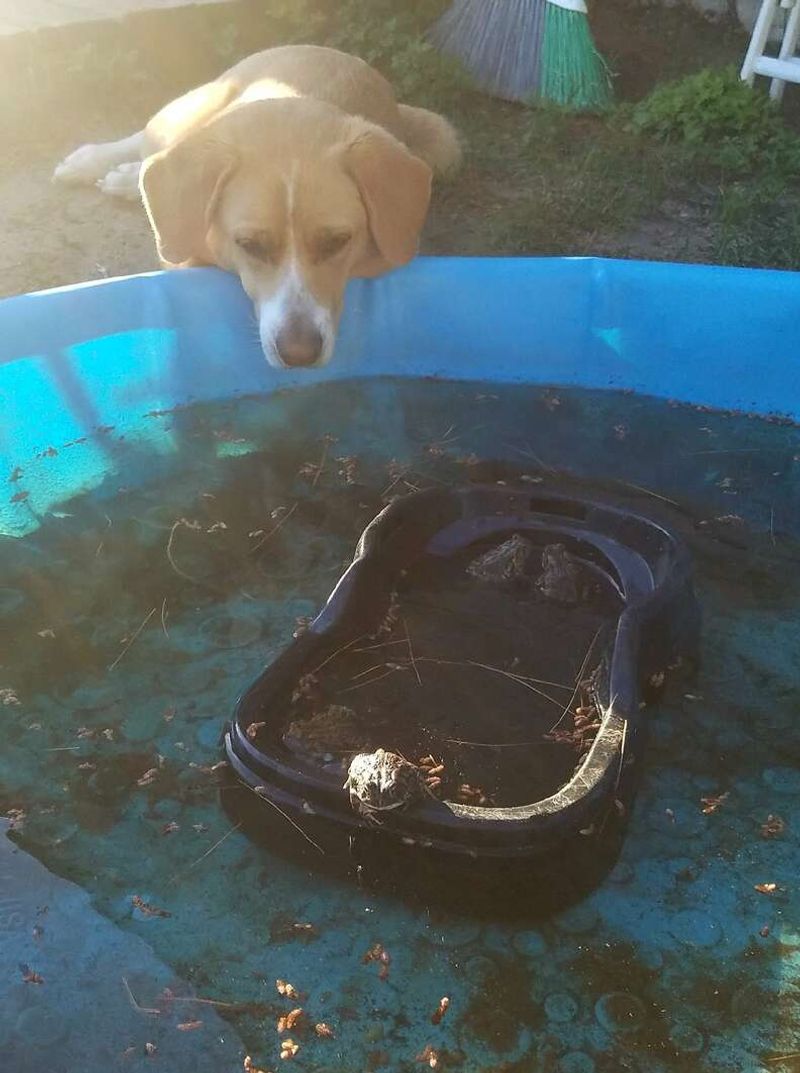
Pets pose a more serious concern. Penn State Extension’s toad garden guidance notes that a dog or cat that bites or mouths a toad can be exposed to skin secretions that cause drooling, pawing at the mouth, and in more severe cases, more significant reactions.
Supervise pets in areas where toads may be active, especially at night. Training a dog to leave wildlife alone is the most durable solution.
If a pet bites or swallows a toad, contact a veterinarian or animal poison control promptly rather than waiting to see whether symptoms develop.
Use toads as one part of a healthier yard
A yard that supports locally occurring California toads does not need to be a wildlife sanctuary or a pesticide-free zone. Shade, a clean shallow water dish, a simple shelter, and a more selective approach to pesticide use are the practical core of the whole effort.
Those four things together create conditions that a passing toad can actually use, and they also make the yard a better environment for the full range of native insects and arthropods that a toad would eat.
Pair that habitat work with active pest management rather than treating it as a replacement. Monitor for slugs and cutworms on a regular schedule, use cultural and mechanical controls first, and reach for targeted treatments only when damage crosses a real threshold.
UC IPM’s slug and snail guidance and UC IPM’s cutworm management page both lay out that sequence clearly. For mosquitoes, source reduction and personal protection remain the reliable tools; the UF/IFAS mosquito IPM guide is a useful reference, and the CDFW western toad account is worth reading for any California homeowner who wants to understand what this animal actually needs.
Success here looks like a more functional, wildlife-aware yard with lower unnecessary pesticide use, not a garden where one native predator has solved every pest problem. A toad that finds your yard and stays for a season is a sign the habitat is working, and that is genuinely worth more than any number on a pest-control label.