
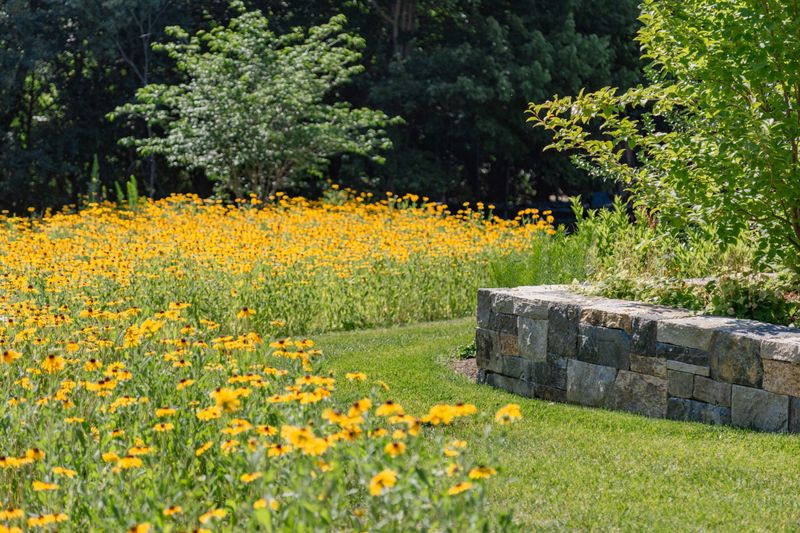
Replacing a scraggly lawn corner with a patch of native wildflowers sounds like the easiest project in the world, but the honest version of that story is a little more nuanced. A well-planned Florida meadow can genuinely cut down on mowing, fertilizing, and watering once plants are established, but the work does not disappear. It shifts forward, into soil prep, careful seed selection, consistent watering during germination, and steady weed patrol in the first season. Get those steps right, and you end up with a pollinator-friendly corner that needs far less attention than the grass it replaced.
A Florida meadow can reduce work later—but it does not run itself
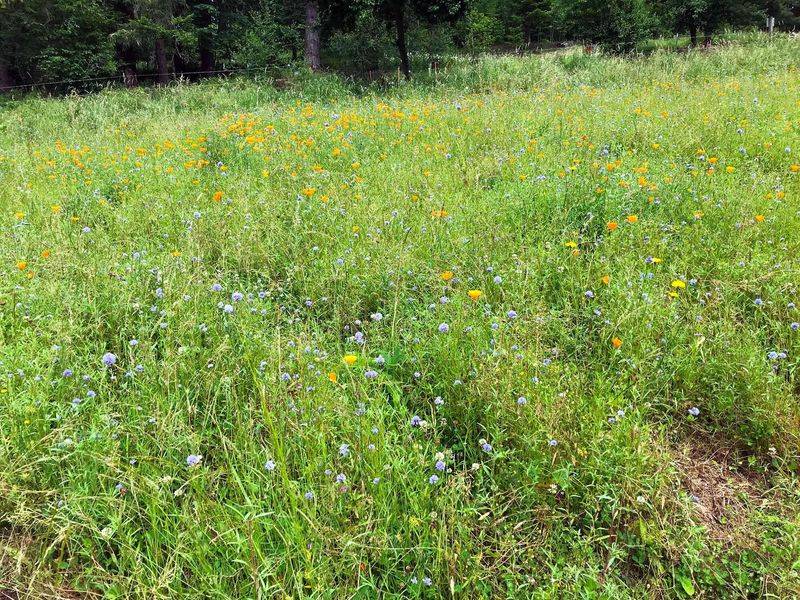
The promise buried in the phrase “runs itself” deserves a straight answer upfront: a native wildflower meadow will not manage itself without any input from you. What it can do, once plants are established and the community is stable, is demand significantly less routine labor than a traditional lawn corner. Less mowing, less fertilizer, less supplemental irrigation during normal rainfall periods. That is a real and worthwhile payoff, but it comes after a front-loaded investment of time and effort.
Most of the work lands in the preparation phase. Removing existing turf, controlling competing weeds, achieving good seed-to-soil contact, irrigating consistently through germination, and patrolling for fast-growing weeds during the first season are the steps that determine whether your meadow thrives or fizzles. UF/IFAS guidance on wildflower enhancements in Florida treats early weed management as one of the most difficult and decisive parts of the entire process, not a minor afterthought.
Even a mature, well-established planting needs periodic attention. You will want to monitor for invasive plants, remove aggressive reseeders that crowd out diversity, and schedule at least one seasonal mow or trim per year depending on your seed mix and region. The goal is a lower-maintenance corner, not an unmanaged one.
Think of the project as a trade: you put in focused effort now, and the planting rewards you with reduced routine chores later. A small lawn corner is a reasonable starting scale. It limits your risk, keeps the prep work manageable, and gives you a chance to learn what grows well in your specific yard before expanding. The step-by-step sequence that follows covers site selection, seed choice, soil preparation, sowing, establishment care, and long-term maintenance so you can move through the project with clear expectations at every stage.
Choose a sunny, well-drained corner that fits your Florida region
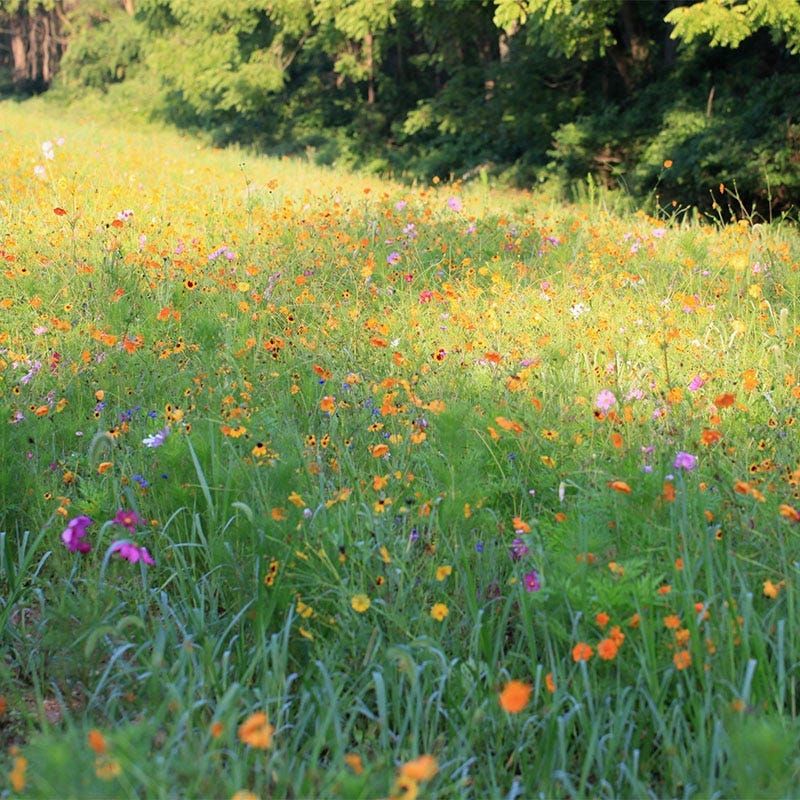
Sunlight is the single most important variable when picking your meadow site. Full sun, meaning at least six hours of direct sun per day, generally produces more blooms and therefore more pollen and nectar for visiting insects. A shadier corner is not automatically disqualifying, but your plant options will narrow considerably, and bloom production tends to drop. Walk your yard at different times of day and note honestly how much sun that corner actually receives before you commit to it.
Drainage matters just as much. UF/IFAS wildflower planting guidance specifically recommends well-drained areas that are not subject to regular flooding. A low-lying corner that holds water after heavy rain is not a good wildflower meadow candidate. A wildflower meadow is not a rain garden or a stormwater management system.
If your site stays wet for extended periods, you would need a different plant palette designed for those conditions, and that is a separate project with its own planning requirements.
Florida is too regionally varied for one set of rules to cover every yard. UF/IFAS Wildflowers For All Seasons makes clear that species suitability, bloom timing, and moisture requirements differ meaningfully between North Florida, Central Florida, and South Florida. A plant that thrives in the Panhandle may struggle or behave differently near Miami. Your county Extension office can help you match species to your specific region and soil type, which is especially useful if your yard has been regraded, filled, or heavily amended over the years.
Also check for altered soil. Many residential lots in Florida sit on fill dirt or heavily compacted subsoil that bears little resemblance to the native sandy loam a wildflower guide might assume. Native plants are not automatically indestructible in modified residential soils. UF/IFAS guidance on common native wildflowers of North Florida reinforces the right-plant-for-the-right-place principle, which applies as much to soil type and drainage as it does to sun exposure.
A quick observation of how the site drains after a summer storm will tell you more than any general guide can.
Choose a diverse native mix instead of trusting the word “wildflower”
The word “wildflower” on a seed packet does not tell you much. Some commercial mixes include non-native species that are poorly adapted to Florida conditions. A few contain plants listed as invasive or problematic in parts of the state. Before purchasing any mix, read the species list carefully, look up the scientific names, and cross-check against the Florida Department of Agriculture’s invasive non-native plant resources and the Florida Invasive Species Council plant list.
A few minutes of research before you buy can prevent years of unwanted spread.
Diversity within your mix is what makes a meadow genuinely useful to pollinators. A planting with multiple species that bloom in spring, summer, fall, and, depending on your region, even winter provides a more continuous food source than a single-species patch. Varying flower shapes, sizes, and colors matters too, because different bee species have different tongue lengths and foraging preferences. A mix that offers both flat-topped flowers and tubular blooms, for example, can support a broader range of insects than one that relies on a single flower form.
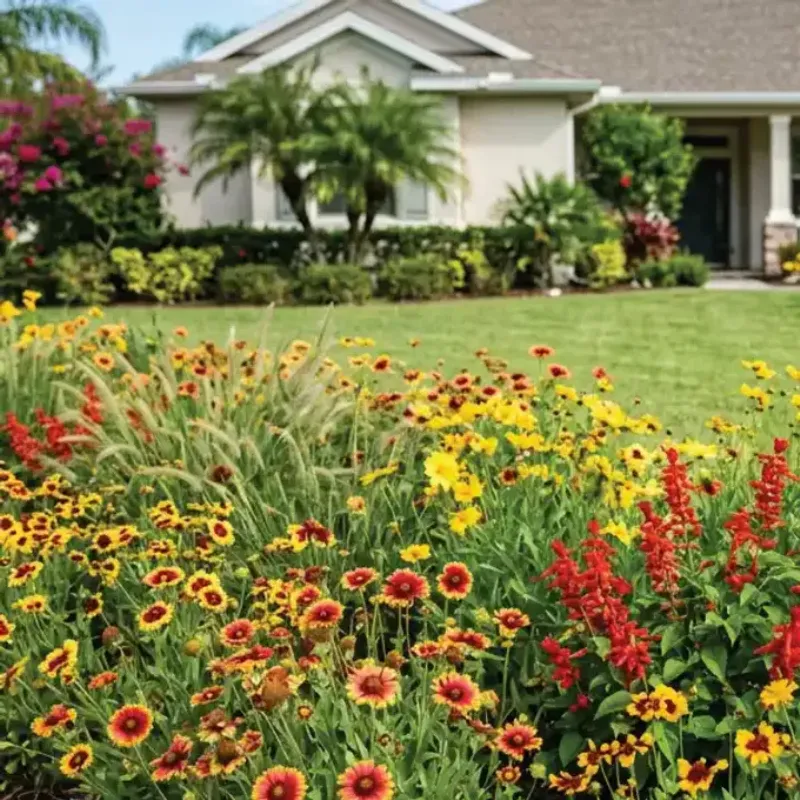
UF/IFAS Wildflowers For All Seasons lists species such as coreopsis, blanket flower, butterfly weed, and scarlet salvia as Florida-suitable examples. Treat those as regional starting points, not a universal recipe. Performance varies between the Panhandle and South Florida, and availability at local nurseries or native plant sales will also shape your realistic options.
Pay particular attention to coreopsis, Florida’s state wildflower. Native coreopsis species can reseed readily and return season after season with minimal help. However, UF/IFAS Extension Duval County notes that some cultivated hybrid varieties may produce sterile seed or persist for fewer seasons than their wild counterparts. If self-seeding persistence is part of your low-maintenance plan, confirm that the coreopsis in your mix is a true native seed strain rather than a cultivated hybrid before you sow it.
Remove turf and weeds until the seed can reach soil
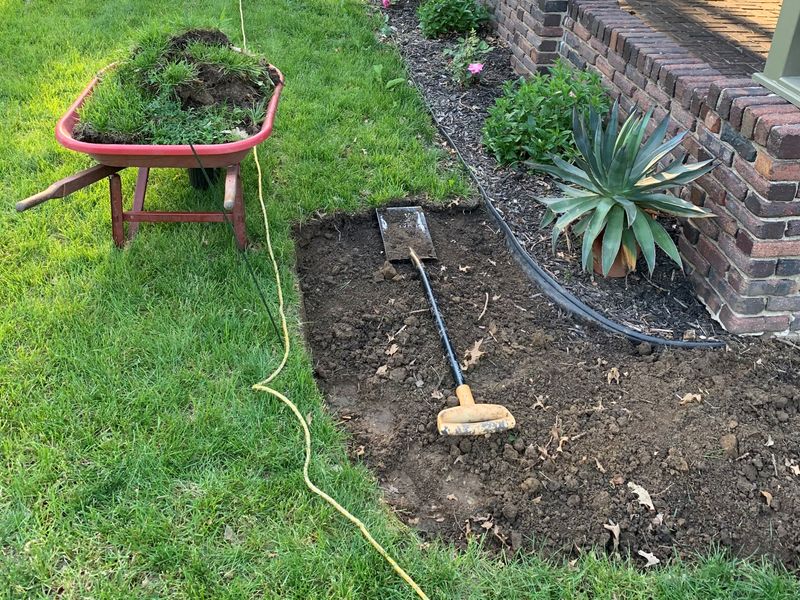
Skipping site preparation is the most reliable way to watch a wildflower project fail. Existing turf, thatch, and established weeds compete aggressively with tiny seedlings, and that competition usually wins. Grass roots in particular create a dense mat that prevents seed from making contact with mineral soil, which is exactly the contact wildflower seed needs to germinate reliably.
UF/IFAS guidance on wildflower enhancements describes a goal of roughly 90% exposed soil for habitat-scale plantings where strong seed-to-soil contact is the priority. For a small backyard corner, you do not need to treat that figure as a rigid threshold, but it communicates the spirit of the task well: bare soil is the foundation, not a nice-to-have. The more living competition you remove before sowing, the better your seedlings’ odds.
Several preparation methods work, and the right one depends on your timeline and preferences. Solarization, which involves covering moist soil with clear plastic during Florida’s hot summer months, can kill grass and weed seed in the top few inches using solar heat alone. It takes four to eight weeks but requires no chemicals. Manual removal with a flat spade or sod cutter works well for small areas.
If you consider herbicides, treat them as targeted, label-directed tools rather than a casual first step. UF/IFAS homeowner herbicide guidance stresses following product labels precisely, avoiding overspray onto desired plants or water features, and being mindful of pollinator exposure during application.
Once vegetation is removed, resist the urge to till deeply. Turning soil can bring buried weed seed to the surface, where light and warmth trigger germination and create a fresh flush of competition right as your wildflower seed is trying to establish. UF/IFAS Alachua County’s wildflower meadow guide favors minimal soil disturbance after the initial preparation for exactly this reason. Rake the surface lightly to break up any crust, but keep your disturbance shallow and targeted.
Sow shallowly in the fall or winter window for your region
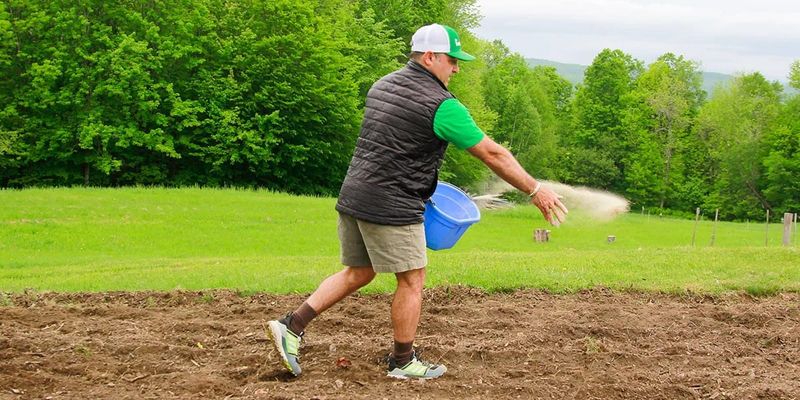
Timing your sowing to match Florida’s regional planting windows is one of the most practical decisions in this whole project. Florida’s climate does not follow a single schedule. If you are in North Florida, the general target is approximately mid-September through mid-October. Central Florida gardeners typically sow from mid-October through December.
South Florida has a longer window running from November through January. These ranges align with cooler, drier conditions that favor germination and reduce the stress that summer heat places on fragile new seedlings.
If you started thinking about this project in July, use that time productively. Assess your site, begin vegetation removal, and let solarization or other preparation methods run their course through the summer. The preparation window and the sowing window do not overlap, and rushing seed into unprepared soil wastes both the seed and the effort. UF/IFAS Wildflowers For All Seasons reinforces that regional timing is not interchangeable across the state.
When you are ready to sow, mix lightweight or fluffy seed with a bulking agent such as coarse sand or vermiculite to make distribution easier and more even. UF/IFAS wildflower enhancement guidance suggests a minimum ratio of 2 parts bulking agent to 1 part seed by volume for lightweight seed types. That ratio is an example calibrated for certain seed types, not a universal formula for every mix, so adjust based on the seed weight and density in your specific packet.
Broadcast the mixture over your prepared soil by hand or with a hand spreader, then rake or press it lightly to improve contact without burying the seed. Many wildflower species should not be covered deeply. UF/IFAS gives a maximum drilling depth of about one-quarter inch for direct seeding, and broadcast seed should remain near the surface where it can receive the light cues that trigger germination. Splitting your seed into two passes, one in each direction across the bed, helps avoid bare patches and uneven coverage.
Protect seedlings with establishment water and early weed control
Germination is the most vulnerable moment in the entire project. Newly seeded ground dries out faster than established plantings, and Florida’s sandy soil drains quickly enough that a single missed watering can set germination back significantly. Plan to irrigate consistently from the day you sow until seedlings are several inches tall and showing clear signs of establishment.
Published UF/IFAS schedules give useful reference points. UF/IFAS habitat planting protocols describe approximately one-quarter inch of water per day for the first 21 days in some situations, while UF/IFAS tickseed establishment guidance recommends one-quarter to one-half inch twice weekly for two to four weeks, with adjustments for sandier soils. Treat those figures as examples, not a single prescription. Adjust frequency and volume based on your soil texture, recent rainfall, and how the seedbed looks and feels.
If the top half-inch of soil is dry by midday, you probably need to water more often.
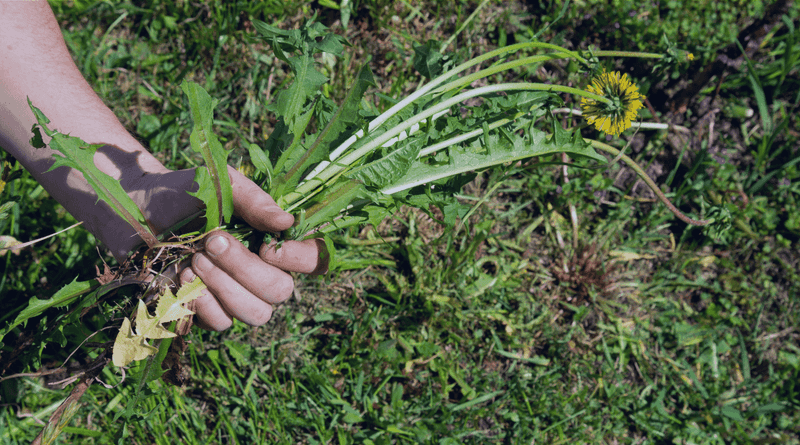
Weed patrol starts the moment you can distinguish your seedlings from everything else growing in the bed. UF/IFAS wildflower guidance identifies weed competition as one of the hardest parts of establishment and recommends checking the planting every two weeks during the first three months. Pull or cut weeds before they set seed, and work carefully around desired seedlings to avoid disturbing their shallow roots. Early, consistent weeding during this window prevents the exponential problem of letting weeds go to seed in a bed you just prepared.
Skip the fertilizer. UF/IFAS Wildflowers in the Garden explains that Florida native wildflowers are adapted to relatively low-fertility soils. Adding fertilizer tends to favor fast-growing weeds rather than the wildflowers you are trying to establish, effectively working against your own project. Unless a soil test reveals a specific, significant deficiency, there is no benefit to fertilizing a native wildflower bed.
Maintain the mature meadow with monitoring and seasonal cuts
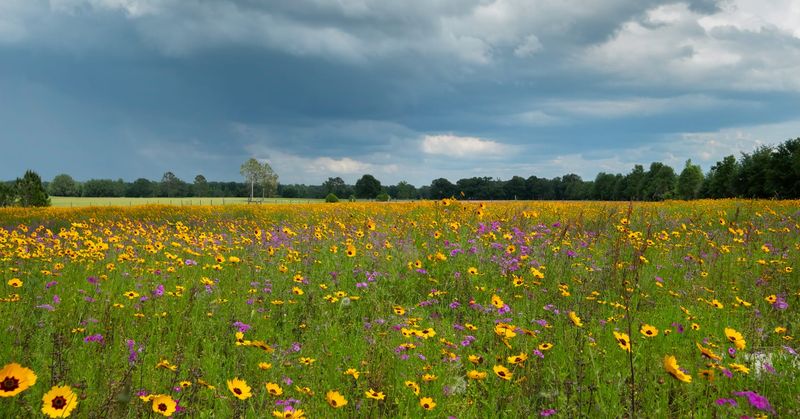
A mature wildflower planting is not a finished project. The maintenance load drops considerably compared to a lawn, but the planting still needs regular eyes on it. Walk through or along the edge of your meadow every few weeks, especially during the growing season, and look for plants that are spreading aggressively, crowding out diversity, or that you cannot identify with confidence. Invasive plants and noxious weeds do not announce themselves, and catching them early, before they set seed, is far easier than managing an established population.
Check unfamiliar plants against the Florida Department of Agriculture’s invasive plant resources and the Florida Invasive Species Council list before deciding whether to keep or remove them. Some plants spread by root or by seed into neighboring beds or beyond the yard, and plant selection combined with active monitoring, not garden design features alone, is what actually addresses unwanted spread.
Seasonal mowing or trimming is part of the maintenance routine for most meadow plantings. UF/IFAS wildflower enhancement guidance and UF/IFAS habitat planting protocols both describe cutting after flowering and seed set as a way to distribute seed, open the canopy for new seedlings, and manage some annual weeds. Timing and cutting height depend on which species are in your mix and where you are in Florida. A rough guide of around six inches cutting height appears in some UF/IFAS habitat examples, but confirm the right approach for your specific plants before you cut.
Preserve patches of undisturbed soil where practical. Many solitary bee species nest in bare or sparsely vegetated ground, and repeated tilling or heavy mulching can eliminate that nesting habitat. Avoid pesticide applications during bloom periods, and keep spray away from flowering plants and adjacent areas where foraging bees might be active. A meadow that supports pollinators needs to stay safe for them throughout the season, not just when it looks its best.
Use clear edges to make the naturalistic planting look intentional
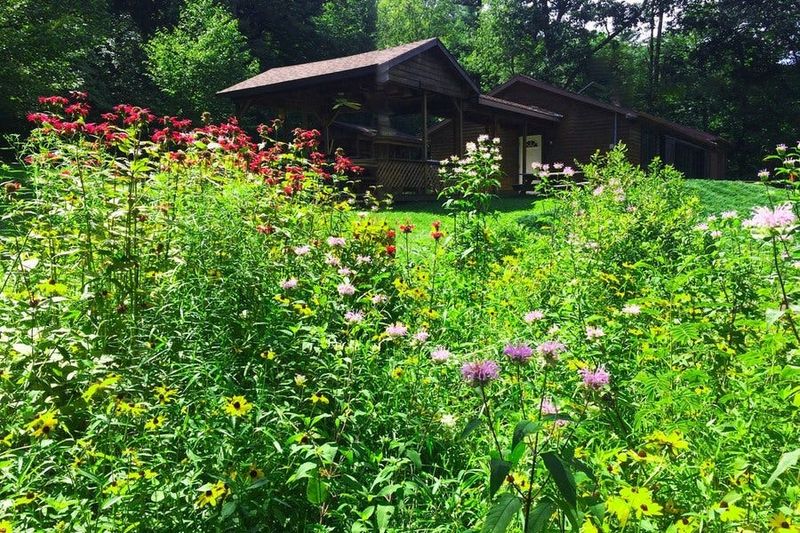
A wildflower meadow in a suburban yard can look like a neglected patch of weeds to a neighbor walking by, unless you give it visual context that communicates care. A mowed perimeter strip, a defined edge of brick or steel, a mulched path running alongside, or a simple garden sign can shift how people read the planting. UF/IFAS Cues to Care guidance describes these kinds of design signals as visual cues that help neighbors and passersby recognize a naturalistic planting as intentional rather than abandoned.
UF/IFAS Extension Leon County’s advice on keeping wildflower plantings tidy echoes this point: a mowed edge or a clear boundary between the meadow and the maintained lawn goes a long way toward neighborhood acceptance. An evergreen shrub or a small ornamental grass planted at the corner can also provide structural definition during the seasons when annual wildflowers are between bloom cycles and the bed looks sparse.
Keep in mind that a mowed path or a decorative edge is a visual signal, not a physical barrier against plant spread. Actual containment comes from choosing species with predictable, non-aggressive growth habits, installing physical edging where spread into adjacent beds is a concern, and monitoring the perimeter regularly so you can remove any plants that are moving where you do not want them. UF/IFAS wildflower planting guidance addresses plant selection and monitoring as the real tools for managing spread, with design features serving a separate, complementary role.
A well-framed meadow corner does two things at once. It earns goodwill from neighbors who might otherwise question the look, and it makes the yard more functional by preserving a clear transition between the naturalistic area and the parts of the yard you use for other purposes. The best meadow is one that looks like a choice, not an accident.