
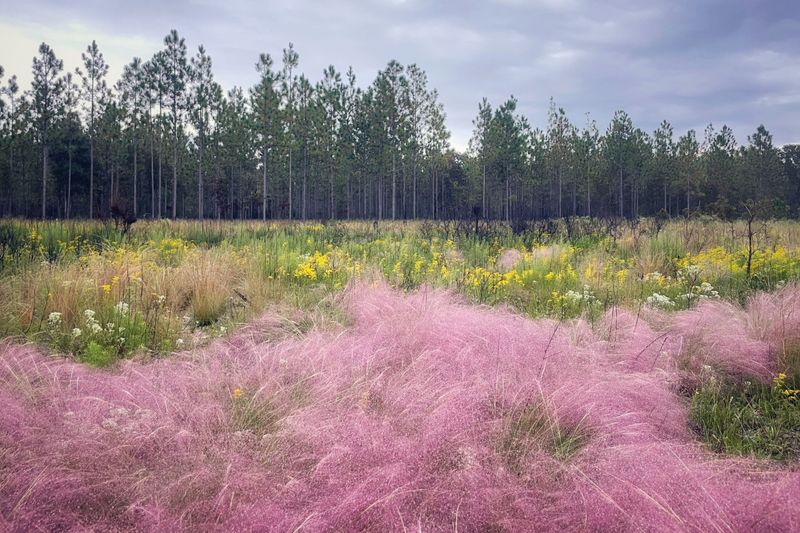
A storm can leave your flower beds looking like someone pulled out half the garden. Florida natives can cover exposed soil, bring back color, and give butterflies a place to feed.
The best choice depends on whether your bare spot now holds water, bakes in the sun, or sits under broken tree cover. Plant while the soil is still warm, but remember that late storms and early North Florida freezes can shorten the growing window.
1. Sunshine Mimosa
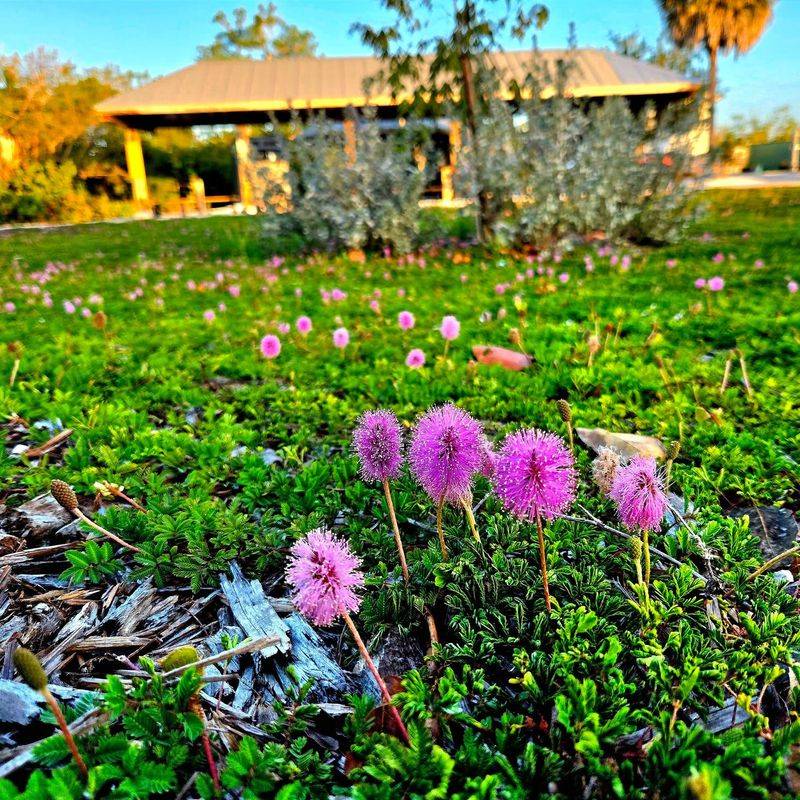
A sprinkle of pink powder-puff flowers makes storm recovery look surprisingly cheerful. Sunshine mimosa, Mimosa strigillosa, earns its spot by spreading low across exposed ground rather than adding another tall plant to a battered bed.
Give it full sun for the best flowering, although it tolerates some light shade. It suits many Florida sandy soils once established, but a spot that stays flooded after rain needs a different choice.
Set nursery-grown plants about 18 to 24 inches apart, then water thoroughly. During establishment, check the root balls often and water when they begin to dry; drought tolerance comes after roots spread into the surrounding soil.
Its stems can travel beyond the original planting area, so place it where a broad patch is welcome. A sidewalk or maintained edge makes wandering growth easier to manage.
For quicker fall coverage, use several rooted plants instead of relying on seed. North Florida cold can brown the foliage, so treat prewinter filling as a warm-weather opportunity, not a promise of year-round green.
2. Frogfruit
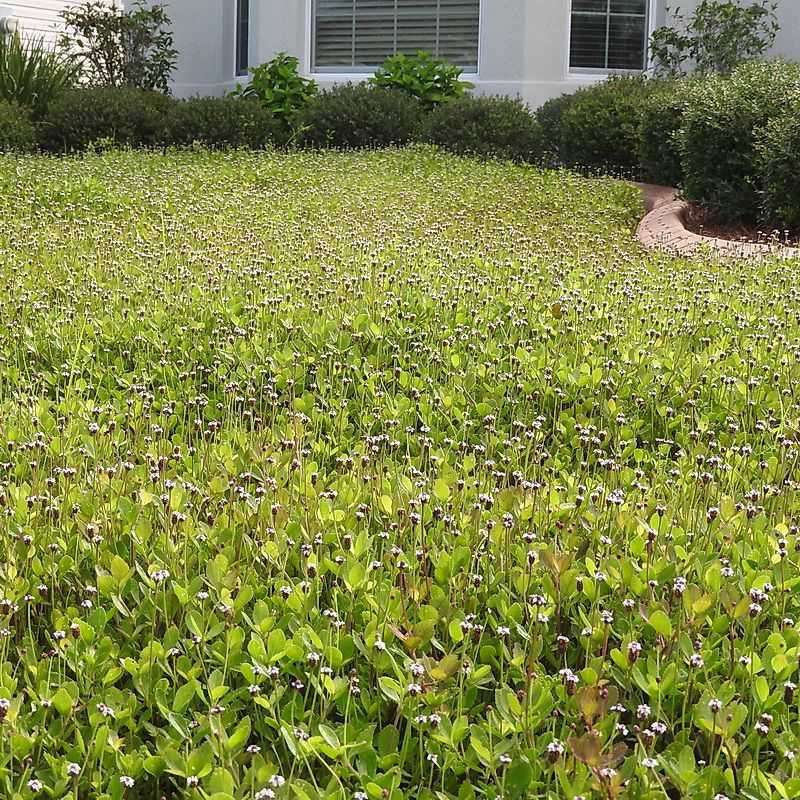
Little flowers can do a big repair job. Frogfruit, Phyla nodiflora, forms a low, spreading patch that softens bare bed edges while feeding small pollinators.
Choose it for sunny or partly shaded ground that swings between moist and fairly dry. Unlike plants that demand sharp drainage at all times, frogfruit handles occasional wet conditions, making it useful near a bed’s lower edge.
Wait until floodwater has drained before planting, and check whether runoff has changed the site. No groundcover can correct a blocked drain or make contaminated flood deposits safe.
Plant rooted starts roughly 12 to 18 inches apart for a tighter layout. Keep them watered while roots establish, and leave room for stems to spread rather than surrounding each plant with a deep mound of mulch.
Frogfruit also supports several butterflies as a caterpillar host plant. That means a few chewed leaves are part of its value, not necessarily a pest problem.
Use it where a relaxed carpet fits the yard. It can creep into nearby beds and may thin or brown during colder North Florida weather.
3. Dune Sunflower
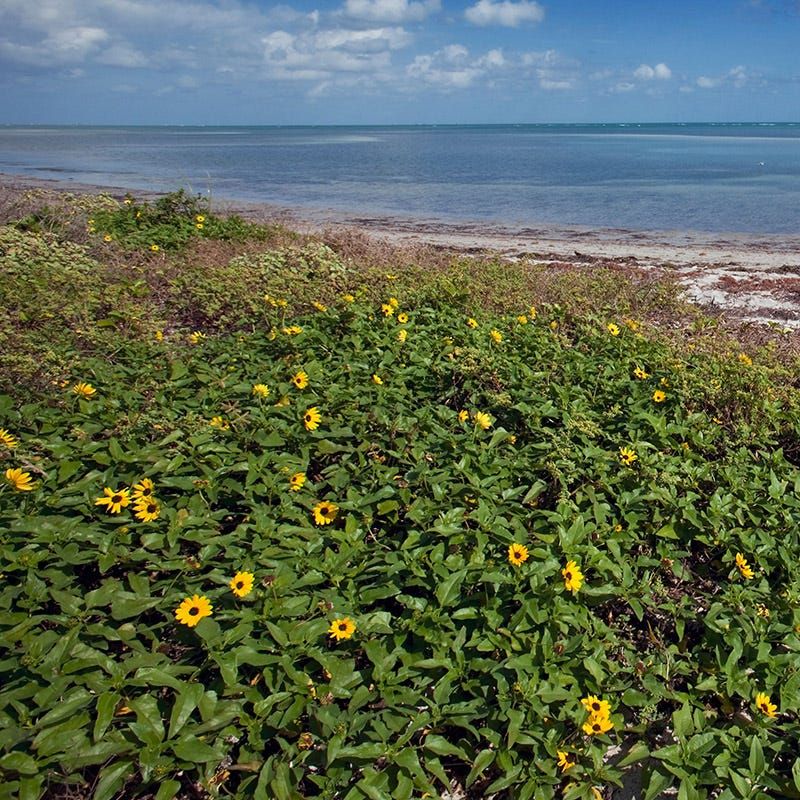
For a sandy bed that suddenly looks empty, yellow flowers offer a fast visual lift. Dune sunflower, Helianthus debilis, combines cheerful blooms with a spreading shape that covers more ground than a small upright perennial.
Its strongest setting is full sun and well-drained soil. Coastal exposure and salt spray are less troubling for this plant than soggy roots, so do not put it in a storm-created puddle.
Allow roughly 3 feet between plants, adjusting for the nursery label and available space. A small transplant can become a broad mound, and crowding several against a walkway creates extra trimming later.
Water new plants through establishment, then reduce watering as they root and rainfall allows. Rich soil and repeated fertilizer are not needed to make a sandy Florida bed look planted again.
Buy locally appropriate nursery stock because Florida has different dune sunflower subspecies and regional forms. A native nursery can help match the plant to your part of the state.
Fall-planted specimens can add immediate flowers, but hard freezes may damage growth inland and in North Florida. Leave space for its spread rather than expecting each plant to stay in a tidy circle.
4. Tropical Sage
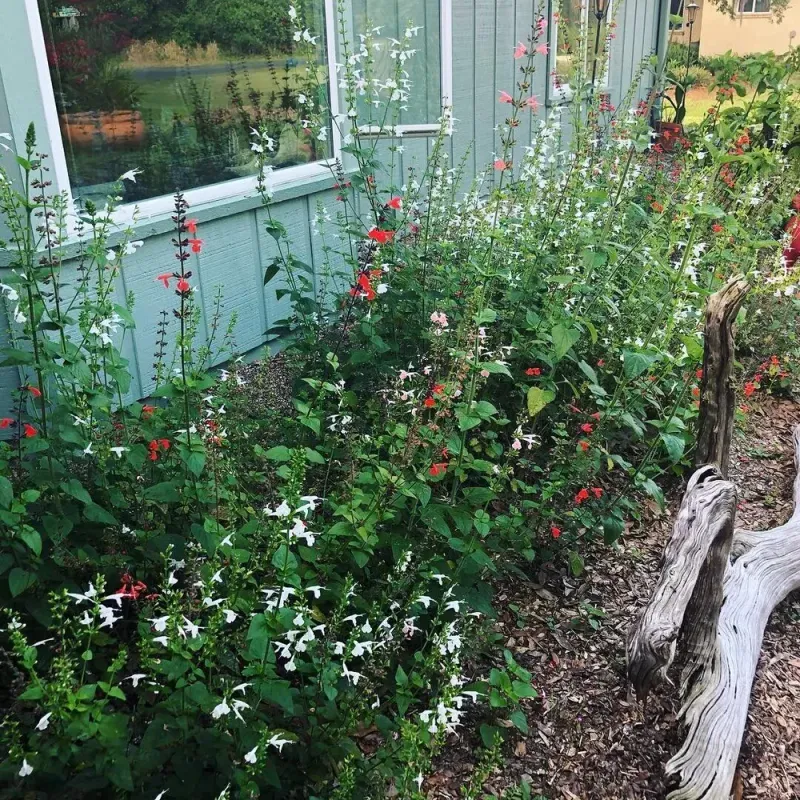
Sometimes the missing piece is height, not a carpet. Tropical sage, Salvia coccinea, lifts red flower spikes above low foliage, helping a damaged bed look layered again without adding a large shrub.
Use it in sun or partial shade with soil that drains well. A location with morning sun and some afternoon protection can work nicely where a storm has opened gaps in the tree canopy.
For color before winter, start with healthy nursery plants already forming buds. Seed can be useful for future seasons, but germination and flowering take time you may not have after a late hurricane.
Space plants about 12 to 18 inches apart and water the root zone during establishment. Once plants settle in, pinching or trimming lanky stems encourages a fuller shape.
The tubular flowers attract hummingbirds and butterflies, giving this choice a different job from the low groundcovers. Leave some flower stalks to form seed if you welcome volunteer seedlings.
Despite its common name, this is a Florida native. Freezing weather can end its top growth, especially farther north, so enjoy its fall color without counting on winter blooms statewide.
5. Twinflower
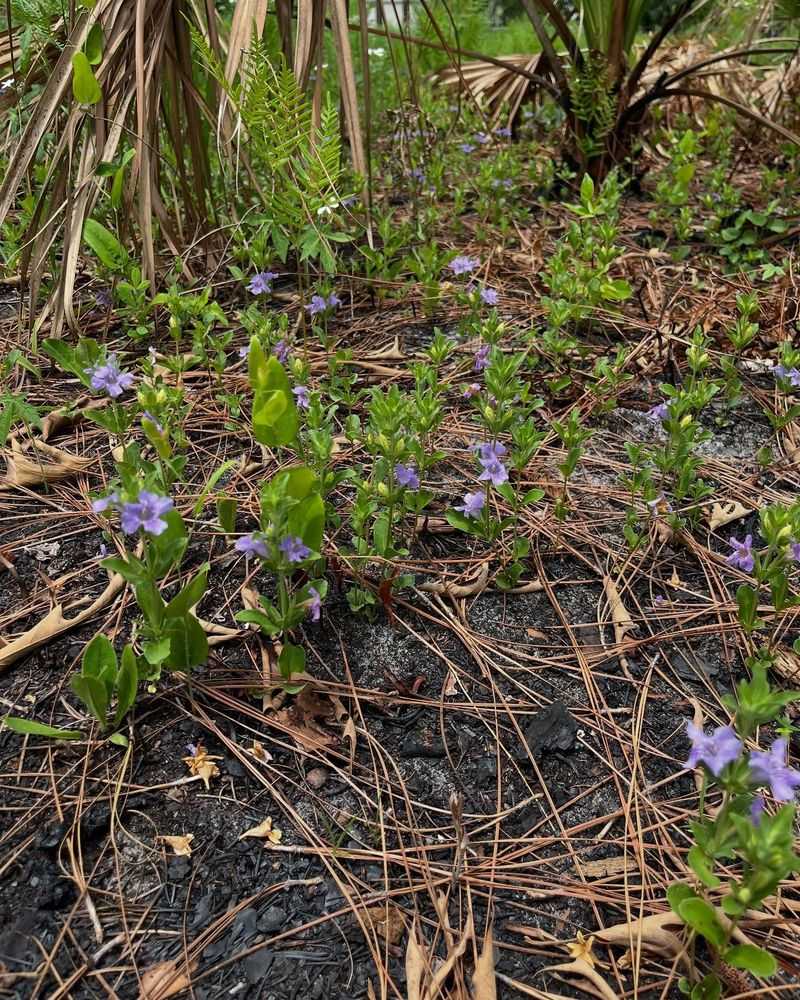
Not every storm gap needs a bright, showy plant. Twinflower, Dyschoriste oblongifolia, brings a quieter repair with low foliage and small lavender flowers that fit naturally along a lightly shaded border.
Try it where pines or an open canopy still provide filtered light. It also grows in sun, provided the site and establishment watering suit it, but deep shade can leave growth sparse.
Plant rooted pots about 12 to 18 inches apart in well-drained soil. Its spreading growth can gradually knit small openings together, though a late fall planting should not be expected to erase a large bare area immediately.
A light layer of pine straw between plants helps protect exposed soil while leaving room for new shoots. Keep mulch away from the crowns and avoid burying the plants under storm debris.
Twinflower is a host plant for common buckeye butterflies, adding wildlife value without much height. Pair it with taller natives rather than hiding it behind them.
Ask for the botanical name when shopping because several plants share similar common names. Locally grown stock and realistic spacing give this understated groundcover a better start than heavy feeding or constant trimming.
6. Blue Porterweed
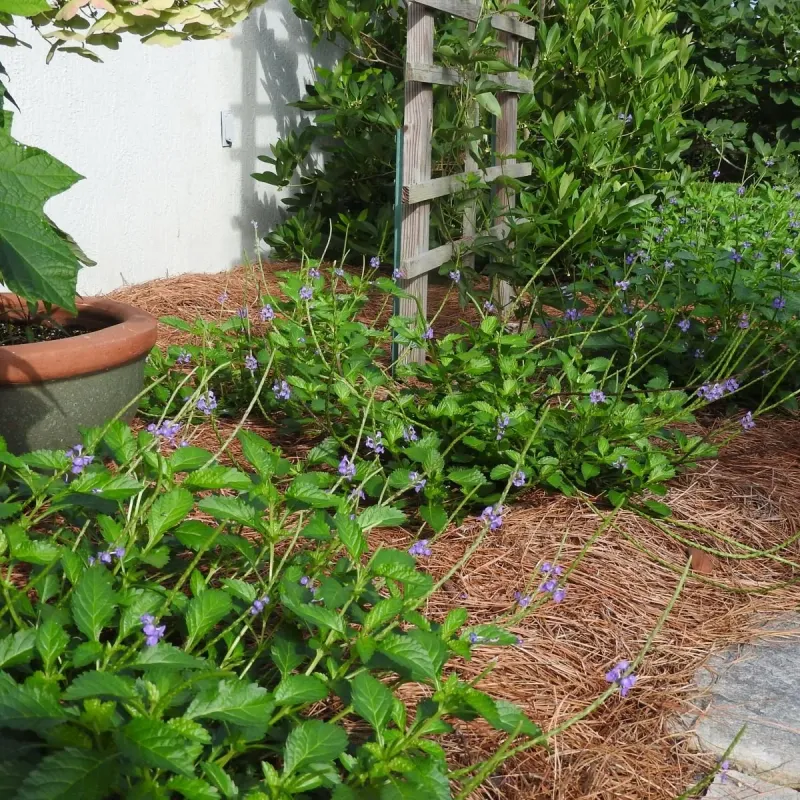
Butterflies notice those tiny blue flowers long before most people do. Native blue porterweed, Stachytarpheta jamaicensis, is a useful low, sprawling filler for sunny beds in warmer parts of Florida.
Its special strength is steady nectar production during warm weather. Only a few flowers open along each slender spike at once, so the effect is scattered blue accents rather than a solid blanket of color.
Shopping carefully matters with this one. Nonnative porterweeds and hybrids are common in the trade, so ask a trusted native nursery for verified Stachytarpheta jamaicensis rather than buying by common name alone.
Choose well-drained ground and allow about 2 to 3 feet of spreading room. Water until established, then adjust to rainfall and soil moisture instead of keeping the bed constantly wet.
South Florida gardeners generally have the longest window for growth and flowers. In colder parts of the state, frost can damage or kill plants, making it a less dependable choice for lasting winter coverage.
Use a few established pots near a path or sunny seating area where the visiting butterflies are easy to see. Avoid placing it where its loose stems will spill across a narrow walkway.
7. Leavenworth’s Tickseed
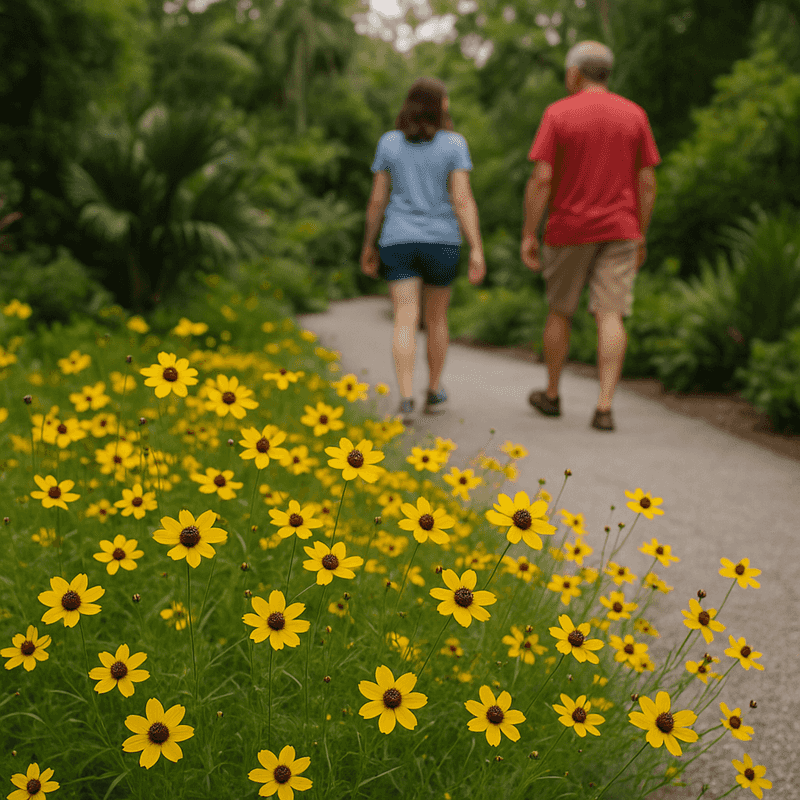
A damp hollow calls for a different plan than a dry roadside bed. Leavenworth’s tickseed, Coreopsis leavenworthii, brings yellow flowers to sunny places with moist soil, including suitable rain-garden edges.
That makes it useful when storm damage reveals a naturally wetter part of the yard. Still, investigate new standing water first; a drainage problem should not be mistaken for a ready-made planting site.
This Florida native has fine foliage and an airy habit. It supplies lightness and seasonal color rather than the dense, soil-hugging coverage you get from frogfruit or sunshine mimosa.
For an immediate fall display, look for nursery-grown plants in bud or bloom and space them about 12 to 18 inches apart. Seed is better treated as an investment in a later display, with timing guided by your region and seed supplier.
Keep the root zone moist while plants settle in, especially if fall turns dry. Avoid piling mulch over small seedlings or the bases of transplants.
Often grown as an annual or short-lived perennial, it can renew itself through seed where conditions suit it. Leave some spent flowers, and expect its flowering calendar to vary across Florida rather than guaranteeing winter color.
8. Muhly Grass
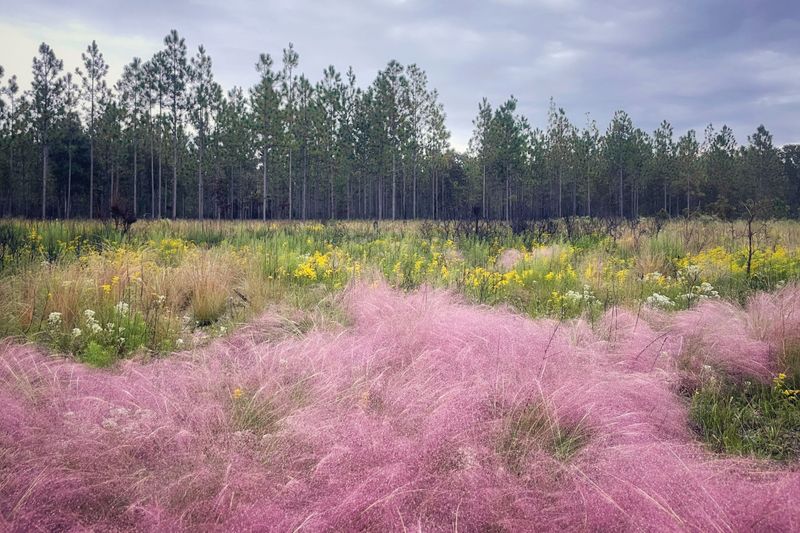
Pink fall plumes can make a repaired bed look planned instead of patched. Muhly grass, Muhlenbergia capillaris, supplies the upright shape that spreading flowers cannot, especially in a broad sunny opening.
Use it as an anchor, not as an instant groundcover. A healthy gallon-size or larger plant fills visual space right away, but its roots and clump still need time to establish.
Choose full sun and well-drained soil for the strongest flowering. Although established muhly handles tough conditions, newly planted grass should not be left dry simply because the label calls it drought tolerant.
Set plants about 3 feet apart, allowing more room where the mature form or nursery label calls for it. Keep the crown at soil level and spread mulch lightly around, not into, the clump.
Fall flowers depend on plant maturity, planting date, and local conditions. Buying a specimen already showing plumes is more reliable than expecting a tiny pot to bloom before winter.
After the display fades, the fine foliage continues to give the bed structure. Pair it with one of the lower natives on this list, and trim old growth in late winter before fresh shoots rise.