
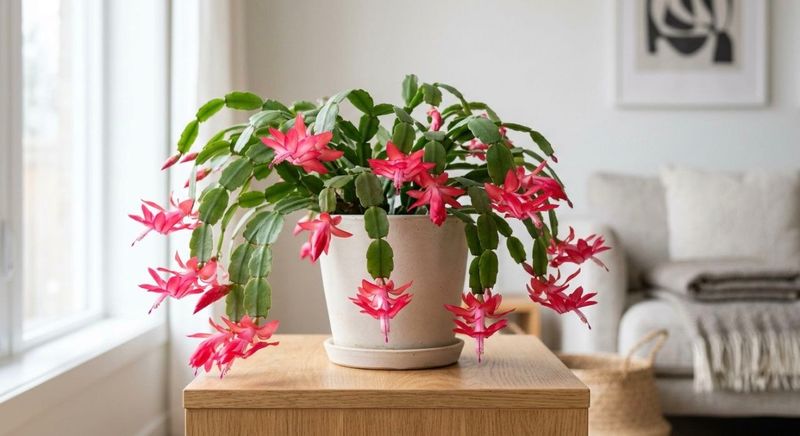
Few things sting like watching tiny pink buds litter the floor right when your Christmas cactus was about to bloom. If it happened soon after you carried the plant to a new spot, the move may be one clue worth checking.
Holiday cacti can be touchy about sudden changes, but other things can cause bud loss too. Here is how to sort out what is going on and give the remaining buds the best chance.
A move may contribute to bud drop, but timing is not proof
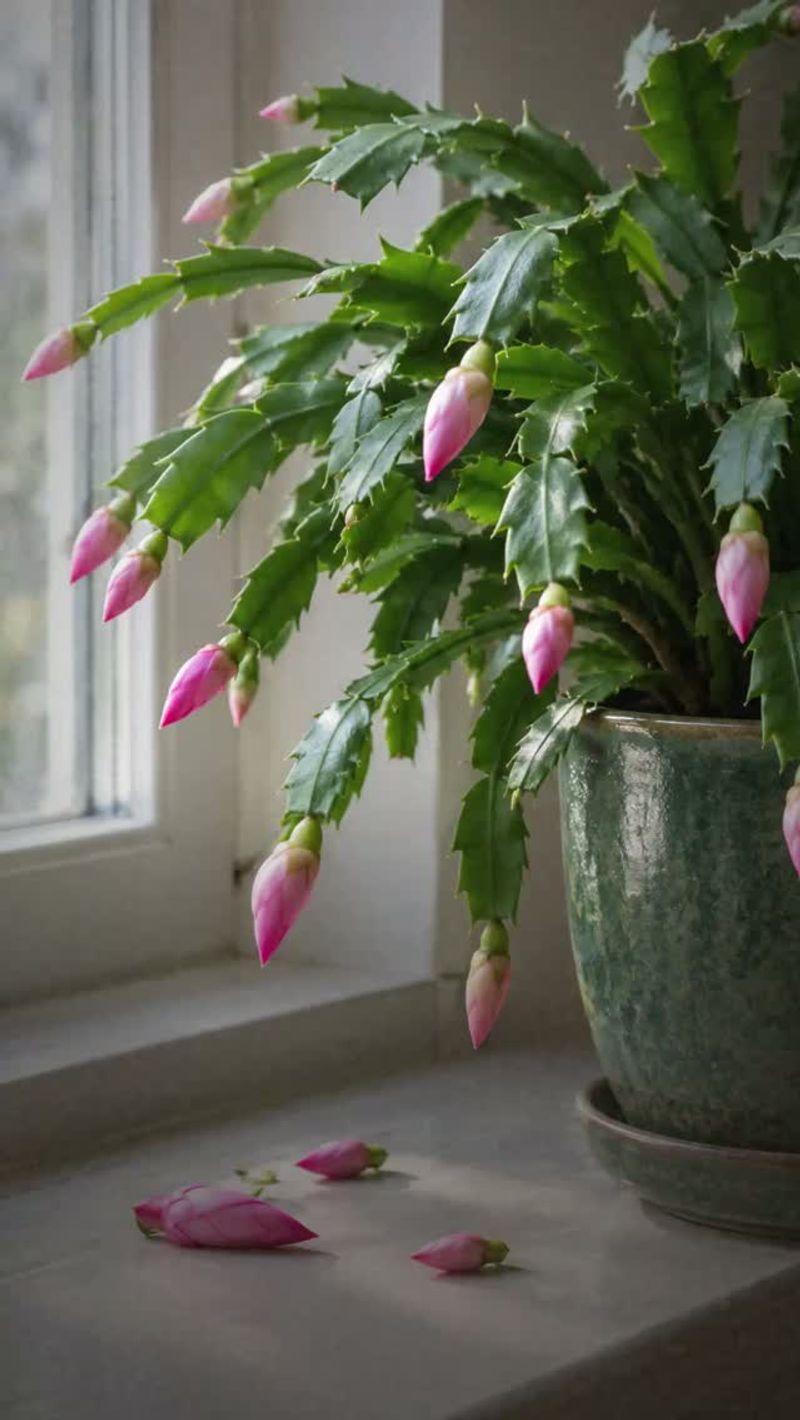
Buds hit the floor a few days after you moved the pot, so the move looks guilty. It may be.
A new spot can change the light, the temperature, the humidity, and how much air blows across the plant, and Iowa State guidance lists those kinds of changes as possible reasons buds fall.
Still, timing alone does not prove the cause. A plant can drop buds for reasons that have nothing to do with where it sits, and the move may simply have happened at the same time.
Other documented possibilities include watering that swings too wet or too dry, light that is too dim, and temperatures that run too hot or too cold. University of Minnesota Extension also notes that a plant may shed extra buds it cannot support.
UConn Extension lists several causes as well.
So treat the move as one clue on a checklist. The next sections walk through the rest of it.
Avoid unnecessary changes while buds develop
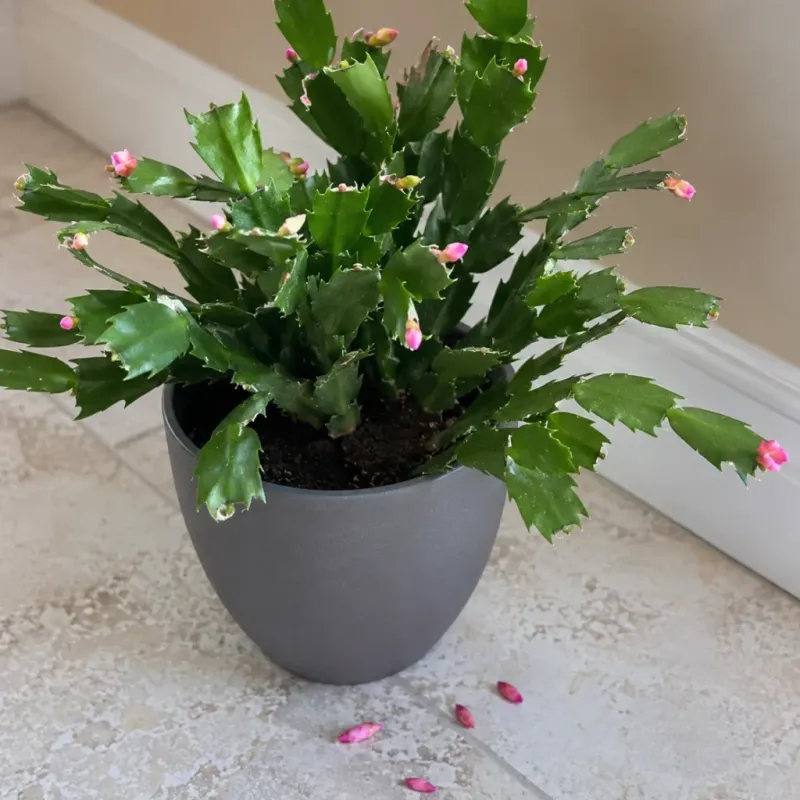
Once buds are forming, the simplest step is to pick a good spot and leave the plant there. Skip the rearranging, and resist turning the pot to even out the look.
Every shift can change the light the buds receive.
That does not mean the plant is untouchable. The goal is to cut down on avoidable changes, not to freeze it in place no matter what.
If a spot is unsafe, such as a cold windowpane or a freezing porch, moving it is the right call.
Display is a different story. Iowa State says you can move a plant for display once the flowers start opening, so the dining table centerpiece plan can wait until then.
If you already moved it and buds are falling, do not keep shuffling it around to look for a better place. Pick one reasonable spot and hold it there.
The Iowa State bloom FAQ points to steady conditions during this stage. That may reduce stress, though it cannot promise every bud stays.
Choose bright light and moderate temperatures
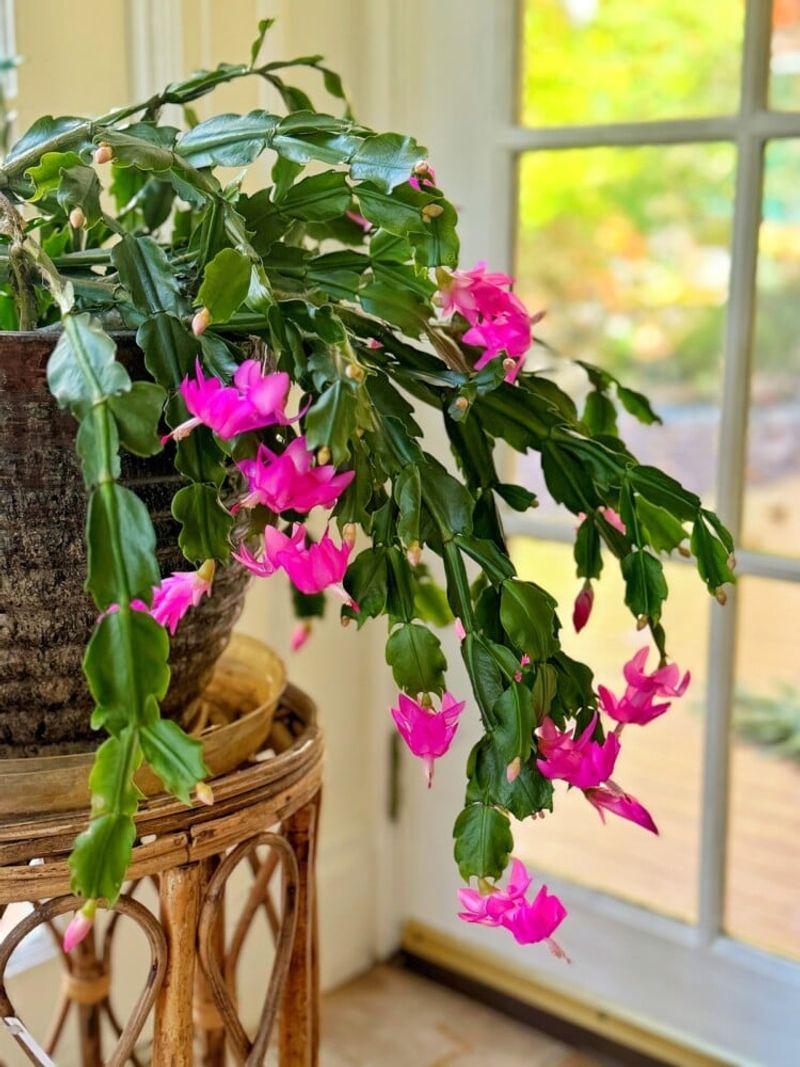
Look for a bright indoor spot where the plant is not baked by direct afternoon sun. Then check what is nearby.
Heating and cooling vents, drafty doors, and cold glass can all cause quick temperature swings, which budded plants tend to dislike.
For numbers, Iowa State suggests roughly 60 to 70°F indoors for flowering conditions, with nights around 60 to 65°F. Treat that as a general range, not a rule you must hit exactly, and there is no need to chill the plant on purpose.
Many Southern homes run warm, so a room that stays near the upper end is fine. The bigger worry is a spot that jumps from hot afternoons to cold nights.
NC State Extension advises keeping budded plants out of very warm or very cool conditions.
A simple test: stand at the spot in the morning and again in the evening. If you feel moving air or big temperature changes, try a calmer corner.
Check the mix and drainage before changing your watering
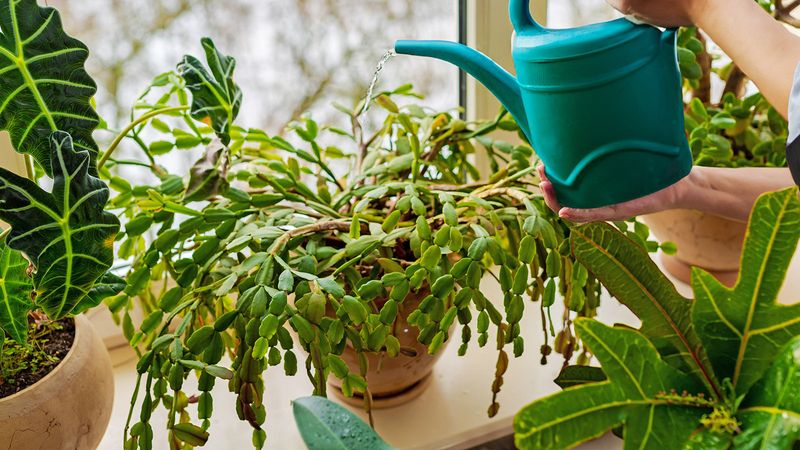
Dropped buds make many of us reach for the watering can. Hold off for a minute and look first.
Poke a finger into the mix, lift the pot to judge its weight, and check that water can actually leave the bottom.
UF/IFAS suggests watering when the top inch feels dry, using a freely draining pot, and emptying the saucer so roots do not sit in water.
Sources word this a little differently. Iowa State warns against both excess dryness and overwatering during bud development, while UConn Extension also stresses even moisture habits.
The shared point is to avoid extremes.
Low indoor humidity may also play a part, since dry air is one possible contributor. There is no sure fix for it, so focus first on the mix, the pot, and the saucer.
Move porch plants if cold makes their location unsafe
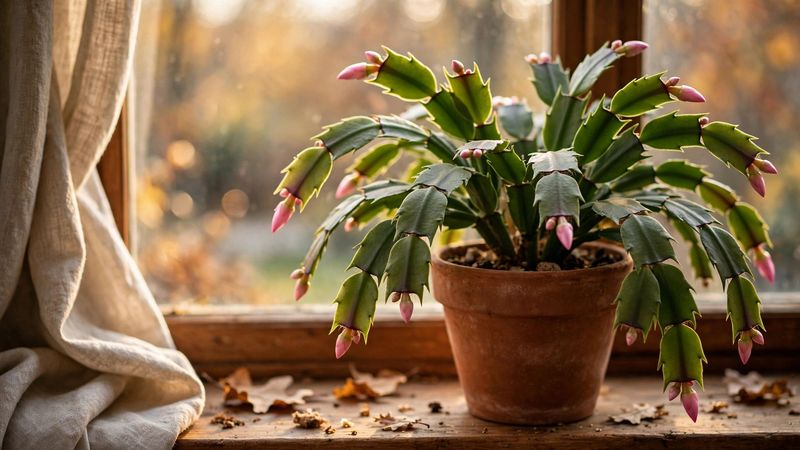
Plenty of Florida and Gulf Coast gardeners keep a holiday cactus on the porch, where it can look wonderful until a cold snap blows in. A big change in surroundings can contribute to bud drop, according to UF/IFAS Extension in Osceola County.
That same source says the plant needs protection from freezing.
Here the steady-conditions advice has a limit. Leaving a plant in freezing weather just to avoid a move is the wrong trade, because cold damage is a bigger risk than a change of scenery.
When a freeze is in the forecast, carry the plant to a bright, stable indoor spot. Try to match the light it was getting outside, and keep it away from vents and drafts, as Iowa State recommends for budded plants.
After that, leave it be. You can return it to the porch once the cold passes and the buds are open, or enjoy it inside.
Some bud loss may happen despite careful care
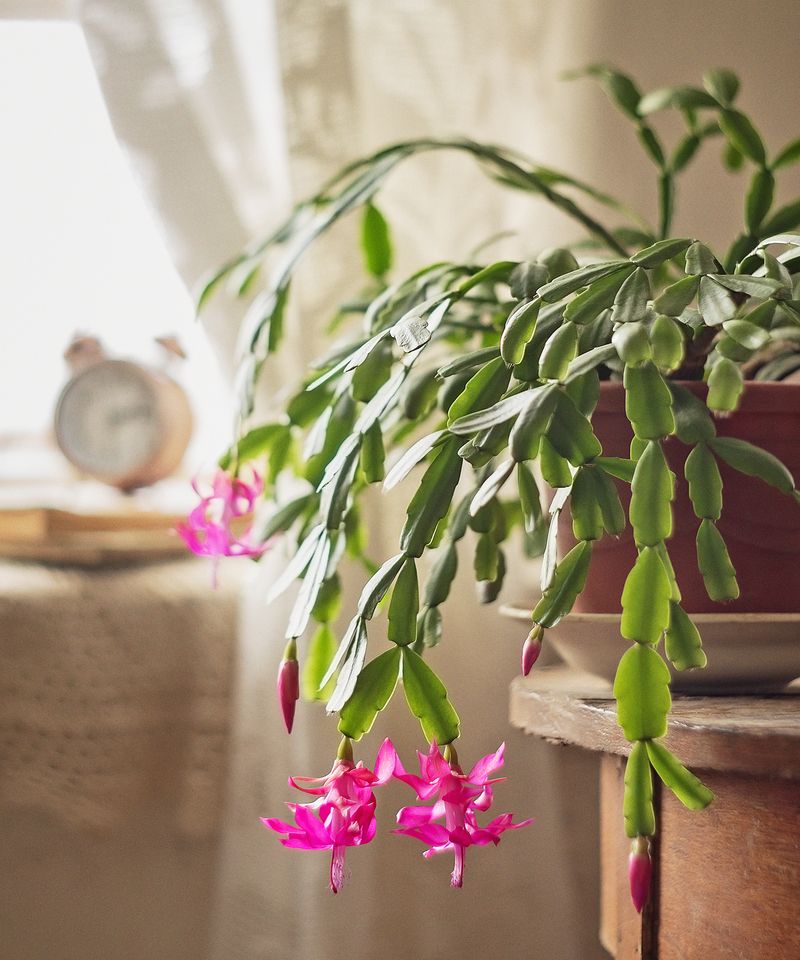
Even a well-kept plant can drop a few buds. University of Minnesota Extension says a plant may shed extra buds when it has set more than it can support.
If plenty remain, that may be self-pruning, not a crisis.
It also helps to separate two questions. Day length and temperature matter for getting buds to form in the first place, as covered by UF/IFAS and the Iowa State bloom FAQ.
They do not by themselves explain why buds that already exist are falling.
Also, the plant labeled Christmas cactus may really be a Thanksgiving cactus or a hybrid, so bloom timing and needs can differ, a point Iowa State makes too.
Your action list is short: a stable, suitable spot, no soggy or bone-dry mix, and a move only when safety calls for it.
A few fallen buds are often the plant balancing its books, not giving up.