
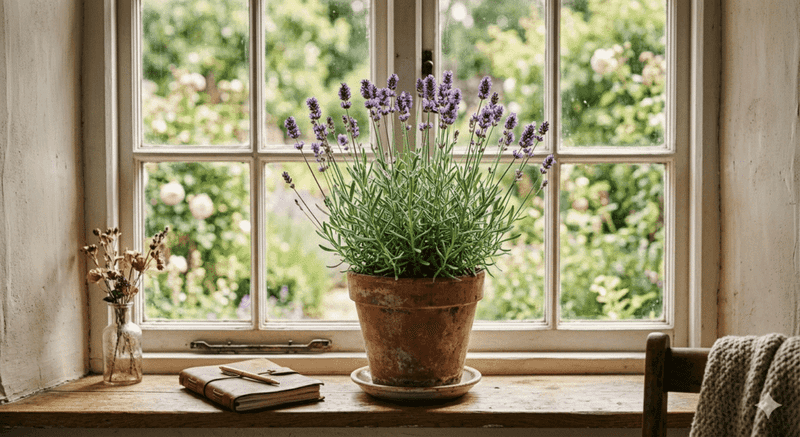
Lavender can look healthy in the fall and still struggle later when the weather turns cool and wet. One reason may be hiding right under the pot, where water has trouble getting out.
A few quick checks can show you whether your container is holding too much moisture. Here is how to look for the problem and what to do about it before the wet weather settles in.
Wet roots—not a March deadline—create the risk
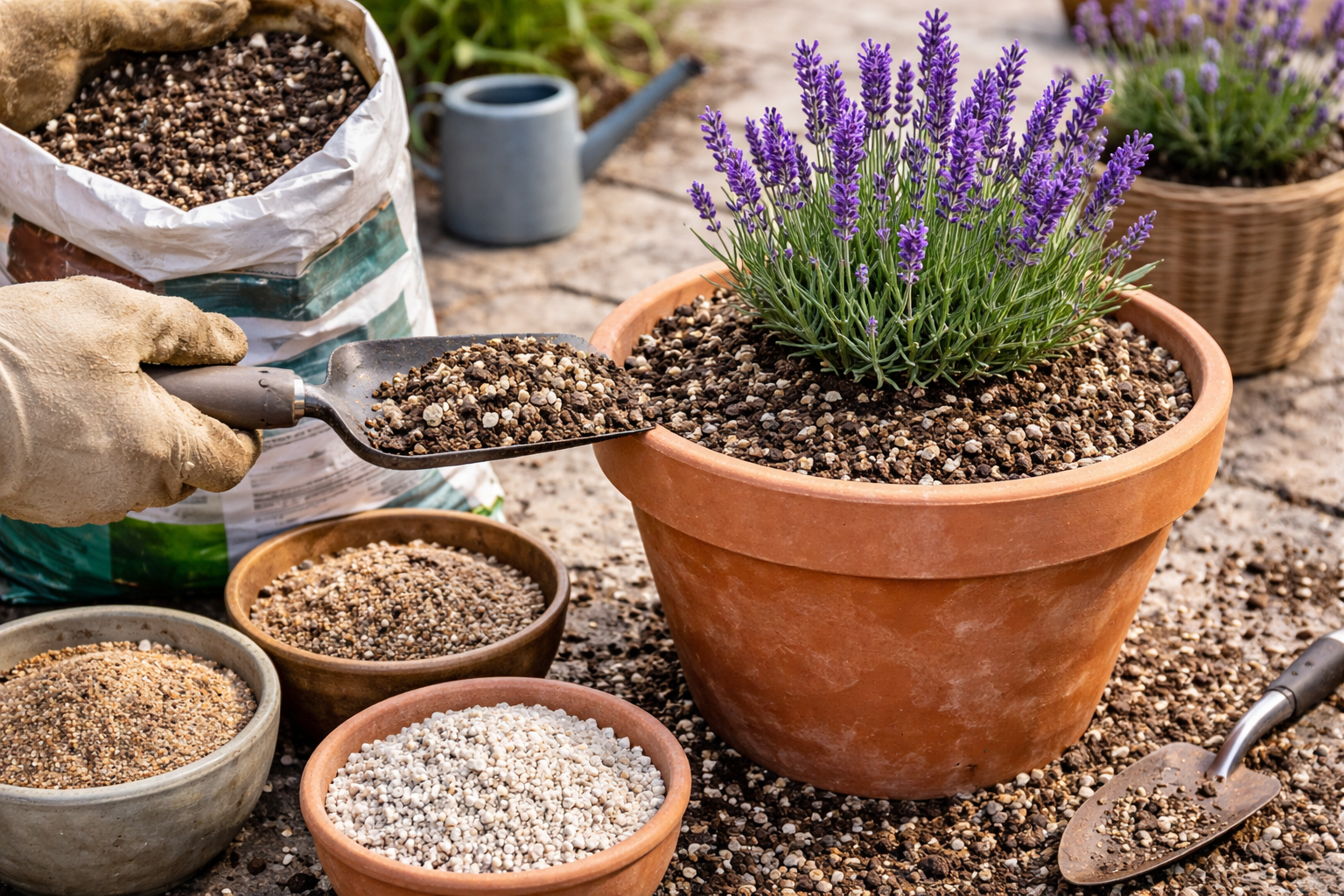
Lavender wants sun and soil that drains well. UF/IFAS notes that English lavender is more prone to winter injury in wet, heavy soil, so soggy conditions are the real worry.
Roots need oxygen, and mix that stays soaked for long stretches can crowd that oxygen out.
Notice that nothing here sets a calendar deadline. Some plants hold up fine through a wet winter, and others struggle for reasons that have nothing to do with the pot.
A plant that looks good in November is not doomed, and one that looks rough in March has not necessarily rotted.
That is why this article focuses on the path water takes out of your container. Rutgers Cooperative Extension points to open drainage and good airflow beneath pots as ways to help excess water escape.
Fixing that path is a small job, and it may lower one real risk to your plant.
Could the pot be sealing its own drain?

Tip the pot gently and look underneath. Find each drainage hole and poke a finger or a stick into it to see whether it is open.
Roots, packed mix, or a flat patio surface can all plug a hole without you noticing.
Next, look for anything that catches water. A saucer under the pot or a decorative outer cachepot can hold rainwater, and University of Maryland Extension advice on overwintering lavender notes that water collecting in a saucer can soak back into the mix.
A pot sitting on the ground is not automatically a problem. A flat surface matters when the base presses over the holes and blocks them.
Rutgers guidance on containers also stresses that the design of the pot and its holes plays a part.
Treat this inspection as a search for a possible bottleneck. If you find one, you have a fixable issue.
If you find nothing, other causes may be at work, and later sections cover those.
Raise the container and clear its exit
Start with the simple steps. Keep every drainage hole open, and clear out any debris from the bottom.
If the pot sits in a saucer outdoors, take the saucer away, or empty it soon after rain or watering.
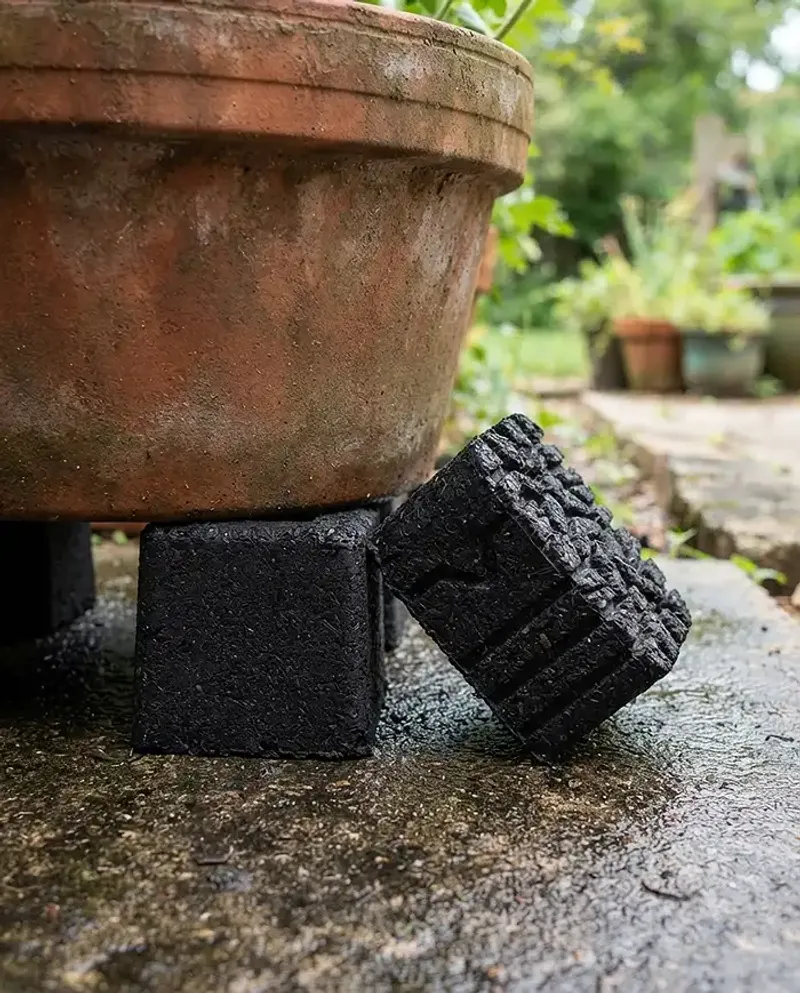
Then look at the base. If it sits flat and seems to block the holes, lift it slightly with pot feet or a few bricks.
Rutgers Cooperative Extension describes this kind of lift as a way to help water drain and improve air circulation under the container.
Make sure the pot stays stable once it is raised, especially in windy spots. A tall, narrow pot on bricks can tip.
These steps reduce one source of extra moisture. They cannot promise your lavender will make it through winter, since rainfall, mix, cold exposure, and variety also play a role.
Still, University of Maryland guidance backs clearing the exit as a sensible first move.
Let the mix, not the calendar, set watering
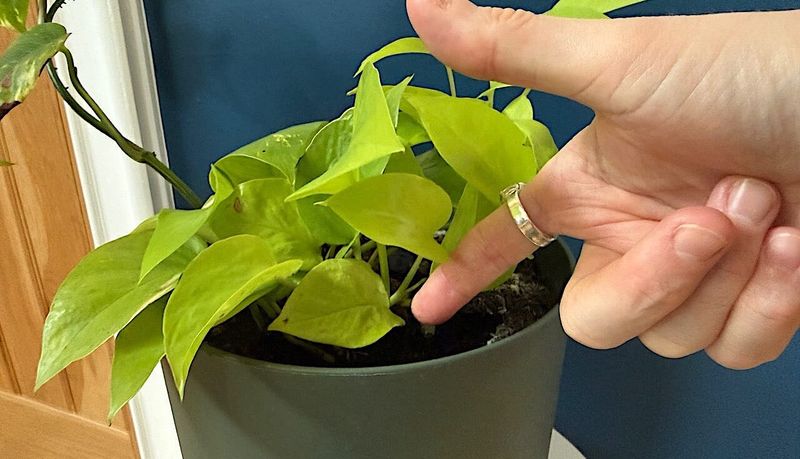
Push a finger two inches into the mix. If it feels damp, hold off.
If it is dry that deep, water, and let the extra drain out freely.
A fixed schedule tends to fail in containers. University of Maryland Extension explains that container moisture needs shift with weather, pot size, material, and location.
A small clay pot on a sunny Texas porch dries far faster than a big glazed one in shade.
Lavender is touchy about staying wet, as Iowa State Extension points out. Still, do not shut off water for the whole winter.
Pots can dry out faster than garden soil, even in cool months, and a dry spell in Florida or Texas may call for a drink.
Check after each rainy stretch and again after a dry, windy week. Let what you feel in the mix guide you.
Gravel is not a drainage fix
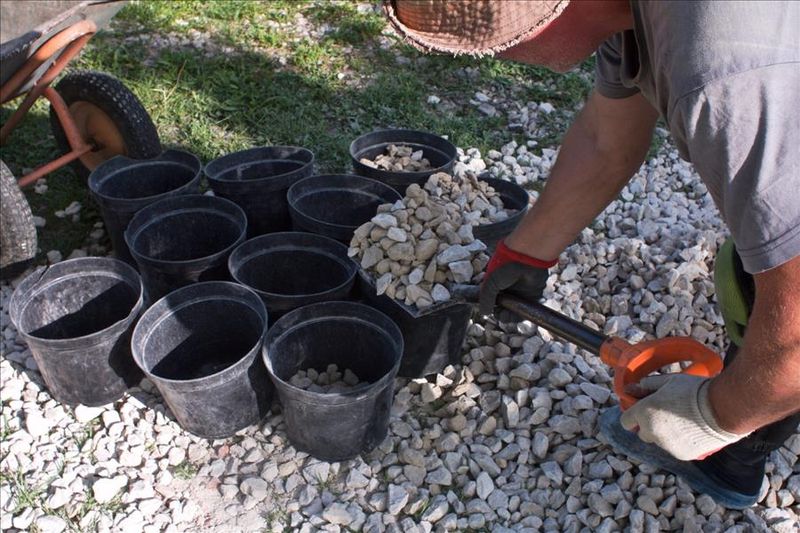
Many gardeners learned to put gravel in the bottom of a pot. It sounds logical, yet it tends to backfire.
UC Master Gardeners of Santa Clara County explain that a gravel layer can leave a saturated band of potting mix sitting above it, rather than helping water leave.
That soggy zone can end up closer to the roots, which is the opposite of what lavender needs. The pot ends up with less usable mix and no better drainage.
Skip the gravel and put your effort elsewhere. Fill the pot with mix and keep the holes open.
Rutgers guidance focuses on giving water a clear route out of the container, and that is the part worth fixing.
A struggling plant may have another problem
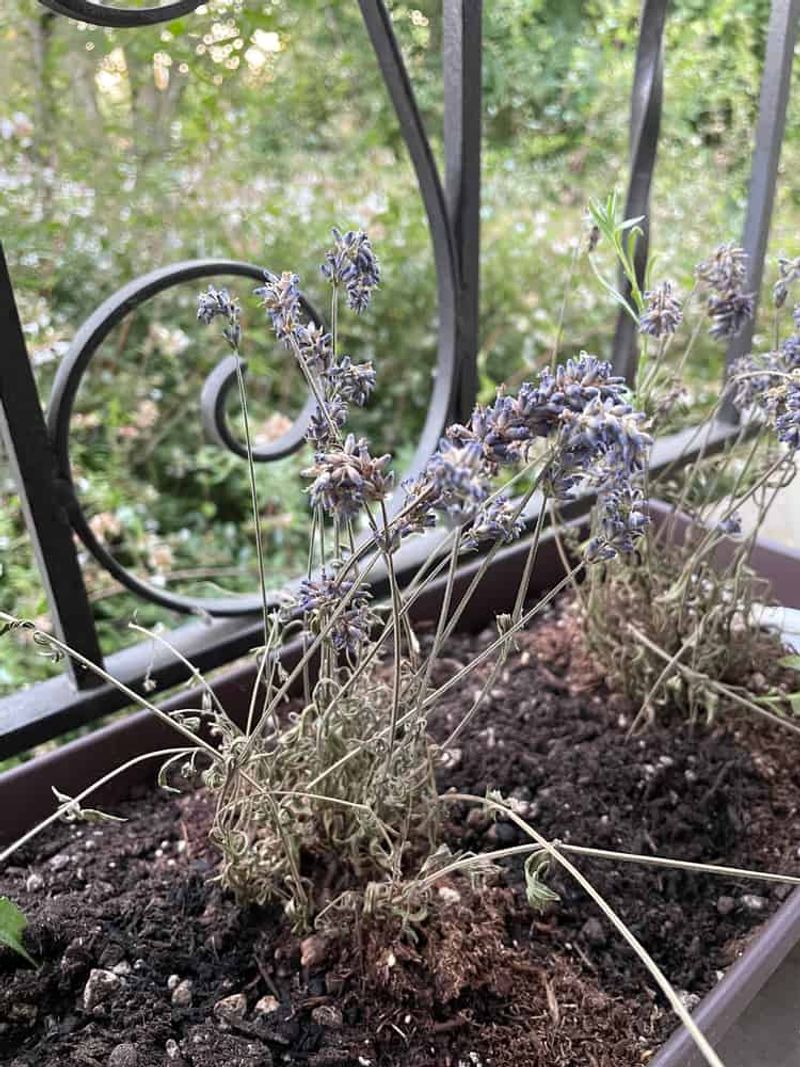
Drooping or browning stems feel like a clear sign of rot, but they are not proof. Phytophthora root and crown rot is a documented lavender disease, and UMass Extension shows what it can look like.
A peer-reviewed Plant Disease study also describes it. Still, similar symptoms can come from other causes, so a diagnosis needs more than a look at the foliage.
Winter exposure counts too. University of Maryland guidance notes that container plants can see bigger root-temperature swings and may be more exposed to cold than plants in the ground, though not every pot faces the same conditions.
Climate and variety matter as well. UF/IFAS lists English lavender for USDA zones 5B to 8 and says it may decline in zone 8 because of summer heat.
Texas advice also varies by region and cultivar, as Bell County Master Gardeners describe. Better drainage cannot fix a poor climate match.
Make the drainage check before winter settles in

Today’s to-do list is short: look at the holes, clear any standing water, and lift the pot if its base blocks drainage. University of Maryland guidance and Rutgers both back these basics.
Keep feeling the mix through winter, since these steps lower a risk and do not promise a result. Go out and tip that pot today.