
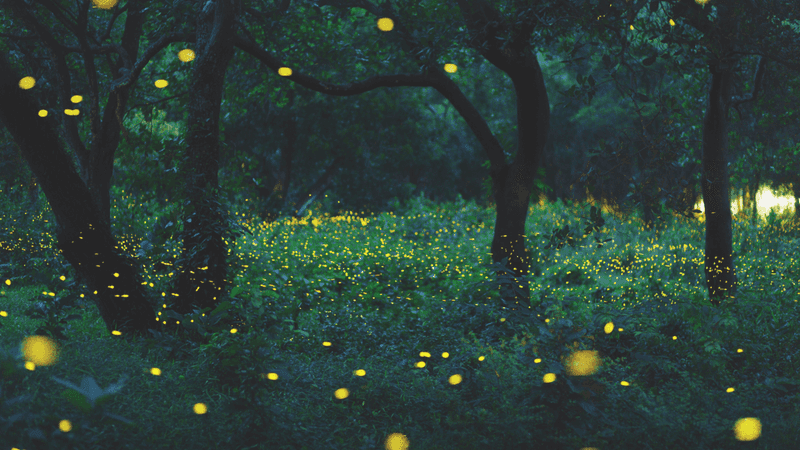
Walk outside on a warm Florida evening in July and you might catch a few soft yellow-green flashes drifting low over the grass. Fireflies are one of those rare summer surprises that feel almost too good to be real, and Florida is actually home to more than 50 documented species. The yards where they show up most often share a handful of specific conditions, and most of those conditions are things you can work toward. This article explains what fireflies actually need, corrects a few common myths, and gives Florida gardeners practical steps to make their yard more suitable for these beetles over time.
July is an important firefly window, not a statewide peak
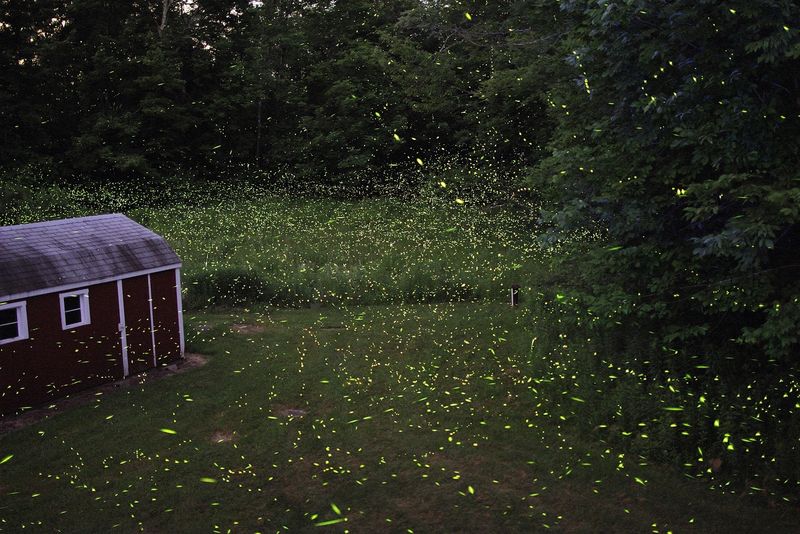
Florida firefly season does not work like a single switch that flips on every yard at once in July. UF/IFAS Extension Polk County reports that Florida fireflies may show two general activity windows – one in spring and another in July and August – while the overall season can stretch from early spring through late summer. Even within those windows, timing shifts depending on species, local habitat, weather, and region, so a July evening that produces dozens of flashes in one part of Florida may be quiet in another.
Part of the reason for that variation is the sheer number of species involved. Firefly Atlas documents more than 50 firefly species in Florida, living across habitats as different as upland forests, open grasslands, freshwater wetlands, coastal salt marshes, mangrove edges, and urban parks. Each species has its own preferred habitat and its own activity schedule. A firefly common in a north Florida hardwood forest may have a completely different peak than a species adapted to a south Florida wetland edge.
Florida is also home to bioluminescent click beetles, which are close relatives of fireflies and can produce a similar glow. Not every flash you see in the yard comes from a typical flashing firefly, so it helps to watch the pattern and height of the light before drawing conclusions about which species are present.
The practical takeaway for July is this: treat the month as a good time to watch for fireflies and honestly assess your yard conditions, not as a guaranteed moment when every Florida location reaches its highest abundance. If you are not seeing flashes yet, that does not mean fireflies are absent from your area. It may simply mean the species in your neighborhood peak at a different time, or that yard conditions have room to improve.
Turn off unnecessary lights after dark
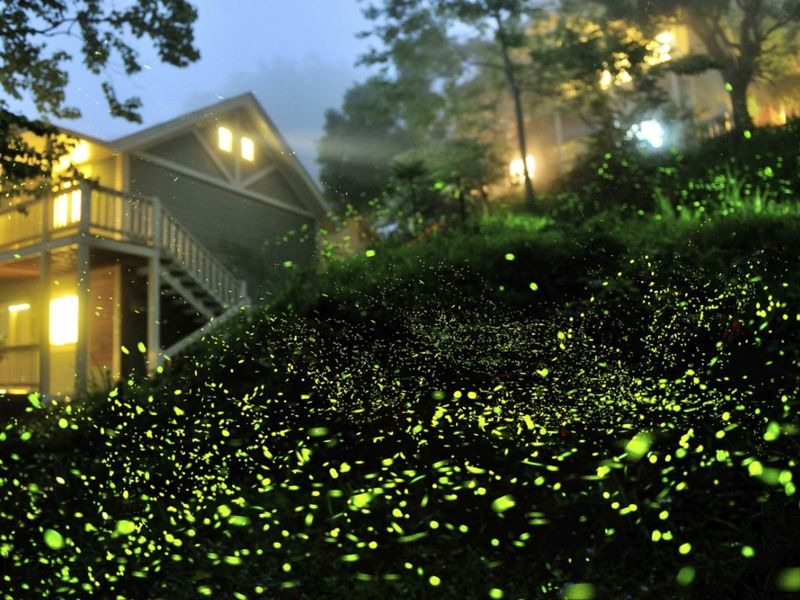
Fireflies do not flash just to look beautiful. Adult males fly through the yard producing species-specific light patterns, and females waiting in the vegetation respond with their own flashes. That back-and-forth exchange is how fireflies find mates, and it depends on the surrounding environment being dark enough for both partners to see each other clearly.
Research on artificial light and firefly mating success found that females exposed to artificial light were significantly less likely to signal and mate compared to females in darker conditions. A brightly lit porch, a landscape spotlight aimed into a shrub border, or decorative string lights left on all evening can all reduce the chances that a firefly nearby will complete a successful courtship. The effect is not just cosmetic – it can translate directly into fewer eggs laid and fewer larvae developing in your soil.
The most straightforward action is an evening checklist. Walk around the yard after dark and identify every light source that is on but not needed for safety: porch decoratives, path lights, garage floods, landscape uplights, and string lights are common examples. Turn off what you can during the peak firefly window, which typically runs from just after sunset through the first couple of hours of darkness.
For lights you genuinely need for safety, behavioral studies on fireflies and artificial light at night suggest that reducing brightness, shielding the fixture, aiming it downward, and using a timer or motion sensor all help limit the spread of light into habitat areas. Some guidance mentions longer-wavelength bulbs like amber or red as potentially less disruptive in certain contexts, but darkness remains the best option and no bulb color should be described as completely harmless to all species at all intensities. When in doubt, less light is better than a different color of light.
Protect a shaded, living ground layer
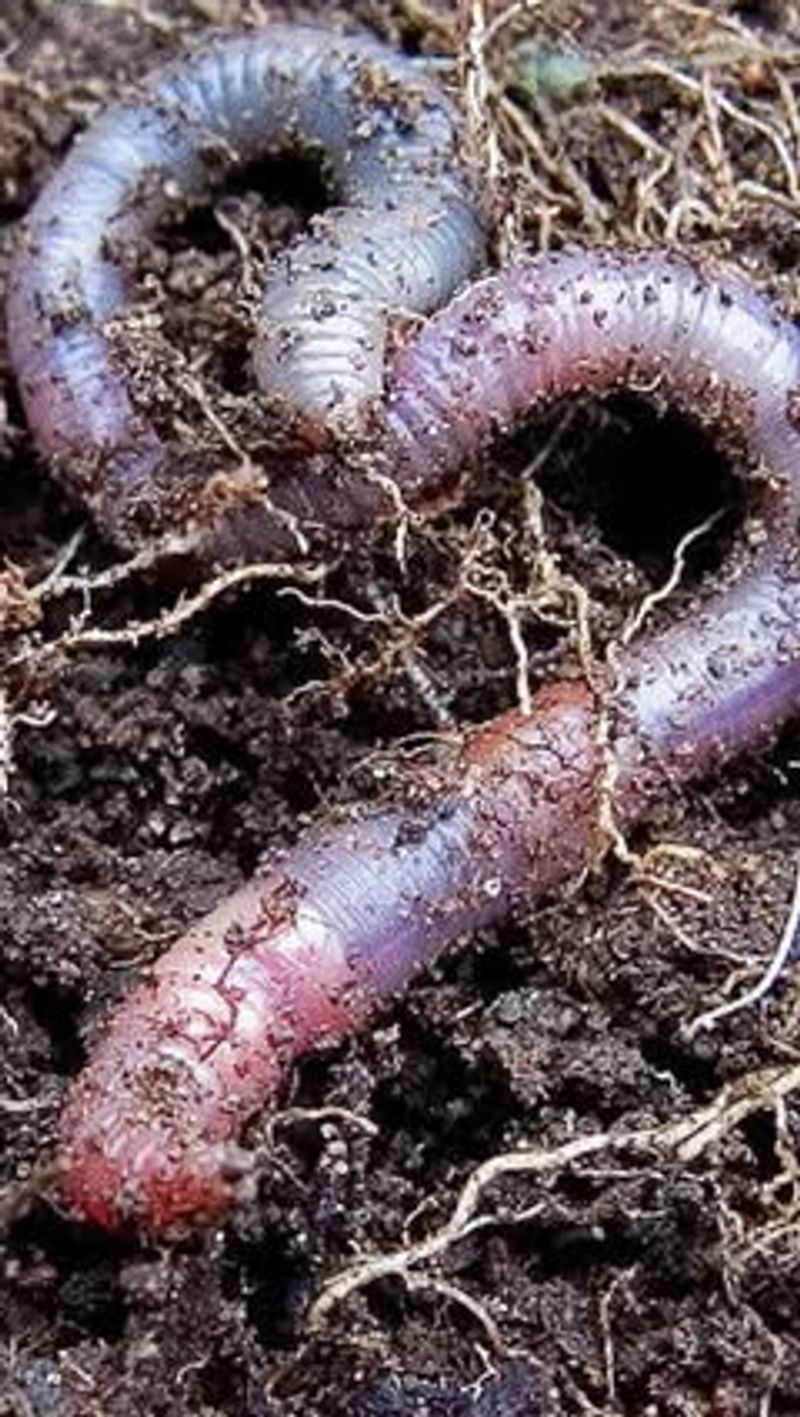
Most people think of fireflies as flying insects, but the part of their life cycle that matters most to yard conditions happens underground. Larvae hatch from eggs laid in moist soil or leaf litter, then spend months – sometimes one to two full years – hunting for food at or just below the ground surface. UF/IFAS Gardening Solutions confirms that firefly larvae prey on snails, slugs, earthworms, and other soft-bodied organisms, injecting a paralyzing fluid before consuming them. A yard that cannot support those prey animals cannot support firefly larvae either.
Shaded, relatively undisturbed ground is where that prey community lives. Heavy sun exposure dries out the surface quickly, especially in Florida’s summer heat, and a bare or routinely raked soil surface removes both the moisture and the organic material that snails, slugs, and worms need. The U.S. Fish and Wildlife Service specifically recommends leaving a designated portion of the yard less manicured, including retaining some leaf litter and allowing a grassy or shrubby edge.
This does not require turning the whole yard into a wild area – a single shaded bed or a strip along the fence line is a reasonable start.
Natural leaf litter and some decomposing woody material are not the same as thick bags of commercial mulch spread uniformly across a planting bed. Firefly Conservation and Research notes that very thick or heavily managed mulch layers can interfere with egg-laying and larval movement. The goal is a loose, organic ground layer that stays a bit moist under shade, not a sealed mulch blanket.
Avoid routinely disturbing every planting-bed surface with cultivation tools. Turning the soil regularly disrupts larvae and destroys the community of small invertebrates they depend on. Choose one area of the yard to protect as a low-disturbance zone, shade it if possible with a tree or large shrub, and let the leaf fall accumulate naturally through the season.
Use layered vegetation instead of a magic firefly plant

Gardeners searching for a single plant that will make their yard glow are going to be disappointed, because no such plant exists. What fireflies respond to is not a particular flower or species but a set of conditions that layered, diverse vegetation happens to create well: shade that keeps the soil surface cooler and more humid, cover that gives adults places to rest during the day, and structural complexity at ground level that supports the snails, slugs, and worms that larvae eat.
UF/IFAS Gardening Solutions recommends diverse habitat and layered vegetation that shades the soil and provides cover, rather than any specific plant list. Grasses, native shrubs, and canopy trees each contribute differently. Grasses and low groundcovers hold moisture at the surface and give larvae places to move. Shrubs create shade and daytime resting spots for adults.
Taller trees anchor the shade zone and drop leaves that become the organic litter layer larvae need below.
Native plants are a practical choice for this kind of layered planting because they are adapted to local rainfall patterns, soil conditions, and seasonal heat. The National Wildlife Federation’s firefly-friendly gardening guidance notes that flowers may help indirectly by supporting the invertebrate community or, for some adult firefly species, providing nectar or pollen. However, adults of some firefly species do not feed at all, while others are carnivorous. Planting a particular flower is not a reliable method for drawing adults to your yard in predictable numbers.
The more useful framing is to think about what the vegetation does rather than what it is. Choose plants appropriate to your specific site – sun exposure, soil moisture, and space – and arrange them in multiple vertical layers. That combination of shade, humidity, cover, and ground-level complexity is what gives fireflies and their prey a reason to stay.
Reduce unnecessary broad-spectrum pesticide exposure
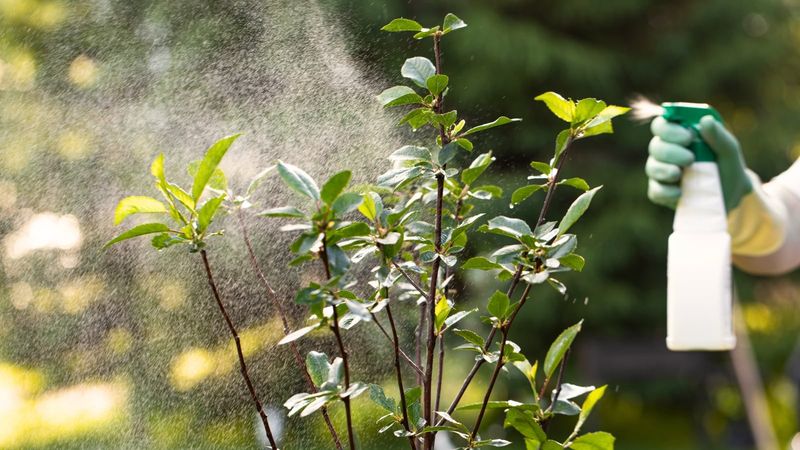
Broad-spectrum lawn insecticides do not distinguish between target pests and the soil community that firefly larvae depend on. When a product is applied across an entire yard, it can reach the snails, slugs, and earthworms that larvae hunt, along with the larvae themselves. A study on clothianidin toxicity to common Eastern North American fireflies found both lethal and sublethal effects on larvae at ecologically relevant concentrations, meaning the harm can occur even at doses that do not kill larvae outright but still impair their development and behavior.
UF/IFAS specifically warns that broad-spectrum lawn insecticides can harm soil-dwelling firefly larvae, and the practical recommendation is to avoid routine whole-yard treatments. Targeted pest management – treating a specific plant or area for a specific problem – is a more defensible approach than default calendar spraying. Before applying any insecticide, read the label, identify the pest, confirm the product is appropriate, and limit the treatment area to where the problem actually exists.
The Xerces Society’s guidance on protecting fireflies from pesticides notes that research on specific pesticide risks to fireflies is still developing, and that the full picture of which products cause harm at what doses remains incomplete. That uncertainty is a reason for caution, not a reason to dismiss the concern.
Mosquito control deserves a separate note. Some scientists suspect that broad-spectrum mosquito spraying may contribute to firefly declines, but the direct evidence is weaker than the evidence for artificial light, habitat loss, and pesticide toxicity from products like clothianidin. Florida mosquito guidance from UF/IFAS emphasizes eliminating breeding water and using targeted control where mosquito pressure is a genuine health concern. Stopping all mosquito control is not a safe recommendation in Florida, where several mosquito species can transmit disease.
The defensible position is to reduce unnecessary broad-spectrum applications, manage standing water, and use targeted methods when treatment is genuinely needed.
Keep the ground moist without creating mosquito habitat
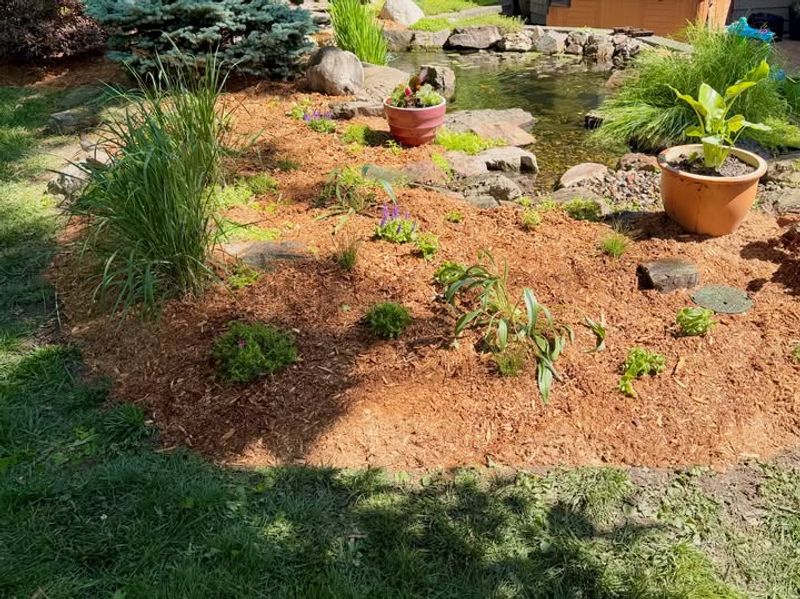
Moisture is one of the conditions fireflies are most consistently associated with, but the goal is a moist microhabitat – not a saturated yard or a collection of standing water. Shaded soil that drains reasonably well but does not dry out completely between rains is more useful than ground that stays flooded or bakes dry by mid-morning. Florida’s summer rain patterns can help here if the yard is set up to retain moisture rather than shed it immediately.
Florida-Friendly Landscaping principles from UF/IFAS recommend watering plants when they show actual need, grouping plants by water requirements so irrigation is efficient, and avoiding overwatering. Those same habits serve firefly habitat well. Soil that stays consistently moist under shade holds the conditions larvae and their prey need, while soil that is waterlogged or constantly irrigated can damage plant roots, increase runoff, and create the kind of standing water that breeds mosquitoes.
Containers, saucers, clogged gutters, and low spots that collect and hold water for more than a few days are mosquito-breeding risks regardless of whether they are intentional. UF/IFAS mosquito guidance is clear that eliminating or frequently refreshing standing water is one of the most effective steps a homeowner can take to reduce mosquito populations around the yard.
A pond or rain garden can support firefly habitat in the right setting by providing a moist edge zone with vegetation and organic matter. UF/IFAS notes that water features may contribute to suitable conditions, but they are not required for a firefly-friendly yard and they do require maintenance to prevent mosquito breeding – including moving water, mosquito dunks, or regular emptying where appropriate. The simpler and lower-risk approach for most yards is to shade existing soil, protect leaf litter, and water thoughtfully rather than building new water features.
Make changes for the full firefly life cycle
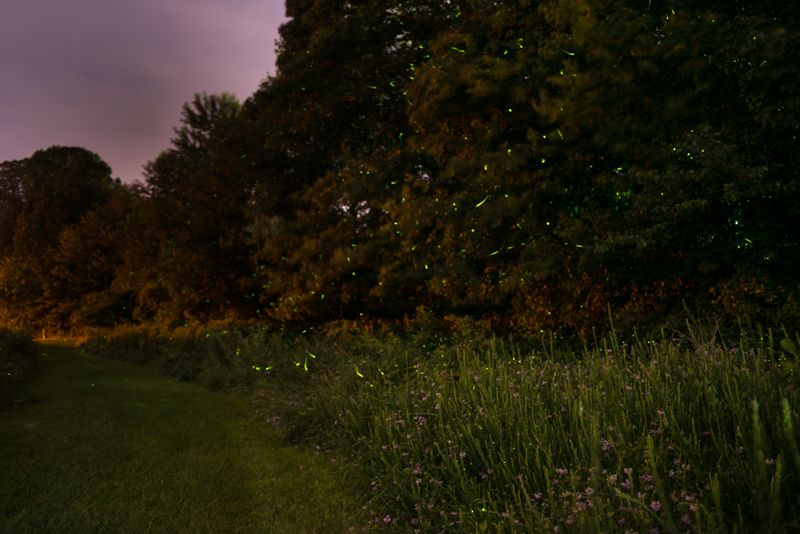
Habitat improvements made in July are worth doing, but they are unlikely to produce a noticeable surge of adult fireflies this same summer. Firefly Conservation and Research explains that larvae may spend one to two years developing in the soil before emerging as adults, while adults themselves may live only a few weeks. The adults you see flashing tonight are the product of conditions in your yard and the surrounding habitat from one or two seasons ago.
That timeline changes how to think about the steps in this article. Darkening the yard at night helps adults currently active in your area find mates and lay eggs successfully. Protecting a shaded ground zone, preserving natural leaf litter, building vegetation layers, reducing unnecessary broad-spectrum spraying, and managing irrigation carefully all support the larvae and prey that will eventually become next season’s adults. Firefly Atlas notes that adult abundance also depends on surrounding habitat, regional light pollution, weather, and species presence – factors that a single yard cannot fully control.
A reasonable priority order for getting started: turn off unnecessary outdoor lights first, since that is the easiest change with the most immediate benefit for any adults already present. Then identify one shaded area to protect as a low-disturbance zone with natural leaf litter. After that, review pesticide use and irrigation habits, and gradually add layered vegetation as plants establish.
UF/IFAS encourages patient observation as conditions improve over multiple seasons. Keep a simple record of where and when you see flashes each year – that kind of long-term watching is how you learn which parts of the yard are already working and where the next improvement will matter most. A yard that genuinely supports fireflies through all life stages is built gradually, and the flashes that eventually follow are more earned than summoned.