
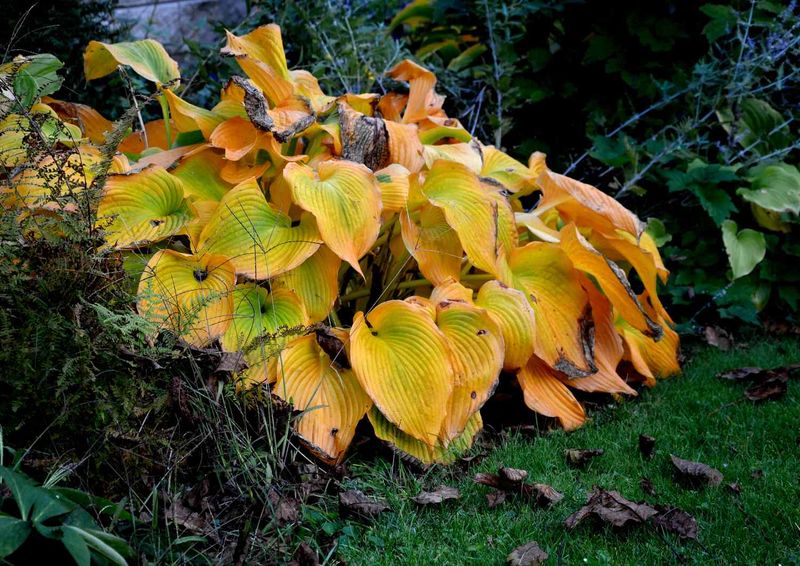
Mulch looks tidy around hostas, but the spot where the leaves meet the soil can stay damp when mulch and soggy leaves pile on top. That wet crown is a risk condition for some plant diseases, and fall is a good time to check it.
A few quick minutes now can help your hostas head into winter with less trouble. Here is how to look, what to move, and when a problem needs more than a rake.
Mulch can protect the soil without covering the crown
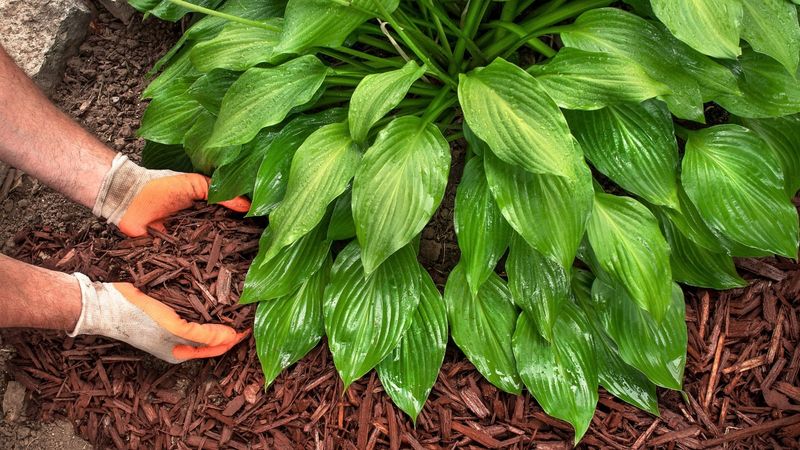
Mulch does good work in a hosta bed. It helps conserve soil moisture, and hostas like soil that stays evenly moist.
The trouble starts when mulch rests against the crown, the spot where stems meet the roots.
University of Connecticut Extension advises keeping mulch off plant crowns because contact can hold extra moisture and favor crown rot. That is a risk, not a certainty.
Plenty of hostas sit in mulched beds and do fine.
Wood mulch adds one more wrinkle for warm, humid gardens. Arkansas Extension notes that the southern blight fungus can overwinter in wood mulch, so it recommends pulling mulch back from hosta crowns.
None of this proves mulch caused a particular plant to fail. Think of it as a simple precaution: keep the mulch in the bed, and keep the crown uncovered.
Start the fall check by clearing wet debris from the plant base
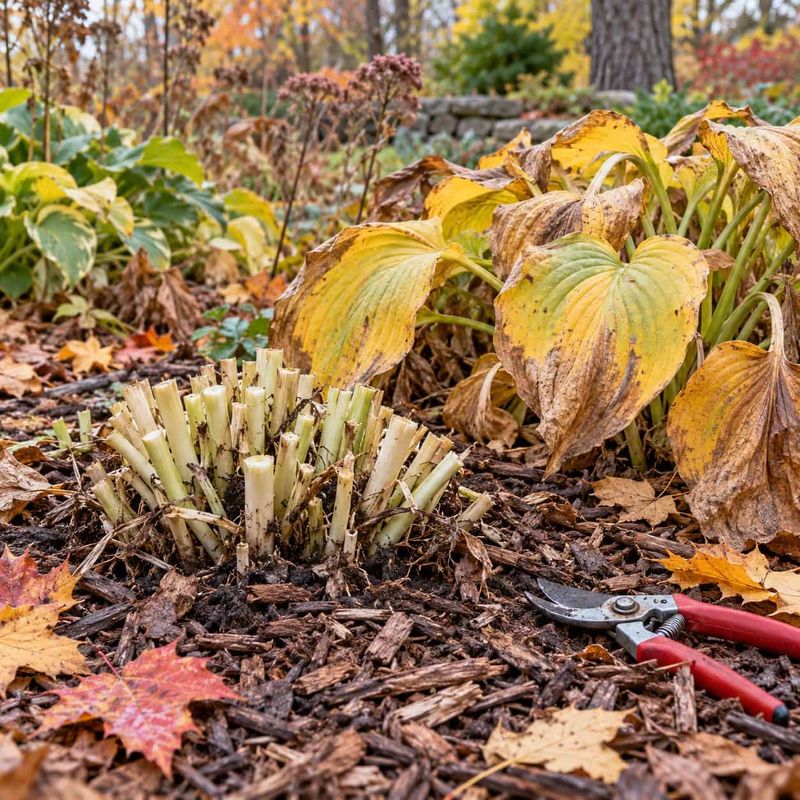
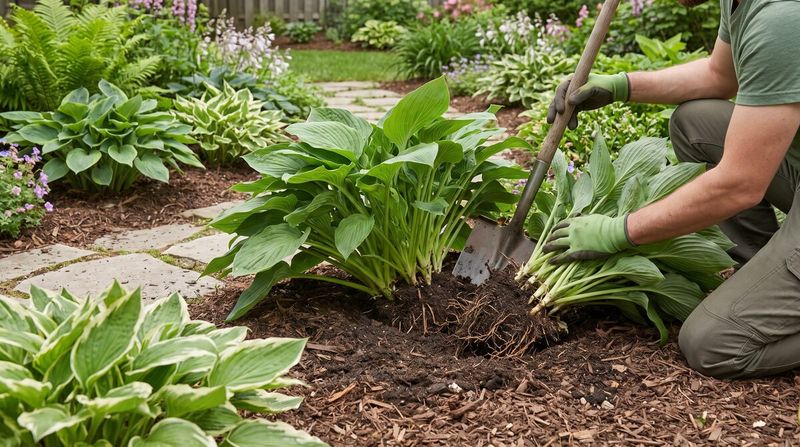
Grab a pair of gloves and kneel down at each clump. Use your fingers to find where the stems come together at the soil line.
That is the crown, and it should not be buried.
Next, lift away any soggy leaves stuck to the base. Illinois Extension recommends removing soggy leaves from hosta crowns before winter.
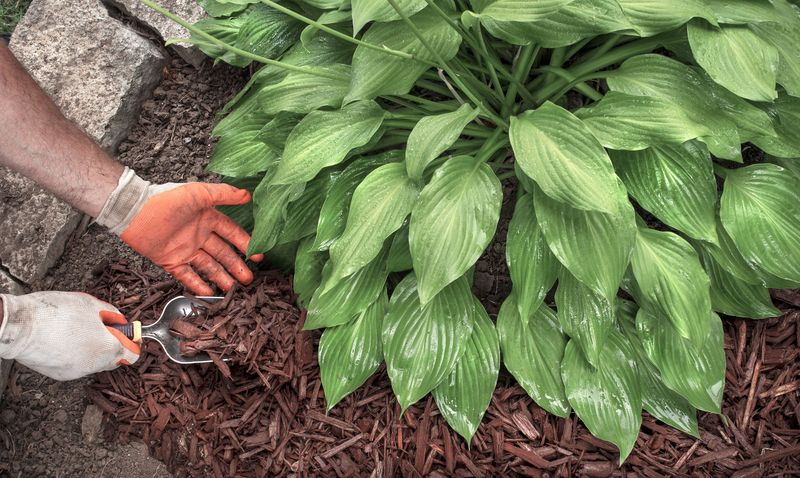
Then slide any mulch that touches or covers the crown outward.
You are clearing debris, not stripping the bed. Leave the mulch that sits around the plant so it can keep conserving soil moisture.
The goal is a plant base that can breathe, with useful mulch still nearby.
While you are down there, look at the crown itself. Firm tissue and normal stem bases are a good sign.
If anything looks soft, brown, or fuzzy, save that thought for the diagnosis sections below.
How far back should the mulch sit?
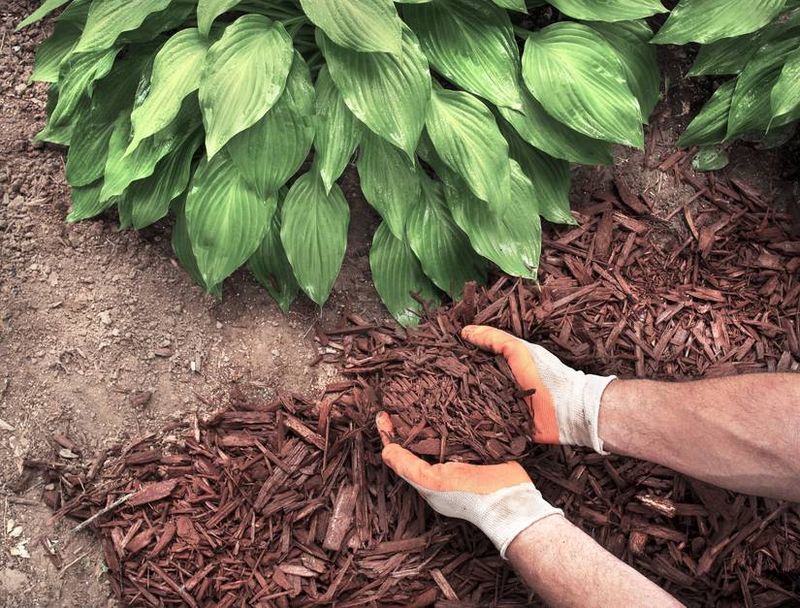
Gardeners love a number, but no one has proven a single gap width for every hosta, mulch, soil, or climate. The firm rule is simple: do not let mulch cover or press against the crown.
Iowa State Extension says a mulch-free zone of several inches might help against petiole and crown rot, so treat that as a precaution, not a requirement.
Depth matters too. UConn’s general mulch guidance suggests a 1 to 3 inch layer, and it warns that very deep mulch can keep soil constantly wet.
That is general mulch advice, not a hosta winter-depth prescription.
Hostas prefer soil that is evenly moist and well drained. UGA Extension says to keep them moist but not wet, and to water only when needed.
If your bed drains slowly after rain, give the crown extra breathing room and go easy on the mulch depth.
Winter mulch needs depend on climate and transplant status
Winter advice for hostas often comes from cold places, so read it with your own climate in mind. Illinois Extension suggests mulching newly transplanted hostas after the ground freezes, then removing that mulch in spring.
The point there is to reduce freeze-thaw heaving.
That is not a rule for every established hosta, and it does not mean Southern gardeners should strip all mulch away. Iowa State Extension also treats winter protection as a question that depends on the situation.
In much of Texas and the Gulf South, the main fall job is keeping the crown clear while the bed keeps a normal mulch layer.
Florida adds a bigger caveat. UF/IFAS Santa Rosa County Extension says hostas need winter dormancy, with chill needs that vary by variety, and they can be weak after winters with too few hours below 45°F.
In zones 9 and 10, success depends on variety and site. Mulch placement cannot make up for too little winter chill.
A mushy crown is a warning sign, not a diagnosis

Soft, brown, mushy tissue at the base of the stems is worth a closer look. Iowa State Extension describes petiole and crown rot as brown, mushy decay at stem bases, collapsing leaves, and sometimes white fungal threads.
Crown and petiole rot can have different causes, so the symptoms alone do not name the culprit.
In warm, humid Southern conditions, southern blight is one possibility. A University of Tennessee Extension publication lists hosta among susceptible plants and describes soft crowns, wilting, white fungal growth, and tan-to-brown seedlike structures.
Texas A&M’s handbook says it grows rapidly above 85°F. It does not cause every crown problem.
A wet crown, a gap in spring, or slow emergence does not confirm disease. Penn State Extension covers several hosta diseases, and voles can also leave gaps.
If you are unsure, contact your local Extension office or a plant diagnostic service.
A collapsing hosta may need more than a mulch adjustment
Moving mulch is a precaution. It will not cure a hosta that is already infected.
If leaves are flopping and the crown feels mushy, do not assume mulch is the only cause.
Arkansas Extension says saving infected plants is difficult. For suspected crown rot, it recommends removing and destroying the plant along with the surrounding soil and mulch, and it stresses sanitation because the disease is hard to manage once established.
Bag the material rather than composting it, and clean your tools afterward. The University of Tennessee publication also points to sanitation for southern blight.
Not sure what you have? Take clear photos and bring a sample to your county Extension office or a plant diagnostic lab.
A proper diagnosis can save you from tossing healthy neighbors or missing the real cause.
Keep mulch around the bed and off the crown

Check each hosta base, then lift off soggy leaves and any mulch pressing on the crown, as Illinois Extension suggests. Keep a modest mulch layer around the plant, in line with UConn’s general guidance, and do not treat any one gap width as mandatory.
If a plant looks unhealthy, get it assessed.
A clear crown is a small habit with a quiet payoff.