
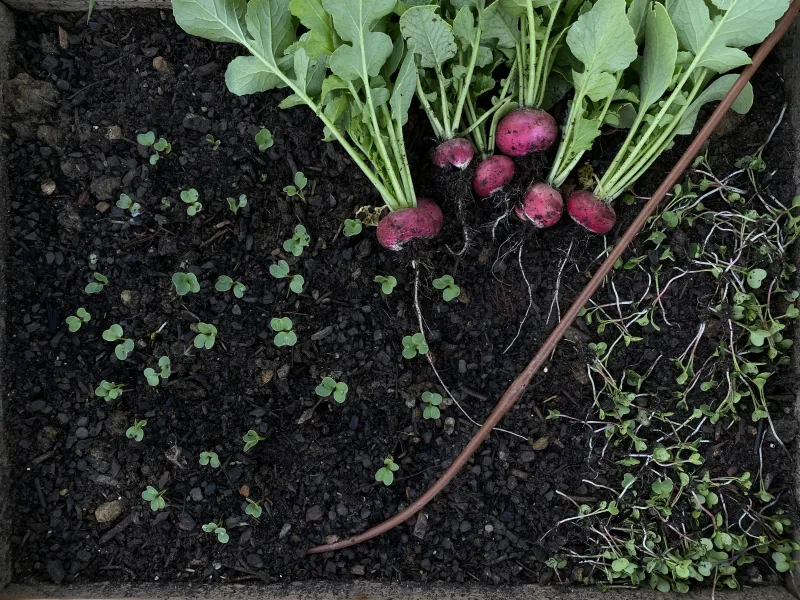
You sowed radishes with high hopes, and now the tops look lush while the roots stay tiny. It is a frustrating sight, especially for a crop that is supposed to be fast and easy.
Shade can play a part, but it is only one of several things worth checking. A little detective work now can help your next fall sowing go better.
What do leafy tops and small roots tell you?
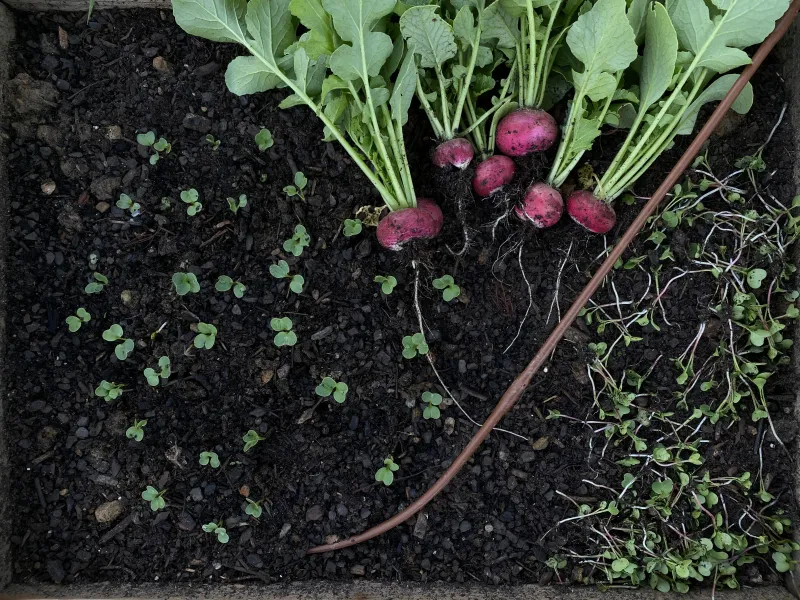
Big leaves and skimpy roots feel like a failure, but they are really a clue. They tell you the plant put its energy into foliage, and a few different conditions can cause that.
Illinois Extension notes that shade generally has to be severe to completely prevent root enlargement, and it also points to crowding and hot weather as causes. Iowa State Extension adds excessive nitrogen to the list.
So an afternoon shadow across the bed does not prove shade is the culprit. Light is worth checking, but so are spacing, fertilizer, moisture, temperature, and the variety you planted.
Think of the next few sections as a checklist that helps you narrow things down without jumping to one answer.
How much direct sun reaches the bed?
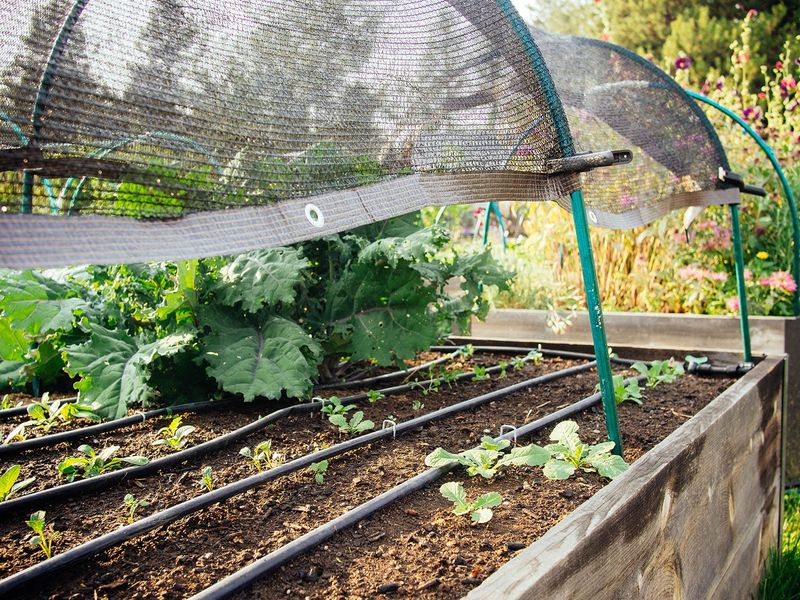
Rather than focusing on one shadow, track the whole day. Check the bed in the morning, at midday, and again in the afternoon, and jot down how many hours of direct sun it gets.
Maryland Extension defines full sun as at least six hours of direct light and says radishes prefer eight to ten hours. North Carolina Extension says radishes can grow with four to five hours of sun, though roots take longer to reach harvest size.
That means partial shade may slow development without necessarily stopping roots from forming. Illinois Extension’s point about severe shade fits here too.
If your bed gets close to the four-to-five-hour range or less, light may be contributing. If it gets six or more hours, look harder at other causes.
Check crowding, nitrogen, and heat
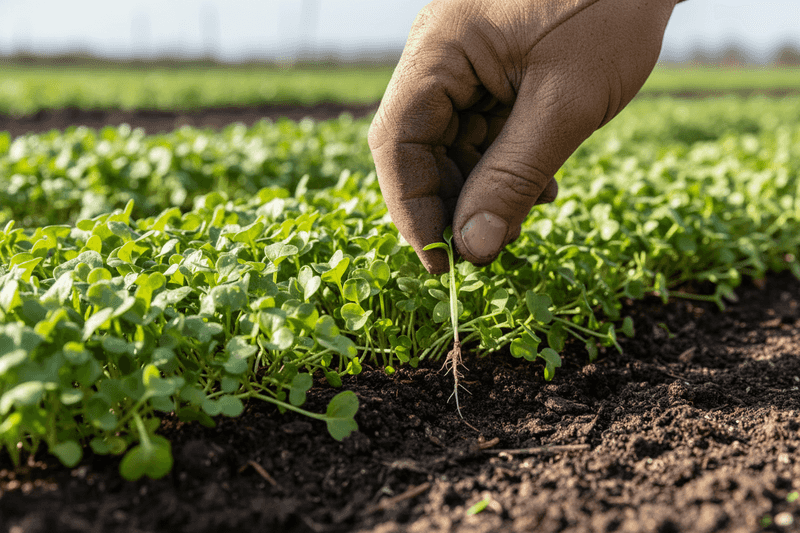
Before blaming light, look back at how you planted. Were the seeds sown thickly, and did the seedlings ever get thinned?
Crowded plants compete for room, and the roots may not have space to swell.
Next, think about fertilizer. Iowa State Extension names excess nitrogen as a cause of lush tops with poor roots, so consider whether the bed was recently fed, amended with rich compost, or planted where a heavy feeder grew before.
Finally, recall the weather. Illinois Extension lists hot weather among the causes, and early fall in the South can still run warm.
A stretch of hot days soon after sowing could have pushed the plants toward leaves. Write down what you find so you can compare it with your sunlight notes.
Some radishes simply need more time
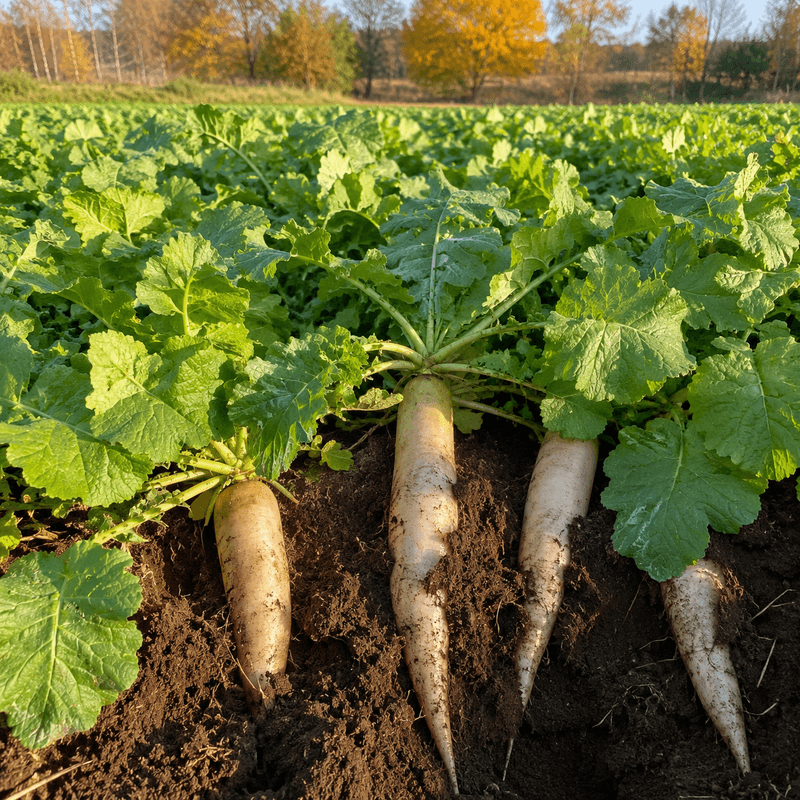
A radish that looks stalled may just be on a longer schedule. UF/IFAS says common radishes may be harvested 20 to 30 days after sowing, while larger types take longer.
It gives daikon harvest estimates of about seven weeks in spring and ten weeks in fall.
Small spring radishes, winter radishes, and daikon are not interchangeable, so check the seed packet for your variety’s days to maturity before judging it. A crop only a few weeks old may not be behind at all.
Timing also differs by place. UF/IFAS Gardening Solutions recommends September through March in Florida.
Texas A&M AgriLife gives region-by-region fall dates, from September 1 in Region I to December 15 in Region V. Match your variety and sowing date to your own location.
Set up the next sowing for root growth
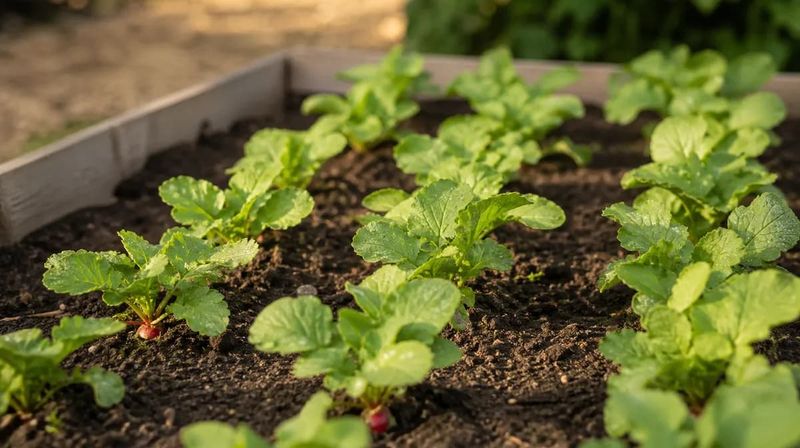
Use what you learned to adjust the next round. If your light check showed limited sun, choose a brighter spot where that is practical.
Thin seedlings to the spacing printed on the seed packet, since it varies by radish type. Skip fertilizer by default, because Maryland Extension describes radishes as having low nutrient needs and advises avoiding excess nitrogen.
Keep the soil evenly moist. The UC Statewide IPM Program offers cultural tips for radishes, and dry or crusted soil can impair root growth.
A light, steady watering after sowing may help prevent crusting.
These changes work together, and they can improve conditions for root growth, but none is a guaranteed cure.
Use the next sowing to test your diagnosis
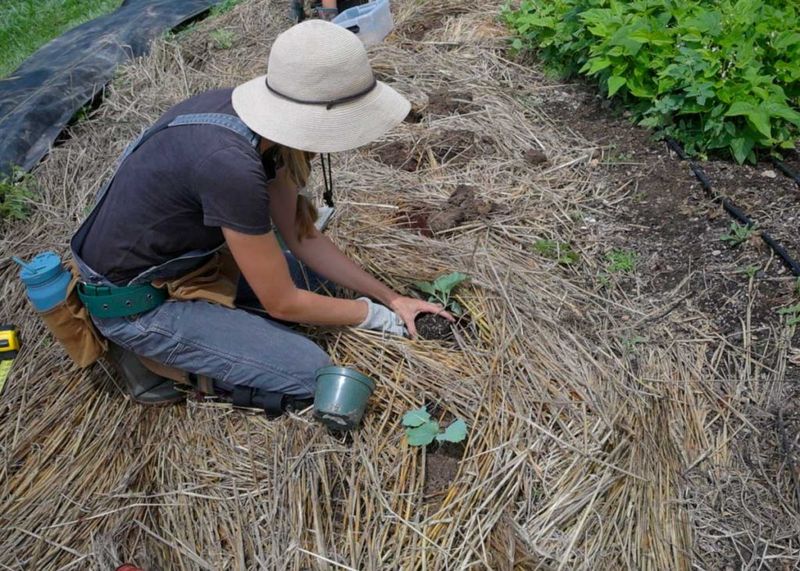
Treat the next planting like a small experiment. Record the sun hours, spacing, fertilizer history, watering, temperatures, variety, and days to maturity.
Then compare those notes before deciding shade was the problem, and change only what the notes point to. No single tweak promises bigger roots, but a clear record makes each sowing smarter than the last.