
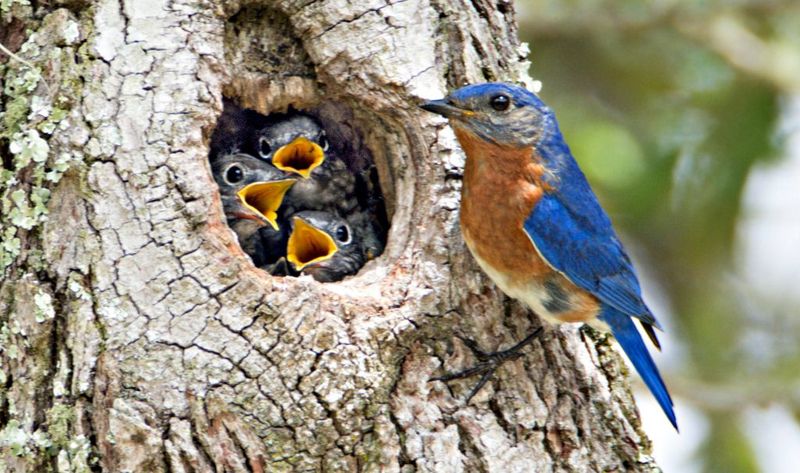
A dead tree with an old woodpecker hole can look like a yard problem. To an Eastern Bluebird, it might look like a place to raise a family.
Keeping the right snag, in the right yard, could give you a front-row seat to one of Texas’s most loved songbirds. Here is how to tell whether your tree and yard have a chance, and what to do if they do not.
A Natural Cavity Can Become a Bluebird Nest Site
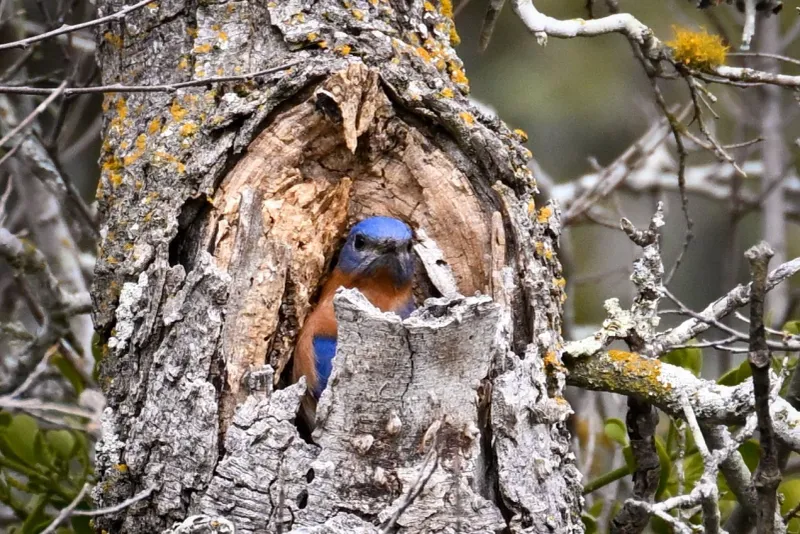
Eastern Bluebirds do not build their own holes. They count on cavities that already exist, which is why a weathered trunk can matter so much.
Cornell Lab of Ornithology life history notes say bluebirds nest in natural cavities and nest boxes, and they often choose old woodpecker holes in dead pine or oak.
That is the appeal of a standing dead tree. Woodpeckers chisel out holes, the wood ages, and some of those openings later become housing for other birds.
A hollow limb or an abandoned woodpecker hole could be exactly the kind of spot a pair of bluebirds scouts in late winter.
Still, a hole in a tree is only a possible nest site. Not every cavity is the right size, depth, or shape, and bluebirds are not the only animals looking.
Other cavity-using wildlife may move in first, and a cavity that sits in the wrong kind of surroundings may simply go unused.
Think of the cavity as an invitation, not a contract. You can walk your yard and note any holes, broken limbs, or hollow spots on dead wood.
Then watch from a distance in late winter and early spring to see who shows up. Seeing a bluebird pair perch nearby and peek in is a good sign, but even that does not promise eggs.
Next, look past the trunk itself, because what surrounds the tree often decides whether bluebirds take an interest.
Does the Yard Offer the Open Habitat Bluebirds Need?
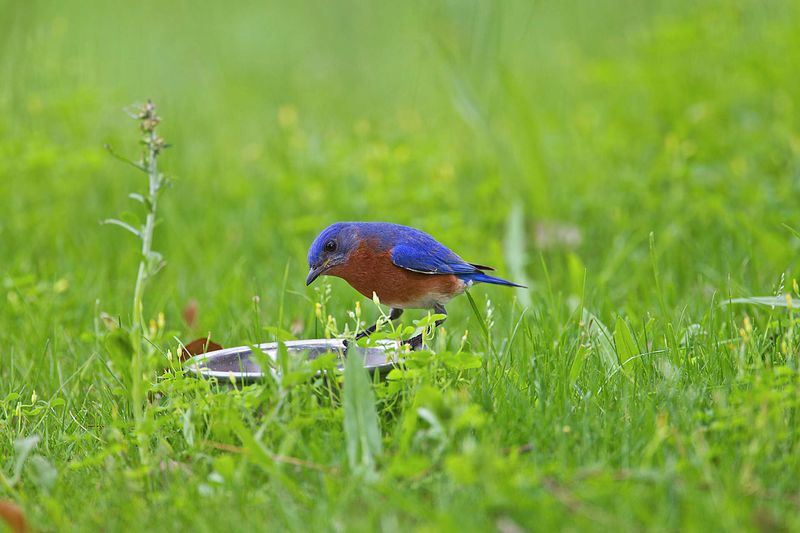
A cavity is only half the picture. Bluebirds hunt insects over open ground, so the space around the tree counts.
Texas Parks and Wildlife describes Eastern Bluebirds as birds of open woodlands, roadsides, farmland, and orchards, and says they breed in the eastern half of Texas.
Local conditions matter, so not every Central Texas yard is equally likely to host them. NestWatch placement advice lists open fields or lawns with scattered trees and sparse ground cover as good Eastern Bluebird habitat.
A snag buried in a dense thicket, with no clear foraging space, is a weaker bet.
Try a quick yard check. Stand by the tree and look around.
Do you see mowed or sparse ground, a few scattered trees, and fence posts or branches where a bird could perch and scan for prey? Those features line up with what bluebirds are known to use.
Regional guides show that bluebird projects are relevant here. A Central Texas habitat guide from TPWD and the U.S.
Fish and Wildlife Service includes an Eastern Bluebird nest-box plan. That shows the idea fits the region, but it does not mean your particular lot will draw a pair.
If your yard is mostly shady and crowded, the tree may still help other wildlife. If it has open space, the cavity gets more interesting.
Keep a Snag Only When It Is Safe
Wildlife value is a good reason to keep dead wood, but it is never a reason to ignore danger. Texas Parks and Wildlife notes that snags with old woodpecker holes can shelter bluebirds and other cavity-using wildlife.
That includes birds and animals you may not expect.
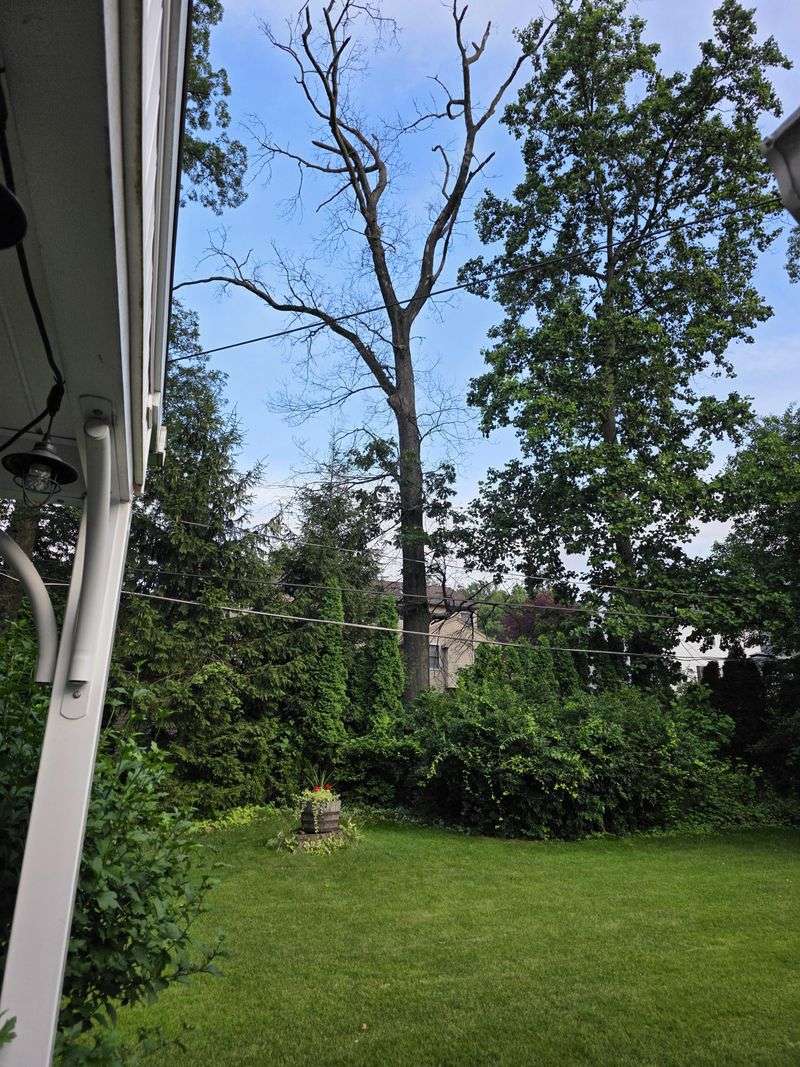
Location comes first. A snag in a back corner, away from where people walk and park, is a very different case from one leaning over a roof or driveway.
If a dead tree stands within falling distance of your home, a road, or a path, treat it as a safety question before a wildlife question.
Texas A&M Forest Service advises having dead or dying trees assessed by a professional when they could threaten people or property. It specifically recommends removal when dead trees are within falling distance of homes, roads, or pathways.
You do not need to guess at the tree’s condition yourself. Call a certified arborist, describe where the tree stands, and ask for an honest assessment.
Storm season in Texas makes this especially worth doing before spring, not after a big wind.
If the tree is a hazard, you can still help bluebirds. A nest box in a better spot can offer a safer option, which is covered next.
When a Natural Cavity Is Not an Option, Try a Nest Box
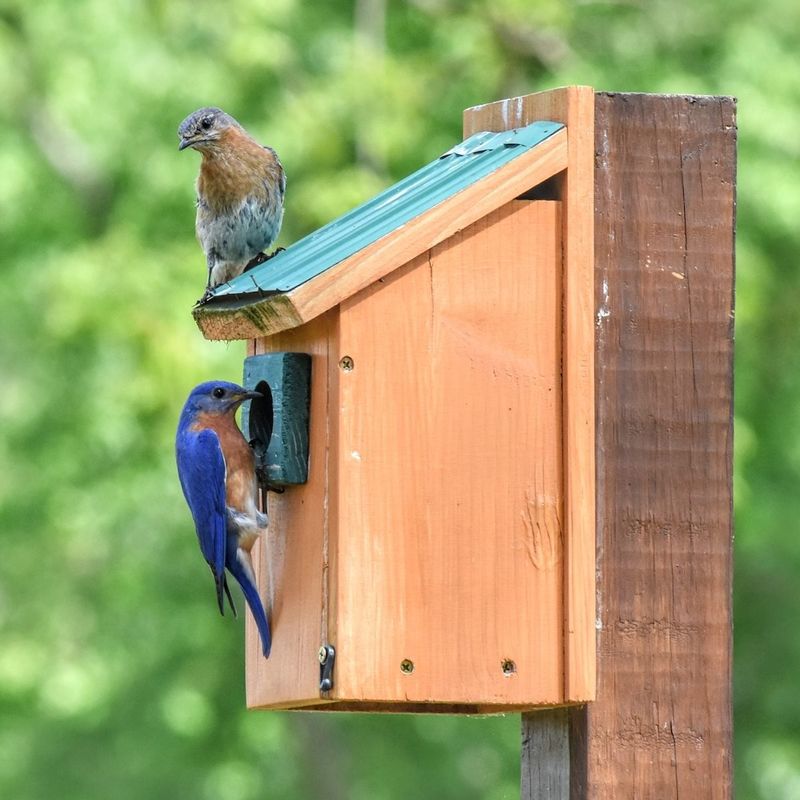
No suitable cavity, or a snag that cannot stay? A nest box can fill the gap.
It is not a perfect stand-in for a natural cavity, and it will not guarantee a tenant, but it gives bluebirds a possible place to nest.
Texas Parks and Wildlife recommends an Eastern Bluebird box with a 1.5-inch entrance hole, mounted at least 5 feet high on a metal pole.
Placement guidance varies a little by source. NestWatch gives a range of 3 to 6 feet, suggests open habitat, and recommends facing the entrance toward an open field.
Both are useful, so choose a height that fits your setup and the guidance you follow.
The Texas Bluebird Society recommends open areas with short grass, nearby perches, and considering afternoon shade for Texas heat. These are recommendations, not rules every yard must meet.
Spacing depends on your purpose. If you are putting up one box in a home yard, you are not following the same plan as someone managing a long line of boxes on a ranch.
Read the guidance for your situation instead of treating one distance as a universal rule.
Check the box through the season and keep the area around it open. A box in a good spot gives you a fair chance, and that is all any of us can offer.
A Spring Nest Is Possible, Not Promised
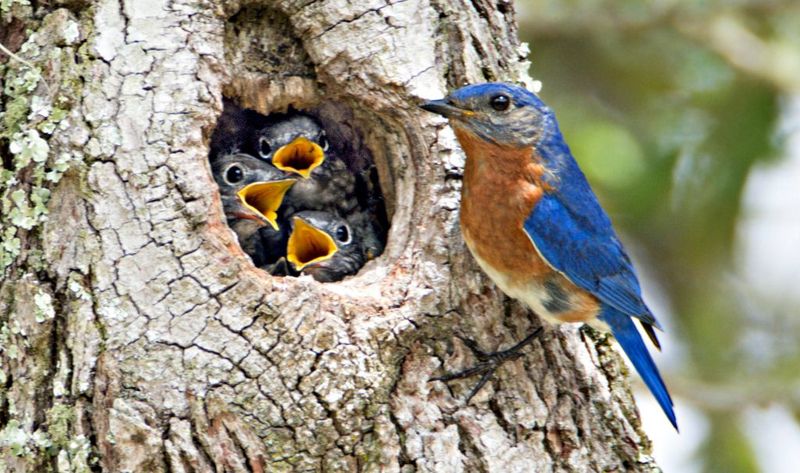
Some years a cavity sits empty. Other years a pair claims it before you notice.
Neither outcome means you did something wrong, because bluebirds make their choices based on factors you cannot fully control.
Even a successful nest does not set a pattern. Cornell Lab of Ornithology notes that bluebirds may raise more than one brood in a season.
That tells you about one busy spring, not about whether the same pair returns next year.
If a nest does appear, give it room. Watch from a distance, keep pets away from the tree or box, and avoid poking around the cavity.
Frequent visits can stress adults and young.
The law is fairly specific. The U.S.
Fish and Wildlife Service says destroying a nest containing eggs or chicks, or dependent young, is illegal under the Migratory Bird Treaty Act. It also clarifies that the Act does not prohibit destroying an inactive nest by itself.
So an active nest deserves protection, while an old empty one is treated differently. If you are unsure whether a nest is active, wait and watch before doing any tree work.
Patience costs little and protects the young birds.
Make Room for the Possibility
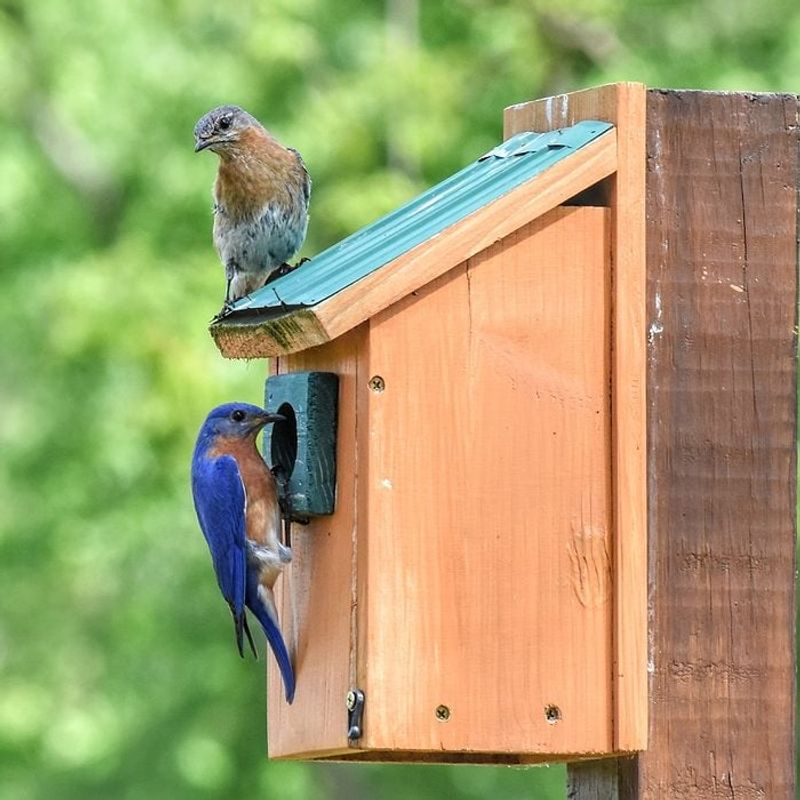
Start with safety: have a questionable tree assessed, using Texas A&M Forest Service guidance as your starting point. Keep a snag that is safe, and add a well-placed box, following TPWD box basics, if no good cavity exists.
Bluebirds may or may not come, and their habits do not include a yearly promise. But a patch of open yard and an old cavity are a fair invitation, and a flash of blue at the entrance is worth the wait.