
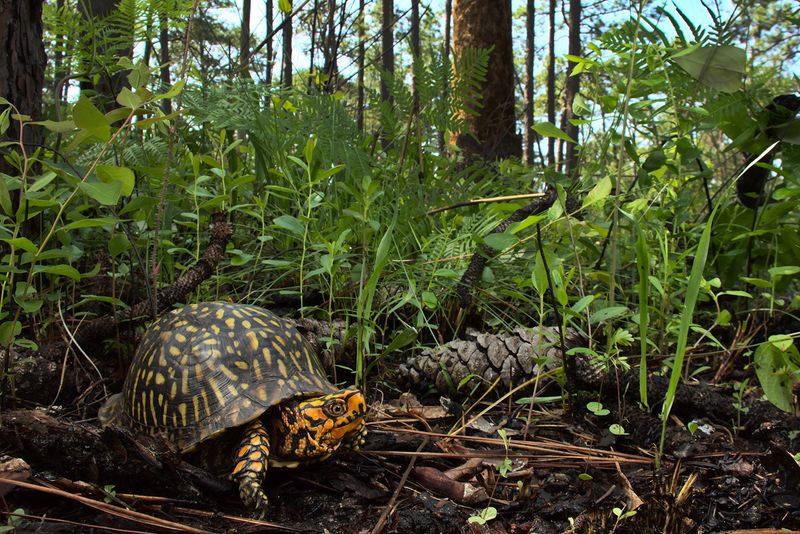
A tidy yard can quietly remove the spots where small wildlife spend the cold months. Box turtles are one of the animals people hope to see again each spring in Texas.
Many gardeners wonder whether a leftover brush pile can help them. The honest answer is more careful than the promise, but it points to simple fall habits that are worth knowing.
One Texas study tracked ornate box turtles overwintering underground
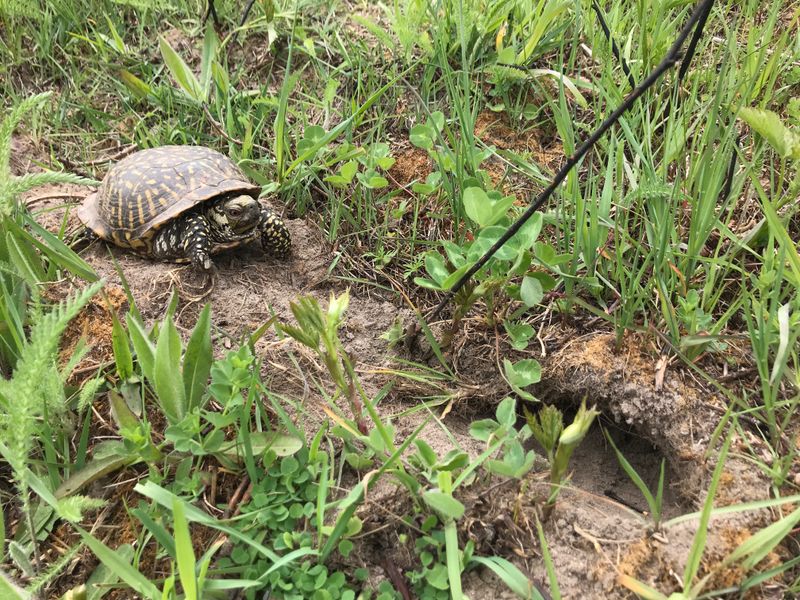
Here is the best Texas evidence we have, and it points underground, not into a pile of branches. A Texas field study of ornate box turtles followed animals at Matador Wildlife Management Area and watched how they spent the winter.
The turtles did not all settle in at once. They entered dormancy on a staggered schedule beginning in mid-October, and by late December every monitored turtle was underground.
Most came back out in early to mid-April, though emergence dates varied from turtle to turtle.
That timeline comes from one study site, not a Central Texas backyard. It describes ornate box turtles only, so it is not a calendar for other species or for every yard.
Weather, soil, and location can all shift the timing.
The study also did not test brush piles. Nothing in it shows that a pile of limbs attracts turtles or keeps them alive through a cold snap.
So the title’s promise goes further than the research does.
What the study does support is a modest, practical idea. If turtles spend winter below the surface, then ground that stays undisturbed is worth protecting.
In fall, that means going easy on digging, tilling, and heavy raking in the parts of the yard you can leave alone.
Which Texas box turtle might use your yard?
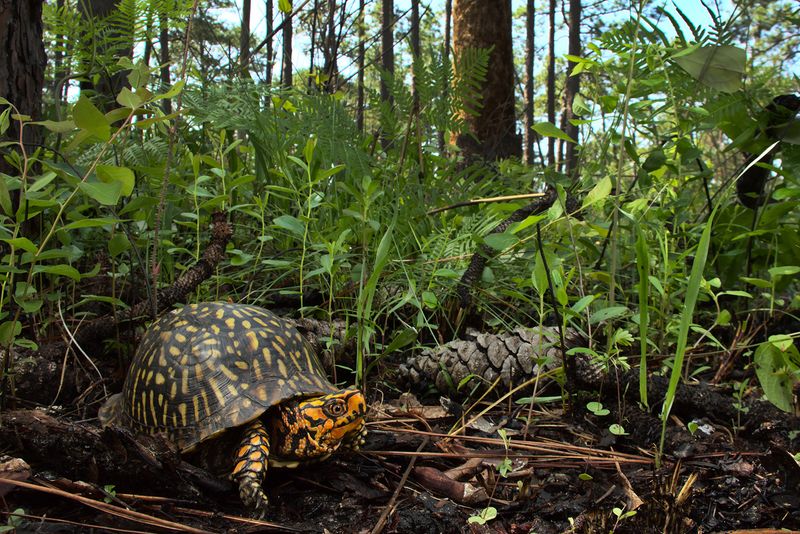
Texas has more than one kind of box turtle, and they do not live the same way. Before you change anything in the yard, it helps to know which habitat you actually have.
According to Texas Parks and Wildlife on the ornate box turtle, this species uses open habitats such as pastures, prairie, and open woodland. Think sunny grassland with patches of cover, not a thick tangle of brush.
The Texas three-toed box turtle leans toward different country. TPWD’s profile of the eastern and three-toed box turtle ties it mainly to woodland, forest edges, and brushy fields.
That difference matters for yard advice. A shady lot with oaks and leaf cover may fit a woodland-edge species better than a wide, sunny pasture lot.
No single feature suits both, and dense brush is not what every box turtle wants.
If a turtle wanders through, enjoy it from a distance and note where you saw it. A sighting is not proof that something in your yard drew it in, or that it will come back next year.
Turtles roam, and a single visit tells you very little.
Conservation concern is not proof of a uniform decline
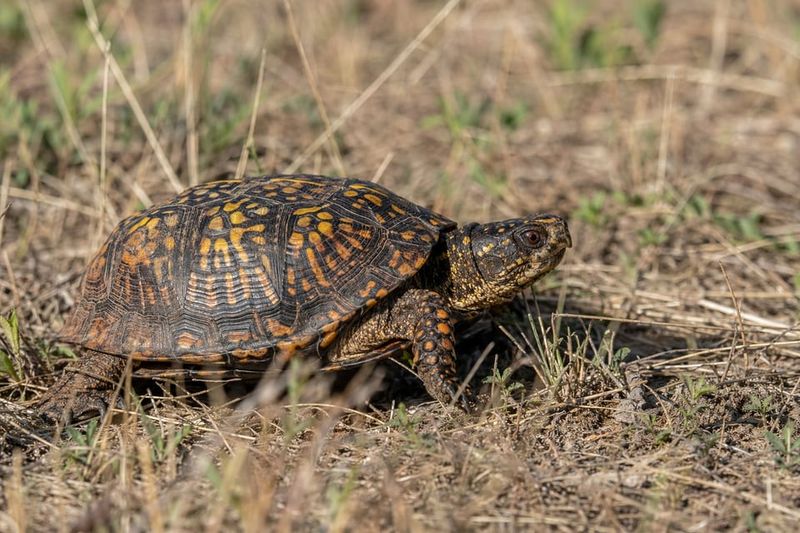
Box turtles often get described as vanishing, but the paperwork says something narrower. TPWD’s Species of Greatest Conservation Need list includes both the eastern box turtle and the western box turtle, which is the ornate box turtle.
Each carries a state rank of S3. The list does not show either one as state-listed or federally listed.
So what does that tell a homeowner? It signals that these animals deserve thoughtful care around their habitat.
It is a reason to pay attention, not a headline number.
These rankings do not, by themselves, measure a current statewide decline. They also do not mean every local population is shrinking.
Some areas may hold healthy numbers while others struggle, and the list alone cannot sort that out.
That is why this article leans on low-risk habits instead of dramatic claims. Protecting leaf litter and soil costs little and harms nothing, whether turtles are common or scarce where you live.
Preserve suitable leaf litter and undisturbed soil

If you only do one thing this fall, keep some of your leaves. UF/IFAS Extension’s winter wildlife guidance explains that leaf litter provides overwintering habitat for a range of wildlife, along with fallen plant material left in appropriate spots.
Soil matters too. Where you can, skip the digging, tilling, and fresh bed work in those leafy corners until spring.
This connects to the Texas finding that ornate box turtles at Matador spent winter underground, as described in the TPWD-hosted study. Ground left alone is simply less likely to be disturbed if an animal is below it.
That is a cautious link, not proof about your yard.
You do not need to bury the whole property in leaves. Keep the lawn and walkways clear where leaves would smother grass or create a slip hazard, and let them rest under shrubs, along fence lines, and at the edge of trees.
Match the choice to your lot. A woodland-edge yard can hold more leaf cover than an open, grassy one.
Either way, the result is a wildlife-friendly yard, not a guarantee that a turtle will move in or survive the winter.
Brush piles offer general cover, not guaranteed turtle shelter
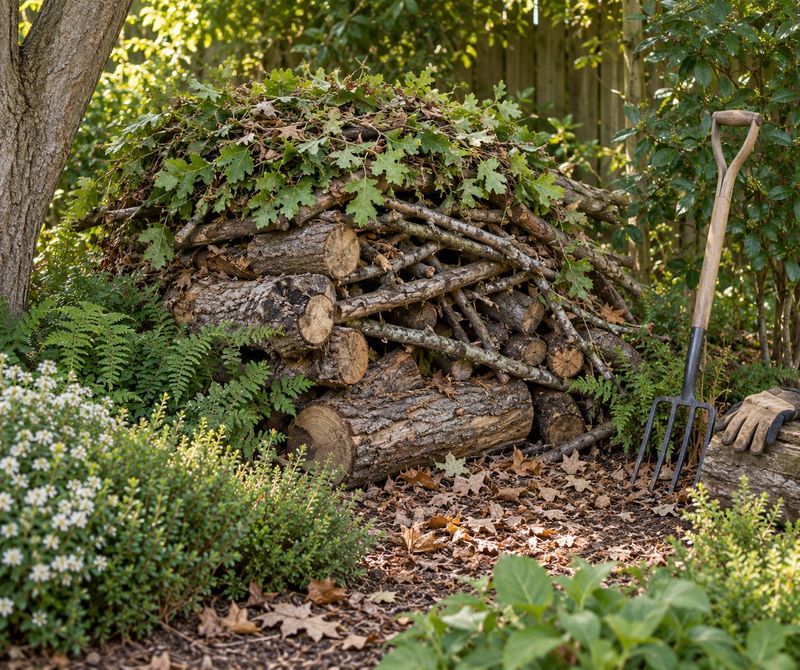
A brush pile has a real job, just not the one the title gave it. UF/IFAS Extension describes brush piles as shelter for small mammals and some other wildlife.
It does not name them as a dependable way for box turtles to hibernate. Leaf litter and brush piles are different things, and neither one is the same as turtles going underground.
If you want a pile for general wildlife, the guidance is simple. Put the larger branches at the bottom, stack smaller material on top, and choose an out-of-the-way spot.
Treat that as a general wildlife recommendation, not a recipe for attracting turtles. An ornate box turtle that prefers open ground may have little use for a dense stack.
A woodland-edge turtle might pass by it too.
Already have a pile from a storm cleanup or pruning? You can leave it be.
Just do not count on it as a turtle hotel, and do not poke around to see who is inside.
Keep tools and fire away from suspected refuge
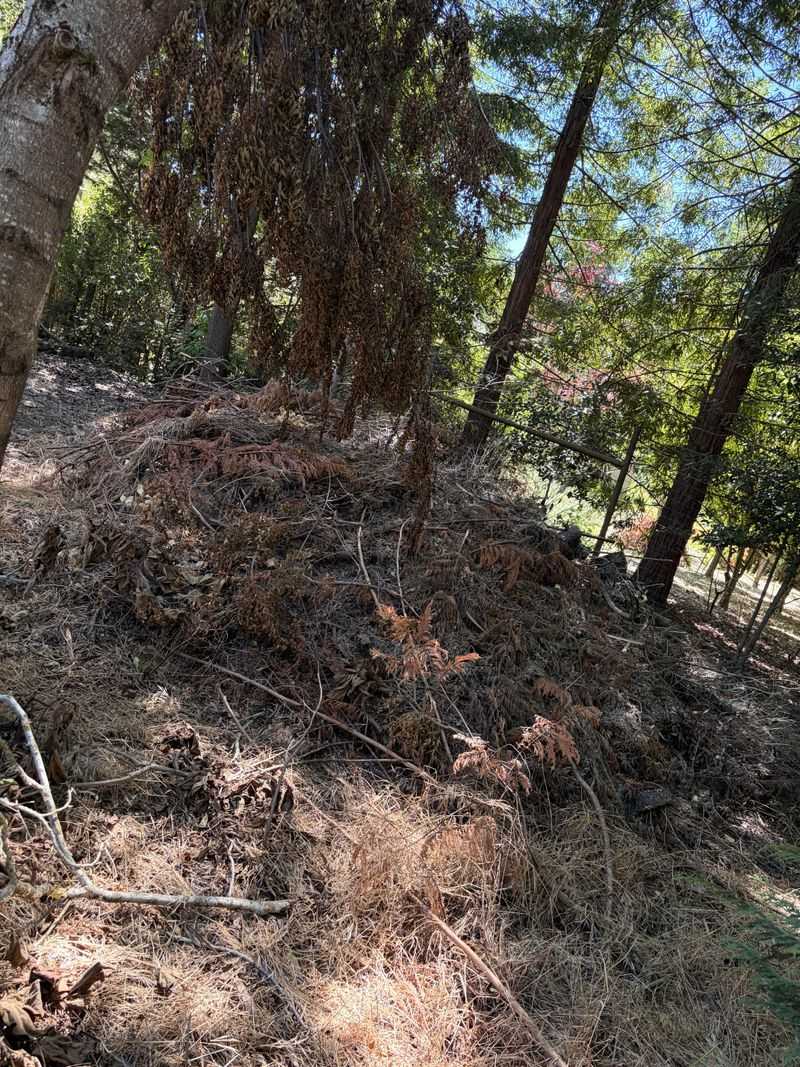
Here is a firm boundary: if you suspect an animal is using a pile or a patch of ground, leave it alone. Do not dismantle it, dig into it, turn it over, or burn it to clear space.
Fire is the sneakiest risk. Oklahoma State University Extension warns that brush piles can smolder for days or weeks after burning, so a pile that looks finished may still be hot inside.
Turtle research backs up the caution. A USGS study of eastern box turtles found fire-related deaths and shell damage, tied to how much fire the turtles were exposed to and how intense it was.
That work took place in Tennessee. It did not test Central Texas brush piles, so it cannot predict what happens in your yard.
It simply gives a good reason to keep flame away from turtle habitat.
If you do see a turtle, give it space and let it go on its way. Do not pick it up or move it somewhere else.
For questions about a particular animal, a local wildlife authority is the right call.
Choose a low-disturbance fall routine
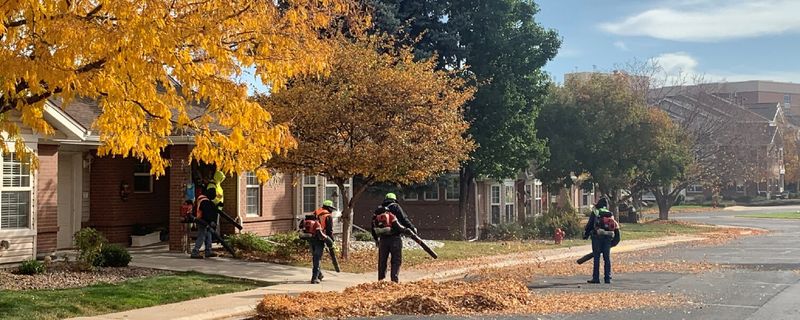
Rake the lawn, but let a leafy corner rest. Keep soil undisturbed where you can, as UF/IFAS winter garden advice supports, and treat any brush pile as general wildlife cover.
Skip the digging and the matches near anything that might shelter an animal. Those habits make a friendlier yard, but the Texas turtle study offers no promise of a turtle’s return.
Some of the best wildlife help is the work you decide not to do.