
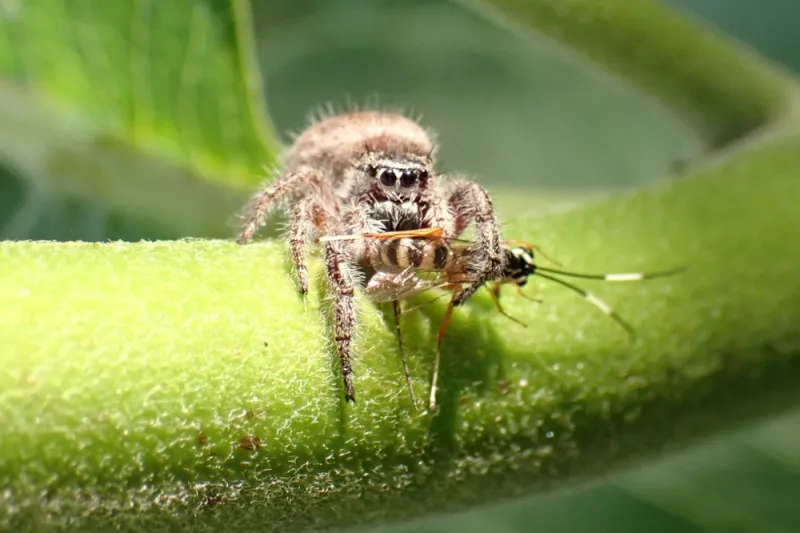
That small, fuzzy spider hopping across your patio pot might make you reach for a shoe. Hold off for a moment.
Jumping spiders are active hunters, and one California species has been recorded eating aphids. Here is what that really means for your containers, and what to do about aphids yourself.
What a jumping spider does
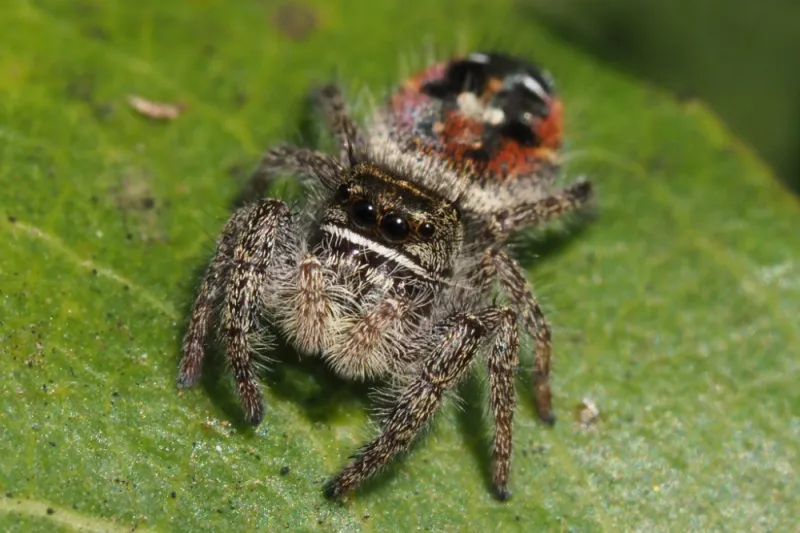
Most spiders make webs and wait. Jumping spiders do not.
According to UC Davis’s Bohart Museum, they hunt during the day and chase down small insects instead of trapping them in silk.
The same fact sheet says Phidippus is the commonest jumping-spider genus in California. That makes it a likely group to meet around the state’s homes and gardens.
Many of them are compact, hairy, and bold, with big forward-facing eyes that give them a curious look.
So why might one turn up on a patio plant? A container offers sun, leaves to climb, and plenty of small insects passing through.
Still, nobody can say for sure why a particular spider chose a particular pot. Daytime hunting describes how these spiders feed.
It does not explain why one is sitting on your basil.
A word of caution about naming what you see. Plenty of small, fuzzy spiders are not jumping spiders, and a loose description is not enough to pin down a species.
If you cannot tell for certain, just treat it as an outdoor neighbor.
What you can safely say is this: jumping spiders are hunters of small prey, and they are worth tolerating outdoors. That alone is a good reason to pause before swatting.
Aphids can be prey, but they are not the whole diet
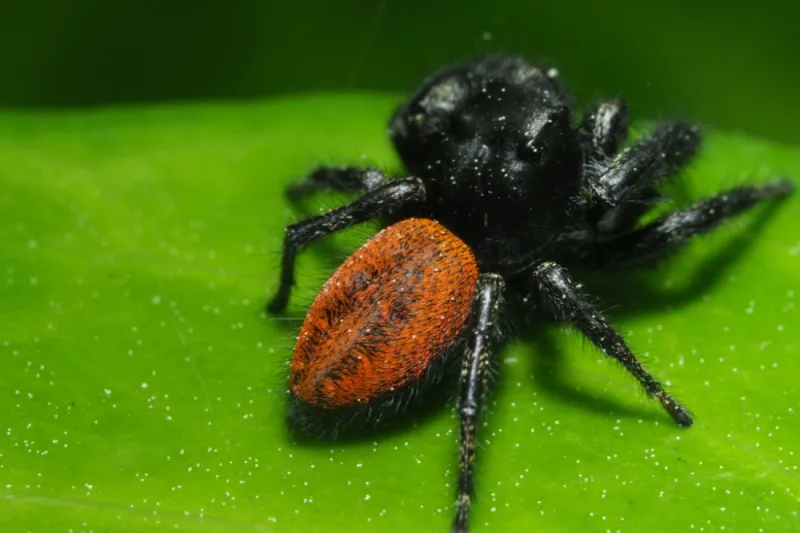
In a 1977 field study, researcher R. R.
Jackson watched what the western jumping spider Phidippus johnsoni ate. In his report on the spider’s prey, aphids showed up in four of 33 recorded prey observations.
That is real evidence that aphids are on the menu. It is also a small number.
Four sightings tell us aphids are one food among several, not the main one.
The same study recorded flies, bees, and other spiders as prey. Bees and other spiders are not pests at all.
The paper describes this spider as a generalist predator, meaning it takes a wide range of animals rather than specializing in one.
Here is what that means in practice. A jumping spider may eat aphids.
The study does not show how often spiders eat aphids on patio plants, and it does not measure how much aphid control they provide. It simply documents prey for one species in the field.
Think of it like a neighbor who sometimes eats at a salad bar. You know salad is among the choices, but you cannot promise your lettuce will be the one they pick.
What leaving a spider on the plant can—and cannot—do
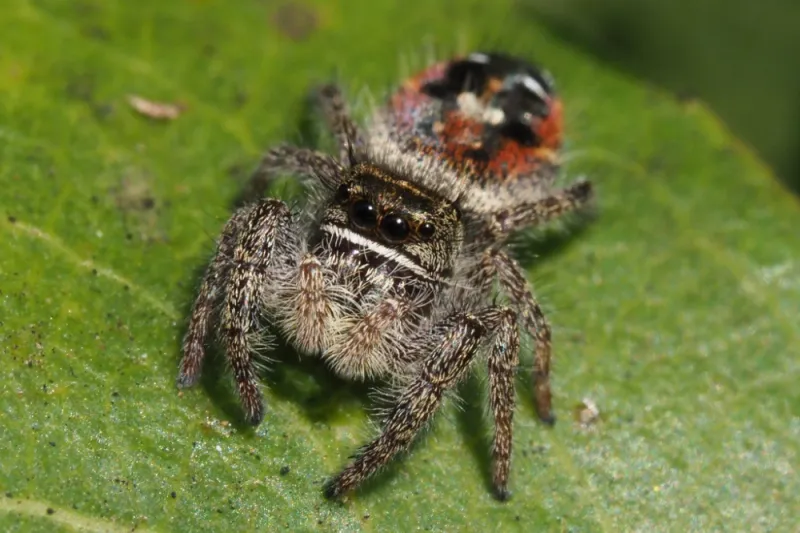
Leaving a spider alone keeps one more small hunter in your garden. UC IPM advises protecting garden spiders because they prey on insects and other pests.
A jumping spider that stays put remains a potential predator of small arthropods around your containers.
Now the limit. Nothing in the field study or the UC guidance shows that one spider will prevent or clear up an aphid infestation in a pot.
The research documents what a spider ate, not how well it protected anyone’s plants.
It also does not tell you that the spider on your plant is eating aphids right now. It might be after a fly, or just passing through.
A practical way to picture it: the spider is a bonus, not a plan. Tolerate it as one part of a lively patio, and keep watching your plants the way you always would.
Look at the undersides of leaves and the tips of new growth, where aphids tend to gather. Sticky leaves or curled, distorted shoots are clues that something is feeding.
If you see those signs, the next steps are up to you, not the spider.
Leave it outdoors, and do not handle it
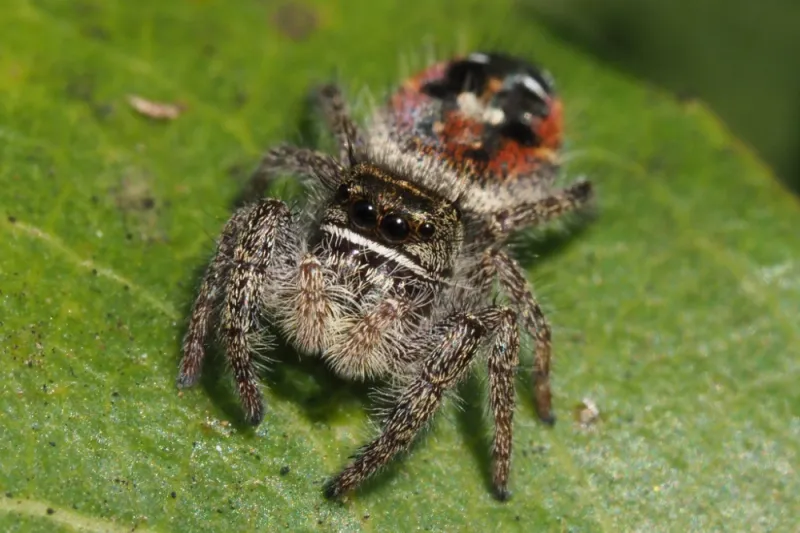
Tolerating a spider is different from touching it. UC Davis describes jumping spiders as generally harmless, but notes they may bite if threatened.
So bites are possible, and the easiest way to avoid one is to leave the spider undisturbed.
Skip picking it up, cornering it against a pot rim, or squashing it. A frightened spider has only a few ways to defend itself, and a bite is one of them.
Watching from a bit of distance works fine, and these spiders are fun to watch.
Not every California jumping spider is the same. UC IPM notes that P. johnsoni may bite if disturbed, usually without serious effects.
That is a reason for care, not for fear.
When you water or prune, move slowly and check the leaves first. If a spider is in your way, a gentle breeze from your hand or a few minutes of patience often sends it elsewhere.
Work around it where you can.
If one wanders indoors, that is a different situation. The advice here is about spiders living on your outdoor plants, where they can simply be left to go about their day.
Check for aphid damage and act when needed
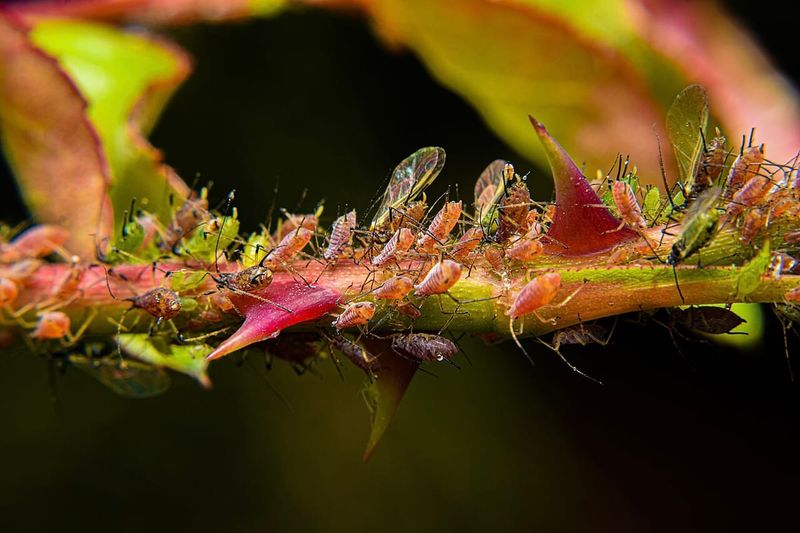
A spider on the patio is not a replacement for plant care. Check your containers regularly and decide whether aphids are actually harming the plant.
A few aphids on a healthy plant may not need any action at all.
When damage is clear, UC IPM recommends nonchemical steps first. On a sturdy plant, you can prune off infested leaves or knock the aphids off with a strong stream of water from the hose.
Do the spraying early in the day. That gives the plant time to dry quickly, which is kinder to the foliage.
Repeat checks over the following days to see whether the aphids come back.
If those steps are not enough, soap or oil products are an option, but UC IPM attaches cautions. Avoid applying them in very hot conditions, which matters on a sunny California patio in summer.
Do not use them on drought-stressed plants, and remember that some plants are sensitive to them. Water the plant well first and test a small area if you are unsure.
Notice what this plan does. You are dealing with the aphids directly, and the spider is free to stay where it is.
If you spray, try to do it away from the spider when you spot it, and keep your treatment limited to the plants that need it.
Keep the spider outdoors; keep watching the plant
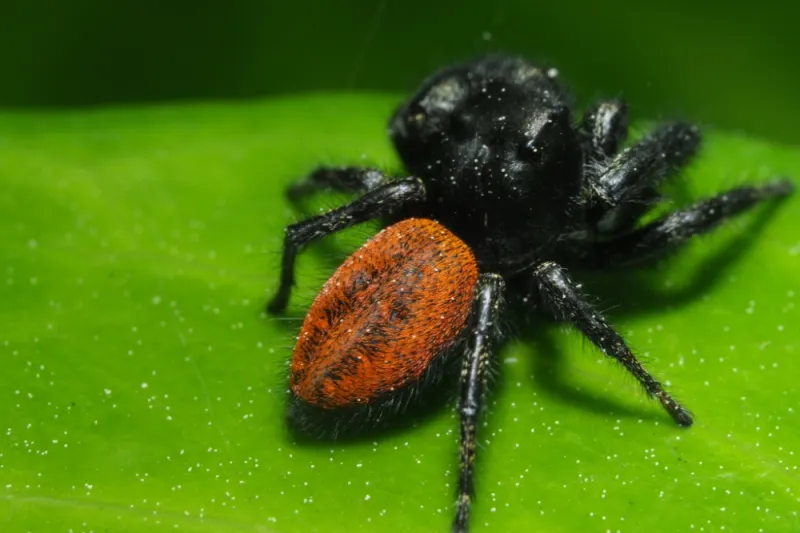
Let the jumping spider stay outside, leave it alone, and keep an eye on your plants. Phidippus johnsoni has been recorded eating aphids, but that does not mean the spider on your pot is eating them or will control an infestation.
If leaves are being damaged, return to the UC IPM steps of pruning or spraying with water. The spider is a welcome guest, and you are still the gardener.