
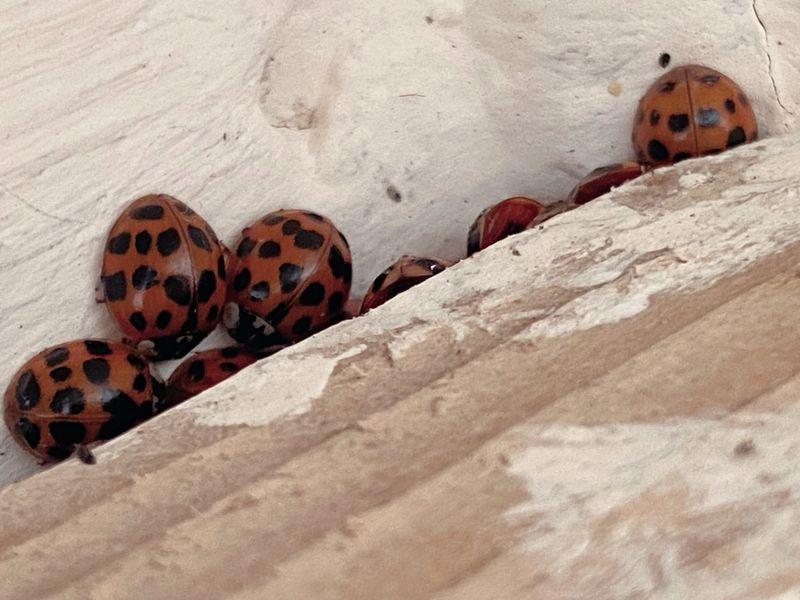
Spot an orange clump of beetles on a stem or under leaves in winter, and your first instinct might be to brush them off or spray them. Many of those clusters are lady beetles, and some of them eat aphids for a living.
Whether they help your own yard is less certain, because beetles move around and species look alike. Here is how to tell when to hold off, and how to handle aphids without hurting helpful insects.
An outdoor winter cluster is a reason to pause
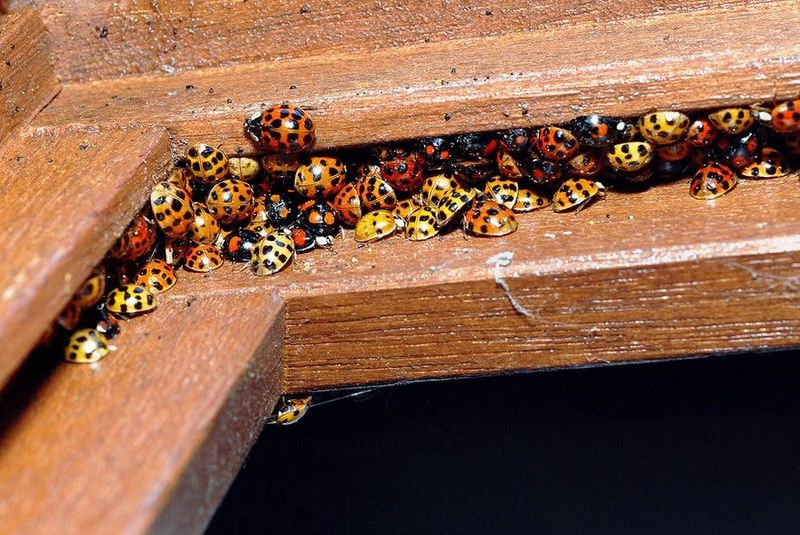
Finding a pile of tiny beetles in the garden can feel alarming, especially when you have no idea what they are. Plenty of well-meaning gardeners reach for the hose, a broom, or a spray bottle.
That impulse is understandable, and it is easy to correct.
Many lady beetles are predators. UC IPM notes that the convergent lady beetle, a common California species, feeds on soft-bodied insects, especially aphids, and its larvae hunt prey too.
Adults gather in groups to ride out the cold months, which is why you might see them clumped together.
So the simple advice is to avoid spraying or sweeping away an outdoor cluster just because it is there. Leaving it alone costs you nothing, and it may spare insects that could feed on aphids once the weather warms.
This is not a rule for every beetle in every situation. If beetles are gathering inside your house, that is a different problem with different solutions.
And a cluster on a fence post or shrub is not a promise of anything. The beetles may fly off on a warm day, and what they will do next depends on weather, food, and habitat.
Before you decide anything, it helps to know what you are looking at. Color is the first thing most people notice, and it turns out to be a poor guide, which brings us to identification.
Orange color alone cannot identify the beetles
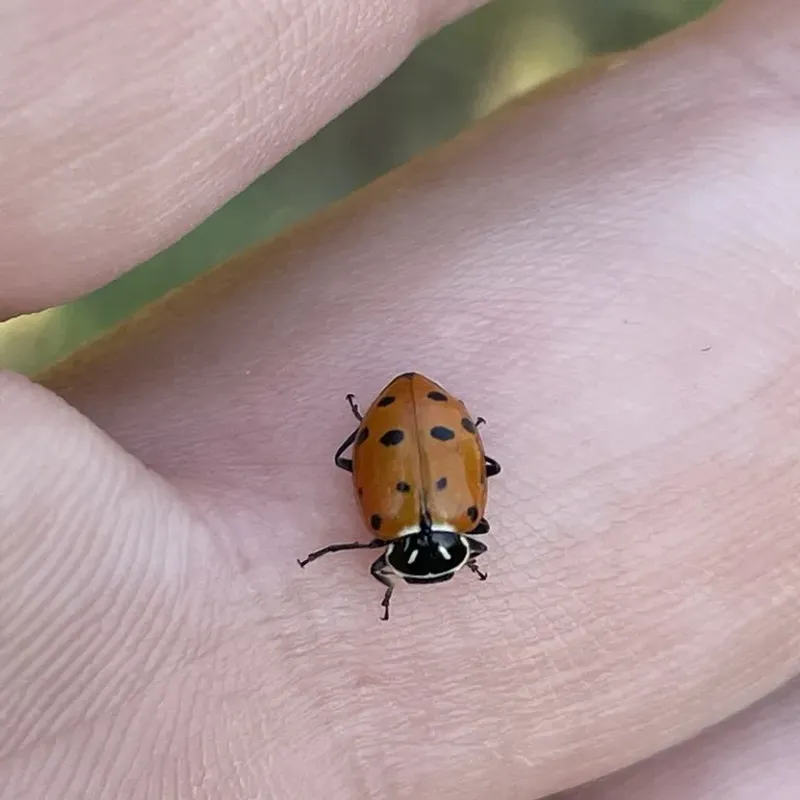
Orange is not a name tag. California is home to many lady beetle species, and color and spot patterns vary quite a bit.
UC IPM points out that even convergent lady beetles can have anywhere from zero to 13 spots, so counting dots will not settle it either.
Another look-alike enters the picture. The multicolored Asian lady beetle also varies widely in color and markings, and it eats aphids as well.
It can form overwintering clusters too, often on buildings, as Illinois Extension explains. So a cluster of orange beetles could be one species or another, and you cannot reliably tell by eye.
That does not mean you need a specimen jar and a field guide. It means you should treat the cluster as a group of possible helpers and avoid assuming the best or the worst about it.
A cluster stuck to the siding of your house is more likely a problem to manage than one resting on garden vegetation.
One more mix-up is worth clearing up. Clusters of adult beetles are not eggs.
Lady beetle eggs are small, yellowish or orange, and football-shaped, and they are usually laid in groups on plants. If you see tiny upright ovals on a leaf, that is a different stage of the life cycle, and likely a promising sign for aphid-eating larvae later.
Where California lady beetles spend the winter
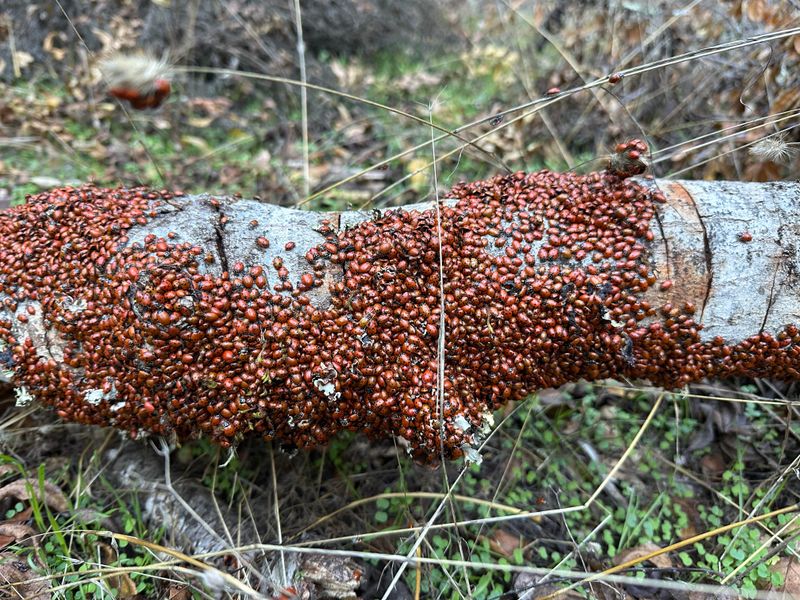
The biggest winter gatherings of convergent lady beetles are not typically in backyards. UC IPM describes these aggregations as commonly found on low-growing vegetation in moist locations, and says much of California’s population winters in the foothills of the Coastal Range or the Sierra Nevada.
The National Park Service gives a vivid picture of this. At Pinnacles National Park, groups of ladybugs shelter beneath fallen leaves and ground litter near streams.
Think of a damp, protected spot where the beetles can stay put through cold weather.
That context matters for your garden. A winter cluster at home is not necessarily typical, and large masses are best documented in mountain and foothill habitats.
Some lady beetles do overwinter in garden spaces, but you cannot count on a big group showing up every year or on a particular group sticking around.
When winter loosens its grip, the beetles move. In California, convergent lady beetles migrate back to lower elevations in late winter.
The park service describes aggregates breaking up in spring, with return flights to valleys and fields when conditions allow. Timing depends on weather, so there is no calendar date to mark.
If you have a cluster on your property, treat it as a snapshot of a species on the move. It may be resting for a few weeks, or it may leave on the first warm afternoon.
Lady beetles eat aphids, but a cluster cannot promise control
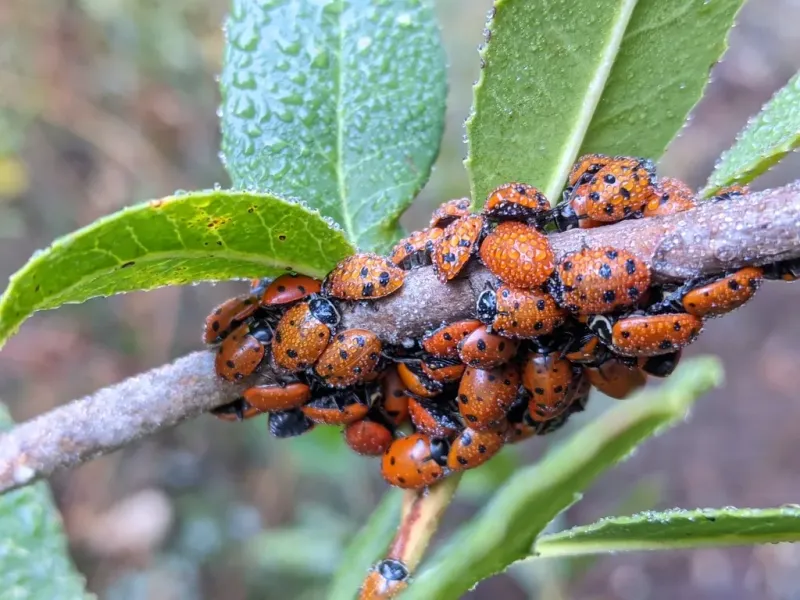
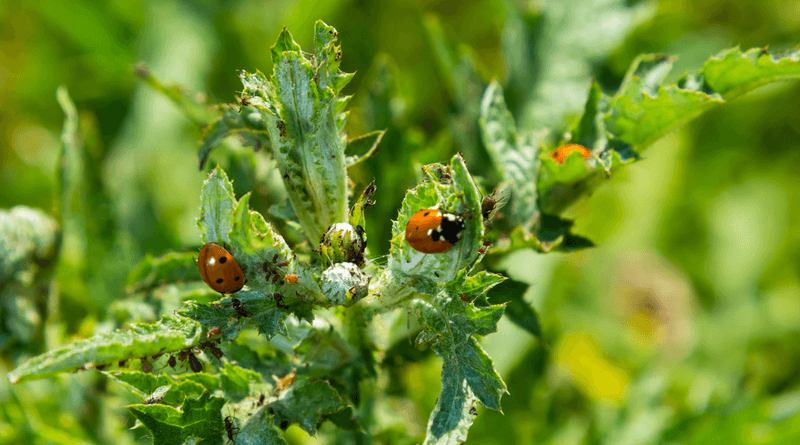
Once the weather warms, convergent lady beetles get busy. UC IPM reports that adults eat aphids and other soft-bodied insects, and the larvae hunt too.
Older larvae and adults can consume whole insects. Feeding and egg-laying are part of their active season, and the park service’s account of spring return flights describes the same cycle, according to Pinnacles National Park.
This is the reason conserving natural enemies makes sense. A garden with predators already in place has a head start on pests, without any extra effort from you.
Still, a winter cluster does not guarantee aphid control in your yard. The beetles may disperse before aphids show up, or they may head to a different neighborhood altogether.
Even when some stay, numbers matter. UC IPM notes that high numbers of lady beetles may be needed to bring aphids down, so a small group may not be enough.
Timing is another wild card. Aphids can build up quickly on new spring growth, and predators may arrive early, late, or not in useful numbers.
They are also not the only helpers. Lacewings, syrphid flies, and parasitic wasps can pitch in, though each yard differs.
A practical way to think about it is that lady beetles are a possible benefit, not a guaranteed one. Keep an eye on your plants in spring, look for larvae and eggs among the aphids, and let that tell you how much help is actually on the job.
Protect beneficial beetles while managing aphids
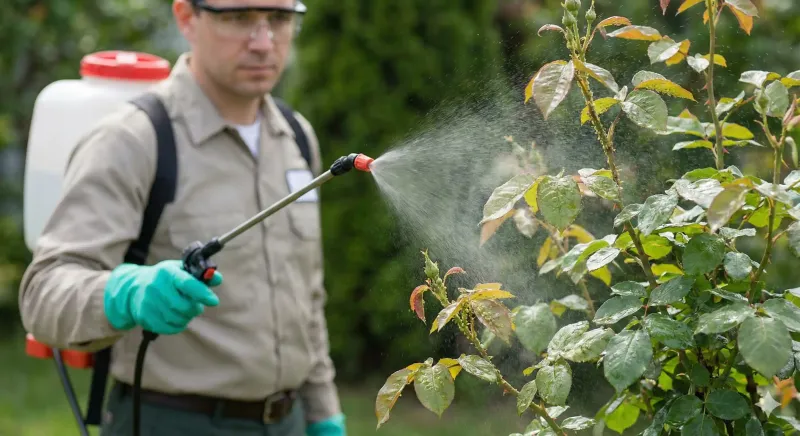
Protecting predators comes down to what you spray and when. UC IPM advises avoiding nonselective, persistent insecticides when possible, since they can harm natural enemies along with the pests.
A broad spray across the whole yard is not compatible with keeping lady beetles around.
If aphids are truly causing damage, start with gentler steps such as a strong blast of water on infested stems or pruning off heavily infested tips. If you decide a pesticide is warranted, use a targeted spot treatment on the affected plants and follow every direction on the product label.
Skip the plants where beetles, larvae, or eggs are present.
You might wonder about buying lady beetles at a garden center. It is not a dependable shortcut.
UC IPM says most purchased convergent lady beetles disperse within one or two days, even when aphids are plentiful.
That said, releases are not hopeless. A California Agriculture study found aphid reductions on potted roses and chrysanthemums.
Potted plants are a limited setting, though, so those results do not guarantee the same outcome in an open garden.
The steadier approach is to make your yard a place where beetles want to stay. Skip broad spraying, keep some flowering plants and low cover, and give the predators that are already there a chance to work.
Leave outdoor clusters alone when you can, then assess the garden
Here is the simple rule: if an outdoor cluster is not bothering anyone, leave it be. Do not count on its color to tell you the species, and do not count on it to handle your spring aphids.
When new growth appears, check your plants and see how many aphids there really are. UC IPM’s aphid guidance can help you decide what level calls for action, and its natural enemy advice favors targeted, label-compliant steps.
A beetle pile is a small clue, not a plan. Your own eyes on the plants will tell you more.