
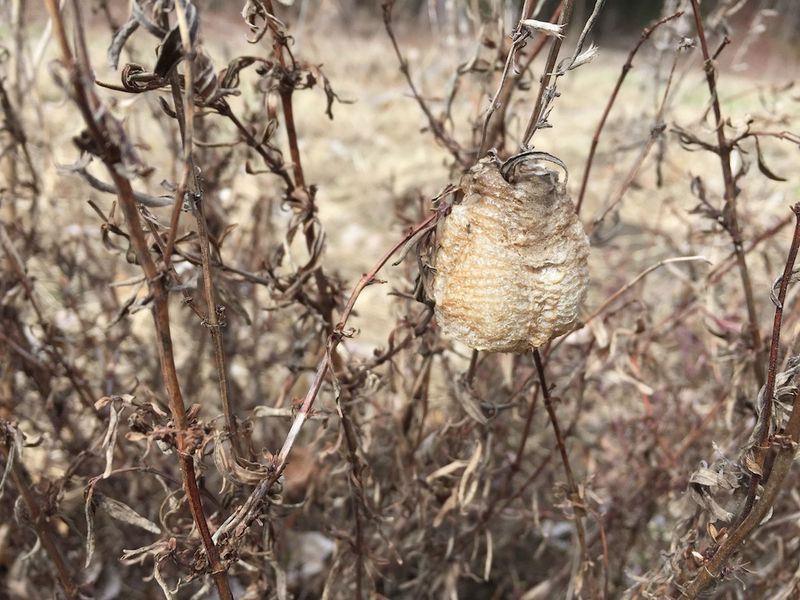
Maybe you have spotted a hard, foamy lump stuck to a twig while pruning your shrubs. It could be a praying mantis egg case, and cutting it off and tossing it can remove it from your yard.
Leaving one in place is a choice to give a possible mantis life cycle a chance. It is not a plan for aphid control, and this article explains the difference.
What is attached to the shrub?
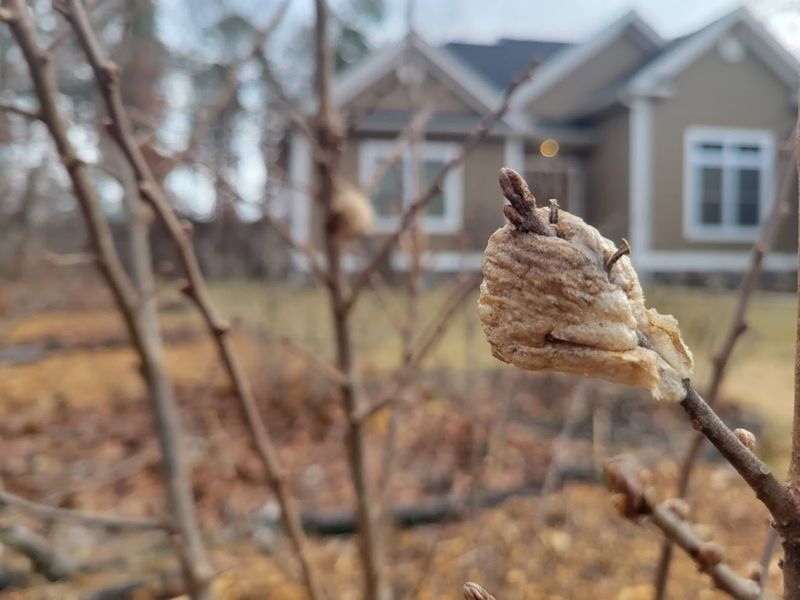
Sometimes a pruning job turns up a surprise: a firm, lumpy object stuck to a branch. If it is a mantis egg case, it is called an ootheca.
That is a hardened, protective case that holds a mantis’s eggs, and it is attached to a twig or another surface.
Think of it as a tiny shelter built by the mother mantis. The outer shell is tough, which helps the eggs inside get through weather and time spent exposed on a shrub.
The case does not move, so wherever it is glued is where it stays.
Plenty of other things can cling to twigs, so it is fair to feel unsure about what you are looking at. Appearance alone will not tell you which species laid a case, and this article will not pretend otherwise.
If you are not sure, a photo shared with your local UC Master Gardener program or a nearby extension office is a sensible step.
What makes the case worth a pause is what UC Davis Bohart Museum describes: mantises deposit their eggs in a protective case on a twig or other surface. That means a routine trim could take the whole thing with it.
You are not doing anything wrong by pruning. You just may want to know what is there before the clippers close, so you can decide on purpose.
California mantises overwinter as eggs
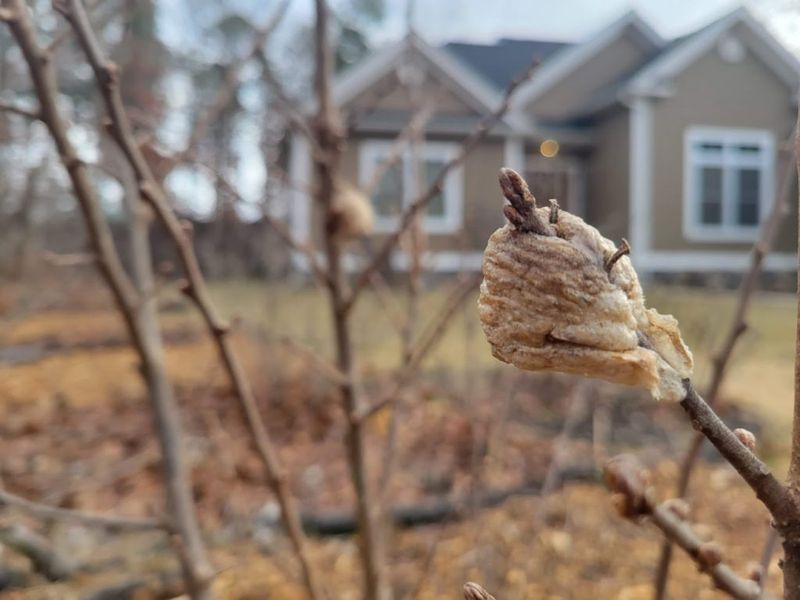
Winter is quiet in a California yard, but a mantis egg case is not empty. Mantises in California lay their cases in fall, and they pass the cold months in the egg stage.
The adults do not carry on through winter, so the eggs are how the next generation waits.
That life cycle explains why a case can sit on the same twig for months. It is attached, hardened, and built to stay put while the weather turns wet and cool.
A shrub you might trim back in late fall or winter may be holding one the whole time.
Spring is the usual broad idea for when things happen, but California is a big place. Coastal fog belts, hot inland valleys, and cooler foothills do not share one calendar.
The sources used here do not give a single hatch date for every species or every climate, so there is no honest way to circle a day on the calendar.
It also helps to keep expectations modest. A case you find may or may not be viable, and nobody can tell by looking at it from the outside.
The point of leaving one is simple: you are letting an overwintering egg stage stay where the mother put it, as the Bohart Museum’s notes on praying mantises describe, and seeing what comes of it.
An egg case does not identify a native species
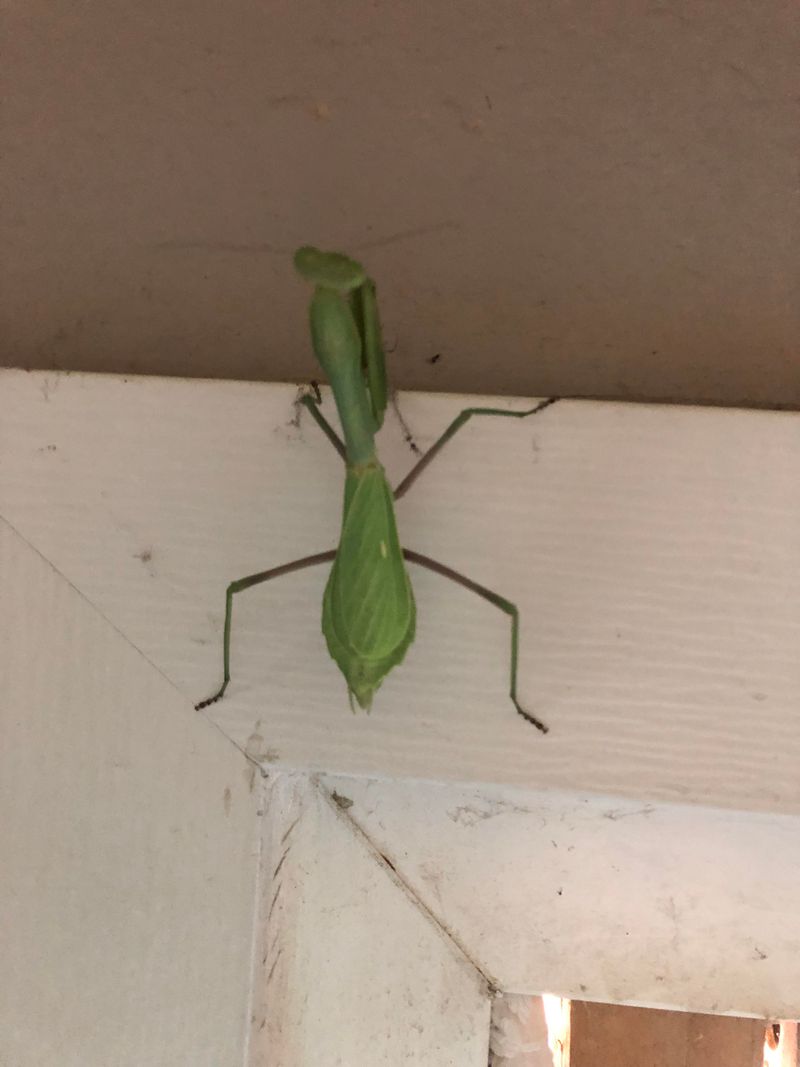
Here is a detail that surprises many gardeners: not every mantis in California is a local. The state has both native and introduced mantis species, and UC IPM lists several of each.
That means a mystery case on your juniper or rosemary should not be labeled native or beneficial just because it is a mantis. Neither the case nor the hatchlings come with a tag that says which kind they are.
You do not need a species answer before deciding to leave a case alone. Plenty of homeowners simply choose to let it be, the way they might leave a bird nest in a hedge.
Knowing the mix of species is more about keeping your description honest than about passing a test.
If you do want to learn more, watching the adults that show up later in the season can help, and local extension staff can point you toward good identification resources. Until then, treat the case as what it is: an insect’s overwintering eggs, nothing more and nothing less.
Prune around a case if you want to keep it
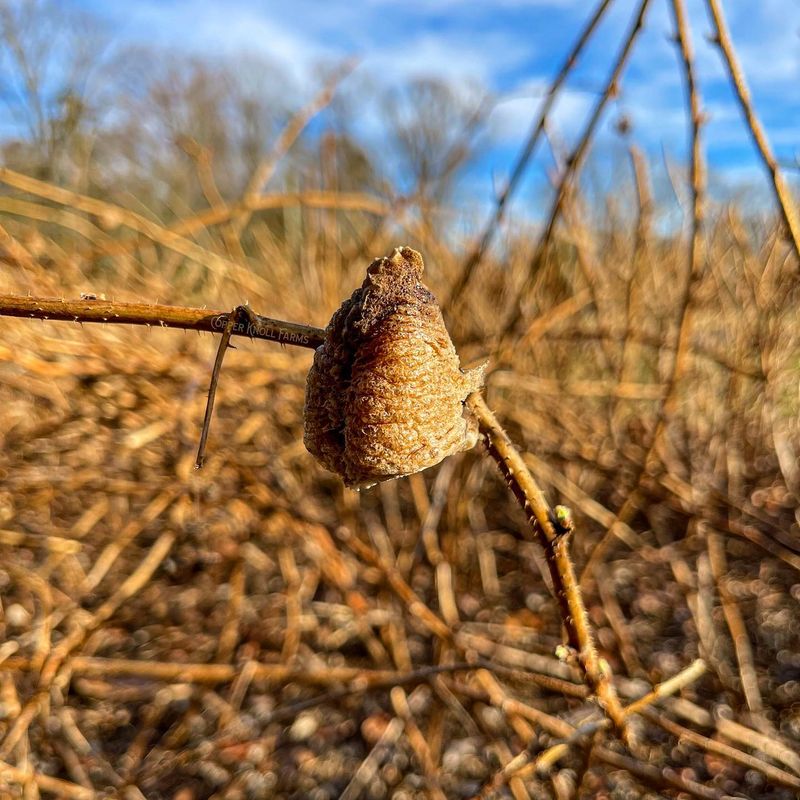
If you decide to keep a case, the action is small. Tie a bit of bright yarn or flagging tape near it, or drop a note in your phone with the shrub’s location.
Then trim other branches as usual and skip the one twig that carries the case.
The reason is narrow, not dramatic. When a twig with a case is cut off and thrown away, the case leaves your yard with it.
That is the whole point, and it is a point about that one case, not about all pruning.
Routine shaping is fine, and a cut does not mean every egg is lost. Material that is clipped and left in a pile might still be home to a case, though nobody can promise what happens to it.
What the Bohart Museum’s notes describe is overwintering on an attached surface, so keeping the twig in place is the surest way to keep the case where it was laid.
Sometimes the twig is in the way of a path, a wire, or a branch that needs to come out for fire safety. In that case, you can choose what matters most for the spot.
You might also tuck the cut piece gently into another shrub, though there is no guarantee it will work. Either way, you are making an informed choice.
Why mantises are not an aphid patrol
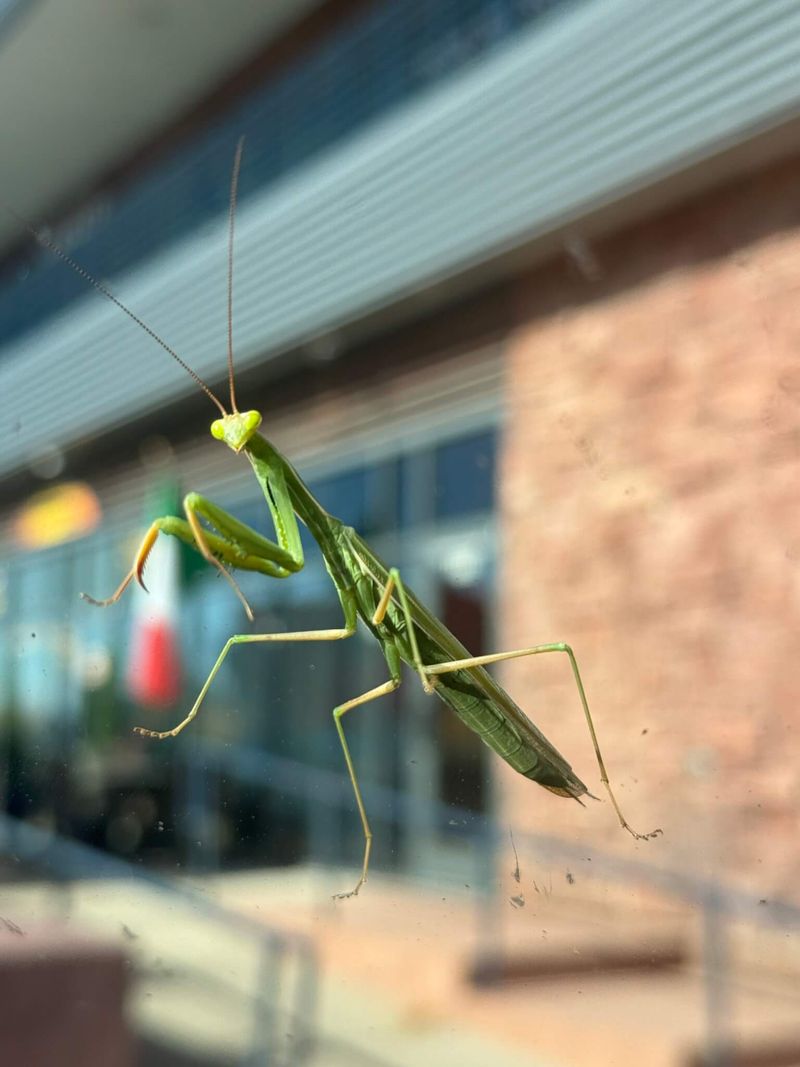
Mantises are fascinating hunters, but they are not a pest-control crew. They sit still and ambush whatever insect wanders close enough to grab.
That can include bees, butterflies, and other helpful insects along with pests.
According to UC IPM, mantids are of no benefit for biological pest control. Each one eats relatively few insects, so the total effect on a garden is small.
Aphids are a good example of why this matters. NC State Extension notes that mantids do not seek out common garden pests such as aphids.
A hatchling may eat one now and then, but it is not hunting them down.
Being a predator is not the same as being a targeted aphid fighter. A tool that works well against aphids goes after aphids, and a mantis simply does not.
That is why the old line about a free pest patrol does not hold up, and why leaving a case should not be counted on to cut aphid numbers.
There is also no promise that hatchlings will stay on the shrub where the case sat. They may disperse, and there is no way to know ahead of time.
If you leave a case, think of it as giving a wild insect a chance to complete its life, not as installing pest protection.
Manage visible aphids separately
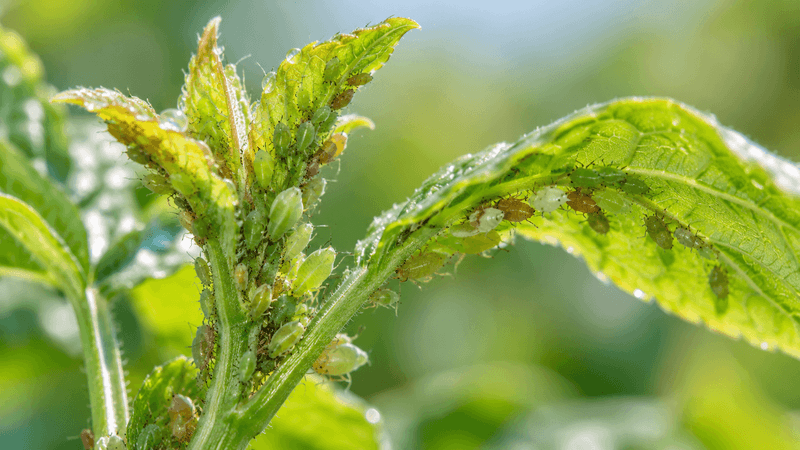
When aphids show up, deal with them directly. UC IPM’s aphid guidance starts with something simple: on sturdy plants, knock them off with a strong stream of water.
If the colony is limited to a few curled leaves or shoots, pruning out those spots may help. Drop the clippings in the trash or green bin instead of leaving them under the plant.
Check the shrub again over the next few days so you can see whether more show up.
UC IPM also points out that natural enemies do best in gardens that avoid broad-spectrum pesticides. Those sprays can hit helpful insects along with pests.
Skipping them keeps the door open for the wider community of insects that already live in your yard.
That is a good match for the case you left on the twig. Keep it for its own sake, and manage aphids with the steps above.
Each job gets handled by the right tool.
A shrub can hold a quiet egg case and a few aphids at the same time, and a good gardener can look after both without confusing them.