
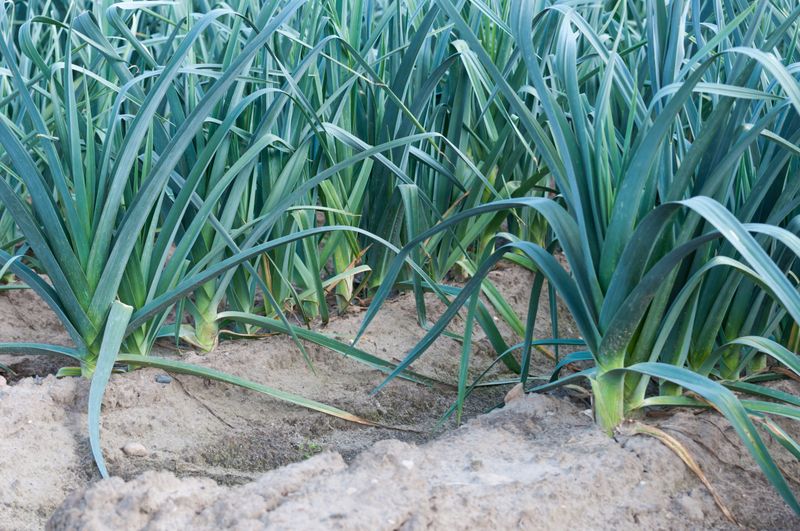
Pile a little soil around a growing leek and you can end up with a longer, paler shank that eats milder at the table. That is the real payoff of hilling, and it is not quite the same as making leeks sweet or keeping them safe from every freeze.
In the South, the right moment depends on how big your plants are, not just what the calendar says. Here is how to hill, when to skip it, and what actually helps with winter picking.
Hilling blanches the shank; it does not sweeten the leek
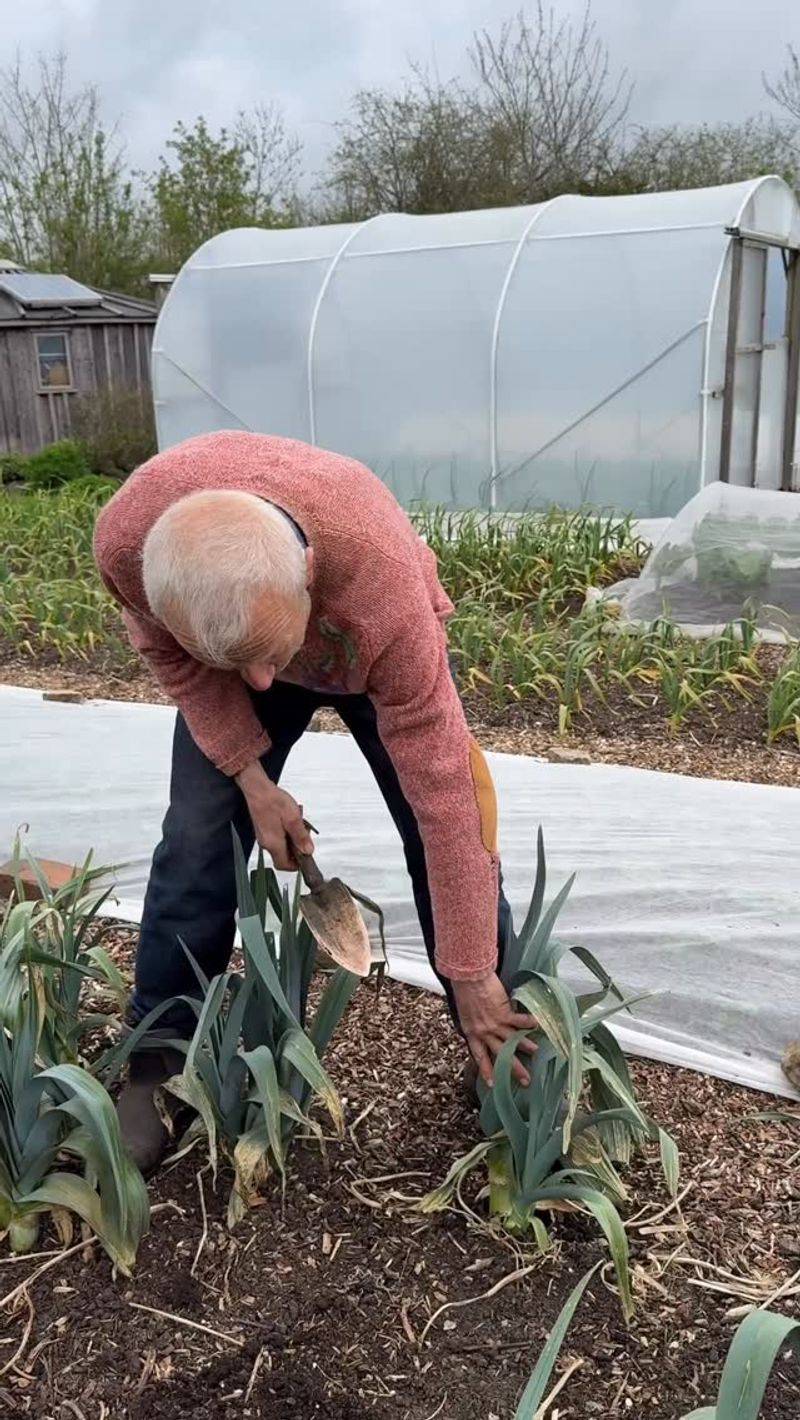
Soil piled around the lower stem blocks light, and that is the whole trick. Without light, the buried part of the leek stays pale, so you get a longer white shank.
Extension guidance, including UF/IFAS leek guidance for Florida, ties hilling to this blanching effect.
Gardeners often hear that hilled leeks turn sweet. The gardening sources do not back that up.
What they describe is a shank that is more tender or mild, which is a real and useful upgrade, just not the same thing as sweetness.
Hilling is also optional. Leeks grown without it are still edible, they just carry a shorter white section and more green.
If you like a long, pale shank for soups and sauteing, hilling is worth the small effort.
Blanching is also not winter protection. Soil mounded for light control is a different job from insulating the bed, and Maryland Extension treats mulch as the added step for cold weather.
Keep the two ideas separate and your plan gets simpler.
Use plant growth and local timing to decide when to hill
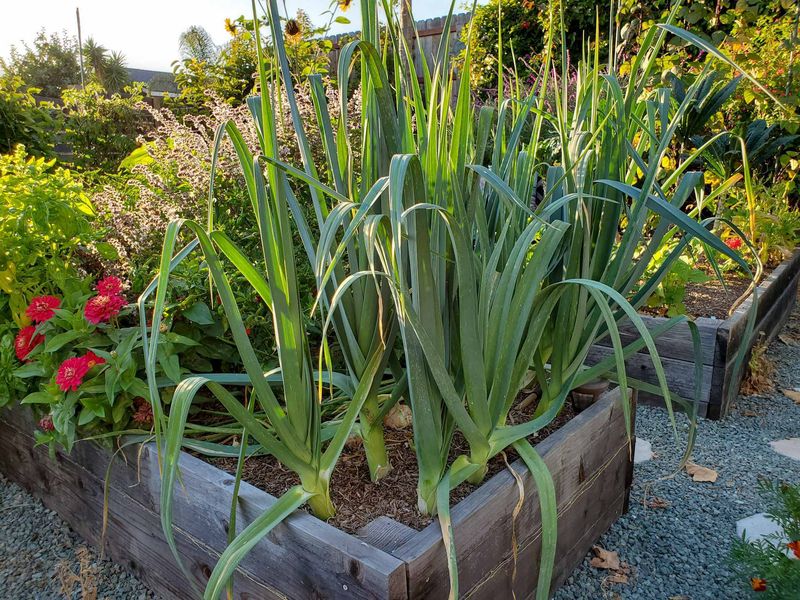
Plant size is a better signal than the month. Texas A&M AgriLife Extension says to start hilling once leeks reach about pencil size.
If your plants are thinner than that, they are not ready yet.
Southern planting windows vary a lot. UF/IFAS lists north Florida transplanting from November through January, while central and south Florida transplanting runs December through January, so a Florida bed planted in December will not look like a bed planted in October.
You can see the full regional picture in the UF/IFAS cultivation guide.
Some fall-planted leeks are indeed ready by November. The Southeastern Vegetable Crop Handbook notes that, though its planting dates differ by state and region.
So check your plants. Pencil-thick and actively growing?
Start hilling. Still thin seedlings or fresh transplants?
Let them grow first.
Add soil gradually around the lower stem
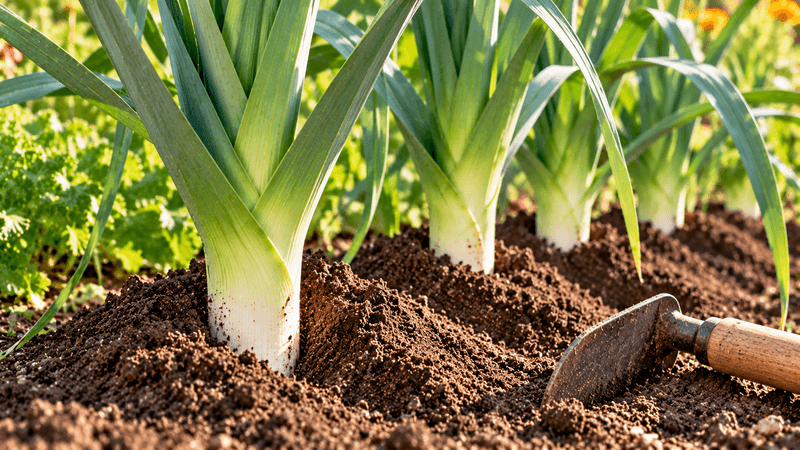
Think of hilling as a series of small top-ups, not one big mound. Pull loose soil in with a hoe or your hands, covering a bit more of the lower stem each time.
As the leek grows taller, add more.
Each layer should stop below the point where the leaves fan out. That keeps light off the shank while the plant keeps growing upward.
If you planted in a trench, you can fill it in step by step, which does the same job.
For a reference point, the Southeastern Vegetable Crop Handbook suggests gradually filling trenches and hilling to about 3 to 4 inches. Treat that as a guide, since your leeks and your soil may call for a little more or less.
Start when plants hit the pencil-size stage described by Texas A&M. Keep in mind that a final mound does not guarantee winter protection.
It only shades the shank.
Avoid burying young plants or filling the sheath with soil
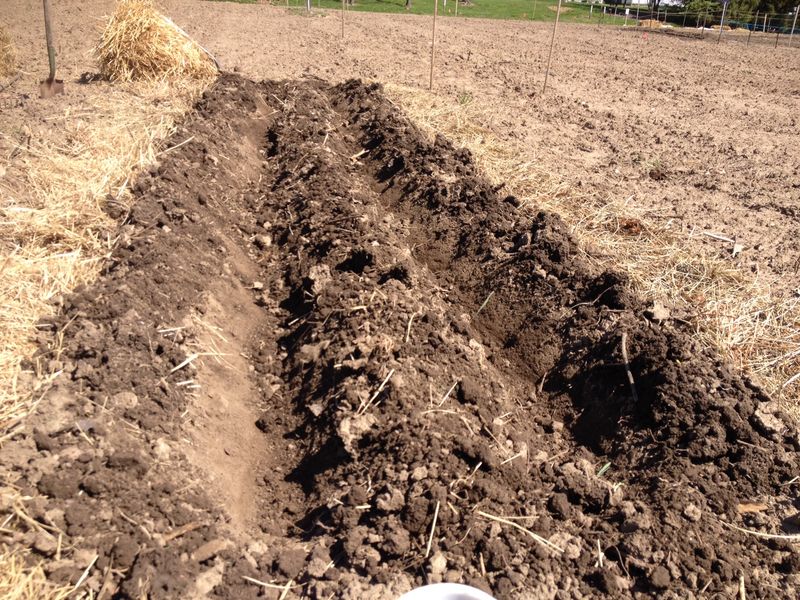
Hilling has two firm limits. Young leeks can rot if you bury them too deep, according to UC Cooperative Extension Master Gardeners of San Diego County.
Small plants need time to size up before they get much soil.
The second limit is the sheath. Soil that slips between the leaves ends up trapped inside, which makes gritty leeks that are a chore to clean.
A good habit is to push soil in from the sides and keep the center of the plant clear. Watch for the leaf fan, and stop each layer just below it.
If your plants look floppy or the base turns soft, pull some soil back and let air reach the stem.
These cautions are why gradual hilling works better than a big one-time pile.
Use mulch to make winter harvest easier
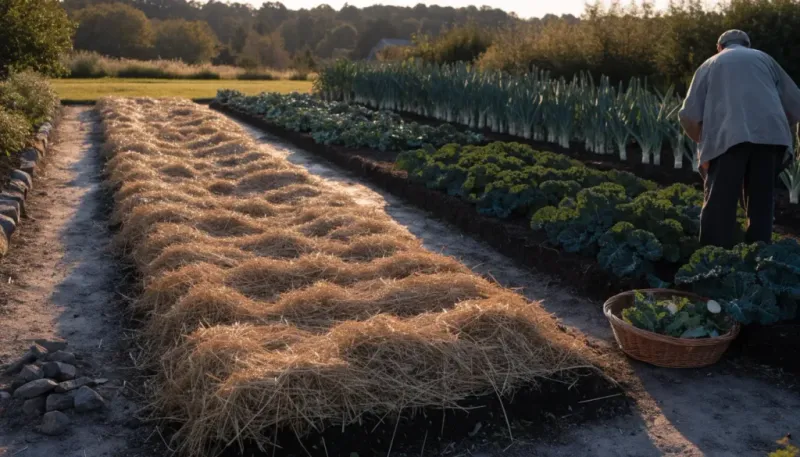
If you want winter help, reach for mulch. Maryland Extension recommends a heavy blanket of straw or leaves over leeks you plan to leave in the ground.
Wisconsin Extension adds that mulch can delay ground freezing and make harvest easier. That is a practical gain, since soil that stays workable lets you dig a leek when dinner calls for one.
Hilled soil is not a stand-in for mulch. It shades the shank, while mulch insulates the bed.
Many gardeners do both, hilling first and mulching as cold weather approaches.
Mulch also has limits. It does not stop every freeze, and a very hard cold snap can still damage plants or lock up the ground.
Think of it as a helpful buffer, not a guarantee.
Cultivar and frozen ground set limits on winter picking
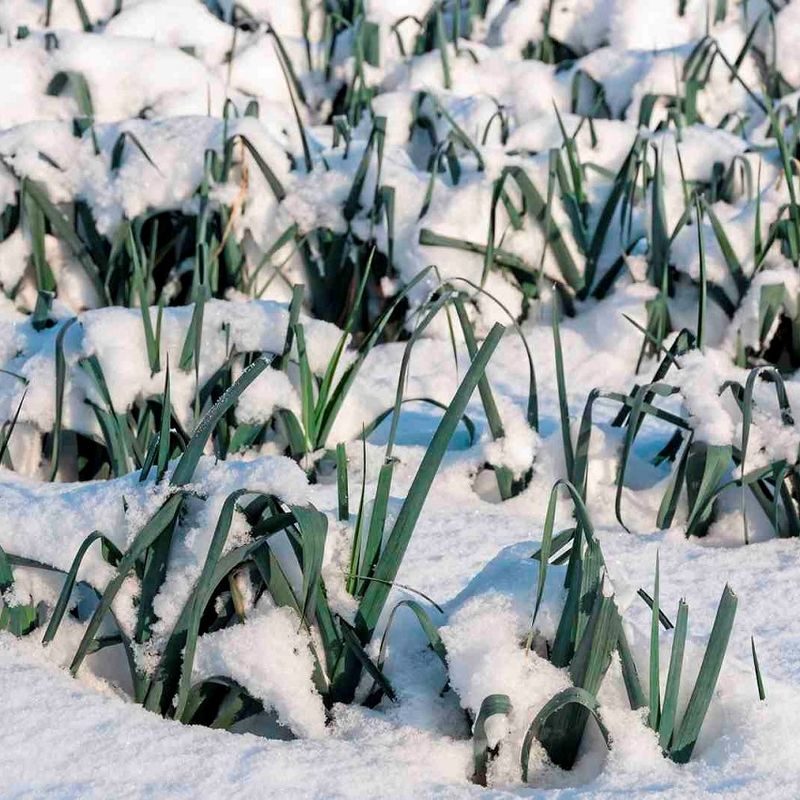
Not every leek handles cold the same way. Wisconsin Extension notes that hardiness varies by cultivar, so check the type you planted.
UF/IFAS gives about 23 degrees F for winter leeks, but treat that as a rough guide, not a promise for every variety or site.
A leek can tolerate cold and still be hard to pick. Once soil freezes solid, you cannot easily dig it, no matter how tough the plant is.
Wisconsin advises digging before the ground freezes in a typical winter there.
Utah State guidance draws a similar line. In Utah State University Extension notes, milder areas can leave leeks in the garden, while very cold areas should harvest and store them indoors.
Most Southern gardens fall on the milder side, but a hard freeze can still happen in north Florida or the Texas Panhandle. Know your local pattern and pick accordingly.
Hill for a blanched shank and mulch for the bed
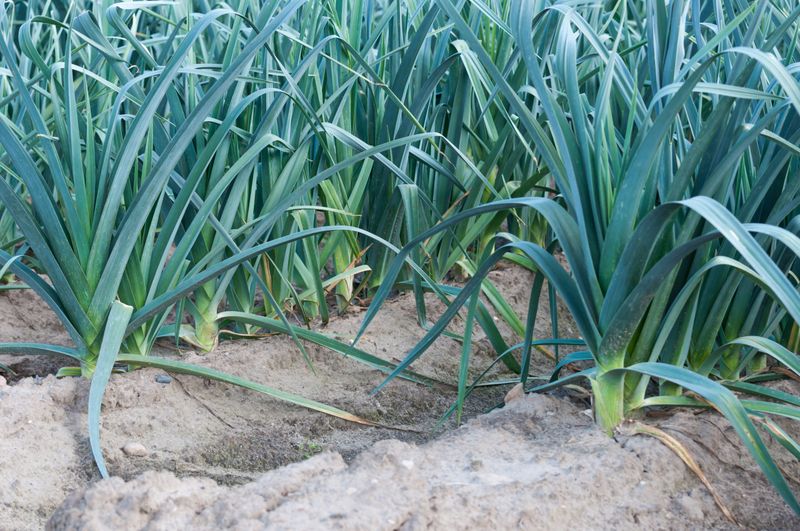
Hill leeks that are actively growing, a little at a time, and you can get a paler, milder shank. Add mulch where winter weather could make digging tough, and let plant size and your local calendar set the timing, as Texas A&M and Maryland Extension both frame it.
Soil shades the stem, and mulch eases the dig. Together they make a better leek bed than either one alone.