
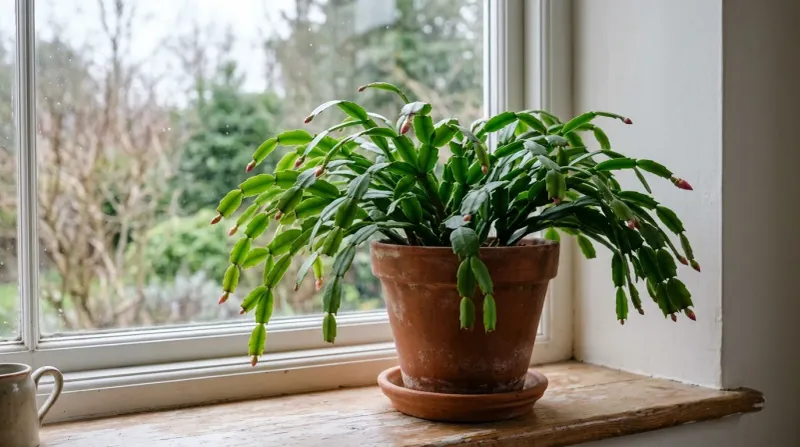
A Christmas cactus that keeps pushing out fresh green stem segments but never sets a bud can be frustrating. The plant is healthy, so why no flowers?
Night length is one clue gardeners can adjust, along with temperature and a few other habits. Here is a practical routine to try, plus honest expectations for when blooms may show up.
Leafy growth does not prove darkness is the problem
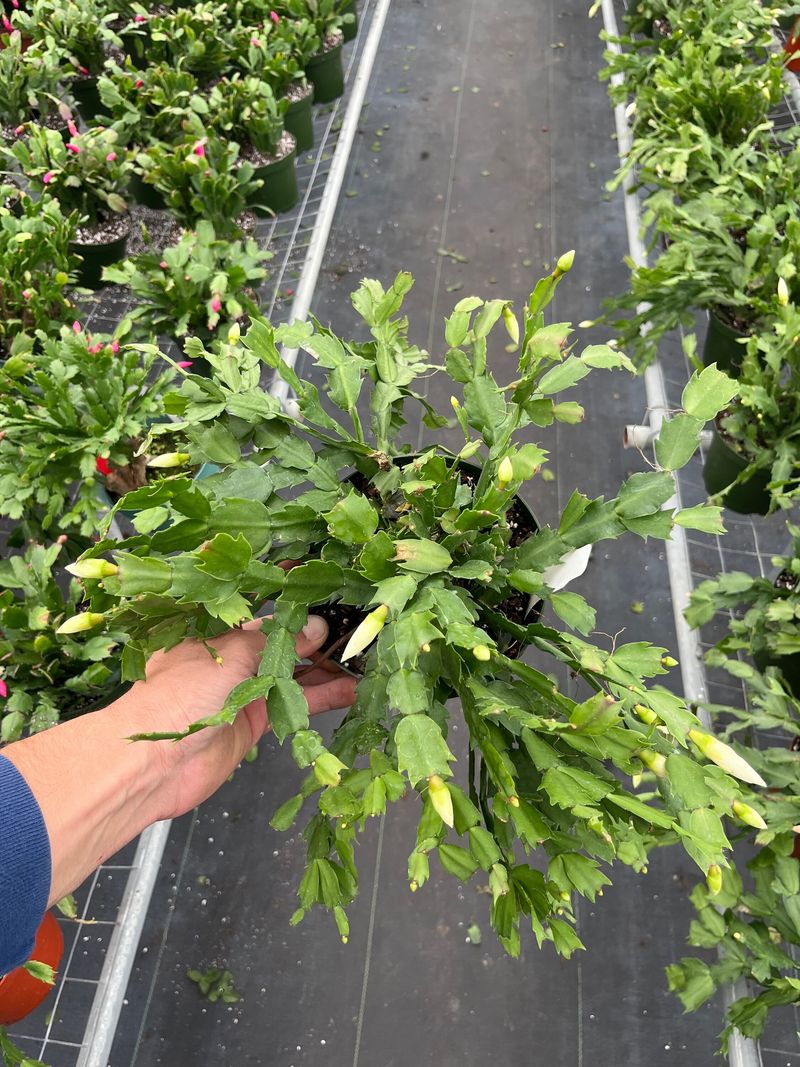
Lots of new green segments and no buds is a symptom, not a diagnosis. Holiday cacti grow stems when days are long, so leafy growth by itself is normal.
The real question is what is keeping the plant from switching into bud mode.
Too few long nights is one plausible cause. Temperature matters too, and Iowa State Extension explains that day length and temperature work together to control flowering.
A plant kept in a warm room with lamps on every evening has two strikes against it.
Cultivar plays a role as well, and UMass Extension notes that flowering time and response differ between varieties. Because of that, no single fix works for every plant.
Think of this as a set of adjustments you can try. Look at where the plant sits, how warm the room stays at night, and how much light it gets after sundown.
Then change one or two things and watch for buds over the next several weeks.
Long nights and cool conditions can encourage buds
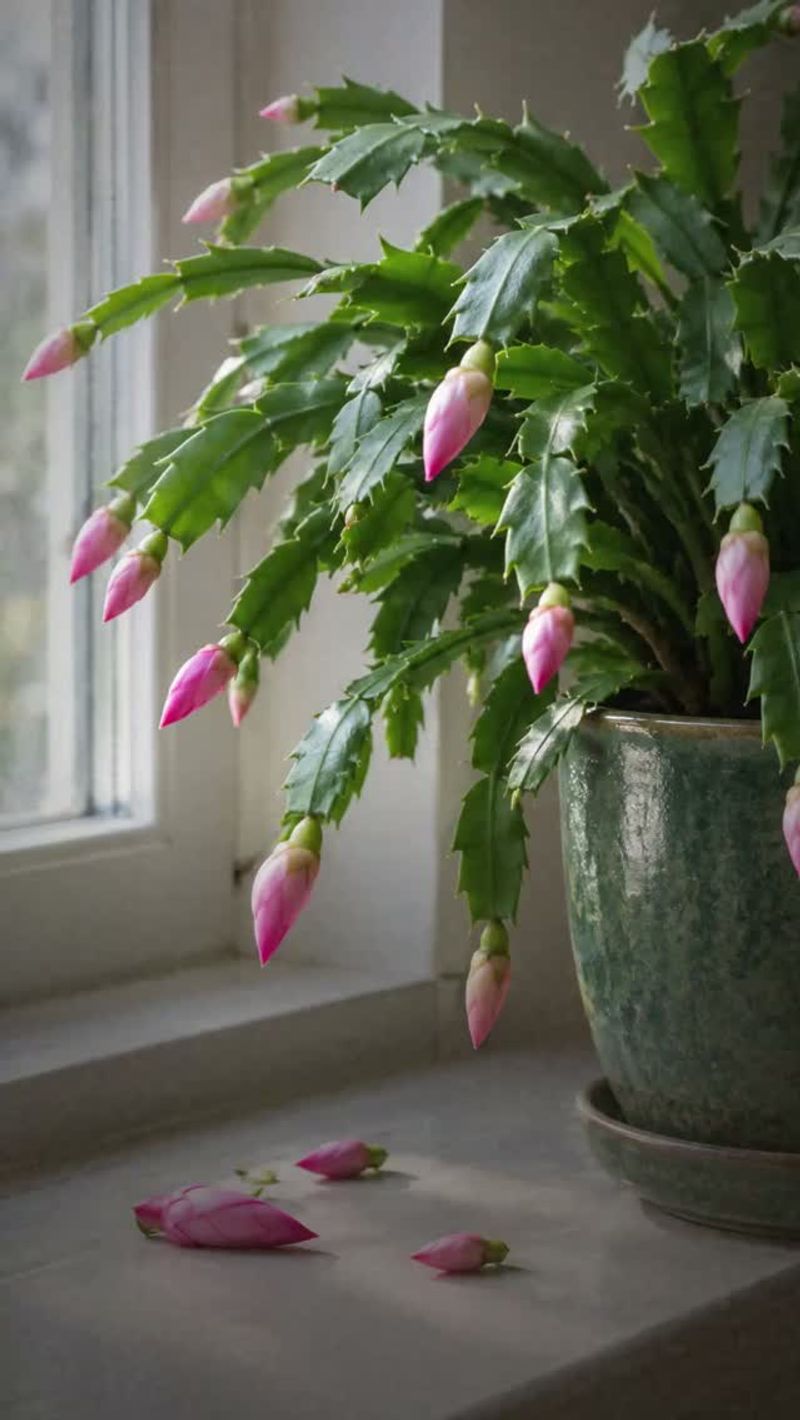
In nature, holiday cacti grow new segments during long days, then form buds as nights stretch out and the air cools. Indoors, that seasonal shift is easy to miss.
Porch lights, TVs, and warm rooms can keep the plant in growth mode.
The Iowa State holiday cactus guide describes this short-day response and the role temperature plays. Longer nights and cooler air work as a team, which is why a dark routine often works best in a room that is not hot.
Darkness is not the only trigger. UConn Extension and Illinois Extension both say nights around 55°F can induce flowering, sometimes regardless of night length.
That does not mean parking the plant outside on a cold night. Temperatures below 50°F can cause trouble, so aim for a cool indoor spot such as a spare room or an enclosed porch that stays mild.
Try 14–15 hours of darkness as a practical starting point
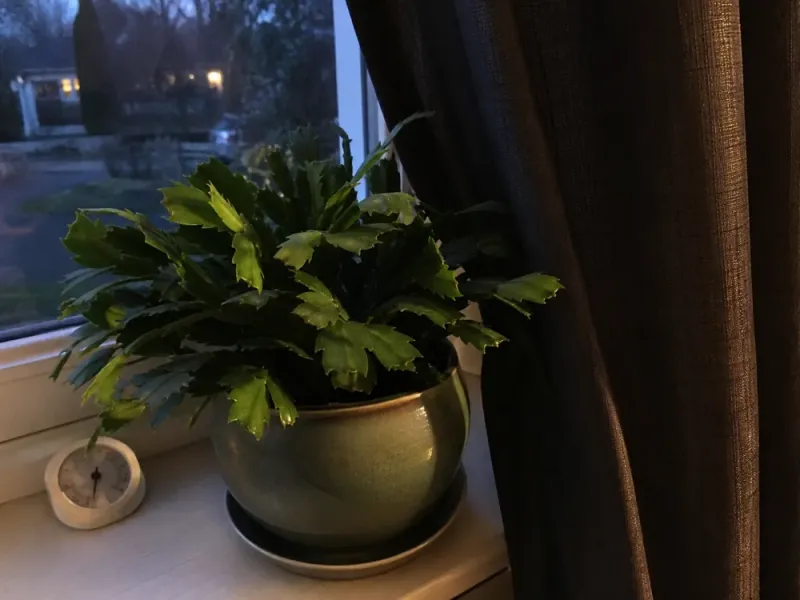
A handy starting routine is about 14 to 15 hours of unbroken darkness each night for roughly six weeks. Treat it as a place to begin, not a rule for every plant.
Guidance differs: Illinois Extension suggests at least 12 continuous hours, while Iowa State says most plants need 14 to 16 and a few may bloom with 12.
For a Florida example, UF/IFAS describes darkness from 5 p.m. to 8 a.m. for six weeks. Your schedule can shift to fit your home.
Pick a spare room that stays truly dark, or cover the plant each evening with an opaque box and uncover it in the morning. Keep lamps, kitchen lights, and TV glow away from it.
Regular or long stretches of light at night can get in the way of bud formation, and Iowa State warns against artificial light at night. Illinois Extension says an interruption of two or more hours may prevent buds from setting.
Stick with the routine, and expect buds to take weeks.
Keep days bright and temperatures cool, not cold
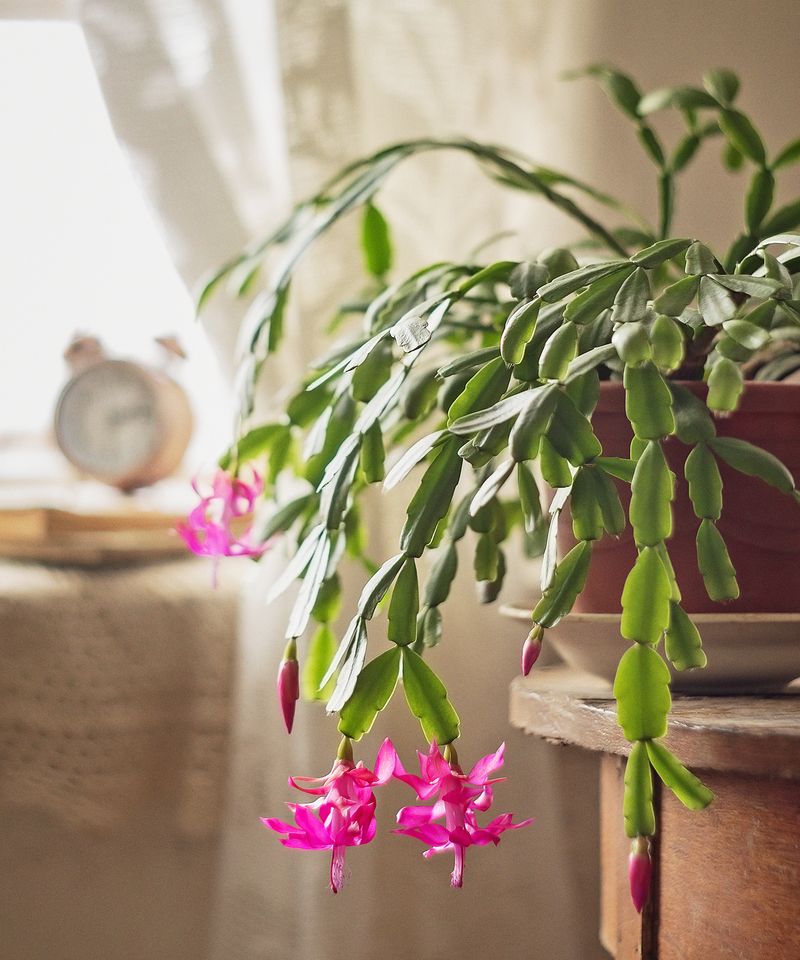
Darkness at night works best when daytime light is good. Park the plant in a bright spot with indirect light, such as near an east window, and keep it out of harsh afternoon sun.
A strong day gives the plant energy to set buds.
Temperature is the other half. Illinois Extension suggests daytime temperatures of 65 to 70°F and evening temperatures of 55 to 65°F.
Many Southern homes run warmer than that, so look for the coolest bright room you have.
Iowa State says temperatures above 70°F can prevent flowering. Ranges differ by source, and UMass commercial guidance gives a somewhat different range, so treat the numbers as a guide.
Cool should never mean cold. Illinois warns that temperatures below 50°F may cause buds to drop, so skip the cold porch or garage on a frosty night.
A cheap thermometer near the plant takes the guesswork out.
Keep watering steady while buds form
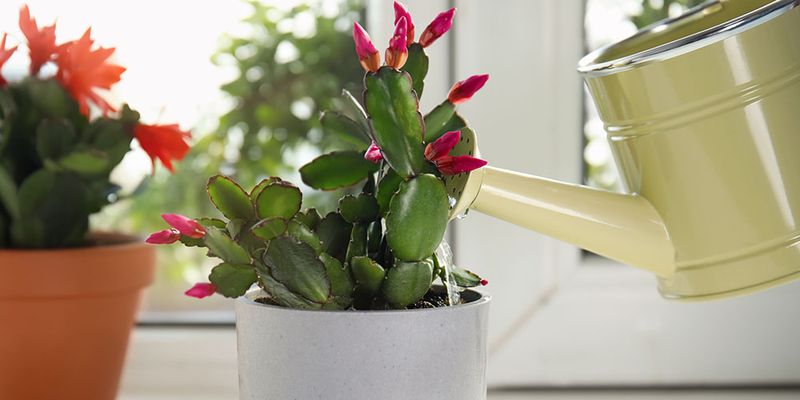
Some gardeners hear that letting the plant dry out will shock it into blooming. That advice can backfire.
UMass Extension reports that research does not support withholding water during flower induction, and that water stress can reduce bud set.
The University of Arkansas reports similar results, with fewer blooms from a dry-down treatment than from uniformly moist conditions.
So aim for steady care. Water when the top of the potting mix begins to feel dry, let excess drain away, and never leave the pot sitting in a full saucer.
Soggy roots cause their own problems, and a severely dried-out plant may drop segments or buds.
There is no magic calendar here. A plant in a cool room uses water more slowly than one in a warm sunroom, so check the soil with your finger rather than following a fixed schedule.
UF/IFAS care guidance also points toward consistent, moderate watering.
Once buds appear, keep conditions stable
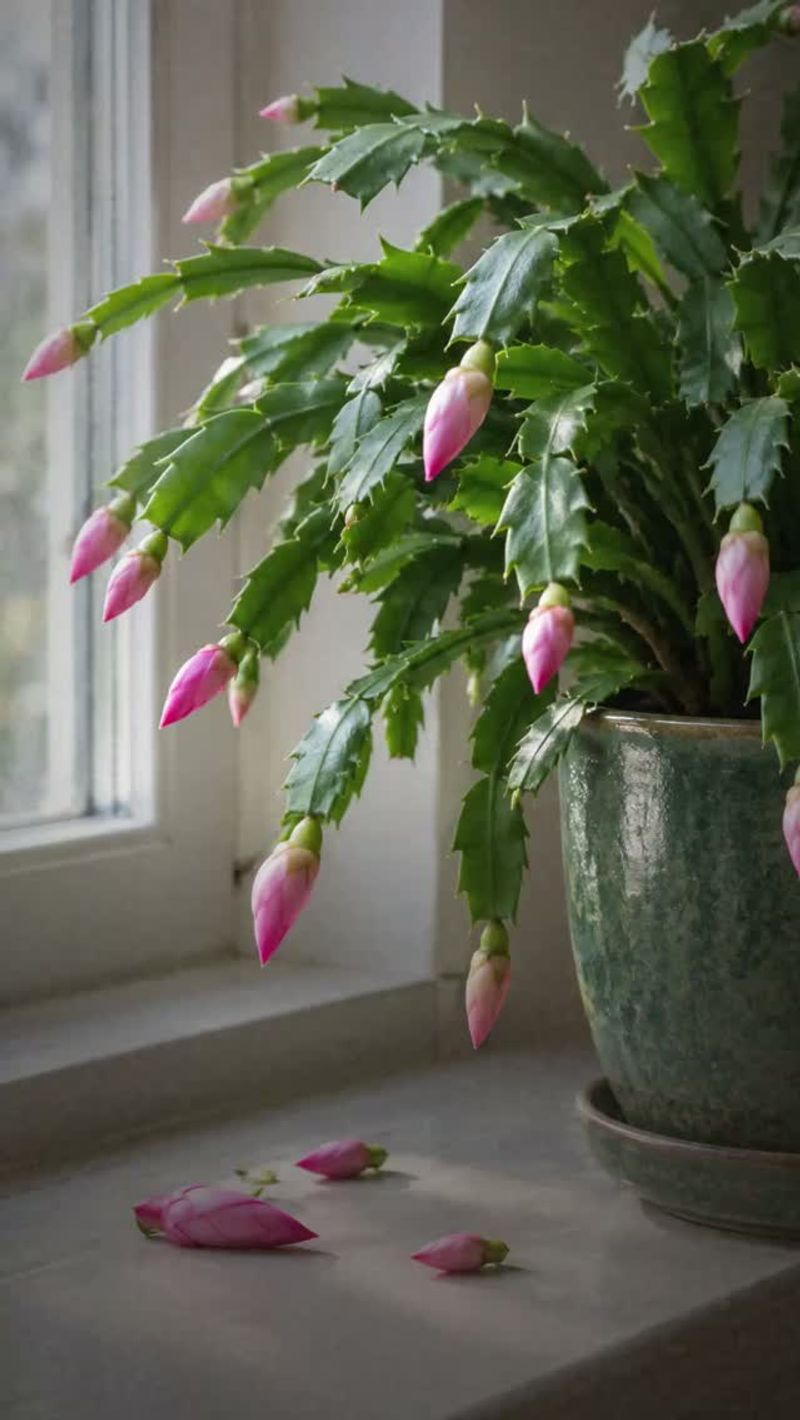
Tiny pink or red bumps at the stem tips mean the routine is working. From here the job changes from encouraging buds to protecting them.
Buds can fall off if the plant gets stressed.
The best move is often to leave the plant alone. Iowa State Extension advises against moving it or exposing it to sudden changes, since shifts in light, temperature, and watering can contribute to bud drop.
Skip the move to the dining table for a party until flowers are open, and keep it away from heating vents, drafty doors, and cold windowpanes. A plant that has settled into a spot usually holds its buds better than one that gets shuffled around.
Illinois Extension also links bud drop to stress such as cold exposure. If you notice a few buds fall, check for a draft or a recent change before you worry.
Plant identity and cultivar shape the bloom calendar
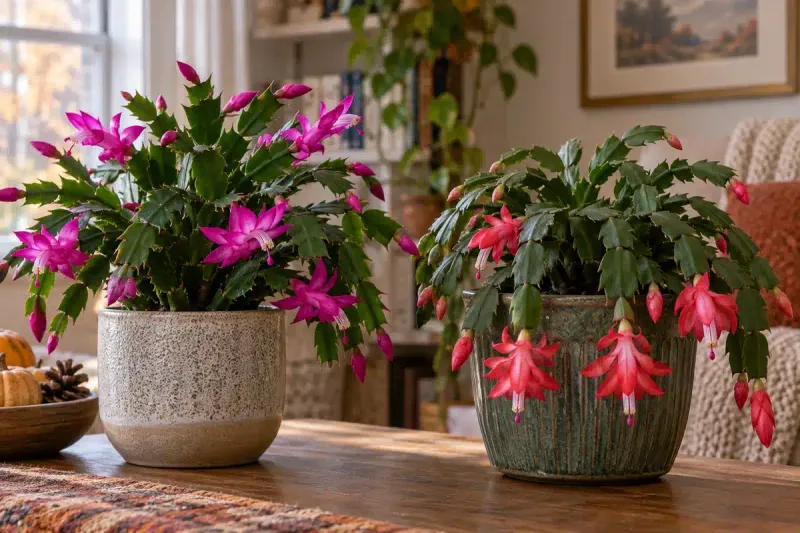
The plant on your shelf may not be a true Christmas cactus. Illinois Extension explains that many plants sold under that name are Thanksgiving cactus or hybrids.
Thanksgiving cactus commonly flowers earlier, so a plant with pointed, toothy stem edges may bloom before December on its own schedule.
Cultivars also differ. UMass Extension notes that flowering time varies between cultivars and from year to year.
A dark-period routine can encourage buds, but it cannot promise blooms on a given holiday. UF/IFAS offers an approximate timeline, with full bloom about ten weeks after starting, but that is a rough guide.
Judge your progress by buds, not the calendar. Tiny buds at the stem tips mean you are on track, and the flowers will open when the plant is ready.