
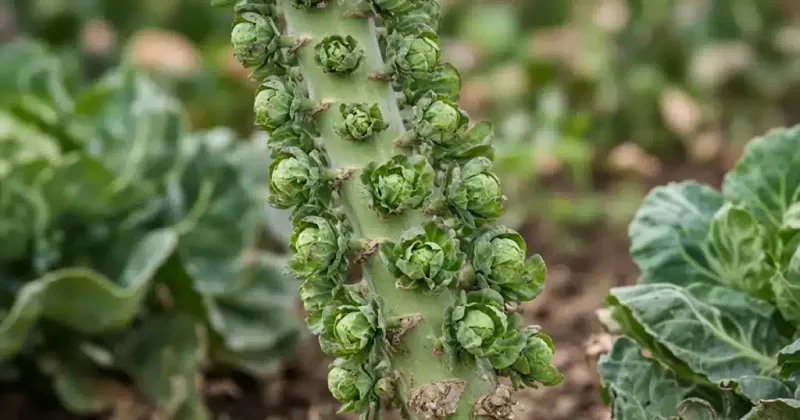
Few things are more disappointing than a tall Brussels sprout stalk covered in floppy, leafy tufts instead of tight little cabbages. Many Southern gardeners hear that pinching off the top of the plant is the fix.
The real story depends on what caused the loose sprouts, how far along the plant is, and when you plan to harvest. Here is how to sort it out before you reach for the pruners.
Why Brussels sprouts may stay loose
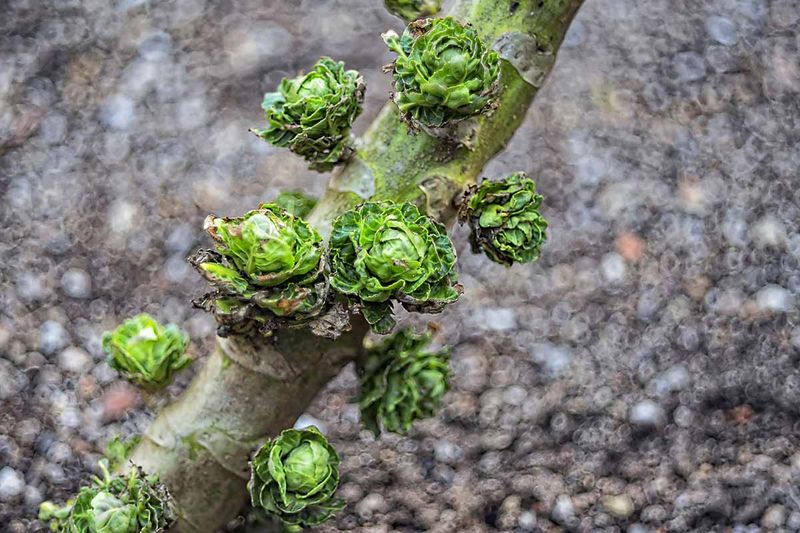
Brussels sprouts want cool weather while their sprouts are forming. When warm conditions hit during that stage, the little buds often open up into leafy tufts instead of packing tight.
Arkansas Extension guidance points to heat as a common reason sprouts stay loose.
Dry soil can add to the trouble. University of Maryland Extension notes that hot, dry conditions while sprouts mature may lead to bitterness or sprouts that fail to form compactly.
Keeping the soil evenly moist, without letting it dry out, is a sensible habit that may help later sprouts develop better.
Be candid with yourself about what watering can do. It will not close up sprouts that have already opened.
Heat during development is the problem you are looking at, and topping the stalk is not a cure for a heat-related issue. Sprouts that formed later in cooler weather, as noted in UC Master Gardener guidance, are the ones more likely to come in firm.
What topping can—and cannot—do
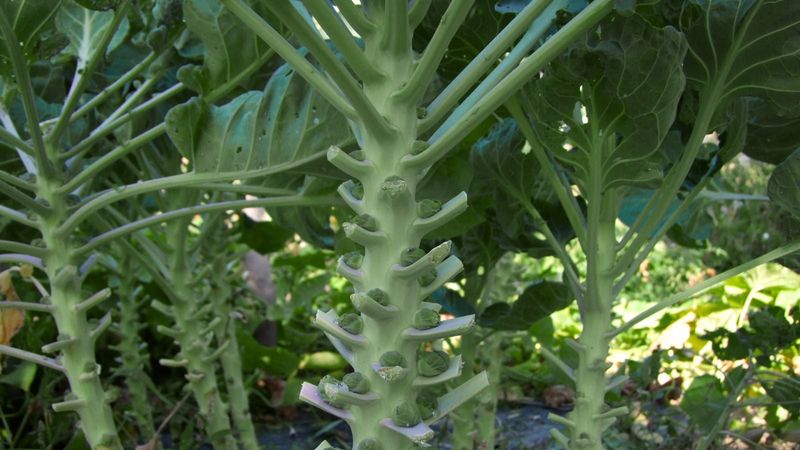
Topping means removing the top of the stalk. It may influence how the lower sprouts develop or when they can be harvested, but it is not a proven way to tighten sprouts that are already loose.
Think of it as a timing tool rather than a repair.
A University of New Hampshire trial found that results depended on the variety and on when plants were topped. Topping sometimes improved yield or appearance for a once-over harvest, but it did not do so every time.
According to the full report, topping too far ahead of harvest can reduce yield and marketability, since the plant may put energy into new stalk growth.
Arkansas Extension adds a spring-specific caution. In its home-gardening guide, pinching a spring crop may bring an earlier harvest but could cut yield by about one-third.
That number applies to spring cropping, so do not assume it fits your fall planting.
Use plant stage, not a calendar date
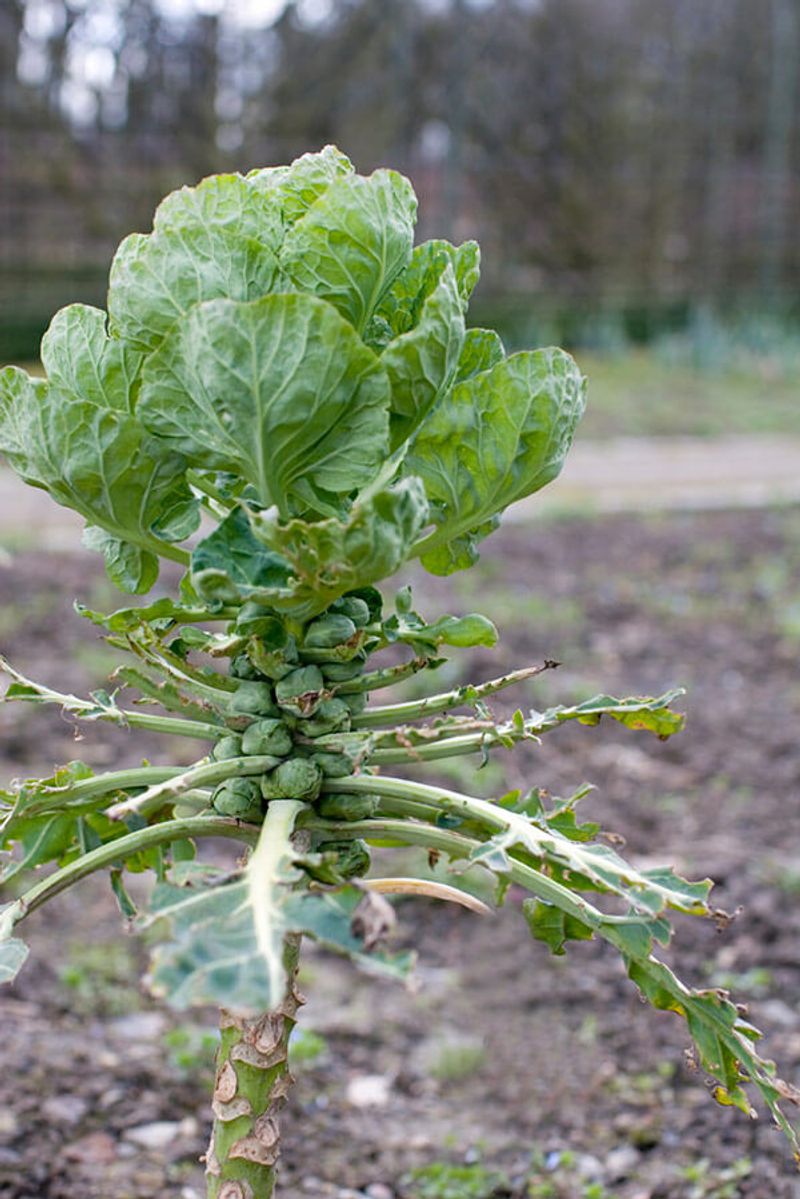
Your plant can tell you more than the calendar can. One common cue is to consider topping when the lowest sprouts reach about one-half inch across, a rule of thumb described in Oregon State guidance.
Go out and check those bottom sprouts before deciding anything.
The New Hampshire report offers a harvest-based window. It suggests topping roughly 30 to 60 days before harvest, and it cautions against topping when harvest is at least 60 days away.
Treat that as a guideline from one state, not a rule for every garden. The report itself notes that variety and fall growth rate change the response.
So an early-maturing variety growing fast in mild weather may be ready sooner than a slow one. Maryland Extension also describes the home-garden stages.
If your sprouts are tiny, or harvest is far off, waiting is a reasonable choice.
Topping removes the growing point, not the leaves
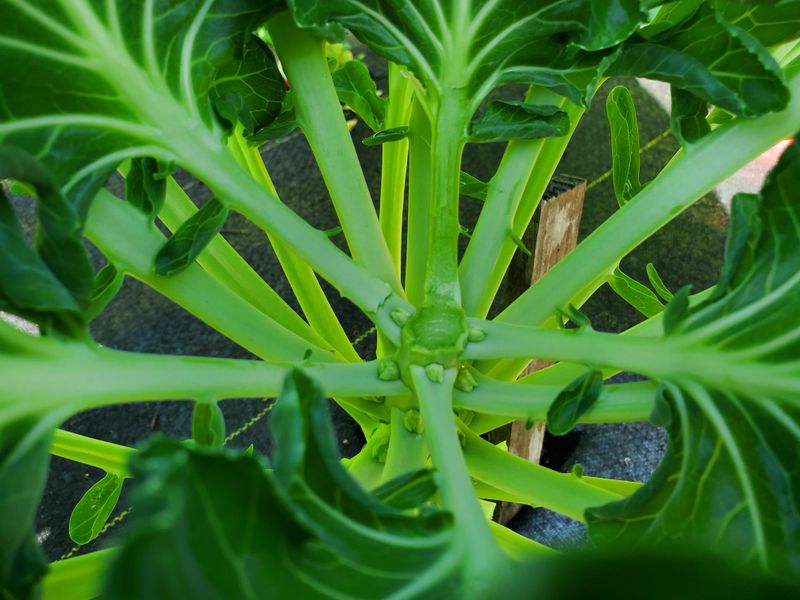
Gardeners often mix up two different jobs. Topping means taking off the apical growing point, which is the tip at the very top of the main stalk where new growth emerges.
The UNH report uses the term this way.
Pulling off the lower leaves is a separate practice. Maryland Extension’s home-garden guide treats the two as different tasks, so stripping leaves is not the same as topping, and it will not give you the same result.
If you decide to top, keep it simple and stick to the growing tip. The cited guidance does not call for a special tool, a set cutting depth, or a detailed procedure, so there is no need to invent one.
Leave the leaves on the rest of the plant unless you have a separate reason to remove them.
Southern growing seasons change the timing
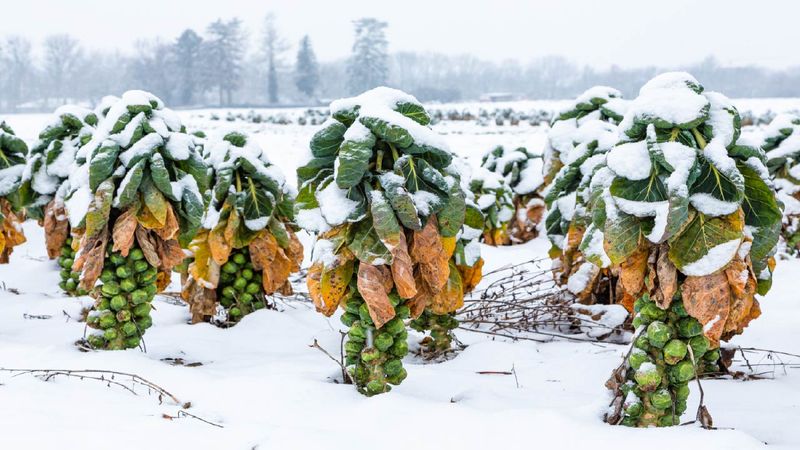
A single “do it this week” message cannot work across Florida and Texas. Brussels sprouts need cool weather to form firm sprouts, and the planting calendar shifts with location.
UF/IFAS says Florida gardeners generally plant in late fall so the crop develops in cooler months.
In Texas, Texas A&M AgriLife describes Brussels sprouts as a fall crop in much of the state. Planting times also differ from region to region, as laid out in the Texas cole-crop guide.
A Panhandle gardener and a Rio Grande Valley gardener will not share a schedule.
The New Hampshire timing came from trials in a much colder climate. Southern gardeners should not copy it date for date.
Use your own planting date, your local first-cool-weather pattern, the stage of your plants, and your expected harvest to decide, and your county Extension office can help fill in local details.
Harvest firm sprouts as they mature
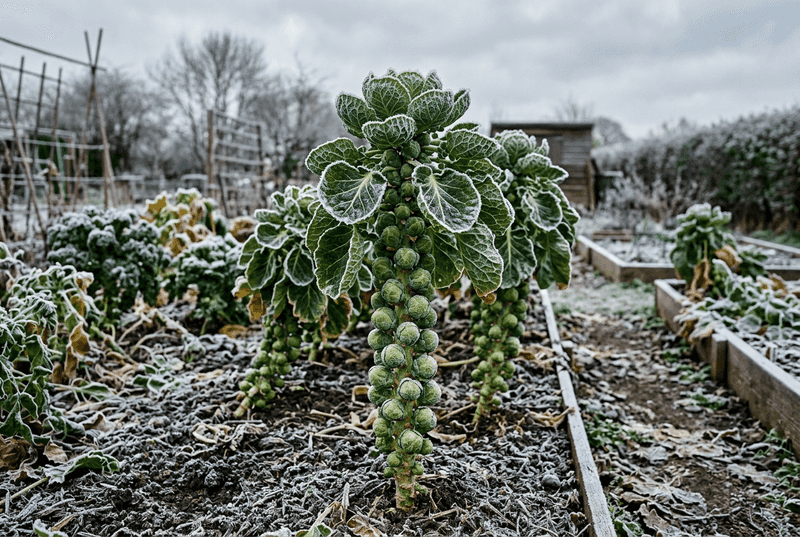
The lowest sprouts on the stalk mature first. That gives home gardeners an easy option: pick firm, compact sprouts from the bottom as they are ready, and let the upper ones keep developing.
Maryland Extension and UC Master Gardeners both describe harvesting this way.
Topping for a single harvest is a different plan. The UNH research looked at it for growers who want to pick everything at once.
A home gardener who enjoys a few sprouts at a time may not need it.
Here is a practical way to decide. Check whether your sprouts are already loose, then look at the plant stage and when you expect to harvest.
Consider topping only if the timing and local conditions line up, and know that neither picking nor topping will firm sprouts that have already opened.
Sometimes the best fix is simply a cooler season next year.