
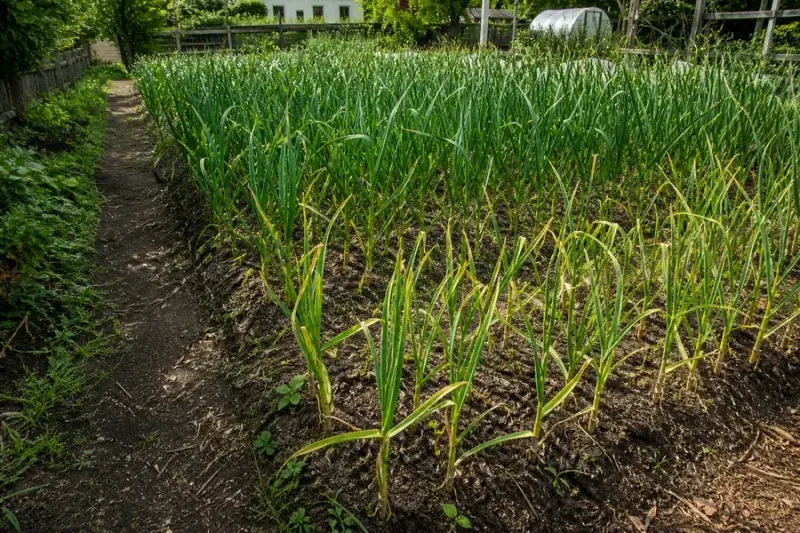
You walk out to the garlic bed and spot strange marks on the leaves. Is it rust, or something else?
The answer matters, because the right fix depends on the right name for the problem. Here is how to tell the difference and what you can do while you sort it out.
What garlic rust actually looks like
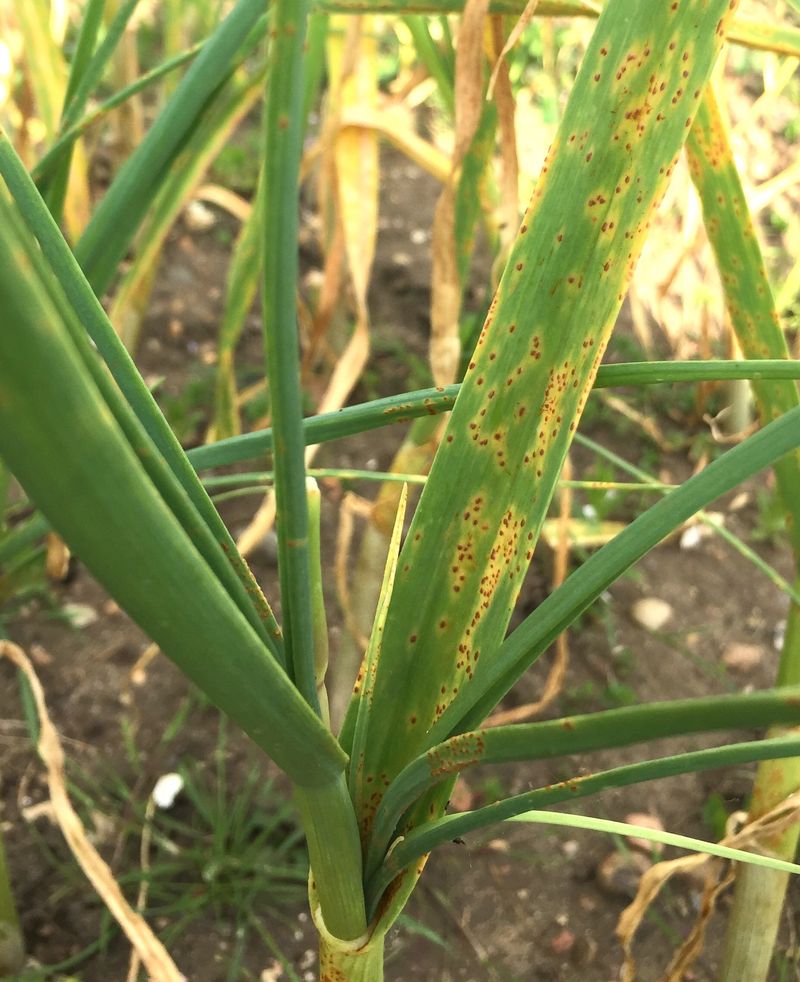
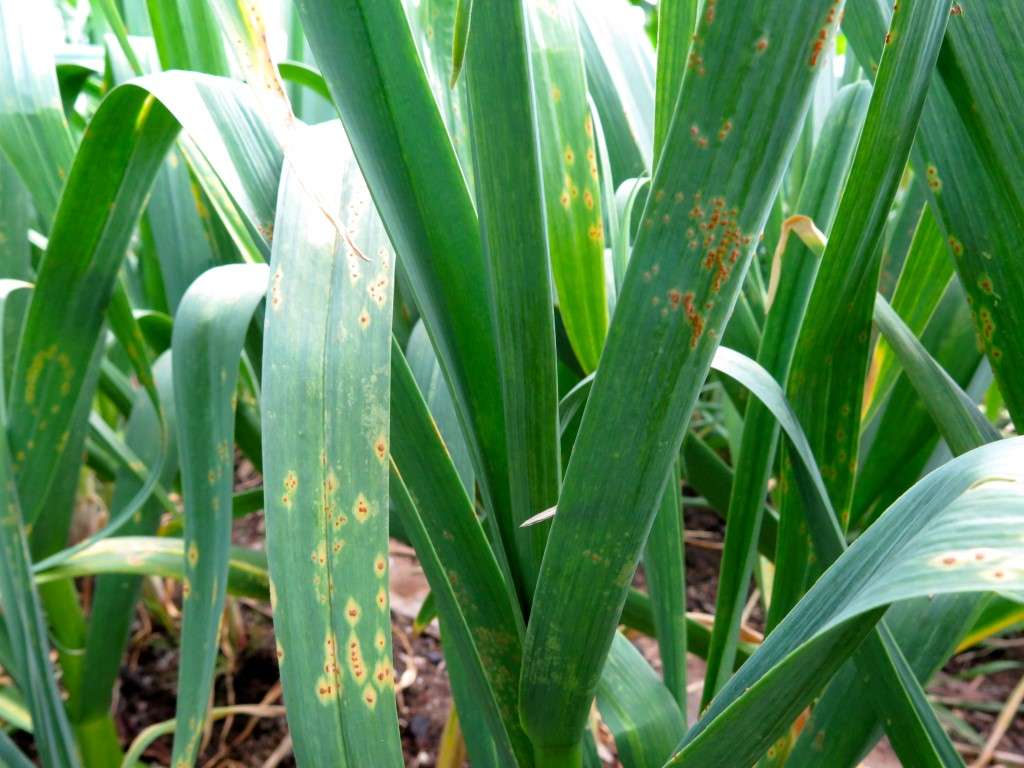
Garlic rust has a distinct look once you know it. According to UC IPM guidance, it often begins as small white or yellow flecks.
These then grow into raised, oval-to-diamond-shaped pustules that are orange or reddish.
Look at the older leaves first, since that is where spots often show up earliest. Run a finger across a spot.
Rust pustules feel raised, and they can leave an orange, powdery-looking residue behind.
As the season goes on, the pustules may darken. Heavy infections can turn leaves yellow, dry them out, and eventually kill them.
The Pacific Northwest Plant Disease Management Handbook describes the disease in similar terms. Notice what is missing from these descriptions: a purple, papery patch by itself is not the way rust is identified.
Start with the pustules, and treat everything else as a clue that needs more checking.
Purple lesions can point to another disease
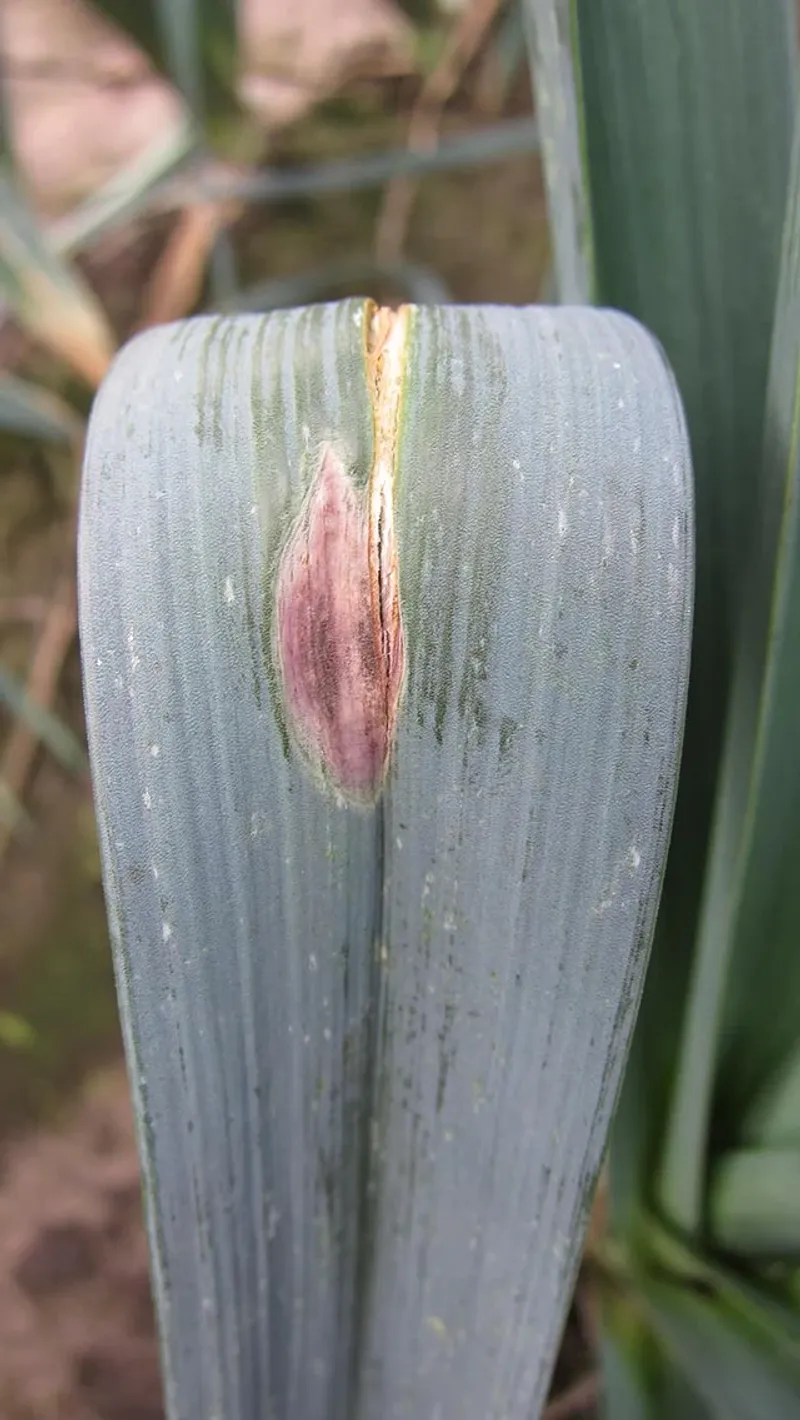
Purple marks sound like a clear clue, but they can mislead. Purple blotch is a different disease that also attacks garlic.
Utah State University Extension describes lesions that can turn deep purple.
Those lesions may also show dark concentric markings, almost like rings. The UC onion and garlic pest management guidelines cover this look-alike too.
Rust, by contrast, is more characteristically identified by orange or reddish pustules, as the Pacific Northwest handbook explains. So the quick test is simple.
Orange and raised points toward rust. Purple with rings points toward purple blotch.
Color alone cannot settle it, and other leaf problems can look similar. If the marks do not match rust’s pustules, take a few clear photos or a leaf sample to your county extension office for a reliable diagnosis before you act.
Cool, wet leaves favor rust but do not confirm it
Weather matters to rust, though it cannot name a spot for you. UC IPM describes favorable conditions as roughly 57 to 75 degrees F with near-saturated humidity.
Cool, damp stretches can give the fungus the moisture it needs.
Leaf wetness plays a big part. In a controlled study, infection increased as leaves stayed wet longer.
That study used spring onion, not garlic, so it is not a precise forecast for a Southern home garlic bed. Think of it as a reason to pay attention, not a prediction.
A foggy week does not prove a spot is rust. Other leaf diseases also like moisture.
Weather tells you when to look closely, and the pustules tell you what you are actually seeing.
Reduce crowding and avoid wetting foliage
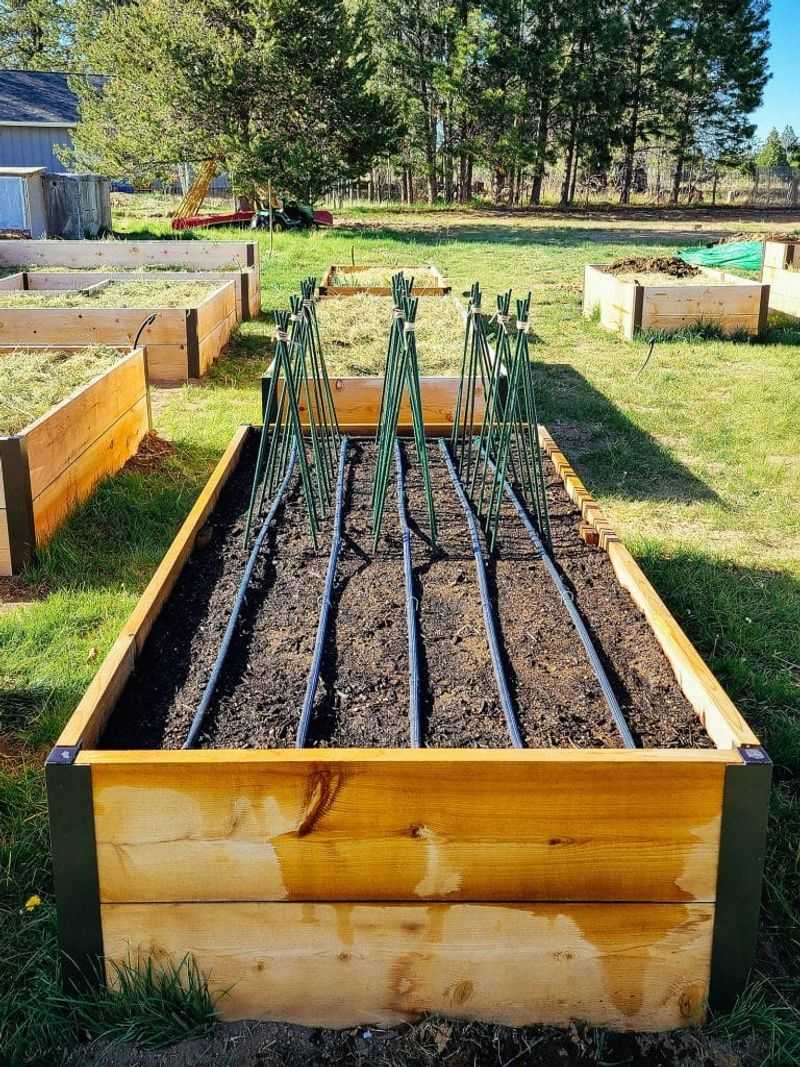
Some habits can make conditions less friendly to rust. The Pacific Northwest handbook advises avoiding dense plantings and wetting the leaves.
Water at the soil with drip lines or a hose at the base, and do it early so any splashes dry quickly.
Give garlic room when you plant. More space can reduce crowding and may let leaves dry faster.
It is a sensible habit for next planting, not a proven way to slow an outbreak already under way, and not a cure.
Pull up volunteer garlic, onions, and other Alliums that sprout around the garden. They can carry disease from one season to the next.
The same handbook also recommends rotating away from Alliums for two to three years and avoiding excessive nitrogen. None of these steps guarantees a clean crop, but together they can lower the odds of trouble.
Severe rust can reduce bulb size and quality
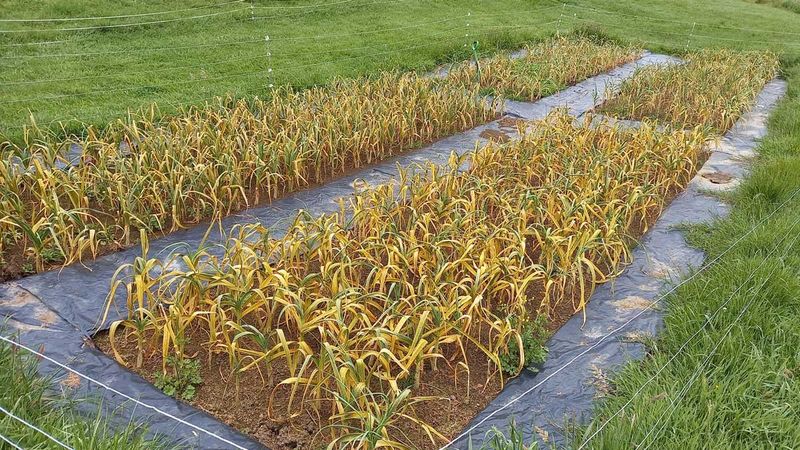
A few spots are not a reason to panic. UC IPM links severe rust to reduced bulb size and quality.
That is the situation where a lot of leaf area gets damaged or dies.
Garlic makes its bulb using what the leaves collect from sunlight. When heavy infection yellows and dries out much of that foliage, there is less energy to feed the bulb.
That does not mean every spotted leaf spells a weaker harvest. A light scattering of marks does not tell you what next summer will bring, and no one can promise either outcome.
This is why watching matters. Check leaves every week or so, note whether spots are spreading, and keep photos.
If the damage grows from a few leaves to most of the plant, that is the moment to get a firm diagnosis.
November is not the same planting moment everywhere
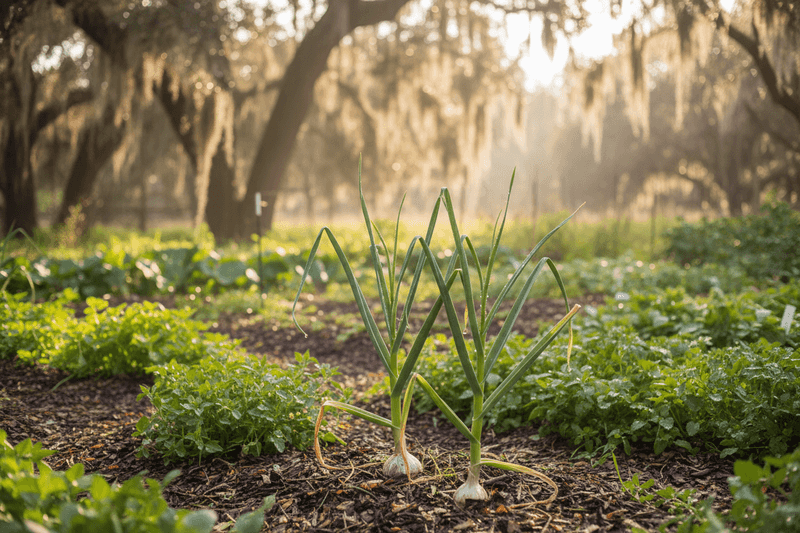
Southern calendars vary a lot. The 2025 Southeastern U.S.
Vegetable Crop Handbook lists October 1 to November 30 for southern Alabama and Georgia. For Mississippi, it lists September 15 to October 30.
Florida looks different again. UF/IFAS describes planting from late fall into early winter, and suggests softneck types suited to Florida.
So in some places, November is planting time. Garlic there may be just cloves in the ground or tiny sprouts, with few leaves to show symptoms.
In other places, plants may be well along.
Do not borrow these dates for Texas or other areas without checking local advice. Your county extension office can tell you the window and crop stage that fit your own garden.
Check the symptom before choosing a response
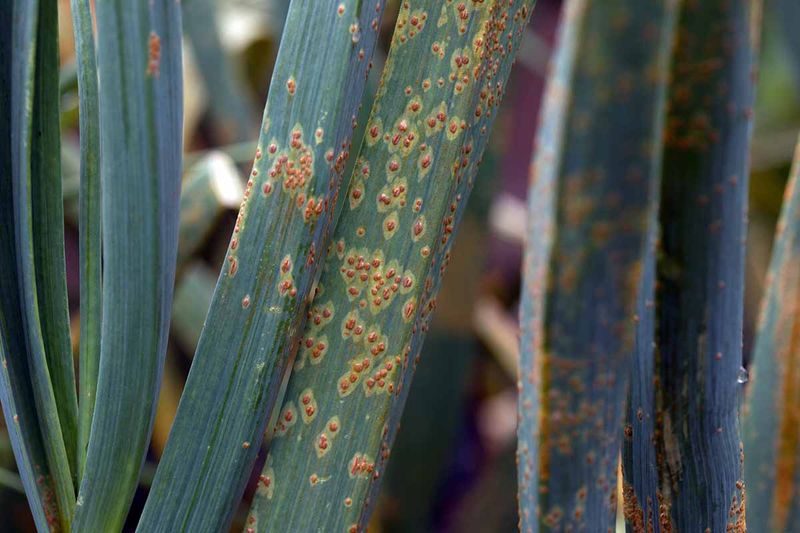
Start with the leaf. Look for raised orange or reddish pustules, which is how UC IPM describes rust.
Treat purple color alone as inconclusive, since purple blotch can look similar.
Then lean on habits the Pacific Northwest handbook supports: less crowding, dry leaves, and no volunteer Alliums. Wider rows are a planting choice, not a rescue.
A name first, a plan second. Garlic forgives a little patience far more than a wrong guess.