
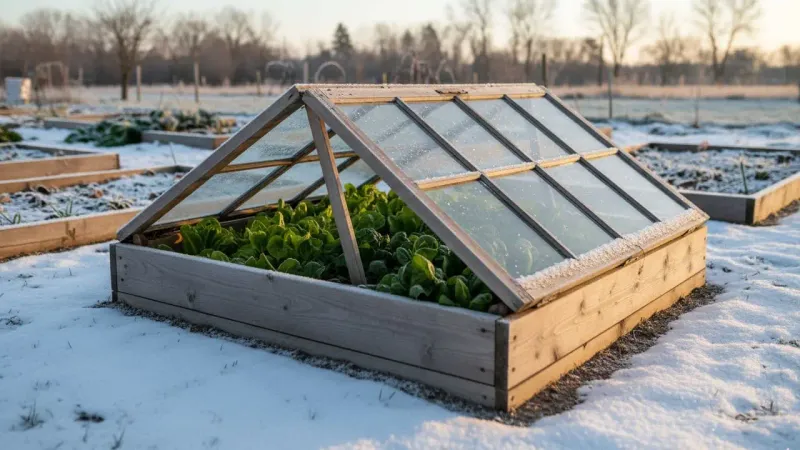
You walk out on a bright winter afternoon and find your lettuce flopped over like it gave up. A cold frame is built to trap warmth, and on a sunny day that same trick can work against your greens.
Wilting has a few possible causes, so a little detective work saves a lot of guessing. Here is how to read the clues and keep your frame working for you.
A sunny day can overheat a closed cold frame
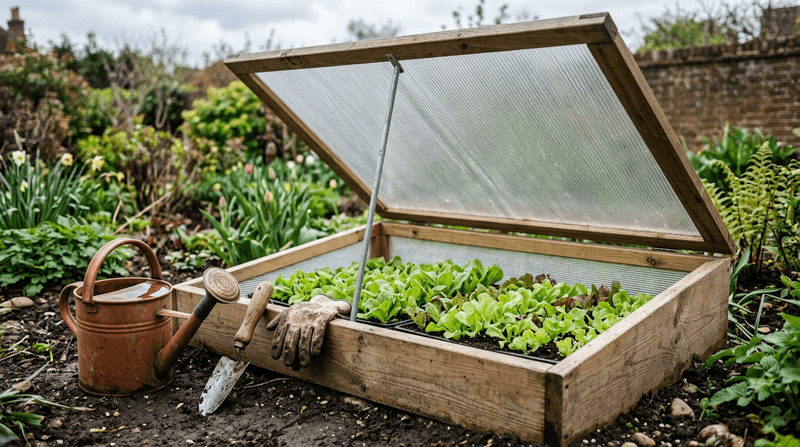
Afternoon wilting is a symptom, and symptoms can have more than one cause. A closed sash on a bright day is one possibility worth checking, but it is not the only one.
A cold frame is usually only a little warmer than the air outside. Missouri Extension guidance puts the interior at roughly 5 to 10 degrees Fahrenheit above outside temperatures, yet it also stresses ventilation and temperature control.
The reason is simple. Sunshine pours through glass or plastic and gets stuck inside, so a mild day can turn a modest boost into damaging heat.
Lettuce that overheats loses water through its leaves faster than the roots can replace it, and the leaves go limp. Other problems can look the same.
University of Maryland Extension lists heat, drought, waterlogged soil, and drying winds among the possible causes of wilting.
So before you change anything, check two things: the temperature near the plants and the moisture in the soil. The next sections walk through both, plus what to do about the lid.
Check the temperature where the lettuce grows
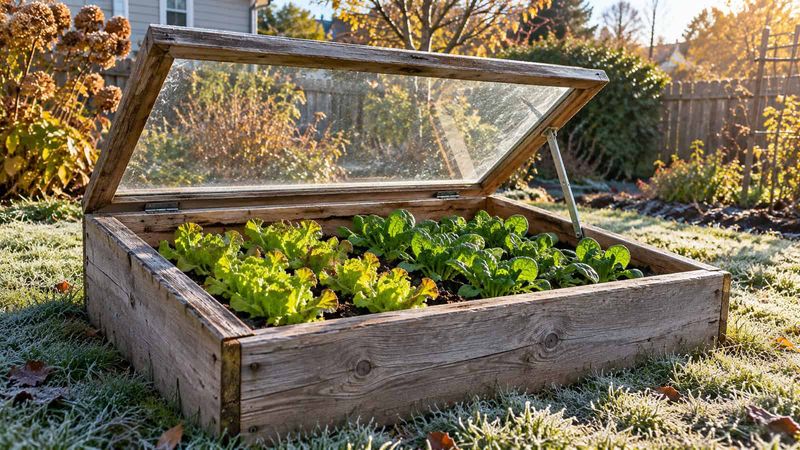
Guessing from how the day feels outside is a shaky way to manage a frame. A thermometer set at plant level tells you what the lettuce is actually experiencing.
Nebraska Extension suggests aiming for 60 to 65 degrees Fahrenheit after germination for cool-season crops. It also says ventilation is especially needed on clear, sunny days when outdoor temperatures climb above 45 degrees.
Treat those numbers as practical guidance, not a rule for when lettuce will wilt.
Published advice for lettuce varies. Illinois Extension mentions an average daily range of 60 to 70 degrees, while NC State Extension gives 60 to 65 degrees for leafy growth.
Because the sources differ, no single number is the final word. Check the thermometer around midday and again in the afternoon, and note how your own frame behaves on sunny versus cloudy days.
Vent as sunshine raises the temperature
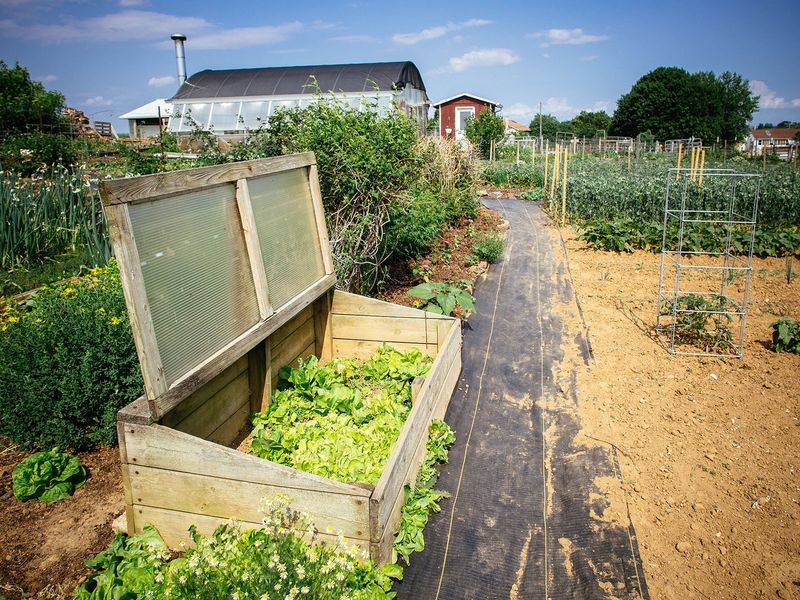
Once the thermometer climbs, let some heat out. On warm, sunny days, prop the lid open, and widen the gap as the temperature rises.
How wide is the right amount? That depends on your frame, your weather, and your readings.
Missouri Extension recommends using a thermometer to judge the opening, and notes the sash may be opened wide or removed in warm sunshine. A small crack may be plenty for one frame and far too little for another.
Wind adds a twist. If gusts are strong, raise the sash on the side opposite the prevailing wind.
That keeps cold, drying air from blowing straight onto tender leaves and lowers the chance that the lid gets lifted or slammed.
A simple notched stick or a lid-support bracket makes adjusting easy, so you can change the opening in seconds. Peek at the thermometer, nudge the lid, and check again later if the sun is strong.
Check the soil before watering wilted lettuce
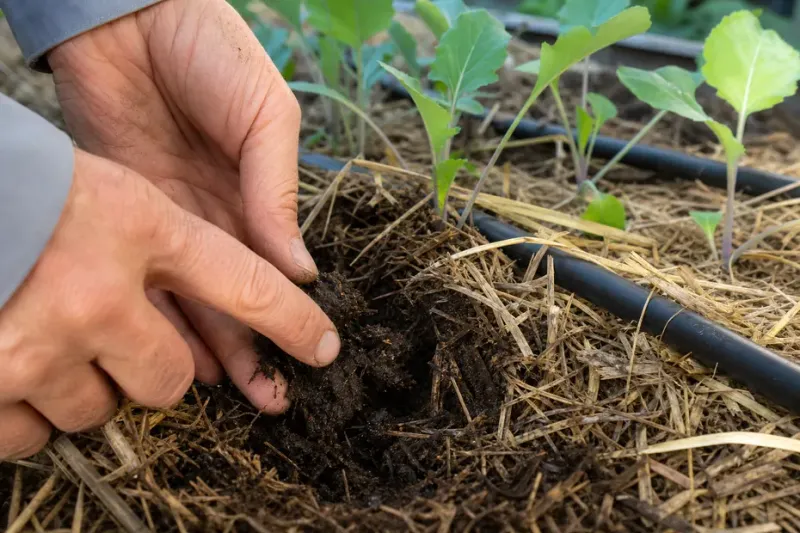
Limp leaves make many gardeners reach for the hose, but water is not always the answer. Push a finger an inch or two into the soil first.
If the soil is moist, heat is a likelier suspect. Missouri Extension notes that plants can wilt when cloudy weather turns sunny, even without needing water, unless the soil is clearly dry.
In that case, vent the frame first. In severe cases, temporary light shade or misting the foliage may help a little.
If the soil is dry, water is the fix. If it is soggy, the trouble may be below ground.
University of Maryland Extension points out that waterlogged soil can cause wilting too, because stressed roots cannot take up water well.
When you do water, do it early enough that the leaves can dry before night or before you close the frame. A plant that perks up by evening probably had a temporary water loss.
One that stays limp deserves a look at drainage and roots.
Close the lid before night cooling
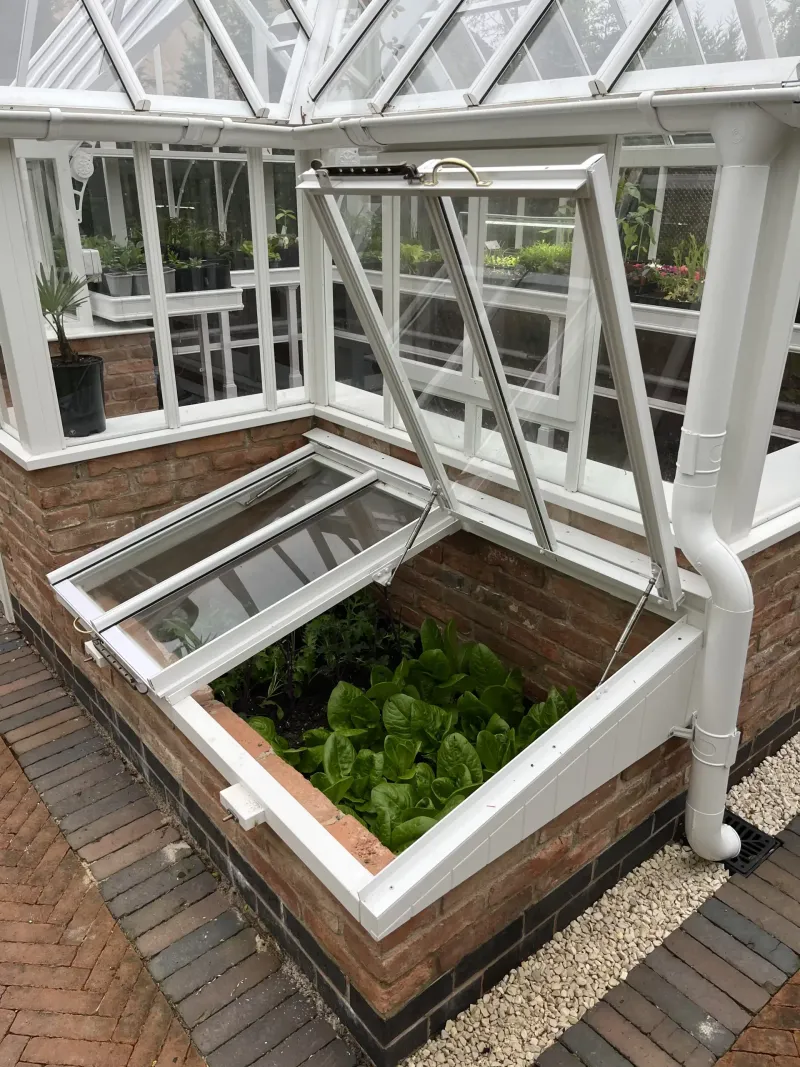
Venting handles the daytime problem, but the same frame protects your lettuce when temperatures drop. The routine has two halves.
During sunny stretches, release excess heat by propping the lid open. Then close the frame in late afternoon or evening, before the air cools, so it holds onto warmth overnight.
Missouri Extension describes this pattern, and Washington State University Extension also advises closing the frame to keep heat in as temperatures fall.
Leaving it open all night defeats the purpose of having a frame. Timing will shift with your weather, so watch the thermometer as the sun gets low rather than relying on a set hour.
If your schedule makes an afternoon trip hard, try tying the chore to something you already do, like bringing in the mail or starting dinner. Consistent habits help, though weather, moisture, and drainage still affect how your lettuce does.
Cold frames are not necessary in every Southern garden
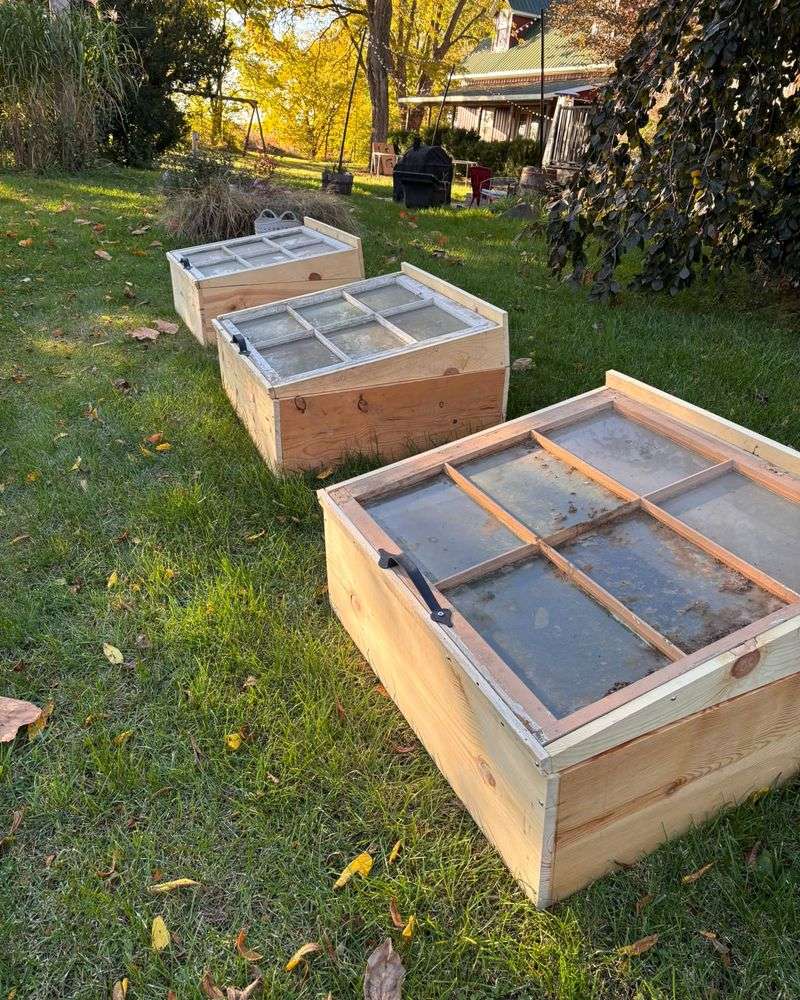
Plenty of Southern gardeners never need a frame at all. Winters in Texas and Florida differ a lot, and so do the growing windows.
Texas A&M AgriLife Extension describes greens as cool-season crops for spring or fall in Texas, with some able to grow through winter in many areas. In Florida, UF/IFAS Extension says lettuce can grow outdoors from October through April.
That means lettuce in an open bed may do fine for much of the season in many Southern yards. A frame could still help during an unusual cold snap or in a colder part of north Texas, but it is a choice, not a requirement.
Look at your own winter lows, your usual sunny spells, and how your garden has done in past years. If a frame is worth having, your thermometer will tell you how to run it.
Sometimes the best cold frame is the one you decide not to build.