
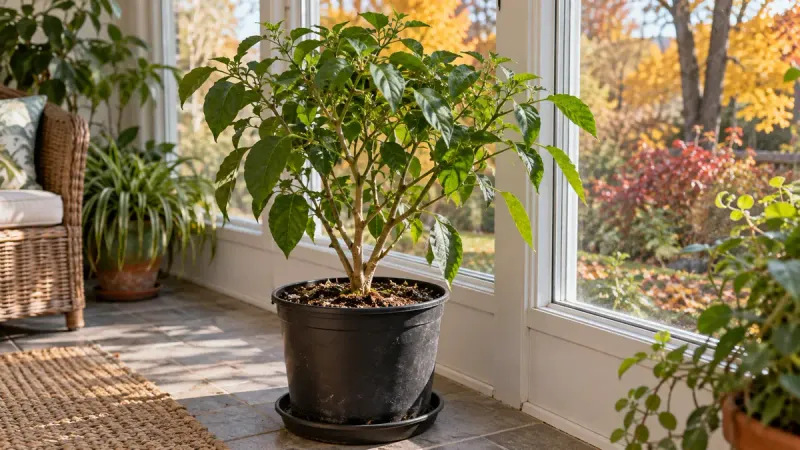
Cold nights can end a pepper season fast, even when the plant still looks healthy. Many gardeners wonder if a potted pepper can be saved instead of tossed.
Moving it into shelter and giving it a quiet winter rest may preserve it, and it might give you a jump on next year. Here is how to decide, what to do, and what to expect.
Frost—not the calendar—sets the move-in deadline
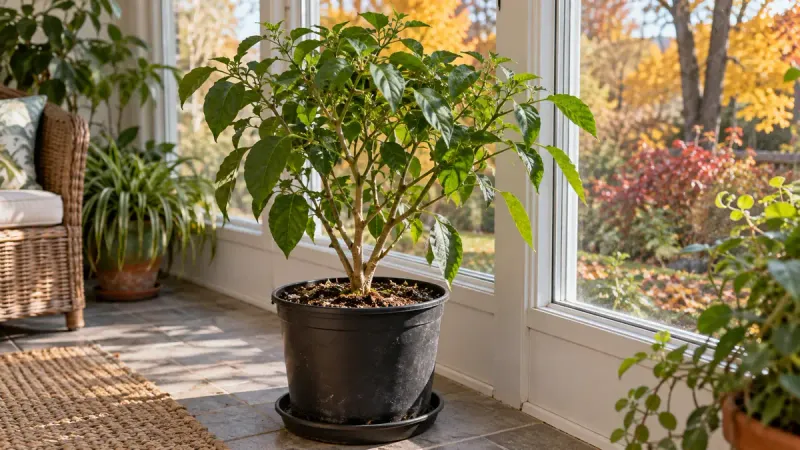
Peppers are warm-season plants, and they do not tolerate frost. Clemson Extension says they grow best around 70 to 85°F by day and 60 to 70°F at night, and Colorado State Extension likewise says they cannot handle frost.
That is why the deadline is a forecast, not a date on the calendar. Move a pot into protection before frost threatens, because waiting for blackened leaves means the damage is already done.
Southern winters vary a lot. In frost-free or very mild spots, you may not need to bring peppers in every year.
Still, UF/IFAS guidance on cold protection notes that Florida can get damaging cold, and potted roots can be more vulnerable to cold than roots in the ground.
Watch your own overnight lows. Moving the pot is a way to try to save the plant, not a guarantee that it will make it.
A head start is possible, not promised
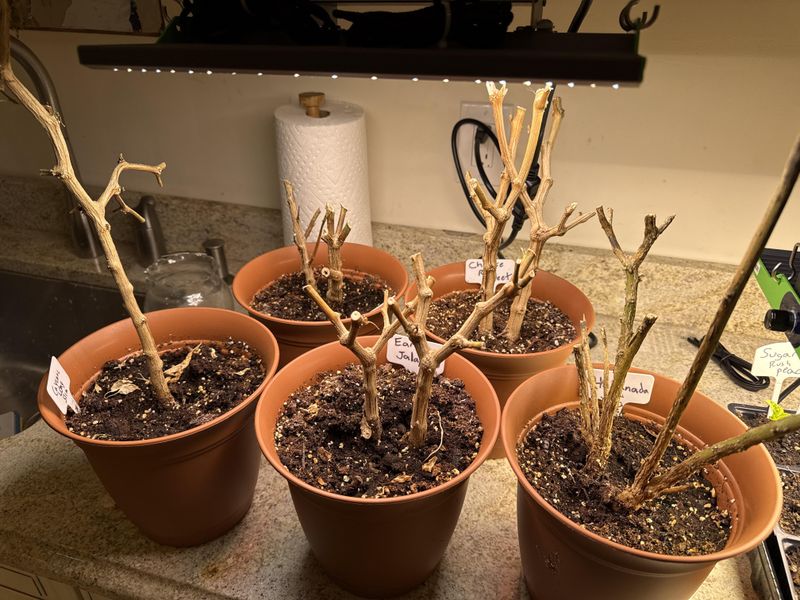
Why bother? An established plant already has roots and branches.
If it wakes up in spring, it may fruit sooner than a seedling started from scratch.
A University of California Master Gardener wrote in a Yolo County newsletter that overwintered plants fruited as much as a month earlier and produced more at a time. Those are growers’ reports, not a controlled comparison, so they do not describe typical results.
Results can go either way. A Kansas State Extension newsletter describes one gardener who kept bell peppers alive and fruiting indoors, and also one attempt that failed.
Any benefit shows up next season, not in the middle of winter. A resting pepper is not producing fruit, so treat it as a plant you hope to save.
Inspect and isolate the plant before it joins your houseplants
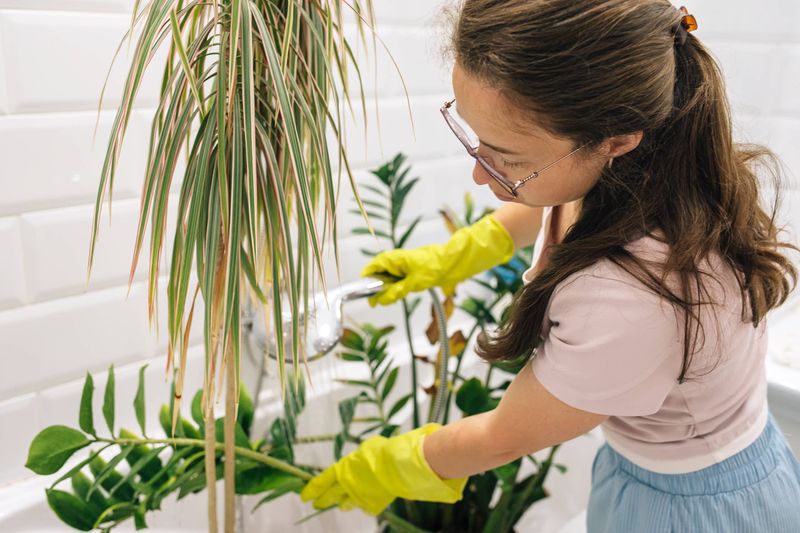
Outdoor plants can carry hitchhikers like aphids, mites, and whiteflies. Before the pot crosses the doorway, check the undersides of leaves, the stems, and the soil surface.
Rinse off pests with a gentle stream of water or remove them by hand where that makes sense. If you use insecticidal soap or horticultural oil, make sure the label covers both your pepper and the pest, then follow the label directions.
Next, keep the pepper apart from your other plants. Penn State Extension recommends isolating newcomers for three to four weeks and watching for problems.
A plant that is clearly infested or diseased should never go straight beside your houseplants. For common indoor pests, UC Integrated Pest Management has houseplant problem guides you can use for identification.
Prune only when the plant needs to fit its winter space
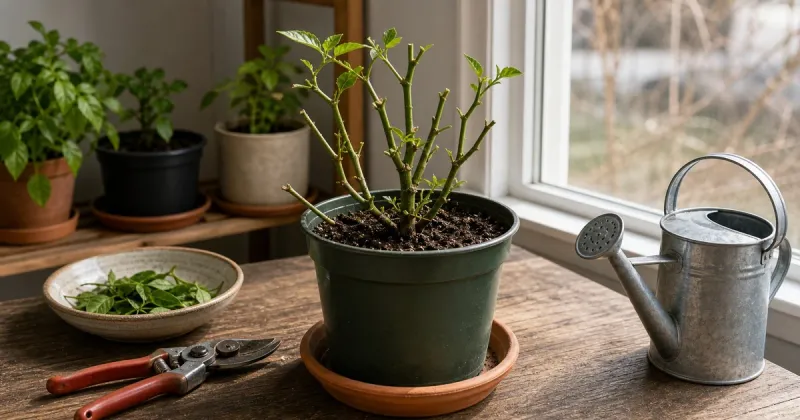
Pruning is optional. Skip it if your pepper already fits the spot where it will spend the winter.
The UC Master Gardener in the Yolo newsletter pruned only to make plants fit the space available, and advised cutting above a bud. There was no set height, and you do not need one either.
Gardeners report mixed outcomes. In a Kansas State newsletter, one gardener’s plants survived when pruned to a main stem and branches.
In another year, her plants died after she removed new leaves to force dormancy.
Those are two personal stories, not a side-by-side test. Stripping leaves is not a step to copy.
Trim only as much as your space calls for.
Cool, sheltered storage carries the pepper through dormancy
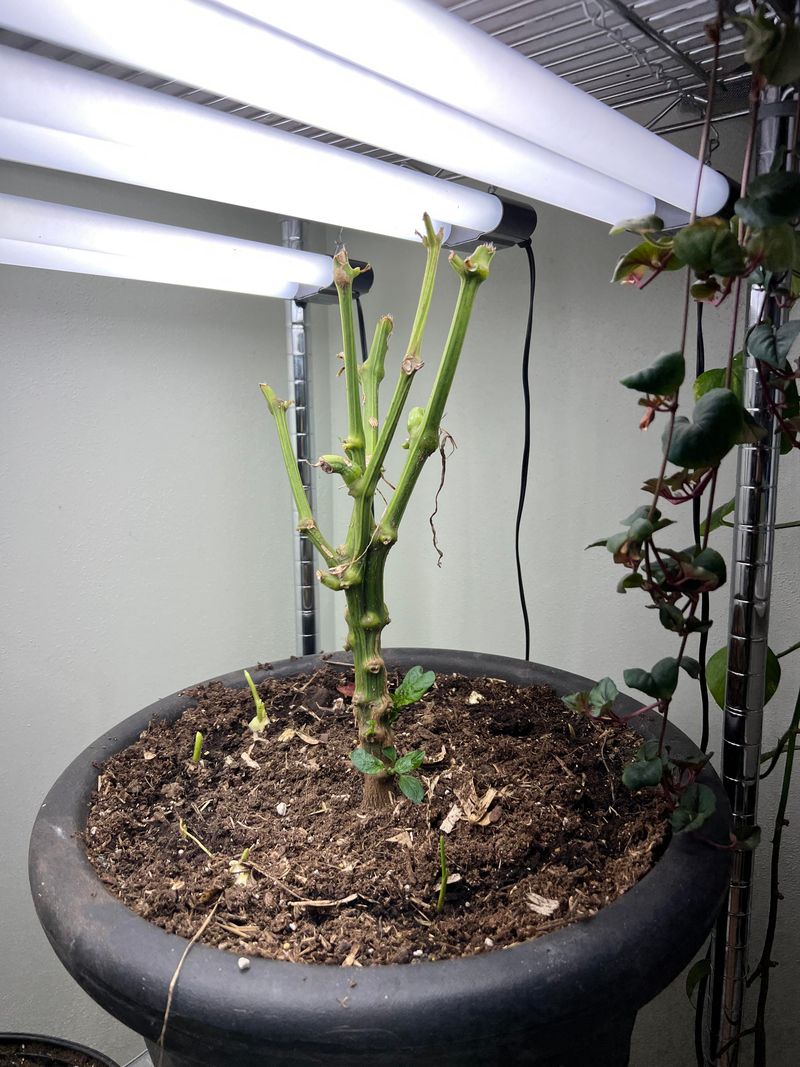
Dormancy means a slow, quiet rest. The plant is not growing or making peppers, and that is normal.
The UC Cooperative Extension account keeps plants cool and sheltered from rain. Water occasionally, but do not let the mix dry out completely.
Light matters at first. Dormant plants need some light until their leaves drop.
After that, a cool, dark spot such as a garage can work.
Water needs shrink in winter. Penn State Extension notes that indoor plants generally need less water when lower light slows growth, so check the potting mix instead of following your summer schedule.
Even with careful care, some plants will not make it. If yours stays shriveled in spring, you can still start fresh.
Begin the spring restart about six weeks before the garden return
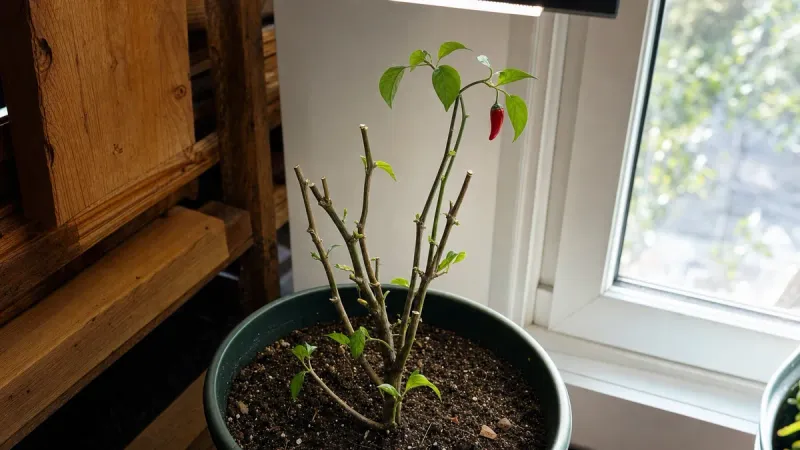
Spring is the wake-up call. Count back about six weeks from the day you plan to return the plant to the garden, and start the transition then.
That is the timing in the UC Cooperative Extension guidance. As new growth appears, give the plant more light and more water.
Look for small buds or fresh leaves along the stems. They signal that the plant is alive and ready for brighter conditions.
Move toward the outdoors gradually rather than all at once. Your local frost dates, not a fixed schedule, decide when the pot goes back outside.
No source promises a particular harvest date, so keep expectations flexible.
Treat overwintering as a chance, not a guarantee
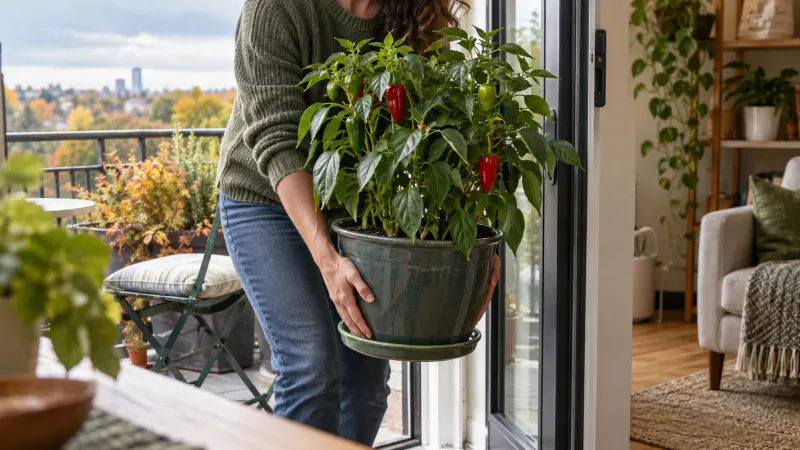
The plan is simple: protect a healthy pepper before frost, give it cool rest, and restart it in spring if it pulls through. Overwintering may preserve the plant and may give it a head start, but survival and an earlier or larger crop are not assured.
Growers’ reports in the UC newsletter and the Kansas State account show both wins and losses.
Think of it as a low-cost experiment with a possible reward.