
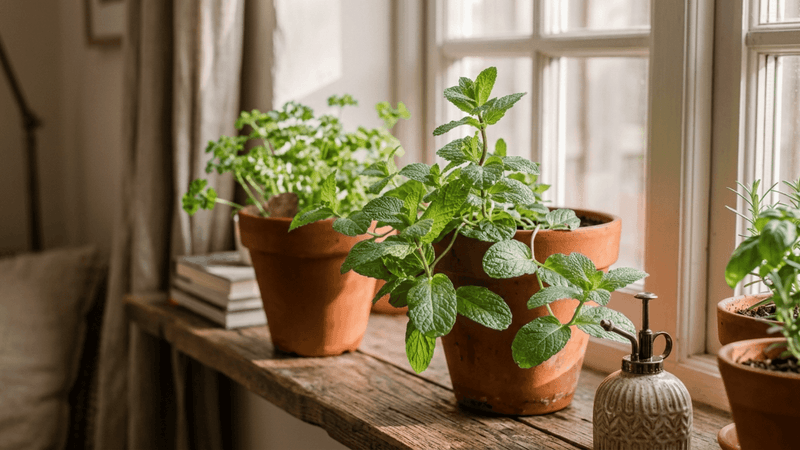
Mint is supposed to be the easy herb, so stretched, washed-out stems in a pot can feel like a surprise. Before you grab the scissors, it helps to figure out what the plant is actually telling you.
A few quick checks of light and moisture can point you toward a sensible next step. One careful cut may help the shape, as long as you know what it can and cannot do.
Low light is a possibility, not a proven fall-day effect
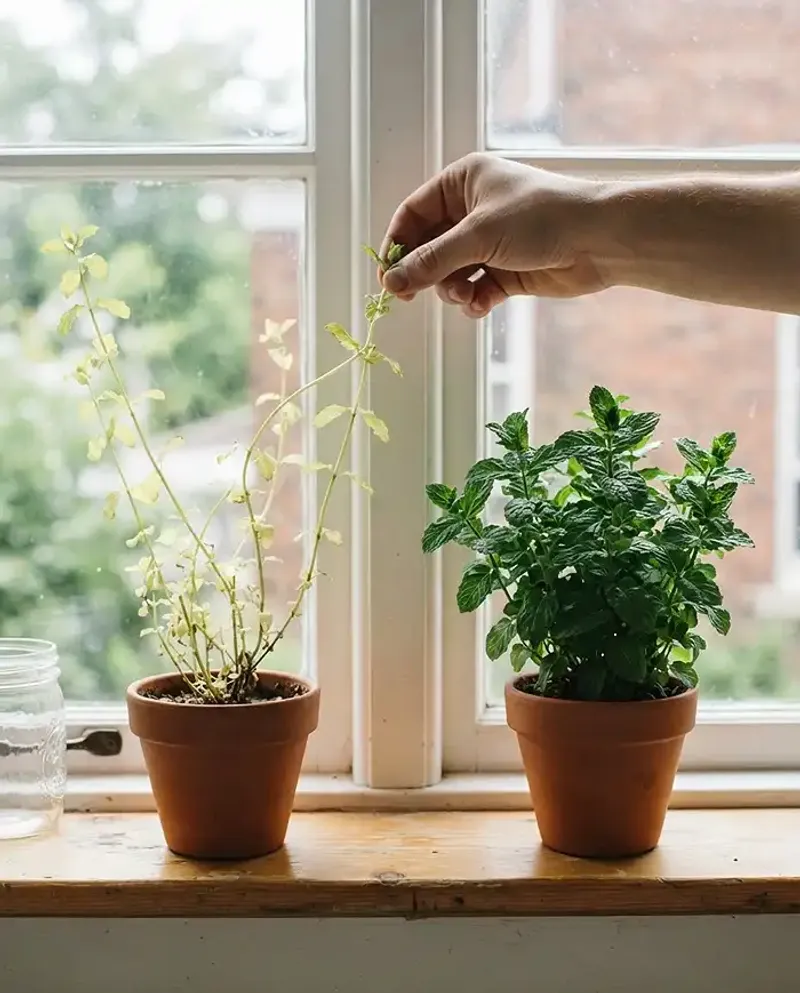
Pale leaves and long, spindly stems with wide gaps between leaf pairs are worth a closer look. NC State Extension container guidance links too little light with stretched growth and paler foliage, so low light is a reasonable first suspect.
Low light and shorter days are not the same thing, though. Light can drop because of shade, a moved pot, or a tree that has filled in, and nothing found so far shows that ordinary fall day shortening alone makes outdoor mint leggy and pale.
You may have seen a mint study that used short-day treatments. It looked at essential-oil content, so it does not explain stretched stems on a patio plant.
So hold off on pruning as the fix. Start by looking at what the pot is really getting.
Assess the light reaching the pot
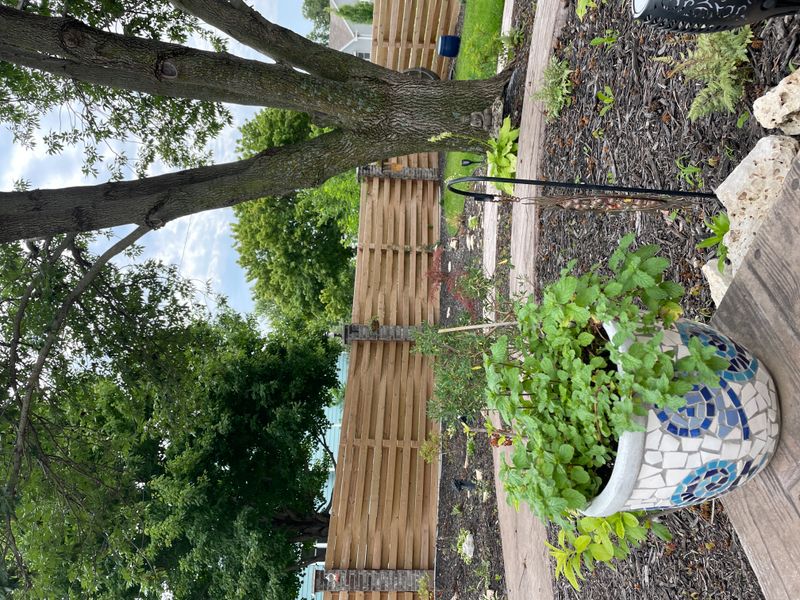
Spend a day watching where the pot sits. Note when sun hits it, and look for shade from a roofline, fence, or tree.
Also ask whether the pot was moved recently, since a new spot can change the light a lot.
Mint tolerates some shade, and advice differs by place. Illinois Extension favors full sun with light shade tolerated, while Texas A&M AgriLife says mints do well in shade or partial shade and appreciate afternoon shade.
UF/IFAS reports that Florida mints can grow in shade or full sun.
Because of that, skip the rule of moving every pot into full sun. Shift the pot only if what you see, such as deep shade most of the day, suggests it is short on light in your yard.
Check moisture and consider other causes
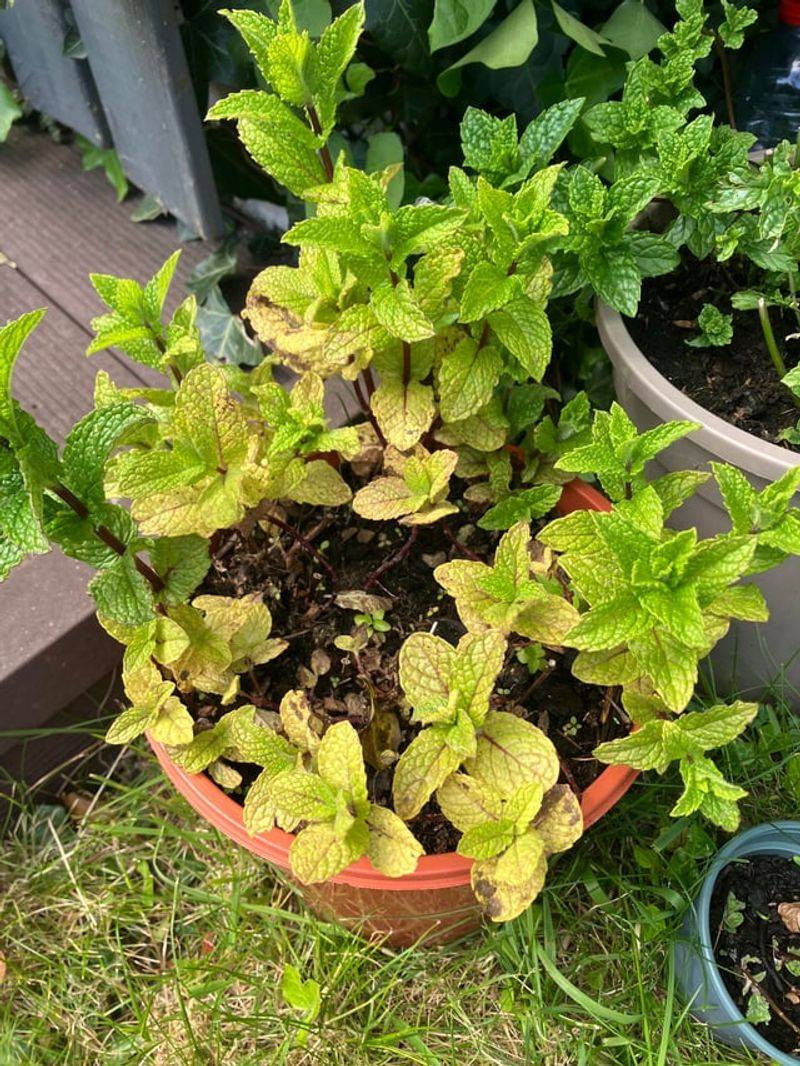
Pale leaves do not prove a light problem. Soil moisture, root trouble, and disease can all change how mint looks, so a quick check of the pot is worth the minute.
Push a finger an inch or two into the soil instead of watering by the calendar. Utah State Extension notes mint likes moist soil, yet too much water can encourage root and leaf disease.
Soggy soil and a pot with poor drainage deserve a second look.
Look closely at the leaves too. Mint rust and Verticillium wilt are among the problems with visible symptoms, but legginess alone does not point to either one.
Illinois Extension also reminds growers that yellowing has more than one cause.
Hold off on extra fertilizer as a default answer to pale leaves. Figure out the growing conditions first, then decide on any changes.
Trim a few long stems while the plant is growing
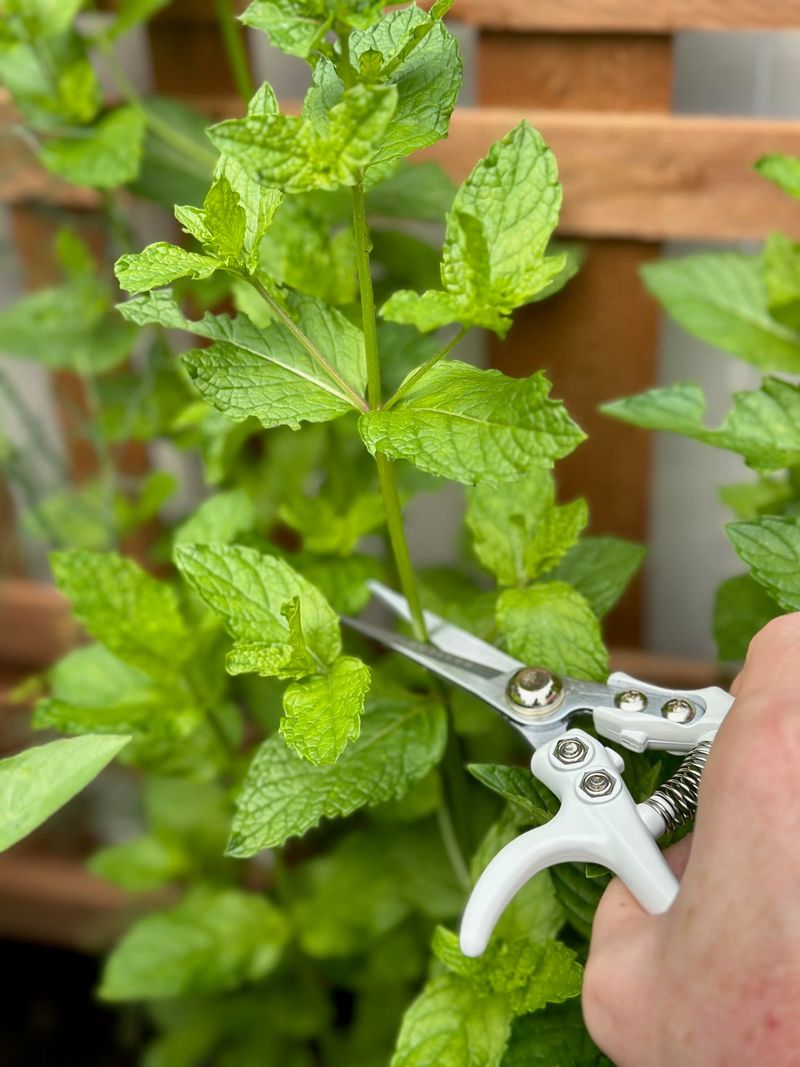
If the mint is still actively putting out new leaves, a light shaping cut is reasonable. Use clean scissors or shears and pick only a few of the longest, floppiest stems.
Cut each one just above a leaf pair or node. Pinching and cutting stems can encourage new growth, and Illinois Extension says more frequent cutting produces fresh growth.
Its container garden maintenance advice adds that removing tips from leggy plants encourages a bushier habit.
Pinching herb tips is also a standard harvest habit, as described in Illinois guidance on popular herbs and UC Agriculture and Natural Resources herb pruning notes.
You do not need a severe cut. Also remember a trim changes shape only, so it will not fix low light, watering trouble, or disease.
Let local conditions set expectations for regrowth
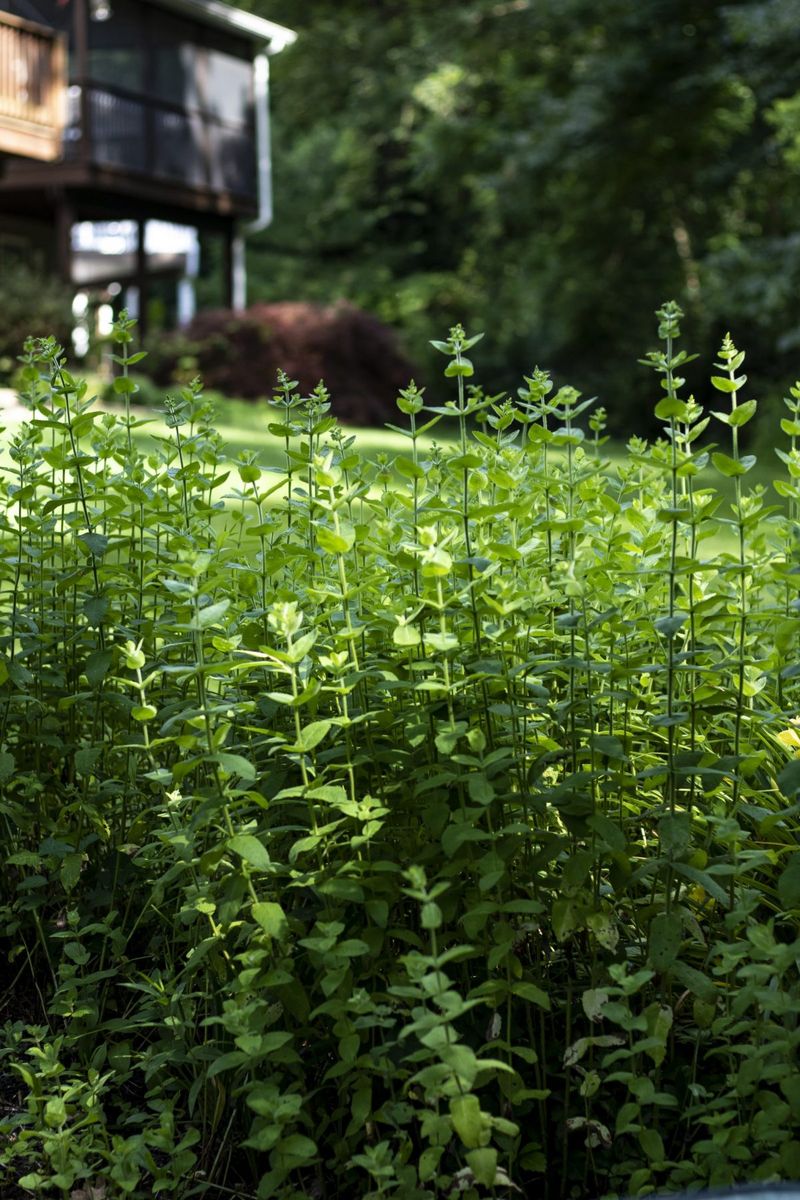
After a trim, new growth may show up, or it may be slow. How much you get depends on light, moisture, temperature, and how much growing time is left where you live.
Gardeners in South Florida have a long season, and UF/IFAS notes that many herbs can grow year-round there. Texas varies widely, and Texas A&M AgriLife describes different regional mint preferences.
A Panhandle gardener and a Gulf Coast gardener should not expect the same timeline.
Do not confuse this light tip cut with other advice. Utah State Extension describes cutting mint close to the soil several times a season and before winter, which is a much harder reset than the cosmetic trim here.
The same Illinois herb guidance centers on cutting for harvest, not on a fixed result, so treat any fuller look as a bonus.
Reassess the plant instead of repeating the cut
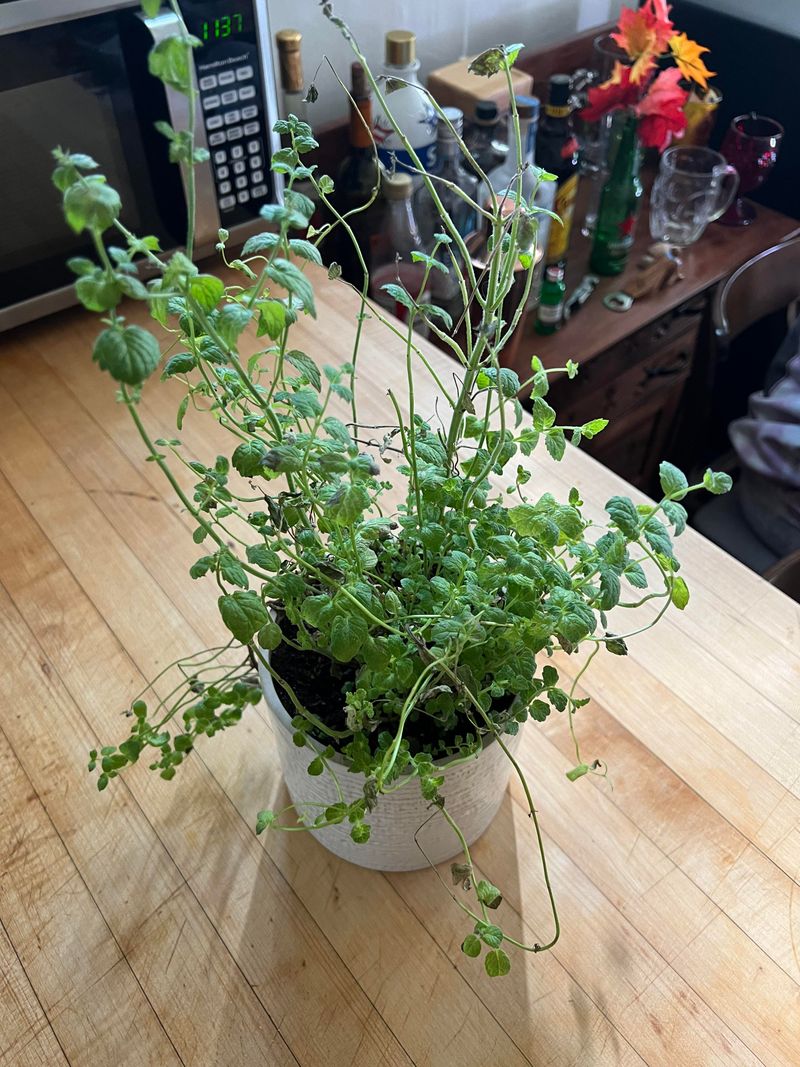
Give the mint a week or two, then look it over again. Are new leaves greener and the gaps between them shorter, or is the pale, stretched look returning?
If it keeps happening, go back to the pot’s light and soil moisture rather than cutting again. NC State ties stretched, pale growth to too little light, and Utah State lists disease among other problems to rule out.
Keep the mint in its pot, since Illinois Extension notes it spreads by underground stems. Trim again only while it is still growing, and judge new growth by your own local weather.
A pair of scissors can tidy a plant, but the pot’s conditions decide how it grows.