
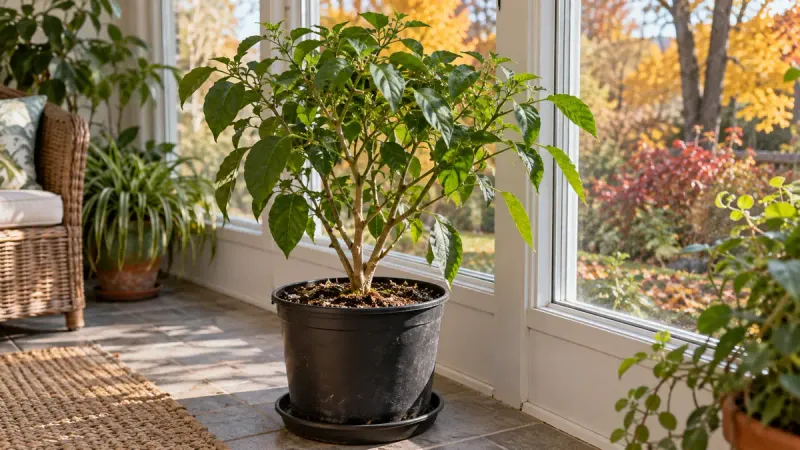
That pepper plant on your patio has worked hard all summer, and one cold snap can end it overnight. Moving the pot inside gives it a second chance, but what you can expect from it depends on your goal.
Some plants just wait out winter, and a few might keep making peppers. Here is how to choose a path, avoid common mistakes, and set honest expectations.
Choose whether you are saving the plant or seeking a winter harvest
Before you carry that pot anywhere, decide what you want from it. Saving the plant until spring is the easier goal, and it is the one most gardeners end up with.
Trying for peppers all winter is a bigger project that asks for more light, more attention, and a willingness to accept a so-so result.
Overwintering often means keeping a plant alive in a slow-growth state. Oregon State Extension describes peppers kept at 40 to 55 degrees F as being in stasis, and it notes that winter light may be too limited for fruit to ripen.
That is a very different picture from steady harvests.
Wisconsin Extension, in a monthly gardening recap, points gardeners toward survival when overwintering: water less, skip fertilizer, give adequate light, and keep the plant out of drafts.
Neither pruning nor getting the plant indoors guarantees peppers. Not every plant will make it through, either.
Think of winter fruit as a bonus if it happens, and spring survival as the real win.
Move the pot indoors before frost threatens it
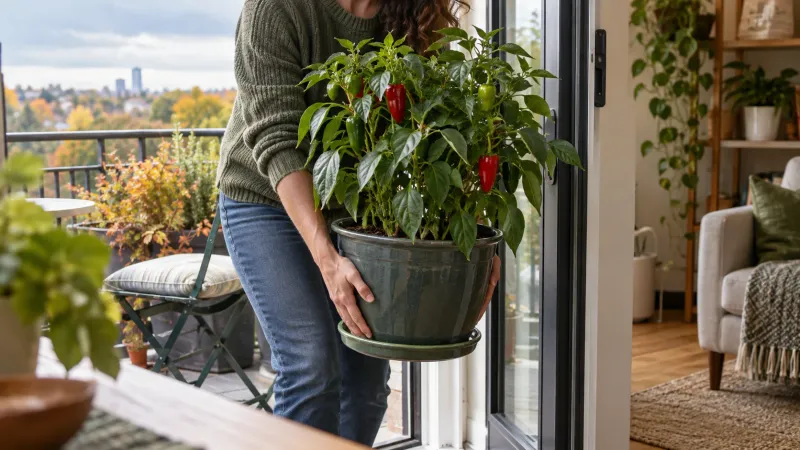
Frost forecasts have a way of showing up fast, so the best move is to bring the pot inside before the cold arrives. Peppers are frost-sensitive, and trimming the plant back will not protect it from a freeze.
Texas A&M AgriLife lists peppers among frost-susceptible vegetables in its fall vegetable guide for Texas.
No single calendar date works across the South. A gardener in the Texas Panhandle may be hauling pots inside weeks before someone in South Florida needs to think about it.
Watch your local forecast and move plants when lows start heading toward the danger zone.
Moving indoors is also not your only way to stretch the pepper season. University of Florida IFAS recommends a fall outdoor pepper planting in August or September, and recommended last planting dates in Texas differ by region.
If your climate allows a fall crop, a fresh young plant outdoors may be worth trying alongside the rescued one.
Inspect the plant before it joins your indoor collection
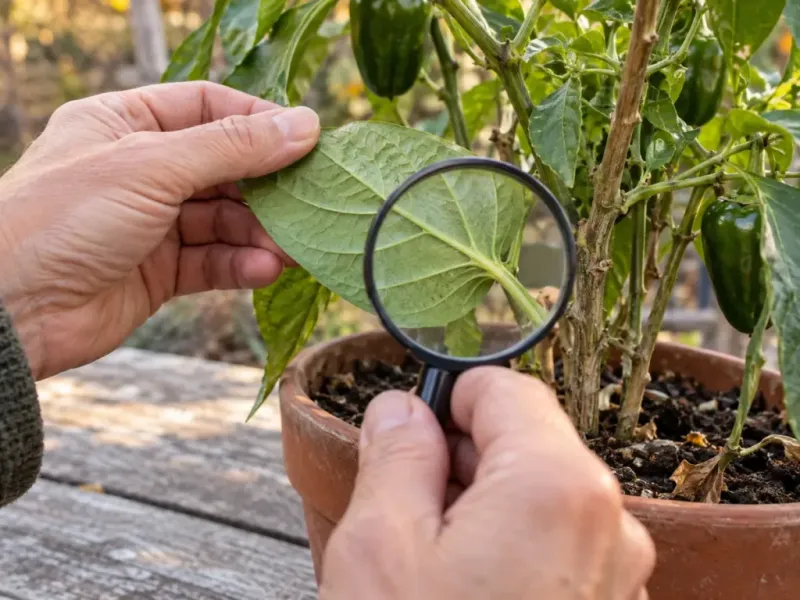
A summer outdoors means your pepper may be hosting hitchhikers. Look over the tops and undersides of leaves, the stems, and the soil surface.
Check the container too, since pests can hide in drainage holes and under the rim.
Where practical, rinse or wash pests off the plant before it comes in. Then keep it apart from your other houseplants for a while and keep watching it.
Minnesota Extension recommends examining leaves and containers and isolating plants when pests turn up.
A spare room or a corner away from your other plants works fine for this quarantine. A quick weekly look is usually enough to catch a problem early.
If you decide a treatment is needed, be careful. Plants and products vary in how they react, and this pepper is an edible plant.
Use only a product whose label allows the intended indoor use and use on edible plants, and follow the directions on that label.
Trim for a manageable plant, not to force fruit
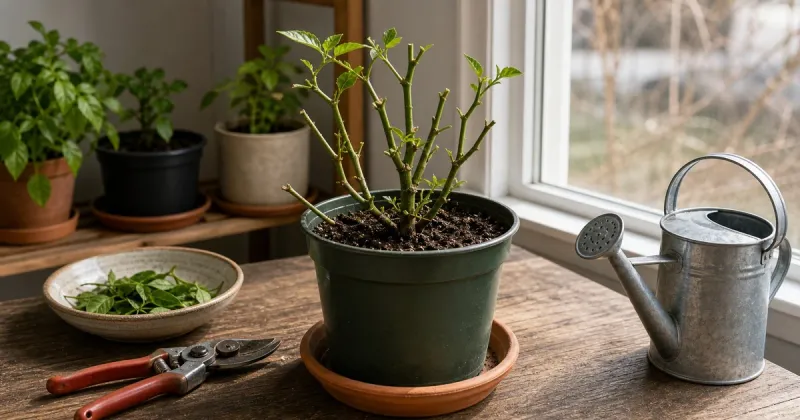
Pruning has one dependable job here: making a big plant small enough to fit by a window. A sprawling summer pepper can be hard to move and harder to light, so a trim may make life easier.
A Kansas State Extension newsletter shares one gardener’s story. She trimmed her plants to reduce their size and had a successful winter harvest.
Earlier, she tried to keep plants dormant by repeatedly removing new leaves, and those plants died.
That is one person’s experience with mixed results, not a controlled test. It does not give you a cut height, a percentage to remove, or a universal pruning method.
It also does not show that pruning triggers fruiting. So trim only as much as you need for space, avoid stripping every new leaf, and let the plant keep its growth.
A cool, quiet winter can prioritize survival
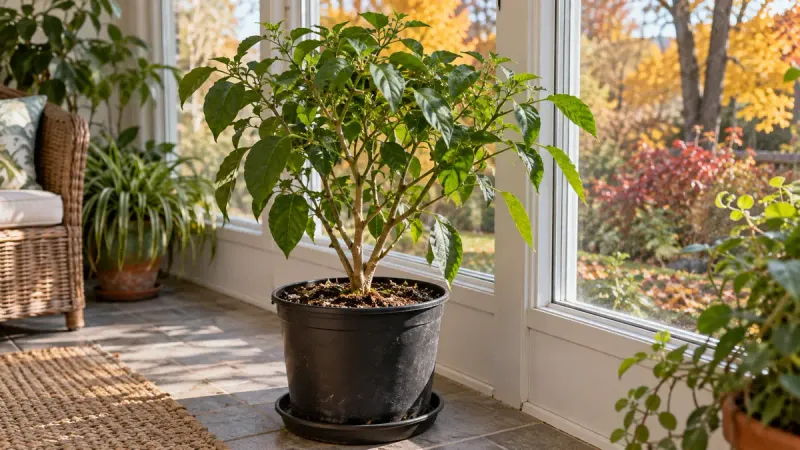
If keeping the plant alive is your goal, you can go low-maintenance. Water less, skip the fertilizer, give the plant adequate light, and keep it away from drafts.
Wisconsin Extension’s gardening recap lists these same basics for overwintering rather than harvesting.
Temperature matters too. Oregon State describes peppers held at 40 to 55 degrees F as being in stasis.
Growth slows way down, and the plant mostly waits. A bright garage, enclosed porch, or cool spare room may fit, as long as it stays above freezing.
Check the soil with a finger before watering. Overwatering a resting plant is an easy way to lose it, and leaf drop during this period is not unusual.
Remember what this path gives you. A plant resting in cool stasis is not growing fruit, and it may not ripen any.
You are holding a place for spring, not shopping for winter peppers. No method promises that every plant survives.
Winter fruiting needs light and suitable temperatures
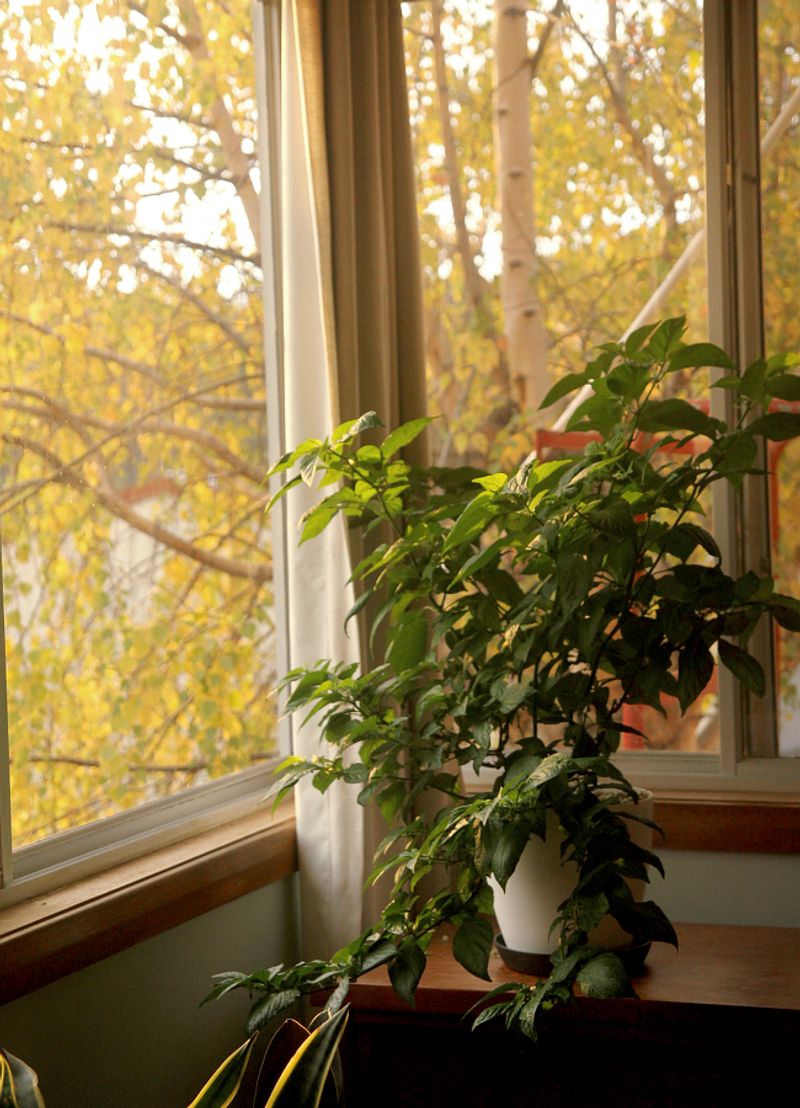
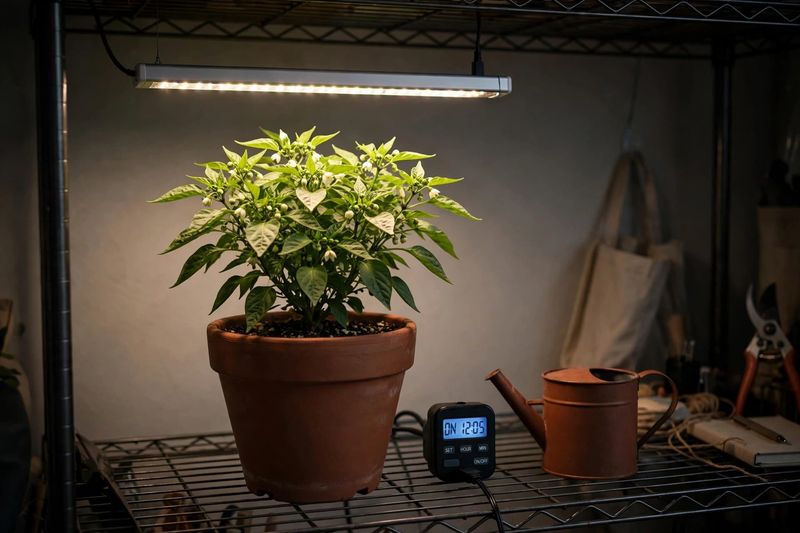
For an active winter attempt, light is the big factor. New Mexico State University recommends a south- or west-facing window, or a grow light when the window is not enough.
Its indoor chile pepper guidance says grow lights can run 14 to 16 hours a day, and it cautions that getting peppers to flower or fruit at a certain time can be challenging.
Temperature adds another hurdle. UC IPM says normal fruit set does not occur below 58 degrees F at night or above 85 degrees F during the day.
Treat those numbers as cautions. Staying inside them does not promise fruit.
Also keep two things separate. Peppers that are already on the plant may keep ripening indoors, but that does not mean new ones will set.
Oregon State notes that low winter light may stop fruit from ripening at all.
A winter harvest is possible, but it is uncertain. Enjoy any peppers you get, and call the living plant the main prize.