
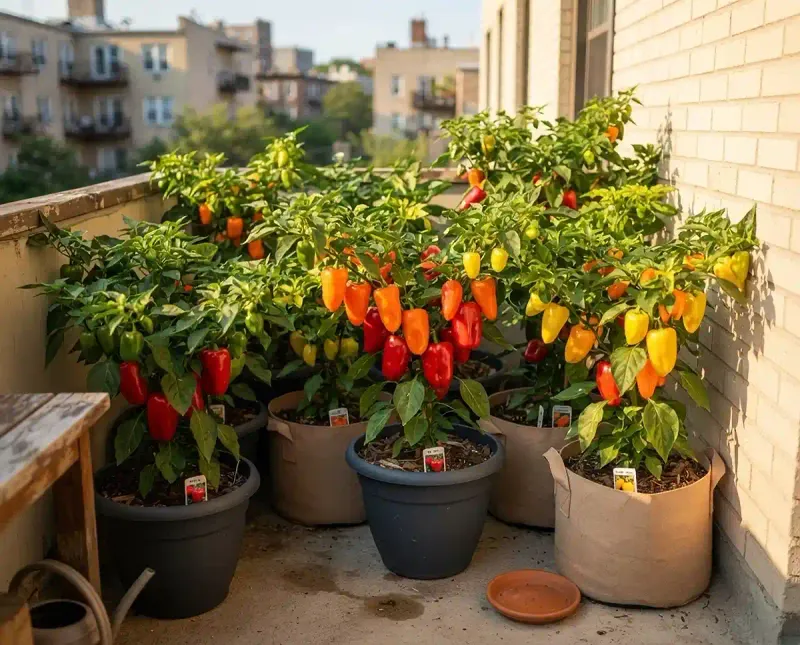
Your tomato and pepper pots may still be loaded with fruit, but the weather has started to shift. Cooler air and more rain can change how fast a pot dries out, and that can catch gardeners off guard.
A few simple checks can keep roots healthy and help the last harvest ripen without splits or spoilage. Here is how to read your pots instead of guessing.
Cool October nights do not set a watering cutoff
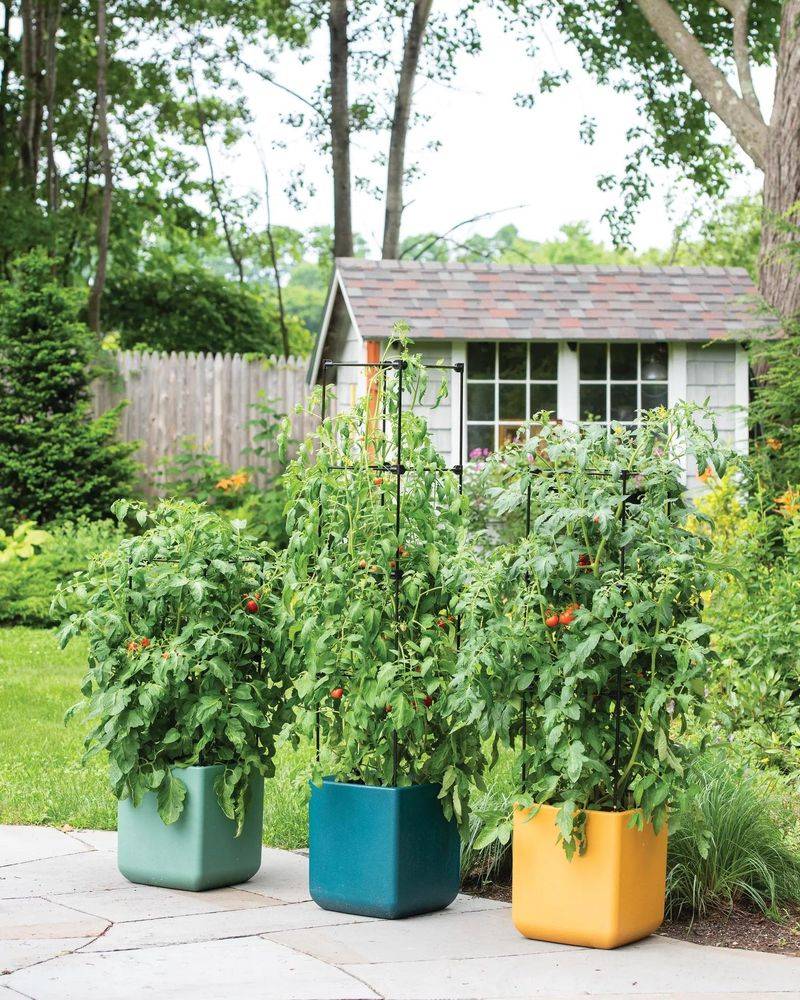
Fall weather can change how quickly some pots dry out, but the calendar and the night temperature are poor watering triggers. A pot in full sun with a big plant may still dry fast on a breezy October afternoon.
A shaded pot that catches frequent rain may stay damp for days.
Gardening conditions across the South differ a lot. A September 2026 UF/IFAS Extension guide lists September 15 as the ideal warm-season planting date for Central Florida and notes tomatoes and peppers may still be producing in fall.
That is a regional example, not a schedule for everyone from East Texas to the Carolinas.
The better habit is to check each pot. UF/IFAS container guidance and University of Maryland Extension both point toward watering based on actual moisture, not a fixed routine.
Plants still need water when the mix is dry, even if the nights feel crisp.
Check the mix before deciding to water
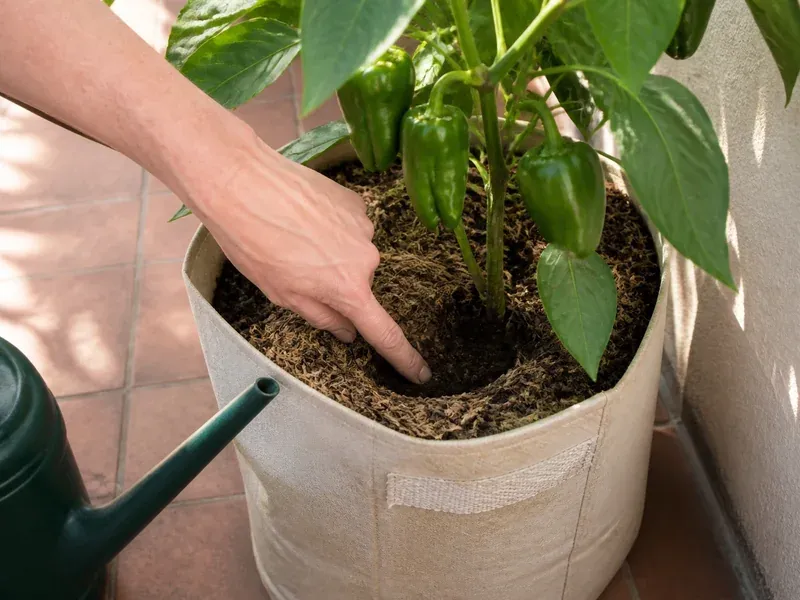
Try the finger test. Push a finger into the potting mix a couple of inches down, slightly below the surface.
If it feels dry there, it is time to water. If it feels damp, wait and check again later.
The top layer can fool you. It may look dry while the root zone is still moist, or the reverse after a short shower.
Many pots dry unevenly, so probing beats judging by sight.
Several things change drying speed. Small pots and porous clay pots generally dry faster than larger or less porous ones, as noted in UF/IFAS guidance on growing vegetables in containers.
A big, leafy tomato uses more water than a small pepper, and sun and wind pull moisture out faster.
Skip the habit of copying your summer timer. A fixed weekly schedule will not fit every pot either.
Let the mix tell you what each container needs on a given day.
Account for rain, then water thoroughly and let pots drain
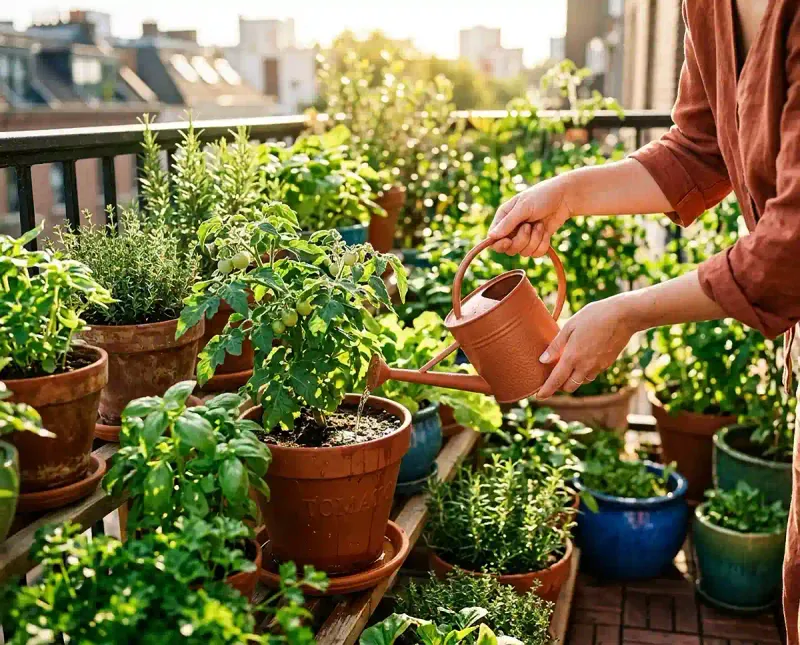
After a rainy day, walk the pots. Containers out in the open can get a heavy soak, while those under eaves or beside a wall may get almost nothing.
University of Maryland Extension points out that location affects both rain exposure and drying.
When the mix is dry, water slowly until it runs out of the bottom holes. That wets the whole root ball instead of just the top.
Then let the extra drain away.
Poke a stick through the drainage holes if they seem clogged, and empty saucers so pots are not standing in runoff. Waterlogged mix and poor drainage can set up root problems, as covered in the Texas Plant Disease Handbook.
The culprit there is standing water and slow drainage, not a cool night by itself. Good drainage keeps roots supplied with air, and it is something you control.
Tomato cracking is linked to moisture swings, not cool roots
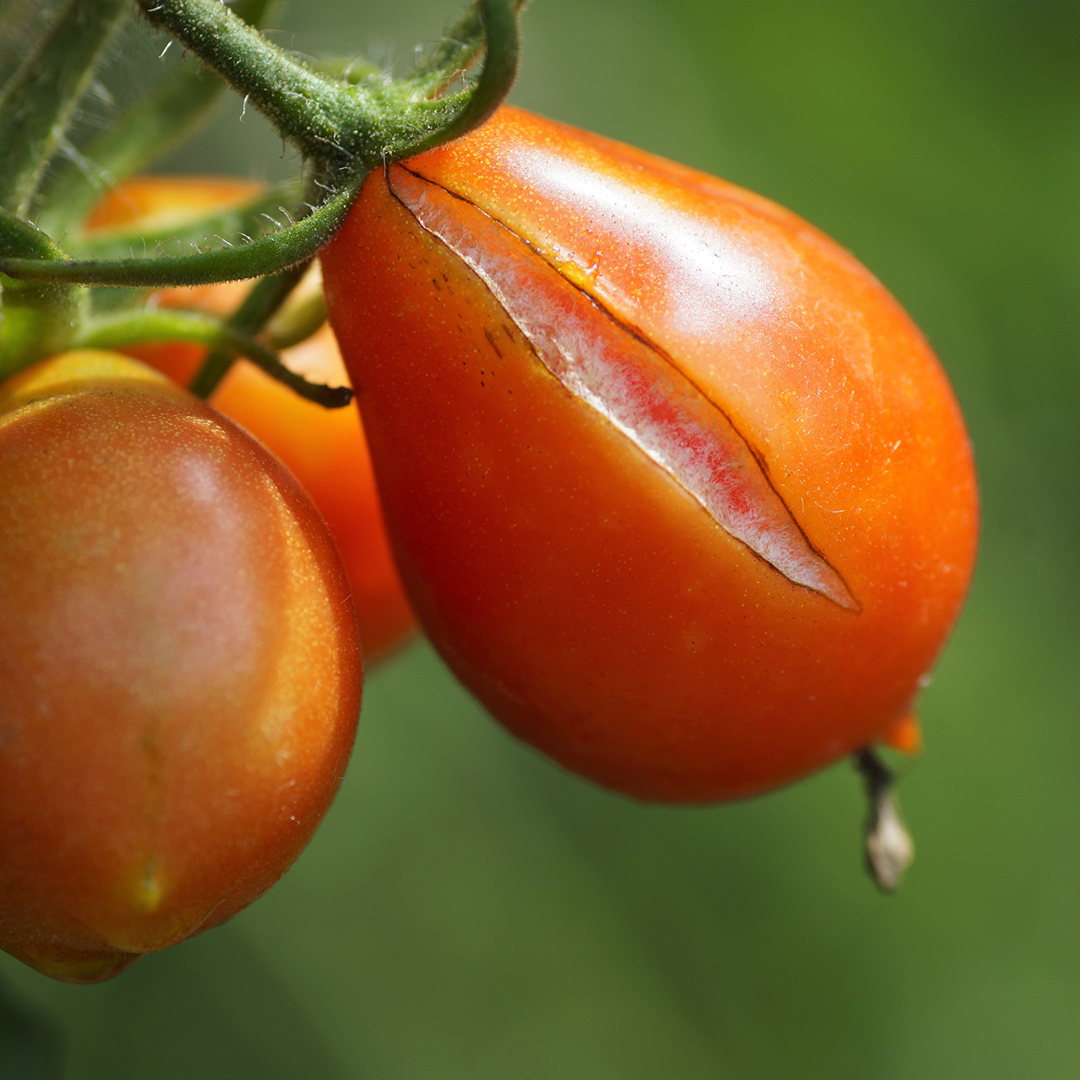
Splits on ripening tomatoes get blamed on cold roots, but that is not the established explanation. Cracking is tied to swings in water availability.
A dry spell followed by a heavy watering or a downpour can make the fruit take up water quickly, and the skin may not keep up. University of Delaware Cooperative Extension describes this pattern.
Keeping pots dry is not the fix. A long dry stretch followed by a big soak can set up the very problem you want to avoid.
Aim for reasonably even moisture, without waterlogging and without letting the mix go bone dry.
Practical example: if a pot has dried out hard, water it well but steadily, and check it more often as fruit ripens. Maryland Extension also notes that avoiding overwatering is part of keeping moisture even.
Harvest cracked tomatoes before rot begins
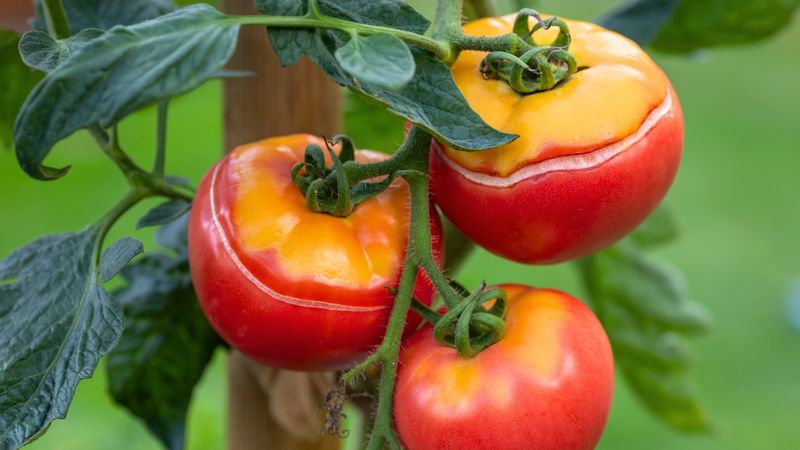
Check ripening tomatoes every day or two. A cracked tomato is not automatically a ruined one.
NC State Extension recommends picking cracked fruit before rot starts.
Deep cracks expose the inner flesh, which raises the chance of rot, as the University of Delaware fact sheet explains. Raising the risk is not the same as being rotten.
A fresh split on a firm tomato can often be picked and eaten soon after trimming.
Use your nose and eyes. If the fruit smells sour or starts oozing, compost it.
Otherwise, bring the tomato inside and let it finish ripening on the counter.
Fall watering itself is not what rots the fruit. Splits are the opening, so catching them early is the practical step.
Some jalapeño corking is normal
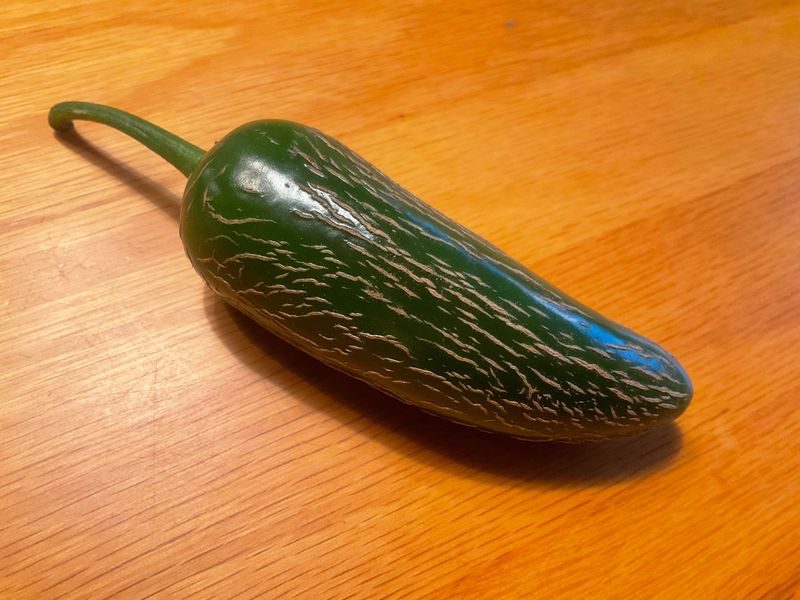
Peppers have their own set of marks, and they do not all mean trouble. Fine, tan, corky-looking lines on a jalapeño are often normal as the fruit ripens.
Maryland Extension says this corking is common and does not affect eating quality.
That is different from a tomato split. A jalapeño with superficial lines can be left on the plant and picked as usual.
There is no need to change your watering just because you spot them.
Other pepper problems have other causes. University of Georgia Cooperative Extension covers common pepper defects and shows that deformed or damaged fruit can come from several different issues.
Look closely before diagnosing. Soft, sunken, or moldy spots are a different story from dry, shallow lines, so judge the texture and the whole fruit.
Use a condition-based routine through fall
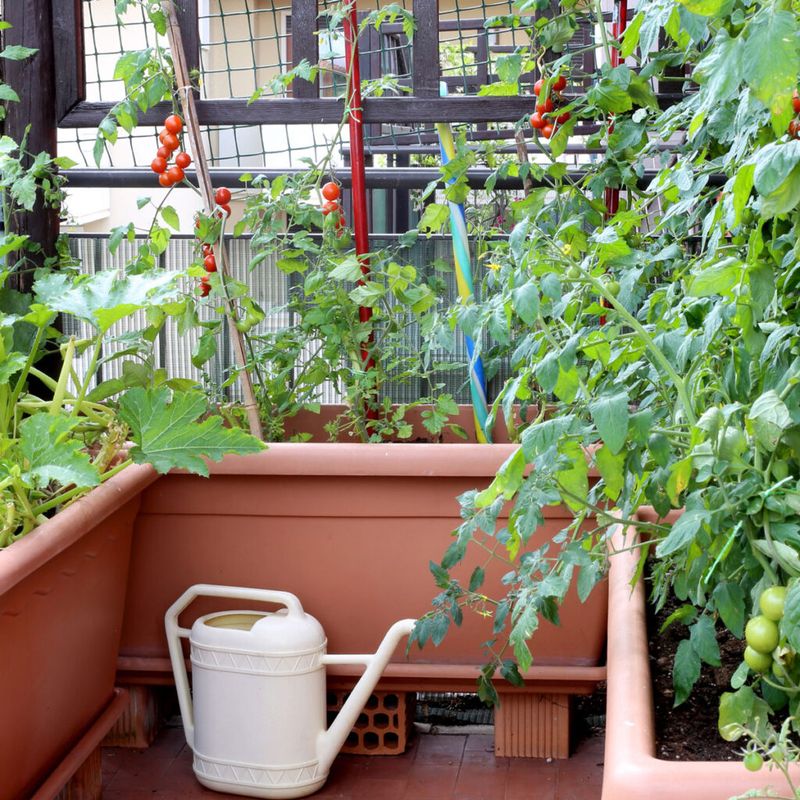
Keep the routine simple. Probe the mix below the surface, look at where each pot sits and how much rain it received, and water thoroughly only when it feels dry.
Let the extra drain out, and keep holes open and saucers empty. Then look over your ripening fruit for splits.
Guidance from UF/IFAS and Maryland Extension supports this condition-based approach.
Your pots keep their own calendar, and a finger in the mix reads it best.