
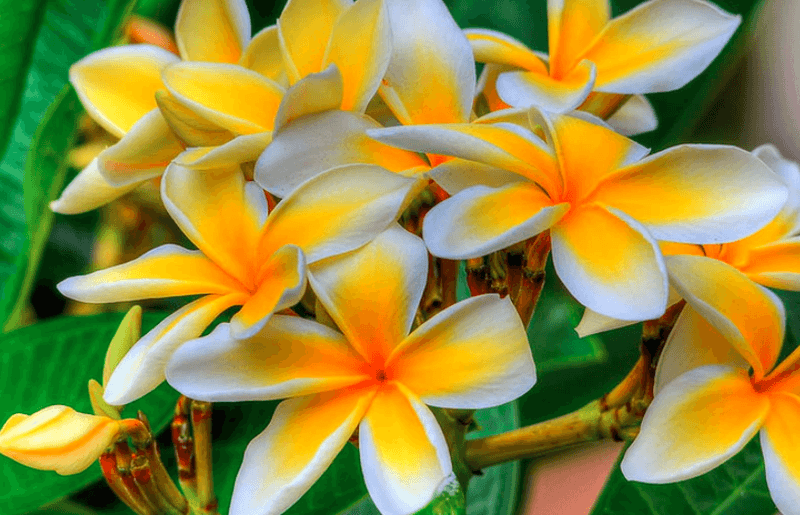
Florida plumeria owners often search for one secret action that will guarantee a yard full of flowers in August, but the real story is more straightforward and more forgiving than that. No single June task has been proven to control whether your plumeria blooms later in summer, and chasing that idea can lead to mistakes that actually do hurt the plant. What matters most is protecting the growth your plant has already started, because disrupting it with hard pruning, drought stress, or the wrong fertilizer can set things back. Understanding what actually influences summer flowering puts you in a much better position than following a rigid calendar.
June Is Not a Proven Flowering Deadline
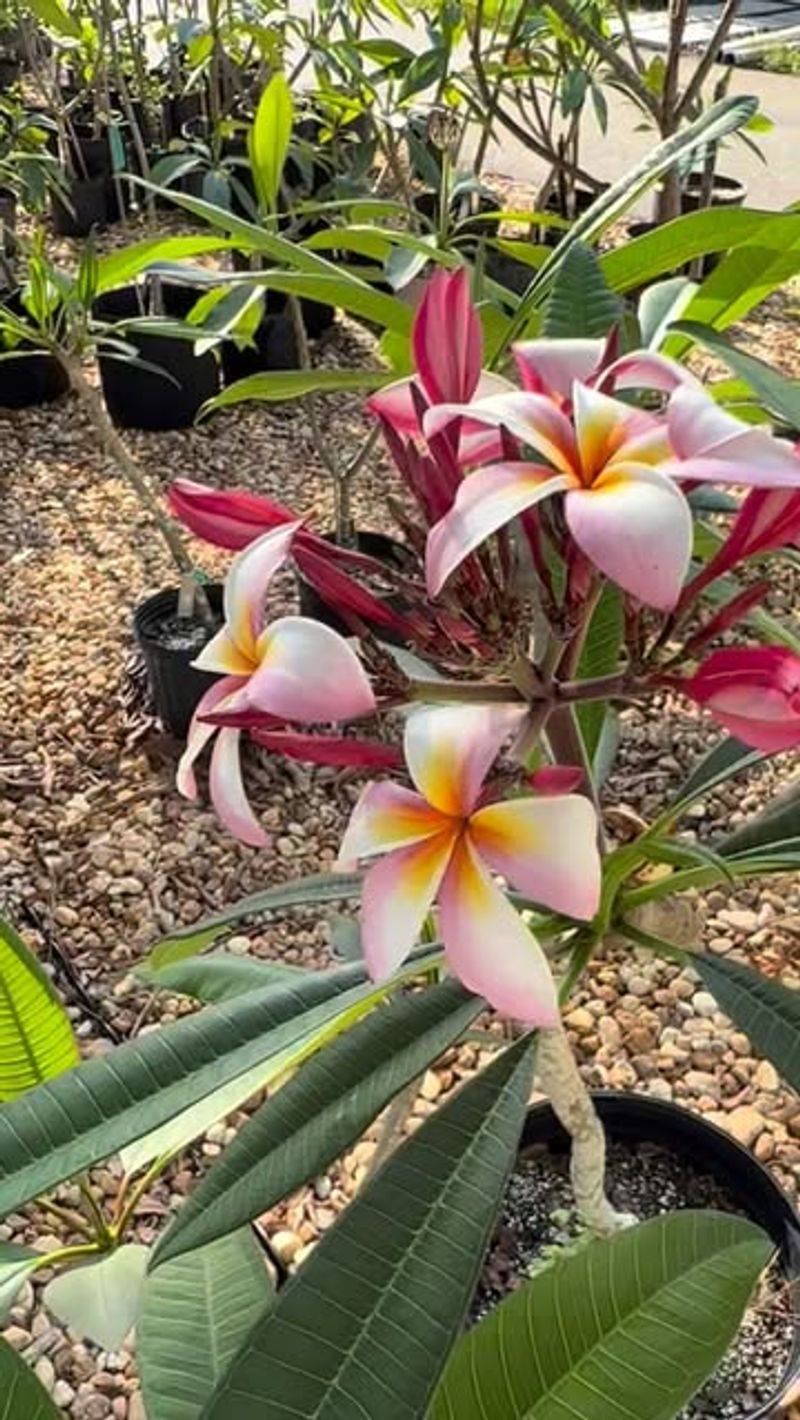
Popular gardening advice sometimes packages a single month as the make-or-break window for plumeria flowering, but that framing does not hold up against the evidence. UF/IFAS Gardening Solutions reports that Florida plumerias commonly flower from May through November, meaning August sits inside a long and naturally variable season rather than at the end of a narrow deadline you either hit or miss.
Bloom timing shifts depending on the cultivar, how mature the plant is, how much direct sun it receives, temperature patterns, winter injury history, and site conditions. A specimen in South Florida Zone 10B can behave quite differently from one growing in inland Central Florida Zone 9B, where frost damage in winter sometimes affects how the plant enters the growing season. No authoritative source reviewed for this article identifies a single June-only intervention that controls August flowering.
The more useful question is not “what must I do before June ends” but rather “what conditions help an actively growing plumeria keep the growth it already has?” Avoiding hard pruning on healthy stems, preventing severe drought, maintaining drainage, and giving the plant adequate light are all reasonable goals during early summer. Each of those factors is discussed in the sections that follow, along with realistic expectations about what they can and cannot promise.
Treating June as a hard deadline creates unnecessary anxiety and sometimes pushes owners toward interventions, like aggressive pruning or heavy fertilizing, that can do more harm than good. A plumeria that is actively growing in June with healthy terminal tips, strong sun, and adequate but well-drained moisture is already in a good position. The job in early summer is mostly to avoid disrupting that momentum, not to search for a single corrective action.
Preserve Healthy Terminal Growth When Flowers Matter
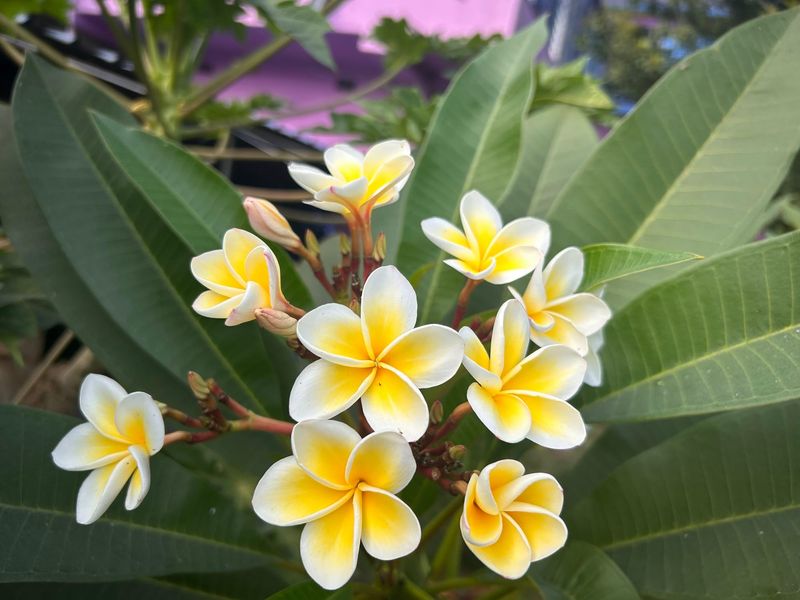
Plumeria flowers emerge in clusters at the ends of stems, which means the growing tips of healthy branches are the sites where flowers actually appear. Cutting off those tips during active summer growth does not stimulate more flowering. It removes the spots where flowers were forming or delays the plant while it grows replacement stems.
A question answered by University of Illinois Extension confirms that plumeria blooms at the ends of its branches, and drastic pruning can reduce the number of flowering sites available in a given season. This does not mean every single tip will produce a flower cluster or that the total number of tips mechanically determines how many flowers you get. Cultivar, plant maturity, light, nutrition, and overall plant health all play roles.
What it does mean is that a casual June “shape-up” or topping session, done without a clear reason, can work against summer bloom potential. If a stem is dead, visibly diseased, damaged by wind or cold, or creating a safety hazard, removing it is entirely reasonable regardless of the time of year. The concern is healthy, actively growing terminal growth being cut simply for aesthetics or on the assumption that it will push more blooms.
Better-supported pruning windows are early spring before leaf-out or after the main flowering period has wound down. Pruning at those times gives the plant a chance to develop new terminal growth before the next bloom cycle begins. During June, when stems may already carry developing flower stalks or newly expanding leaves, leaving healthy tips undisturbed is the more cautious and evidence-aligned choice.
One practical note: plumeria sap contains irritants, so wearing gloves and eye protection whenever you cut stems is sensible. Any pruning cuts should be clean, and tools should be wiped between plants to avoid spreading disease.
Balance Water With Drainage During Summer Growth
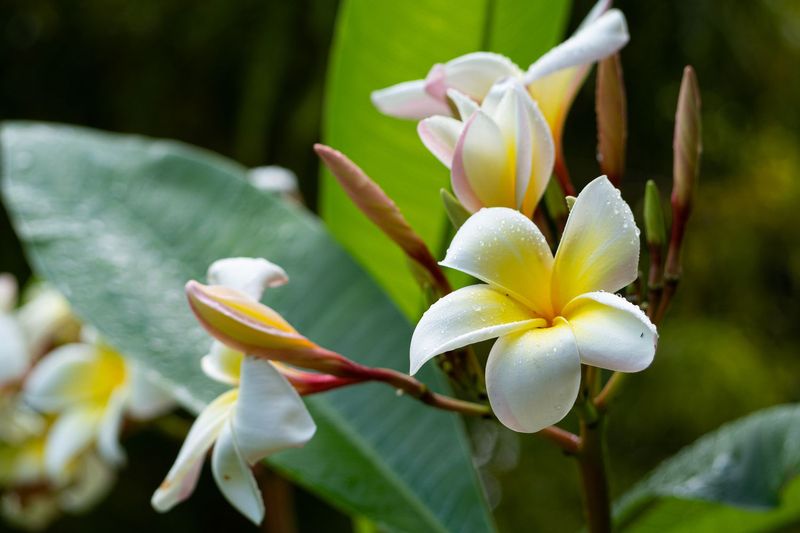
Water management for Florida plumerias in summer is genuinely a two-sided problem. Too little water during active growth can cause the plant to abort developing flower stalks and drop leaves as a stress response. Too much water, or water that sits in poorly drained soil, can lead to root rot that weakens the plant from below, often without obvious above-ground symptoms until the damage is already significant.
The practical approach is to check the root zone before watering rather than following a fixed schedule. When the soil or potting mix has dried to a meaningful depth, water thoroughly and then allow excess water to drain completely before the next irrigation. UF/IFAS guidance on landscape irrigation management emphasizes that irrigation frequency should reflect plant type, soil type, season, shade, and site conditions rather than a calendar interval.
Florida’s sandy soils drain quickly and hold relatively little water, which matters differently depending on whether your plumeria is in a container or in the ground. A container plant, especially a small or recently potted one, can dry out noticeably faster than an established in-ground specimen and may need more frequent monitoring during heat spikes. At the same time, a container with poor drainage holes can stay waterlogged after Florida’s heavy summer afternoon rains, which is equally problematic.
Established in-ground plumerias in South Florida often receive substantial natural rainfall through the summer and may need little or no supplemental irrigation during wet stretches. Newly planted or recently transplanted specimens, however, need more consistent attention to establishment moisture while their root systems expand. Adjusting your approach based on the plant’s actual situation, rather than applying one rule to all plumerias in all Florida yards, is the most reliable way to support active summer growth without creating root problems.
Give Plumeria Strong Sun Before Chasing Fertilizer
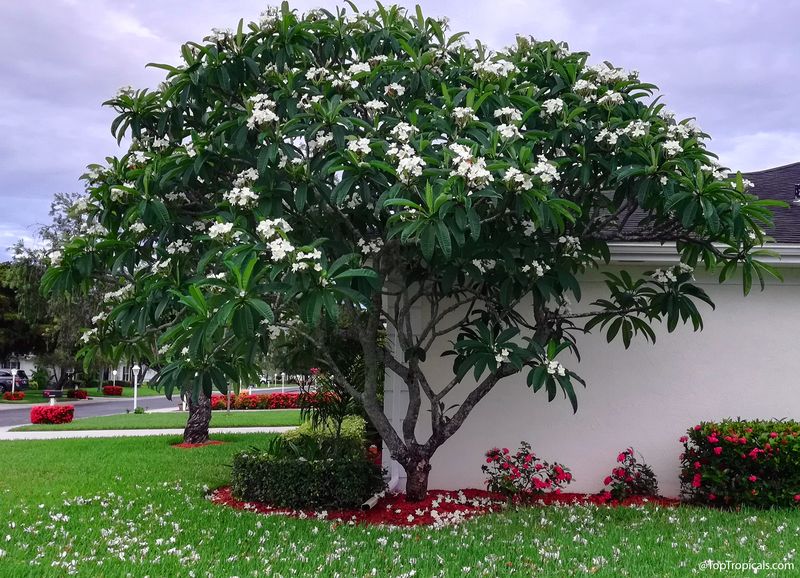
Before adjusting fertilizer, checking soil pH, or buying any specialty product, the single most reliable thing a Florida plumeria owner can do is confirm the plant is getting strong direct sunlight. UF/IFAS states that plumerias grow best in full sun and well-drained soil. Shade, even partial shade from a nearby tree or structure that has grown taller over the years, is a credible and frequently overlooked cause of reduced flowering.
University of Wisconsin Extension notes that plumerias need a minimum of six hours of direct sunlight for good blooming, though the exact threshold can vary by cultivar and growing conditions. The key word is direct: filtered light through a screen or canopy does not substitute for open sky exposure during the peak sun hours of a Florida summer day.
For established landscape plants, sun access is sometimes reduced gradually as surrounding vegetation fills in, making it easy to miss. A plumeria that bloomed reliably three years ago but has become progressively weaker in flower production may simply be getting less sun than it was before. Checking the site at midday during summer will quickly reveal whether shade has become a factor.
Recently rooted cuttings or newly transplanted specimens have different priorities. They need to establish a functional root system before they can support heavy flowering, and some may not bloom in their first season regardless of sun or nutrition. Photosynthesis and the carbohydrates plants store generally support growth and flowering, but treating that as a reason to add a June treatment assumes a connection that has not been demonstrated specifically for plumeria. Getting the light right first is the more grounded starting point.
Use Fertilizer Only When the Plant and Soil Justify It
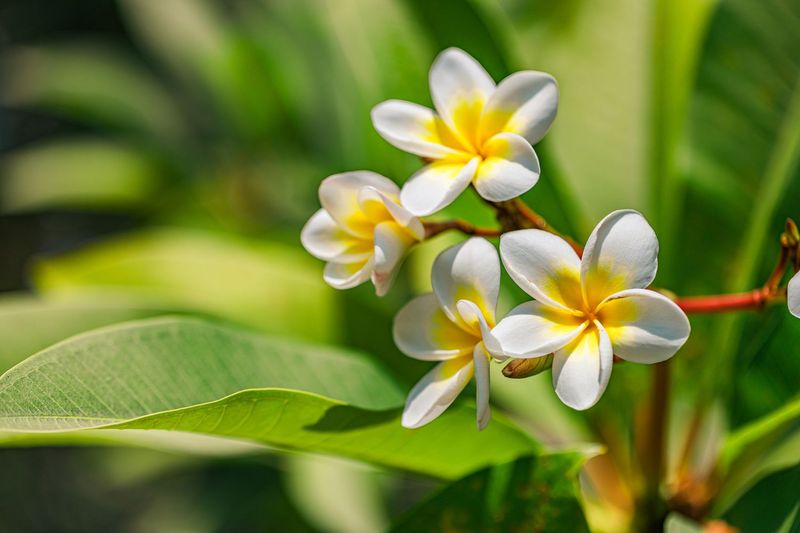
Fertilizer advice for plumeria is one of the more contested areas in popular gardening content, and it is worth separating what extension sources actually say from what enthusiast forums often repeat. Some plumeria-care sources recommend high-phosphorus “bloom booster” products during the growing season, presenting them as a reliable way to push more flowers. The evidence behind that specific claim is weaker than its popularity suggests.
University of Wisconsin Extension recommends fertilizing plumerias during the growing season, but ties that guidance to following the product label and using a balanced approach rather than automatically reaching for a high-phosphorus formula. Florida-specific extension guidance goes further on the phosphorus question: UF/IFAS research on phosphorus and water quality explains that phosphorus can move off-site in Florida’s sandy soils, entering waterways where it contributes to algae problems. Applying phosphorus when soil levels are already adequate is both environmentally harmful and agronomically unnecessary.
A soil test is the most defensible basis for any fertilizer decision. UF/IFAS guidance on soil-test-based phosphorus recommendations supports applying nutrients according to documented soil need rather than a calendar prescription, and UF/IFAS principles of sound fertilizer recommendations reinforce using plant condition and soil information together before deciding on a product or rate.
If a plumeria shows visible signs of nutrient deficiency, such as yellowing leaves that do not match rust or drought symptoms, then fertilizing during active growth with a labeled product makes reasonable sense. Applying fertilizer to a plant that shows no deficiency symptoms, on sandy soil that has not been tested, based only on a June calendar date, is a practice the available evidence does not support and that carries real environmental risk in Florida’s landscape.
Troubleshoot Weak Flowering Without Blaming June
When a plumeria produces fewer flowers than expected, the cause is rarely one missed calendar task. A useful diagnostic sequence starts with the most fundamental factors and works outward. First, check light: is the plant receiving direct sun for most of the day, or has shade crept in from surrounding growth? Second, review recent watering: has the plant experienced prolonged drought that might have triggered flower-stalk abortion, or has it been sitting in waterlogged soil that could have stressed or damaged roots?
Third, consider pruning history. If healthy terminal stems were cut during the growing season, that may have removed or delayed potential flower sites. Fourth, think about plant maturity and origin: a young plant grown from a cutting may simply not be old or large enough to flower reliably yet, and that is a normal developmental stage rather than a care failure.
Fifth, assess winter and cold damage, especially for plants in northern or inland Central Florida. UF/IFAS notes that plumerias are best suited to Zones 10B through 11 and are vulnerable to cold injury in cooler regions. Frost or a hard freeze can damage stem tissue in ways that affect the following season’s growth and flowering even when the plant appears to recover.
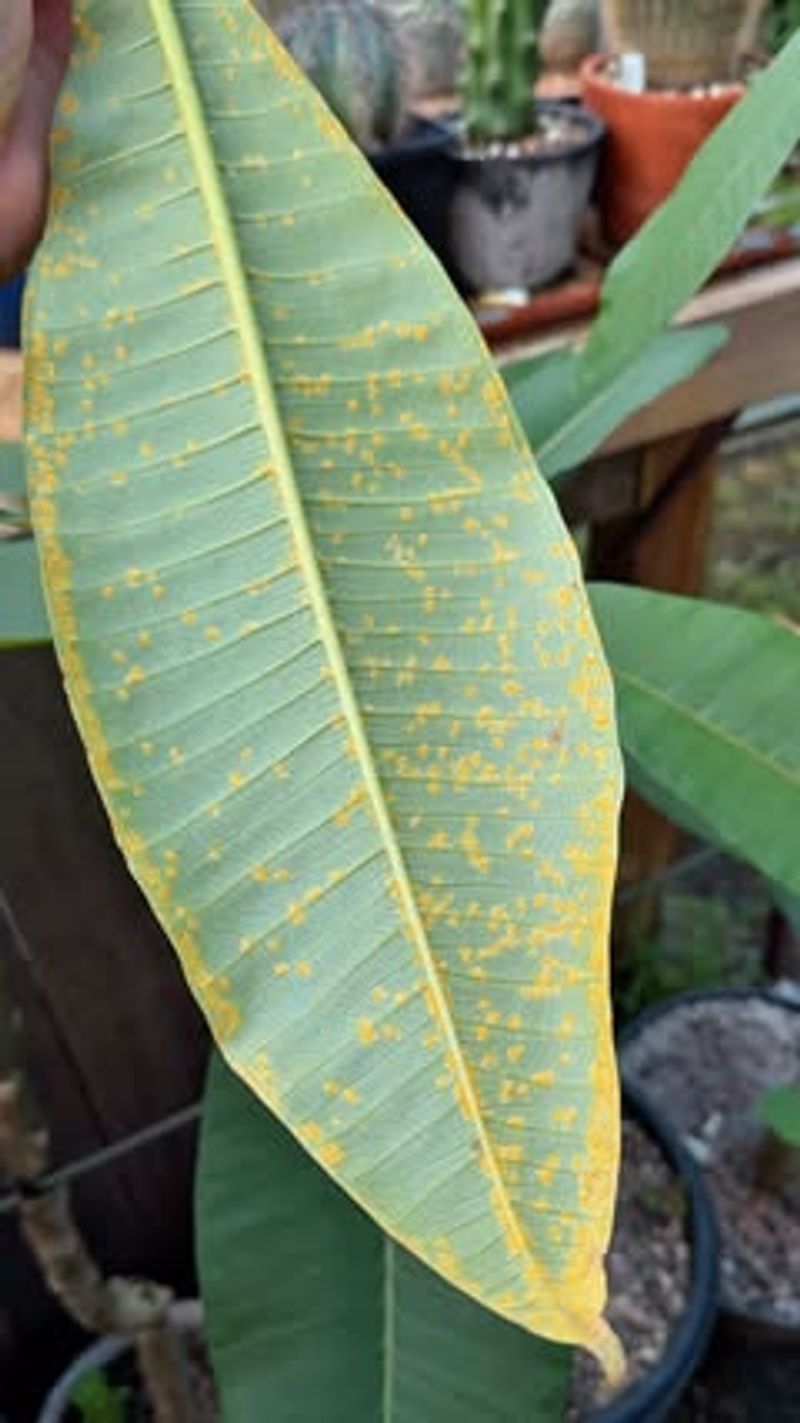
Frangipani rust is another factor worth checking during Florida’s humid summer months. UF/IFAS documentation on rusts on Florida ornamentals identifies the symptoms: yellow or chlorotic spots on the upper leaf surface and orange-yellow powdery pustules on the underside of leaves. Severe infections can cause significant defoliation, which reduces the plant’s photosynthetic capacity for that season. However, UF/IFAS Sarasota County extension clarifies that frangipani rust does not typically affect the plant’s long-term health.
Removing and disposing of heavily infected leaves can help manage minor infections at home, while any fungicide use requires following the specific product label for ornamental use.
Running through this sequence honestly will usually point toward a real, addressable cause rather than leaving the owner chasing a missed June deadline.
Protect Active Growth Instead of Chasing a June Deadline
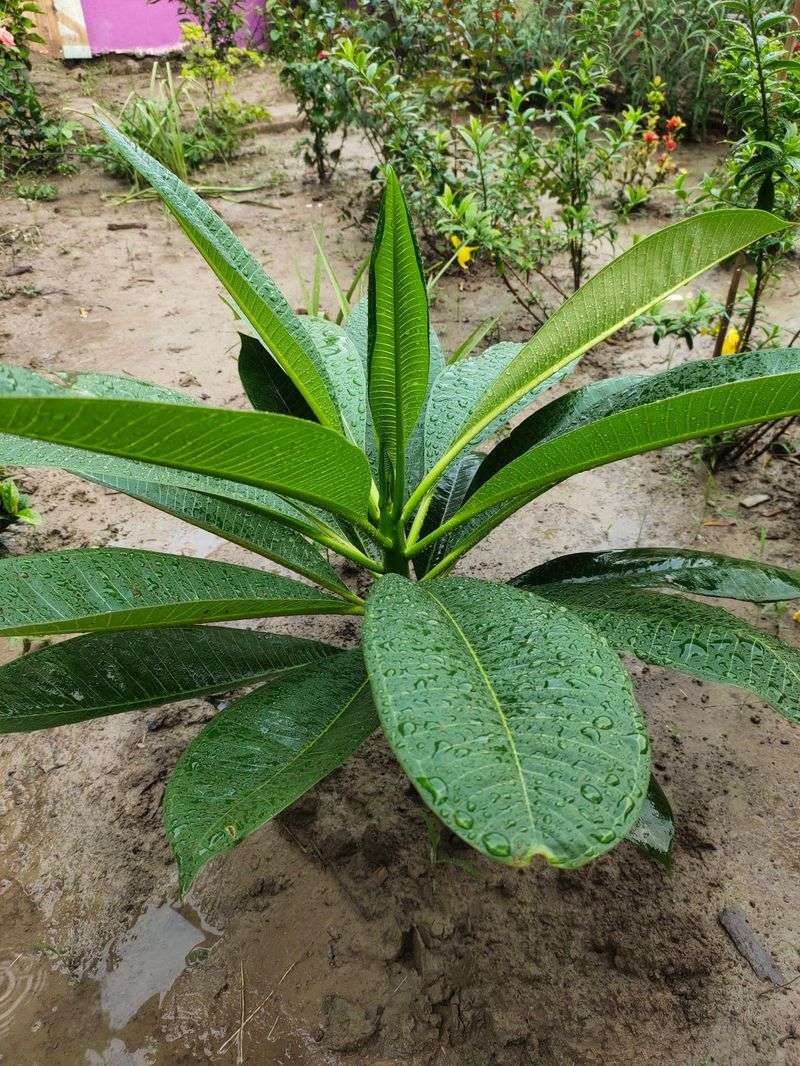
No single June treatment can guarantee August flowers, and no cited evidence supports the idea that one missed early-summer action quietly ruins a plumeria’s bloom potential. What owners can do is avoid the preventable disruptions that genuinely do affect actively growing plants: cutting healthy terminal stems without cause, allowing severe drought during active growth, keeping roots in waterlogged conditions, and applying fertilizer without soil information or visible plant need.
Adjusting care to the actual plant is more reliable than following a universal schedule. A container plumeria on a sunny patio dries faster and needs different attention than an established in-ground specimen in a South Florida landscape. A plant recovering from winter damage in Zone 9B needs different handling than a mature tree that has never seen frost. Regional climate, rainfall patterns, soil type, and plant maturity all shape what good June care actually looks like for a specific yard.
The most durable takeaway is straightforward: keep the plant in strong sun, protect roots from both drought and waterlogging, leave healthy stem ends undisturbed, and fertilize only when the plant and soil give you a real reason to. A plumeria that enters summer with its active growth intact is already positioned well. The season is long, and the plant is more resilient than a single-deadline narrative gives it credit for.