
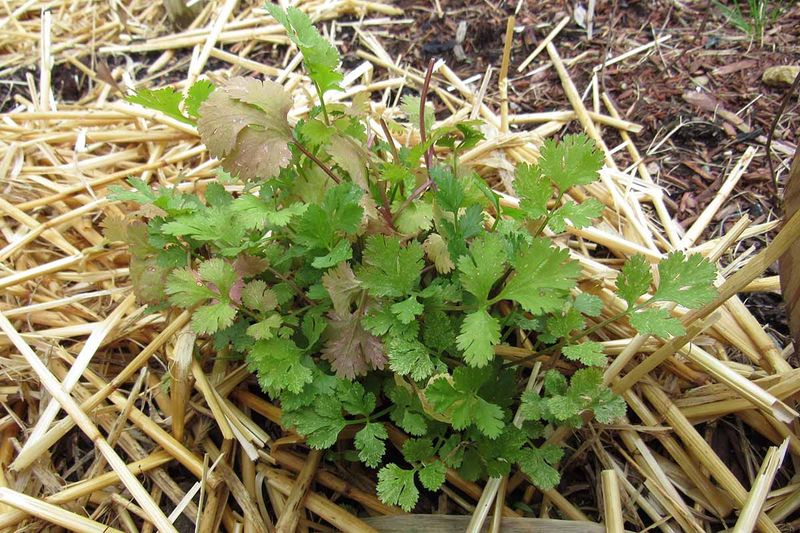
You planted cilantro for crisp fall flavor, and now the leaves are turning purple and the plants have stopped growing. It looks alarming, and the internet is full of quick answers.
The truth is that more than one thing can cause this look, and the right fix depends on what is going on below the soil line. A few simple checks can keep you from treating the wrong problem.
Purple leaves are a clue, not a diagnosis
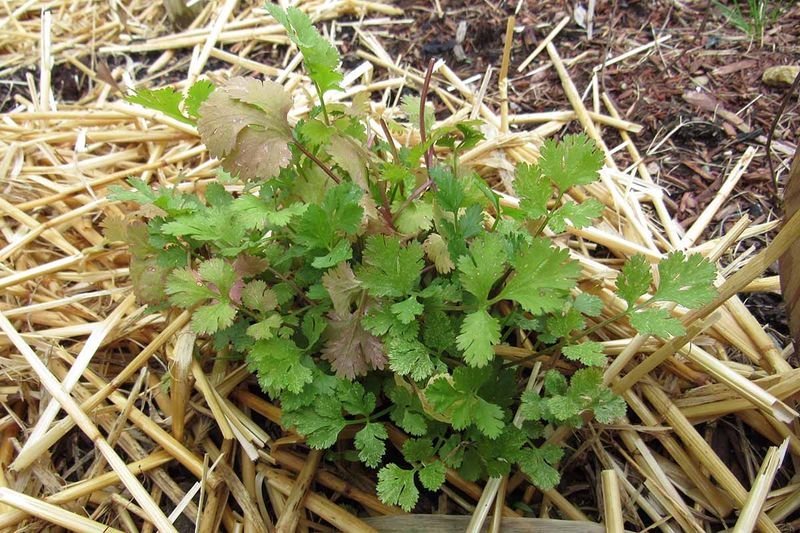
Seeing purple on your cilantro is unsettling, especially when the plants also seem stuck at a small size. Your worry makes sense.
That color change is a real signal that something is off, even if it does not tell you exactly what.
According to UF/IFAS vegetable guidance, purple leaves, stunted growth, and shortened stems can show up when vegetables are short on phosphorus. Cool, wet soil and very acidic or alkaline soil are listed among the conditions that may play a part.
Here is the catch. That list describes vegetables in general, not cilantro in particular.
Other stresses can produce a similar look, so the leaves alone cannot confirm phosphorus trouble or point to a cause. Before you reach for any product, look at how the bed is growing: temperature, moisture, drainage, and soil.
Those clues narrow things down far better than leaf color does.
Cilantro is built for cool-season growing
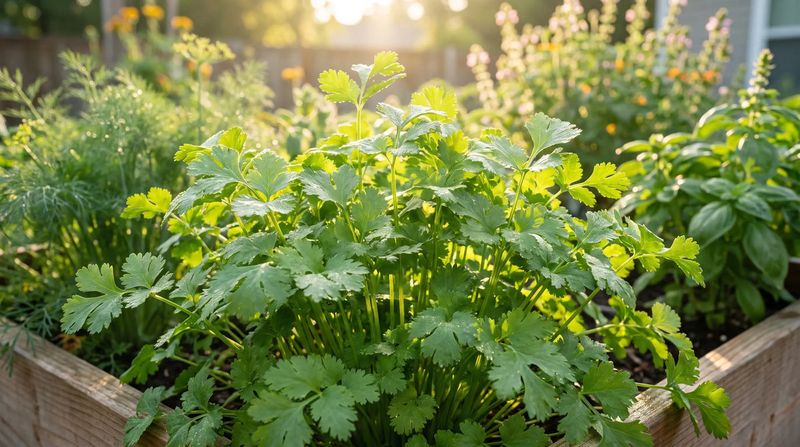
Cilantro is a cool-season herb, so a chilly fall morning is not automatically a problem. Texas A&M AgriLife says it grows best between 50 and 85°F and prefers well-drained soil.
UF/IFAS also treats it as a cool-season herb in Florida.
That is why fall and winter are the sweet spot for the crop across much of the South. Summer heat is usually what makes cilantro struggle and bolt.
So if temperatures are sitting inside that comfortable range, cool weather by itself does not mean your plants are sick or short on phosphorus. Cold becomes worth a closer look only when the plants are clearly unhappy and conditions are on the extreme side.
Keep that range in mind as a baseline while you look at other factors, especially how well the bed drains after rain or watering.
Cold soil can limit phosphorus uptake

Roots take up phosphorus more slowly when the soil is cold. Texas A&M’s tomato phosphorus guide describes this with a cold root zone.
That example is about tomatoes, so think of it as helpful background and not proof of what is happening to your cilantro.
Soil pH matters too. The Texas Vegetable Growers Handbook notes that phosphorus is less available in strongly acidic soil and at pH 7.0 and above.
Many Texas soils run alkaline, so this is worth knowing about.
Put together, cold soil and pH are two plausible ways phosphorus could be hard to reach. Still, purple leaves and slow growth cannot tell you which one, if either, is at work.
Treat them as possibilities to test, not conclusions.
Waterlogged roots face an oxygen problem
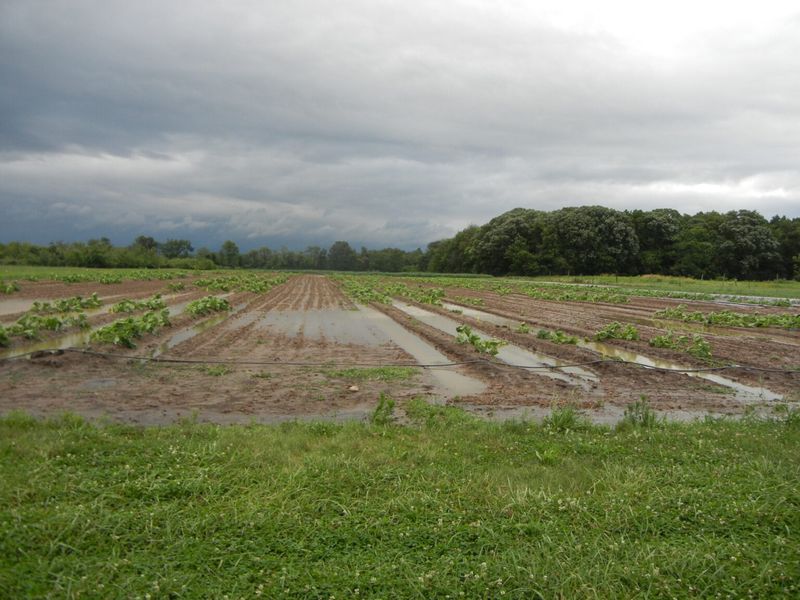
Roots breathe. When soil stays saturated, air pockets fill with water and oxygen runs low.
The UC Statewide IPM Program explains that roots need oxygen to take up water and nutrients, and that poor drainage or too much watering can damage them and stunt growth.
This is a different problem from cold-soil phosphorus trouble. A plant in soggy ground may struggle to absorb nutrients, including phosphorus, even when plenty is present.
Adding more would not fix the lack of oxygen.
Heavy clay, low spots, and frequent rain make this a real risk in many Texas and Florida beds. The Texas handbook also stresses the value of good soil structure and drainage.
Stunting from wet roots can look a lot like a nutrient problem, which is why checking moisture comes first.
What should you check before changing the bed?
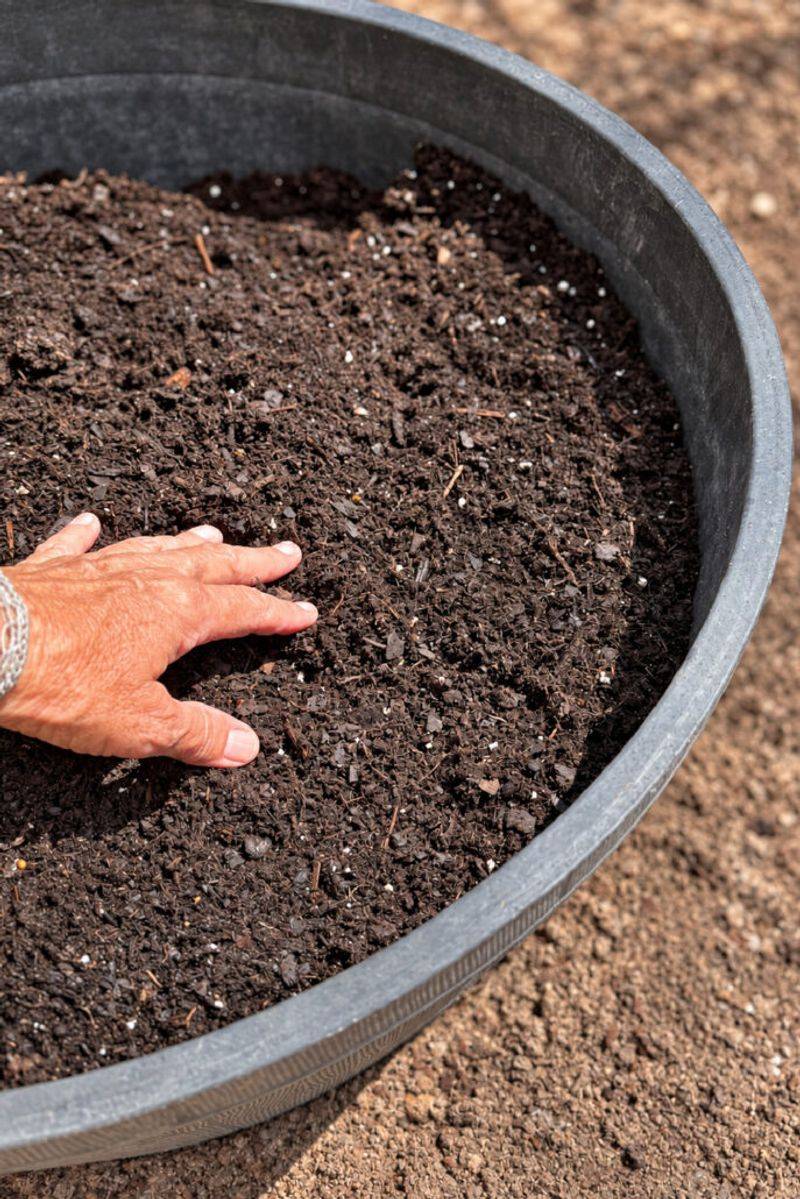
Start with your hands. Push a finger a couple of inches into the soil.
If it feels wet and heavy a day or two after watering, the bed is holding too much moisture, and more water will not help.
Next, watch what happens after a rain or irrigation. Puddles that linger or soil that drains slowly point to a drainage problem.
Texas A&M notes that cilantro prefers well-drained soil.
Then ease one struggling plant out and look at its roots. The UC IPM page on aeration deficit points to soggy soil and discolored or rotting roots as warning signs.
If the bed stays saturated, focus on drainage, such as raising the bed or loosening and amending the soil, instead of fertilizer. Be patient, because damaged plants may not bounce back quickly, and recovery is not guaranteed.
Let a soil test guide phosphorus applications
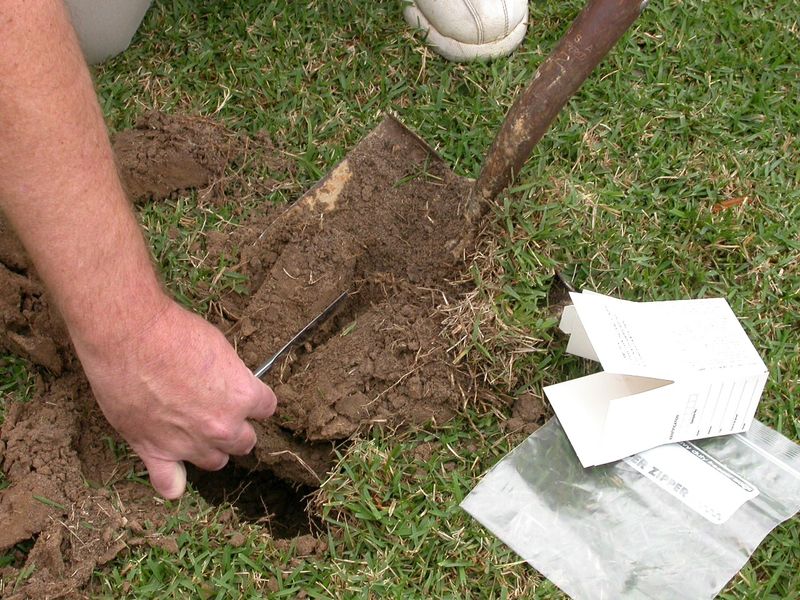
Guessing at nutrients from leaf color is a gamble. A soil test gives you numbers instead.
The Texas A&M soil testing lab offers nutrient analyses and recommendations, and UF/IFAS explains in its soil sampling guide that testing helps show nutrient status and fertilizer need. Test results also reveal soil pH, which can affect phosphorus availability.
When you submit a sample, name the crop so the recommendations fit what you are growing, and follow what the lab advises.
Florida gardeners have an extra reason to be careful. UF/IFAS Hillsborough County says phosphorus is generally readily available in Florida soils, and extra fertilizer can reach groundwater and water bodies.
Without test results that call for it, skip the phosphorus.
Treat the cause you can verify
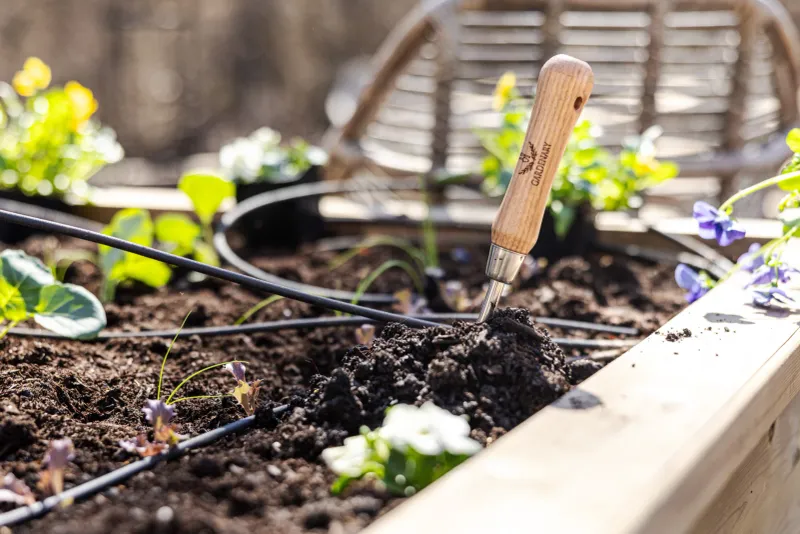
Here is a simple path. First, check whether the bed is saturated.
If it is, fix drainage and ease off watering, using the aeration deficit guidance as a reference for what wet-root stress looks like.
Second, send in a sample through a lab such as the Texas A&M soil testing lab, and apply phosphorus only if the results call for it.
Purple, stunted cilantro can have more than one explanation, and no single treatment is certain to bring the plants back. Some may recover, and some may not.
Your plants are showing you where to start looking, and the soil is where the answer lives.