
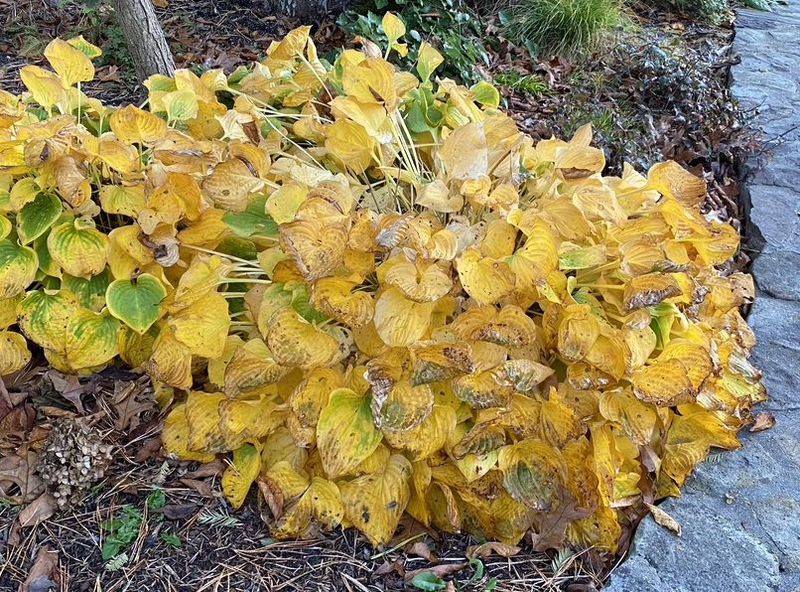
Hosta leaves can turn tattered and soggy by fall, and many gardeners blame slugs right away. Cleaning up at the right moment may take away some of the damp shelter slugs like.
But it will not fix everything, and it will not make the same clump grow fuller. Here is how to read the damage, time the cleanup, and know what to expect come spring.
Ragged leaves do not automatically point to slugs
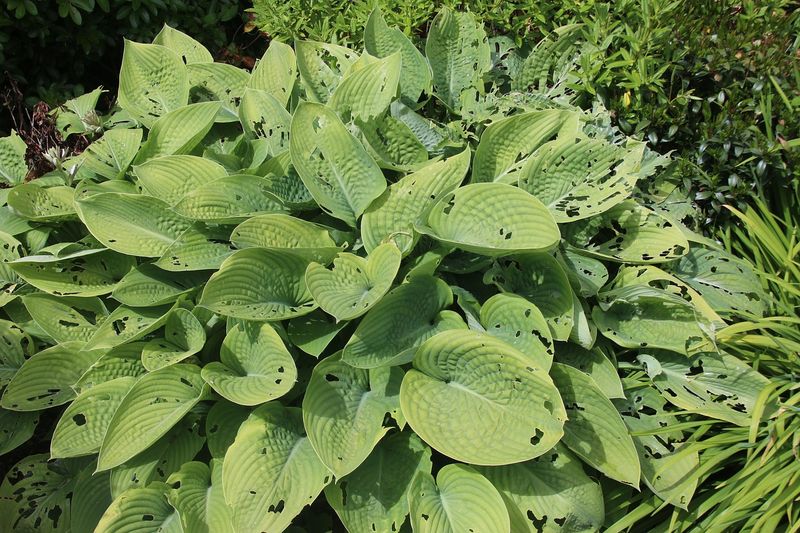
Holes in a hosta leaf make slugs the easy suspect, and they are a good one. University of Minnesota Extension notes that slugs favor hostas and feed mostly at night or on cloudy days, when conditions are cool and damp.
Look closely before you decide. Irregular holes with ragged edges and shiny slime trails on leaves or nearby soil are useful clues.
Trails dry into a silvery streak, so check early in the morning.
Still, ragged foliage alone proves nothing. Iowa State Extension lists other pests and diseases that can damage hostas, and deer and rabbits can also chew leaves down to stubs.
Go out after dark with a flashlight if you want better evidence. Spotting slugs on the leaves is much stronger than guessing from the damage.
If you find no slugs and no trails, look at deer, rabbits, or disease instead.
Wait for the hosta’s natural decline
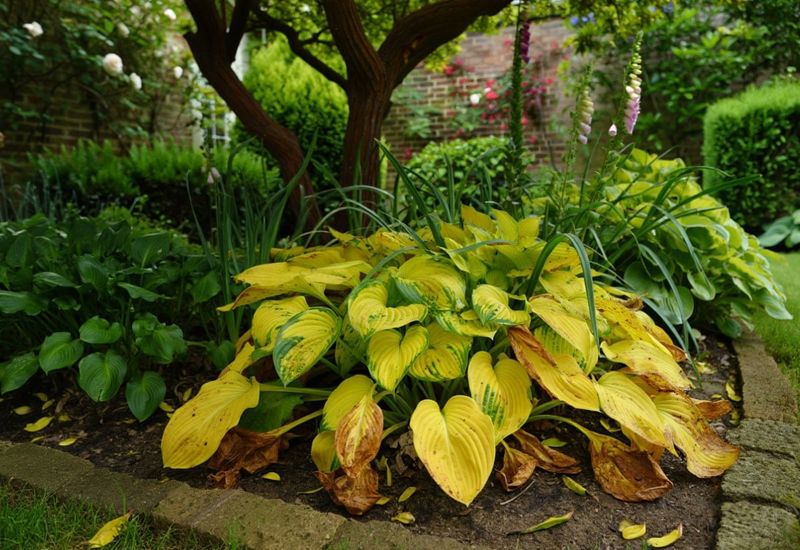
Timing comes before any cutting. Wait until the foliage has died back or its fall color has subsided.
Healthy green leaves are still feeding the plant, so snipping them early takes away energy it is storing.
Let the plant, not the calendar, tell you. Both Clemson Extension and Illinois Extension point to that stage for cleanup.
A fixed date or frost rule would not fit every yard.
Southern gardens vary a lot. Clemson’s guidance supports growing hostas in South Carolina, and it names Hosta plantaginea as especially heat-tolerant.
That does not mean every hosta performs the same across the South, or that leaves fade at the same time in every region.
A practical check is simple. If leaves are yellow, brown, mushy, or lying flat, they are ready to go.
If a leaf still looks firm and green, leave it a little longer.
Remove dead leaves from around the crown
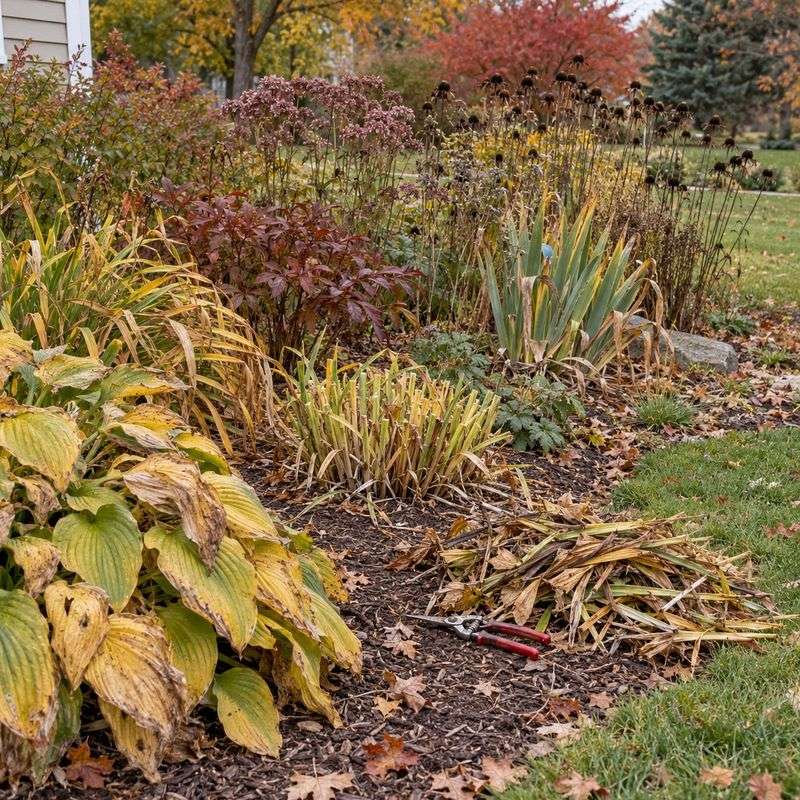
Once the leaves have collapsed, clear them away from the center of the plant. A wet, flattened pile around the crown holds moisture and gives slugs a cool place to hide.
Gloves and clean pruners or scissors make the job quick.
Take only the dead or fully faded foliage. Leave any leaves that are still healthy and green, and avoid damaging the crown where next season’s shoots will form.
Cleanup also helps with disease. Clemson Extension and Illinois Extension both recommend removing the old leaves, which can help limit disease carryover.
Where does it all go? If a plant had disease, throw the foliage out with the trash instead of adding it to the compost pile.
Healthy leaves from plants with no problems are a lower worry.
Cleanup removes some slug shelter, not every egg
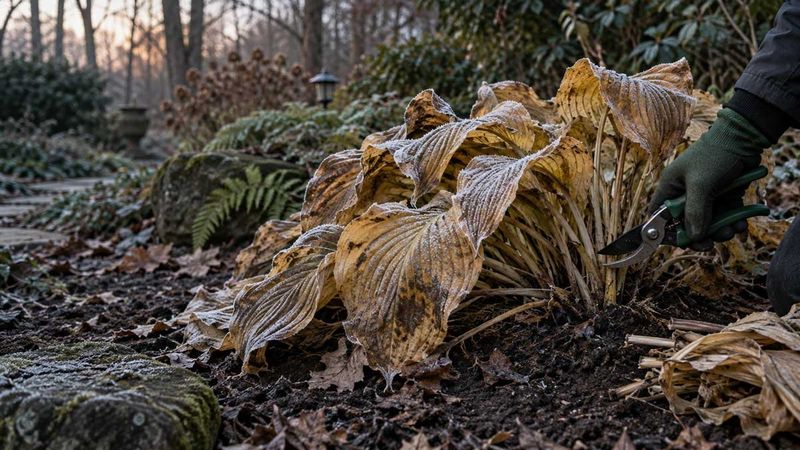
Fall cleanup is worth doing, but it is only one piece. Slugs can overwinter as eggs in protected soil sites, and they also tuck eggs under debris, mulch, or boards.
Clearing dead hosta leaves takes away some of those spots, not all of them.
University of Minnesota Extension describes this egg-laying habit. Eggs in the soil stay put when the leaves above them come off.
That is why no one can promise fewer slugs next spring or a slug-free bed. A specific drop in numbers is not something anyone can guarantee.
What the guidance does support is reducing refuges. Mississippi State Extension suggests limiting heavy mulch, leaf litter, and similar hiding places to help limit slug populations.
Think of cleanup as taking away some cover, which may help over time.
Reduce other damp hiding places
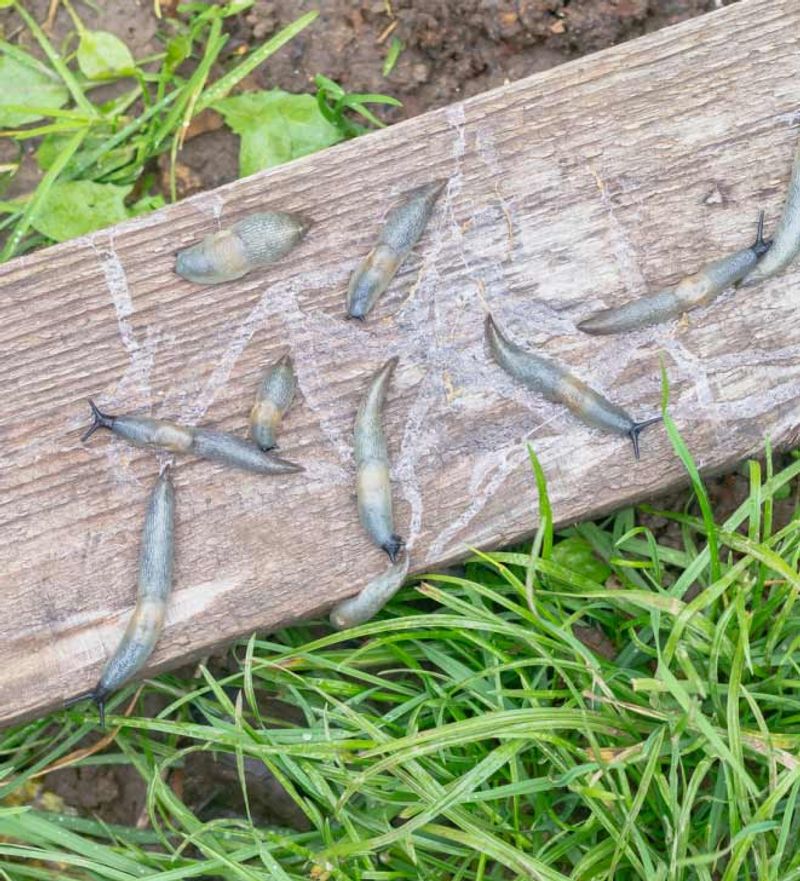
If slugs keep showing up, look beyond the hosta itself. Boards, flat stones, thick mulch, and piles of leaf litter all stay damp and dark.
Moving or thinning them gives slugs fewer places to rest during the day.
Watering matters too. In damp climates, Mississippi State Extension suggests watering at the root zone in the morning, so leaves and soil surface are not wet all night.
Then go hunting. Slugs are most active after dark, so a flashlight check can show you what is actually feeding.
Per University of Minnesota Extension, cool, damp, cloudy conditions raise their activity.
These steps are practical management, not a guaranteed fix. Expect some slugs to remain, and keep checking as the weather changes.
A fuller clump takes division, not pruning
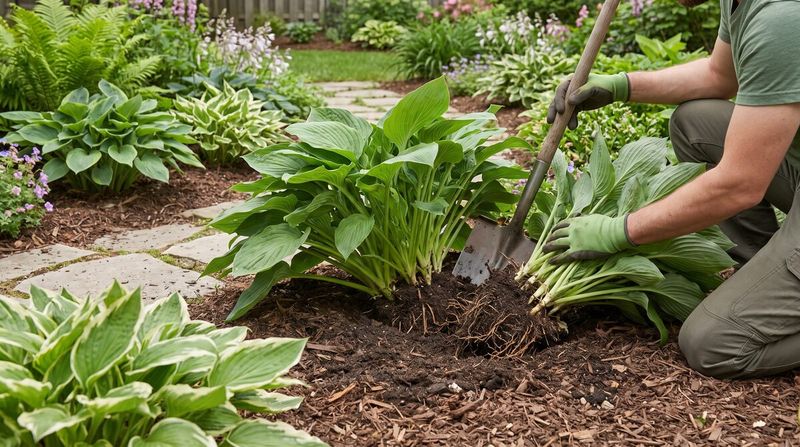
Cutting off old leaves cleans up the plant, but it does not make the same clump fuller. That part of the title’s promise does not hold up.
Growth next spring depends on the crown and roots, not on how the dead foliage was trimmed.
Division is a separate job with a different goal. It can give you additional plants, and it can fix a clump that has gone hollow.
Iowa State Extension notes that older hostas can develop a dead center, and the live ring can be divided.
Not every hosta needs this. A clump that is growing well and looks healthy can simply be left alone after cleanup.
For general care and variety guidance in the South, Clemson Extension’s hosta guide is a helpful reference.
Keep cleanup selective across the garden
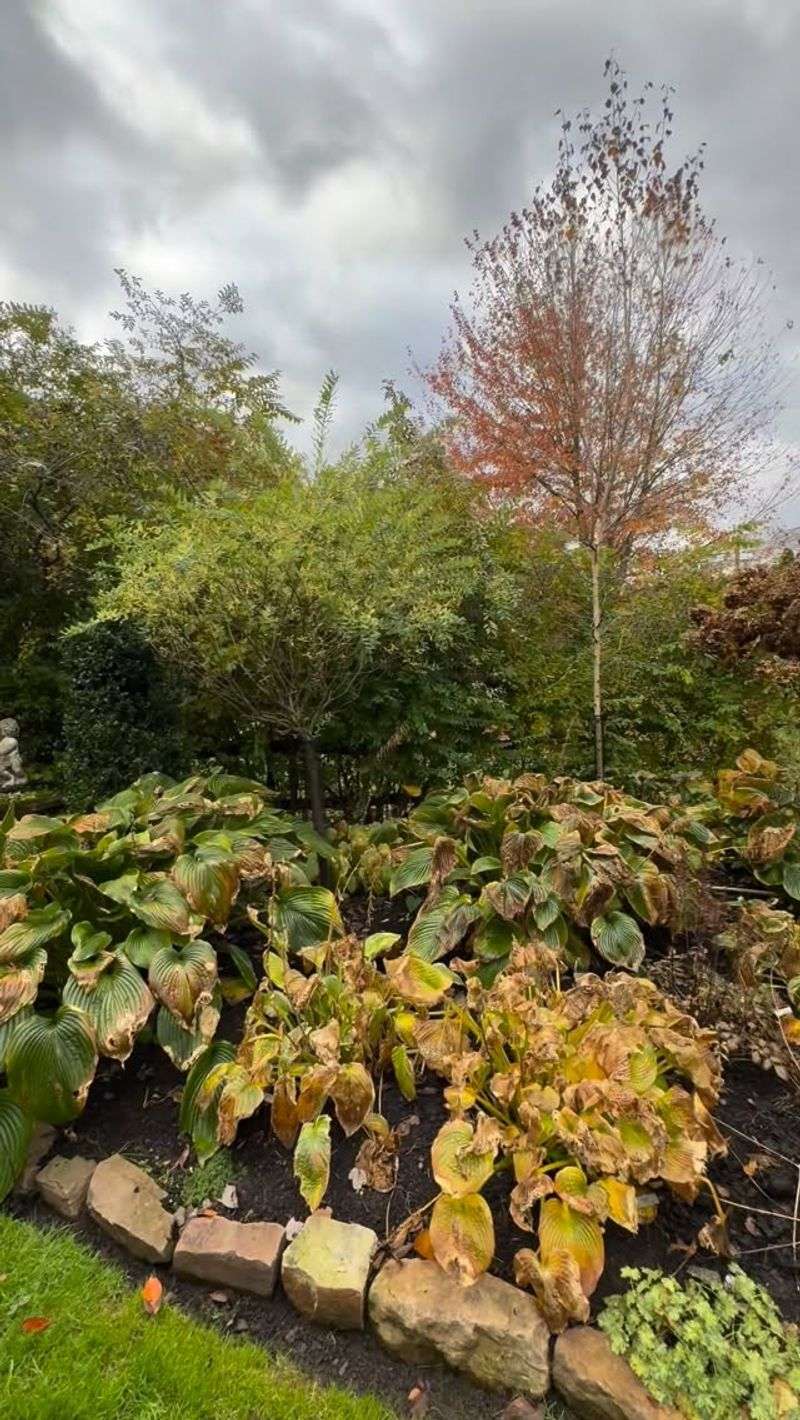
After your hostas have naturally declined, clear the dead foliage from around each crown. Then stop there.
A bare, spotless yard is not the goal.
Dead leaves and stems elsewhere can shelter beneficial insects and other wildlife through the cold months. Illinois Extension encourages gardeners to consider pollinators during fall cleanup.
So be selective. Remove problem foliage where slugs or disease are a worry, and leave suitable habitat in other corners, away from your prized hostas.
A neat hosta bed and a living yard can share the same fence line.